James Adams

Is China hiding how bad the coronavirus is?

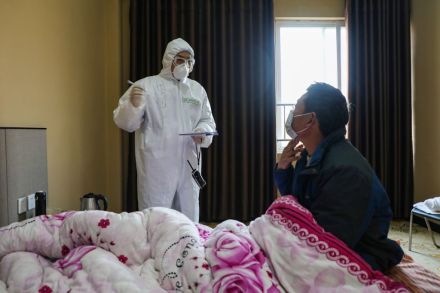
The Chinese government would have the world believe that the coronavirus is under control and the risks of it spreading to the rest of us is minimal. But foreign governments and intelligence agencies believe that China has been lying about the extent of the epidemic and continues to deny the truth about the numbers of dead and infected.Judging by leaked videos on social media that purpotedly show the dead lying untended in the street, bodies wrapped in sheets lying on benches and crematoriums working 24/7 with bodies unceremoniously stuffed into ovens with no burial rites, millions of Chinese people appear to agree with the foreign assessments.
coronavirus

Is it unsafe to fly in a helicopter?

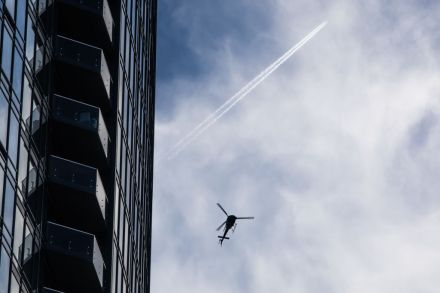
After the helicopter crash that killed basketball star Kobe Bryant, his daughter and seven others, there has been a rash of speculation on social media that helicopters are inherently unsafe to fly. Perhaps the most extreme example is British businessman, Lord Alan Sugar, an experienced pilot, who says he will no longer fly in helicopters because they defy physics. He should know better. After a number of high-profile accidents, it might seem that helicopters have a poor safety record. In 2018, five people died when a helicopter giving a sightseeing tour of New York City crashed into the Hudson river. In the past two years there have been other deaths in Hawaii, the Grand Canyon and Manhattan.

kobe helicopter

The cars of the future

A revolution is under way that will fundamentally change the way humans relate to their cars, so that the vehicle more closely resembles the living room with all the stress of driving removed and all the possibilities of distracting entertainment.Cars will soon become an extension of movie theater, concert venue and 3D videogame as the full potential of 5G communication is unleashed, along with a business imperative of advertisers wishing to monetize the opportunity of drivers being a captive audience for hours at a time.A taste of the future was glimpsed at the Consumer Electronics Show in Las Vegas earlier this month.

cars

The risks and rewards of ransomware

Ransomware, the locking up of large networks through hacking until payment is made, is exploding. Recent attacks have crippled more than 200 city and local government networks in Baltimore, Albany and Atlanta, while specific hacking tools have been successfully used against mortgage companies, universities, hospitals, banks and consulting firms. A report this month from the cybersecurity firm, Emsisoft, reveals that the cost of ransomware in the US last year was over $7.5 billion, involving 113 state and local governments, 764 health care providers and 1,233 schools. In 2018, the FBI received reports of 1,500 ransomware attacks (the latest available FBI figures) which does not include hundreds of attacks that were never reported with ransoms secretly paid.

ransomware

Automation and the future of modern warfare

There is an epic moment in the latest Gerard Butler movie Angel Has Fallen where he gets to save the life of the US president (again). The bad guys launch a swarm of dozens of micro drones able to detect and kill dozens of Secret Service agents, destroying anything and anyone that might get in the way of their mission to kill the president.It’s a chilling moment in the movie that clearly demonstrates just how powerless mere mortals will be in the face of superior technology that can operate independently of any direct human control.As with so much in Hollywood these days, movie truth is remarkably close to a reality that has been prefaced since 1984 when the first Terminator movie appeared and suggested the idea of autonomous robots as terrifying killing machines.

drones automation

How to disappear completely

Coming soon to as neighborhood near you: cameras everywhere. On every traffic light, intersection, telephone pole and storefront, with tracking software that uses facial, gesture and heartbeat recognition. That identity data is combined with web search history, conversations with Alexa and Siri, Amazon purchases and Twitter. A complete individual profile, with a score measuring social reliability, can be constructed and shared with law enforcement and intelligence agencies.This might sound too dystopian to be true.

disappear completely privacy

How tech is trying to solve America’s trash pile-up

Households in America produce 254 tons of trash annually and only 34 percent is recycled. Every person creates 1,316 pounds of trash destined the landfill, about the weight of a grizzly bear. America represents 4 percent of the world’s population yet produces 12 percent of the world’s waste and Germany recycles around twice as much as the US. The statistics tell one story. A different tale is that recycling programs across the country are failing as companies struggle to make money and the amount of waste that ends up as landfill is growing every year. It’s a depressing story of failed ambition confronted by market realities that has left the mountains of trash growing as a monument to American excess and unchecked environmental pollution.

trash

What will war with China look like?

Like so many wars, this one began with an accident: a US naval vessel patrolling the South China Seas and shadowing the Chinese navy made a small navigation error in rough weather. The ships collided, five Chinese sailors died and their vessel was severely damaged. Beijing saw this as an act of war, the latest in a series of perceived insults by the US administration, and the response was swift. Cyber attacks against Washington DC and the headquarters of the US Pacific Fleet at Pearl Harbor shut down power. Ironically, most of the 175 deaths in the first three hours came not from hospitals where emergency generators kicked in successfully, but from failed traffic lights and massive car pile-ups in both cities.

war china

The Russian attempt to swing 2020 for Trump

American intelligence is warning of a concerted effort overseen by Russian president Vladimir Putin to swing next year’s presidential election in favor of Donald Trump. Reports prepared by the National Security Agency and the Central Intelligence Agency are unequivocal, detailing a two-pronged Russian strategy: sow dissension inside America by manipulating social media and attack the voting process itself. There is also concern that a new front could be opened in this battle by the use of deepfakes, videos generated using artificial intelligence that recreate the image and voice of anyone, who can be made to say and do anything. The leading Democratic candidate, for example, could be seen to suggest pardoning Patrick Crusius, the man who killed 22 people in El Paso in August.

russian

The brave new world of 5G

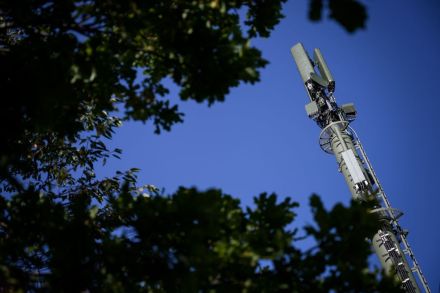
To those who understand it, 5G is the next exciting piece of technology and it is coming to your neighborhood soon. For the rest of us, it is a number and letter that mean almost nothing, but we talk about it as if we really do understand our future and how great it's going to be.The theory goes that 5G is a game-changing new generation of wireless technology, a little like the iPhone of today compared with the old rotary telephone. The scientists behind 5G believe it will, at last, deliver very high data speeds to every connected device and do so with extraordinary reliability.Today, 5G has been deployed in 20 American cities from New York to Atlanta with a further 10 coming online before the end of the year.

5g

Would UBI actually work in America?

It seems like the perfect socialist ideal: massive unemployment, inequality in income and jobs along with growing class divisions can all be met by a common income that keeps every family fed, housed and healthy. Such is the current debate that is engaging every country that fears the fallout from the Artificial Intelligence revolution that is likely to eliminate tens of millions of jobs – up to 33 percent of all jobs in the US according to a McKinsey study. At the same time, many students leaving high school or graduating from college may face the reality of never being able to work. With social tensions across America already high, the idea of a Universal Basic Income for all seems like an attractive solution.

ubi yang

Space is the place — for war

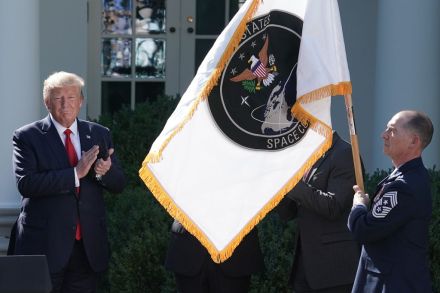
This article is in The Spectator’s inaugural US edition. Subscribe here to get yours. You have no phone service, no television, no GPS for the car and no road atlas because you threw it out in 2009. Planes aren’t flying, and that spinning sound you can’t hear is the sound of space hardware floating out of our control. So dependent have we become on satellites for everything from communications to traffic control that a day without them would mean catastrophe. In the new space race, victory won’t mean landing on the moon or sending a rocket to Mars, but developing a new arsenal to wage and win war in space.

space force

How drones are dramatically changing warfare

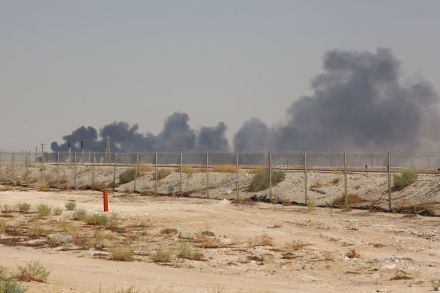
The attack on Saudi Arabia’s oil facilities by Houthi rebels using a fleet of 10 drones loaded with explosives has caused serious damage and will result in a global production cut of around five percent. The Houthi strike was the second aimed at Saudis oil facilities after a previous effort last month resulted in minimal damage. The Houthi drones were likely supplied by Iran, which has a large drone fleet and has been arming the rebel group in Yemen for years. Saudi Arabia is likely to launch retaliatory strikes against both the Houthis and Iran. Drones have become a new frontier in warfare allowing activist groups and nations access to a potent weapon that can be used for surveillance or as a remotely piloted bomb.

drones oil saudi arabia

Can we engineer our way out of the climate crisis?

The Climate Apocalypse is upon us. More carbon monoxide has been discharged into the atmosphere in the last 50 years than in the whole of human history that went before. Carbon traps heat and the world is getting hotter. Heat holds water vapor and so rainfall is getting more frequent while heat waves last longer. Ice at the poles melts and coastal cities face inundation as sea levels rise. But the doom confidently predicted by many climate scientists around the world is being met by optimism among other scientists who are employing innovative technologies that may transform the debate and offer hope for us all. These technological breakthroughs will impact all aspects of climate change from carbon emissions to food production and all forms of energy.

climate change

When will American schools catch up with the technological revolution?

As 75 million children head back to school for the fall semester, there are concerns among academics, technologists and social scientists that the current American education system is no longer fit for purpose. Such is the pace of the technology revolution that children in kindergarten or middle school today are likely to be educated for a world that will largely have disappeared by the time they graduate. Even those in high school today are going to find a different world where learning about the past or the present has less and less value for the future. Even universities, which have changed little in the past 25 years are confronting a revolution where whole professions, such as accounting or medicine, which have provided a steady income stream are going to be under assault.

education schools

Will Hong Kong’s revolution come West?

A specter is haunting the world — the specter of a new kind of revolution. The Hong Kong protesters’ technology and tactics have baffled the Chinese authorities, leaving them apparently powerless to restore order, except by extreme and counter-productive violence. Hong Kong's revolutionary template will be adopted by all groups wishing to destabilize existing orders. The Hong Kong riots have unfolded despite the most intrusive surveillance state ever created. The Chinese government gathers information on every citizen, and is working to assign each a social credit score that will determine who may buy a house, get a promotion, or move to a different city.

hong kong

The last hurrah of an America I once knew

From our UK edition

It’s all too easy to overreact to yet another mass shooting in America. But the two shootings on Saturday, hours apart that killed 29 and wounded dozens more, seem in some respects to be the last hurrah of an America that I once knew. The recent tragedies have been met with all the usual tropes: hand-wringing by editorial writers; meaningless clichés from the White House and political leaders; calls by the left to ban all guns; calls by the right to stop name-calling. And on and on. None of this counts for anything at all and will be trotted out at the next massacre in exactly the same terms and language as has happened after these tragic events. When I arrived in the US in 1991 as an immigrant from England, I felt privileged and excited.

America’s cyberspace challenge

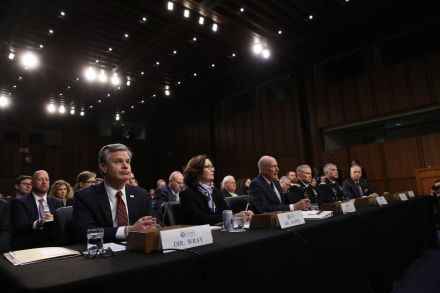
America is at war in cyberspace and is losing badly. The US has some of the world’s most advanced cyber weapons, but no political will or a coherent national strategy. As a result, America’s enemies see a fatal weakness, and are exploiting it every day. In July, the Senate Intelligence Committee reported that Russia hacked into the electoral systems of all 50 US states. The committee did not find that the Russians directly interfered with the voting, but is clear that they have developed that capability. 'While the Committee does not know with confidence what Moscow’s intentions were, Russia may have been probing vulnerabilities in voting systems to exploit later,’ the report said.

cyberspace

Silicon Valley is your government now

The Federal Trade Commission’s decision to fine Facebook $5 billion for privacy violations is an expensive slap on the wrist that will do little to change anything in what is developing as a titanic struggle between the nation states (governments) and the new market states (technology companies). Across the world, the nation states are struggling to keep pace with technology developments and largely failing. Meanwhile, the nation states are proceeding at breakneck speed to develop a world of their choosing where countries become less and less relevant to the course of our future history. The FTC fined Facebook for a series of ethics and privacy violations and imposed the largest fine in the FTC’s history.

silicon valley

Microsoft, Google and the artificial intelligence race

The decision by Microsoft to invest $1 billion in OpenAI, a company jointly founded by Elon Musk, brings closer the time when machines threaten to replace humans in any tasks that humans do today. OpenAI, which was founded just four years ago, has pioneered a range of technologies which have pushed the frontiers of massive data processing in defiance of the physical and computer capabilities that governed such developments for generations. Now, with the investment from Microsoft, the pace of technological change is likely to accelerate rapidly. Today, Artificial Intelligence is at a level of what is known as 'weak AI’ and relies on humans to create the algorithms which allow for the crunching of massive amounts of data to produce new and often predictive results.

artificial intelligence