Economy

  • AAPL

    213.43 (+0.29%)

  • BARC-LN

    1205.7 (-1.46%)

  • NKE

    94.05 (+0.39%)

  • CVX

    152.67 (-1.00%)

  • CRM

    230.27 (-2.34%)

  • INTC

    30.5 (-0.87%)

  • DIS

    100.16 (-0.67%)

  • DOW

    55.79 (-0.82%)

UBI will make us miserable

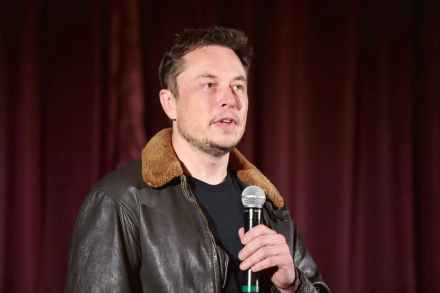
It’s hard to avoid the constant prophecies of doom about how AI is going to take our jobs – with some of these already being borne out. However, AI leaders such as Elon Musk have declared that the population will be supported by Universal Basic Income (UBI) instead, in which the government will financially support everyone through the huge revenues produced by AI. “Universal HIGH INCOME via checks issued by the Federal government is the best way to deal with unemployment caused by AI,” Musk posted on X earlier this year. Musk imagines that we wouldn’t be unemployed but rather liberated – UBI would allow us to live without the mundane tasks of everyday life, like making PowerPoint presentations, writing emails or finding synergies in our deliverables.

Spotlight

Featured economics news and data.

Cutting Britain’s giant welfare bill would be an act of kindness

Does having money really matter that much? There are those, usually with quite a bit of it, who want us to care less about materialism. But, unequivocally, money really does matter – not because of any status it supposedly brings, but for the freedom it buys: freedom to choose how we live and how we look after others. Considering this, it seems that the deep disillusionment with mainstream politicians in recent years stems from a protracted and ongoing period of stagnant living standards over which they have presided. But the truth is that the average person has not got poorer since the global financial crisis. They have got a little bit richer. Employment levels are still exceptionally high. And, both historically and internationally, we are a very rich country.

Are Trump’s tumbling poll numbers behind his latest tweet spree?

There’s a fresh Nixon scandal brewing. This past Sunday, Cynthia Nixon, the former Sex and the City actress who is running for Governor against Andrew Cuomo in the Democratic primary in New York, ordered a cinnamon raisin bagel with lox, capers and red onion at Zabar’s. Outrage was instant. The New York Post deemed it a ‘horrifying’ culinary lapse. George Conway, the husband of Kellyanne Conway and a prominent conservative lawyer, asked on Twitter, ‘Lox her up?’ So far, Donald Trump, who appears to subsist on a daily regimen of about 12 Diet Cokes, steaks slathered in ketchup and eight hours of television, hasn’t weighed in on his hometown gastronomic controversy.

trump tumbling poll

Ten years on: the world the crash made

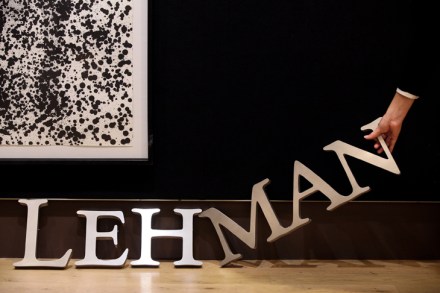
With September marking a decade since the Lehman Brothers implosion, stand by for a slew of economic retrospectives. Any meaningful analysis, though, needs to get beyond historic balance sheets and plunging share price graphs — however dramatic the data. For the most significant impact of the biggest financial and economic upheaval since the Great Depression has been the growing loss of faith in western liberal capitalism. Politics has been upended by the 2008 crisis — doing much to explain Trump, Corbyn and the broader shift away from centrist parties towards extremes. The demise of Lehmans, a once-impregnable investment bank, exposed a US financial sector riddled with chronic debts and fraud.

crash
did the crash create populism

Did the crash create populism? If only it were that simple

We often hear it said that the financial crash created populism. It is now a familiar story: that the Lehman Brothers collapse and the Great Recession exposed a shocking and colossal failure of economic stewardship in general. Ordinary families suffered, while bankers were bailed out. This led to people losing confidence in mainstream parties and established institutions. And this, in turn, fuelled the populist upsurge that upended American and British politics — with Donald Trump and Brexit being two of the results. While this account is not wrong, I now believe that it represents only a portion of the truth. There are many other cultural and demographic trends at work. Take, for example, the way in which most cities are now thriving but most smaller towns are not.

In 2016, Paul Krugman said the markets would ‘never recover’ from Trump’s victory. Ha!

Donald Trump’s Twitter bragging about the soaring stock market can be tiresome. Come on — it’s not all about you, Mr President. It is worth bearing in mind, however, that, as Dominic suggests, under President Hillary Clinton, the world would probably not have enjoyed such a boom. And as the Nasdaq breaks 8000 for the first time, it’s also worth rewinding the clock to when Trump won the presidential election. Let’s look at what Paul Krugman predicted, in November 2016. I quote at length: ‘If the question is when markets will recover, a first-pass answer is never.

paul krugman

Trump, the Kochs, and a GOP crack-up

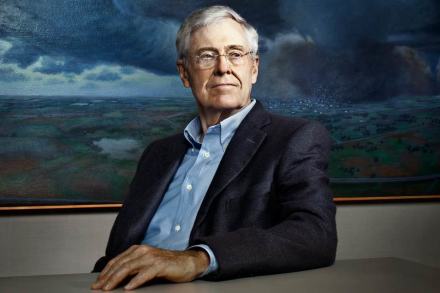
Last year I ran into a person associated with the Koch organisation on a street near the White House. He was absolutely delighted with President Trump’s deregulation policies. Freeing business from all sorts of senseless and burdensome government regulation has long been a goal of the conservative/libertarian Koch brothers and their far-reaching donor network. Trump was making it happen. Kochworld was equally happy when the president passed a major corporate tax cut. Fast forward 12 months, to the Kochs’ annual meeting of donors in Colorado.

Bob Woodward’s book will give Trump a new chance to be outraged

Should Donald Trump be afraid of Bob Woodward’s forthcoming book Fear: Trump in the White House? The book title comes from a remark that Trump apparently made to Woodward and fellow Washington Post reporter Robert Costa in 2016: “Real power is through respect… real power is, I don’t even want to use the word, ‘fear.’” The legendary Watergate reporter’s latest effort is said to be stuffed with numerous interviews of top Trump officials whom Woodward—drumroll here—apparently often visited late at night to get the inside dope on the nefarious activities occurring in the Trump White House. It’s supposed to be Watergate all over again.

Yes, the GDP growth is great. But how much of that is down to Trump?

Donald Trump declared Friday morning on Twitter, “We have accomplished an economic turnaround of HISTORIC proportions!” Will the press and the pundits claim that the president is simply trying to change the subject again?That’s what most of them said earlier in the week when Trump sent an all-caps, instant-classic tweet addressed to Iranian president Hassan Rouhani. Conveniently missing from many of their missives was the fact that Rouhani had himself addressed Trump earlier that day. “Mr. Trump, don’t play with the lion’s tail, this would only lead to regret,” Rouhani had warned, adding that “war with Iran is the mother of all wars.

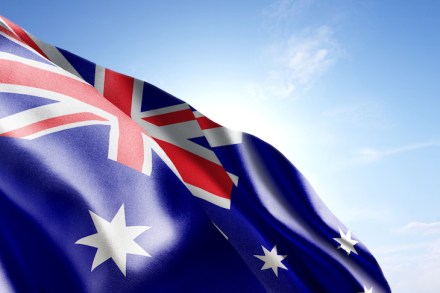
Australia’s choice: Chinese trade – or American security?

 SydneyFor decades, Australia has been known as ‘the lucky country’. At the end of the world geographically, we are separated from the global troublespots by vast oceans. We have recorded 27 years of uninterrupted growth, partly because of a surge in exports of commodities to China. At the same time, our tough border protection policies boost public confidence in, as John Howard put it, ‘who comes to this country and the circumstances in which they come’. As a result, our politics have not been profoundly affected by the kind of populist forces dismantling established parties across Europe. Nor have we witnessed an anti-globalisation backlash. Not for us any Trump- or Brexit-like insurgencies.

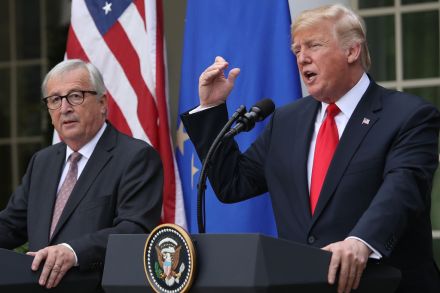
How significant are Trump’s trade talks with the EU?

President Trump’s announcement Wednesday of a trade breakthrough with the European Union was like the summit with North Korea but on a much smaller scale. It was a step back from the ledge after Trump himself contributed to the ratcheting up of tensions. Whether it translates into anything substantively remains to be seen. No, we’re not talking about nuclear weapons as was the case with North Korea. And the trade war with China is more consequential than the haggling with the EU. But just as Trump was seen as risking conflict with “Little Rocket Man” Kim Jong Un, he’d described the EU as a “foe.

Elon Musk: Genius or jerk?

Elon Musk, the California-based entrepreneur behind the Tesla electric car, the SpaceX commercial rocket venture and several other wacky start-ups, made a fool of himself with his attempt to intervene in the Thai cave rescue and subsequent Twitter spat, but there’s no doubt he’s an original thinker and a remarkable businessman. If the futuristic Tesla is a fine feat of technology, what’s more impressive is that the company is not only still in business after 15 years without turning a profit and having lost at least $3.5 billion since 2015, but that its market capitalisation, at $52 billion, is bigger than Ford’s at $42 billion. Tesla built more than 100,000 cars last year compared with 6.6 million by Ford worldwide.

Steve Bannon: ‘We have to end the Cold War with Russia’

Yesterday, in central London, I spent an interesting hour with Stephen K. Bannon, discussing the fall out from President Trump’s Helsinki summit. We recorded a podcast which you can listen to here: https://audioboom.com/posts/6936042-steve-bannon-why-china-is-a-bigger-threat-than-russia I asked Bannon whether he felt the media were right to be working themselves into such a lather over Trump’s apparent siding with Russia over American intelligence services over the 2016 election – this was before the Commander-in-Chief’s peculiar ‘double negative’ volte-face in the afternoon. In reply, Bannon reiterated the now fairly standard – nonetheless fair – point that the media conflates Russian meddling with Russian collusion.

Trump is behaving like a caudillo in trying to intimidate Harley-Davidson

President Trump declared “Wow!” after he learned of the Supreme Court’s 5-4 decision upholding the third version of his travel ban. It’s a big victory for him. In its decision, the Supreme Court pointed to national security concerns, which Trump has consistently invoked about immigration and trade.The dubious decision underscores the extent to America has become a national security state. The Washington Post reports that a major new study indicates that a majority of Americans believe that the United States is in peril of becoming a “nondemocratic, authoritarian country.” Eight in 10 said they are “somewhat” or “very” apprehensive about the state of democracy in America.

What’s the real reason Jared Kushner lost his security clearance?

Jared Kushner had his security clearance restored last month. He can, once again, read classified documents, such as the President’s Daily Brief, or PDB, which contains some of the nation’s most sensitive secrets. Many American commentators said this must mean Kushner is out of danger with the special counsel’s inquiry into the Trump campaign and Russia. If the special counsel, Robert Mueller, had turned up anything really bad, they argue, he would have told the FBI agents doing Kushner’s background check. One legal expert told the New York Times that Kushner could breath a sigh of relief. Perhaps. Perhaps not. Kusher, Trump’s son in law, had been working in the White House for a year under a temporary top secret clearance.

Trump’s ZTE talks have Congress wondering if he’s putting America first

It doesn’t happen often, but it happened this week: Republicans in Congress made it officially known that they disagree with their party leader, President Donald Trump, on an important issue of policy.On Thursday, the House Appropriations Committee voted unanimously to accept an amendment to the 2019 Commerce, Justice, and Science Appropriations Bill. That amendment, introduced by Democratic Maryland congressman Dutch Ruppersberger, forbids the Commerce Department from renegotiating the sanctions it enacted last month on Chinese telecom company ZTE.It’s a real reprimand of the president, who started sending tweets in support of the company on Sunday.

AI

Does Facebook want news ratings to fail?

Facebook has had a great ride, but they are now hitting limits. At least in the U.S., we can’t spend much more time than we do on social media, and Facebook can’t gain a much larger fraction of that time. So instead of seeking new vistas here, Facebook is probably now turning their attention to how to lock in their current advantage.And one classic strategy, widely known among economic and business experts, is “regulatory capture.” Get your industry regulated in a way that puts new smaller competitors at a disadvantage.

The perfect recipe for a Trump meltdown

President Trump has invited Russian president Vladimir Putin to the White House. This news is rocking Washington, but it shouldn’t really come as a surprise, at least no more than Trump’s willingness to meet with the portly pariah of Pyongyang. I have long suspected that Trump would like nothing more than to hold a state dinner for Putin. Trump’s move has temporarily managed to displace his budding tariff war with China from the headlines, but it is of a piece with his embrace of what might be called his inner Trump. Recall that at the July 2017 Republican Convention in Cleveland, Trump declared that “I alone can fix it.” Now he is giving it a go. But what, exactly, is he fixing? When it comes to trade, Trump is manufacturing an artificial crisis.

Are you a winner or a loser in Trump’s trade war?

China’s imposition today of tariffs on 128 imports from the US was inevitable – and is no doubt exactly the reaction that Donald Trump wants, giving him the excuse to announce yet more tariffs in addition to those on steel and aluminium imports which he has already imposed.  After all he did say, even before China announced any form of retaliation:  “trade wars are good.  It should easy for the US to win one”.  A trade war is what he wanted, and what he has got. But does he have any more of a strategy for his trade war than George W Bush had a plan for winning the peace in Iraq? There is an argument for saying that China will come off worse – on the basis that it exports far more to the US than travels in the other direction.

A trade war with China sounds terrifying – but the US is doing the right thing

Nobody likes the sound of trade war, and rightly so. China’s new retaliatory tariffs against US products feel like the beginning of something bad: an escalating tit-for-tat trade conflict between the world’s richest countries which could choke the global economy. But there are good reasons to think that, far from being another silly move by a hothead president, Trump’s right about trade with China and that, as he has with North Korea, he is grasping a dangerous nettle that other presidents dared not touch. It may be scary, but it needs to be done. And it’s not just necessary for America, but perhaps the rest of the world as well. China is deeply protectionist, and is rapidly becoming the most powerful country on earth.

Kudlow vs. Navarro? The Race To Replace ‘Globalist Gary’

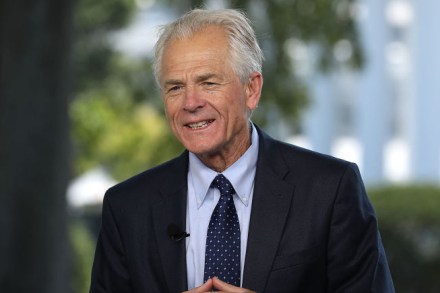
Cockburn has learned that Lawrence Kudlow, the CNBC star, former Reagan official and financier, is a major candidate to replace Gary Cohn as Donald Trump’s top economic advisor, according to a source familiar with the matter.Other candidates include the man who forced Cohn’s departure: the tariff-loving Peter Navarro.Also in contention are Mick Mulvaney, the former South Carolina Congressman who is currently holding down not one, but two jobs for Trump, Andy Puzder, who was once nominated, but then withdrawn for Labor Secretary, and little-known Cohn subordinate Sharira Knight.Navarro and Kudlow are the biggest names.

Why Trump’s ‘trade war’ makes strategic sense

Has Donald Trump sparked off a trade war? His plans for a 25 percent tariff on steel imports and 10 percent tariff on aluminum have shocked friend and foe alike. China is outraged; so are Canada, Japan, and South Korea—allies that in fact export more steel to the U.S. than China does. They stand to be hurt worst if they aren’t granted exemptions or cut special deals by the president. Trump accuses the Chinese of 'dumping' steel into the American market, while the legal grounds for his new tariffs rest in the idea that strategically critical manufacturing is endangered by a diminished U.S. metals industry.