Economy

  • AAPL

    213.43 (+0.29%)

  • BARC-LN

    1205.7 (-1.46%)

  • NKE

    94.05 (+0.39%)

  • CVX

    152.67 (-1.00%)

  • CRM

    230.27 (-2.34%)

  • INTC

    30.5 (-0.87%)

  • DIS

    100.16 (-0.67%)

  • DOW

    55.79 (-0.82%)

UBI will make us miserable

It’s hard to avoid the constant prophecies of doom about how AI is going to take our jobs – with some of these already being borne out. However, AI leaders such as Elon Musk have declared that the population will be supported by Universal Basic Income (UBI) instead, in which the government will financially support everyone through the huge revenues produced by AI. “Universal HIGH INCOME via checks issued by the Federal government is the best way to deal with unemployment caused by AI,” Musk posted on X earlier this year. Musk imagines that we wouldn’t be unemployed but rather liberated – UBI would allow us to live without the mundane tasks of everyday life, like making PowerPoint presentations, writing emails or finding synergies in our deliverables.

Spotlight

Featured economics news and data.

Cutting Britain’s giant welfare bill would be an act of kindness

Does having money really matter that much? There are those, usually with quite a bit of it, who want us to care less about materialism. But, unequivocally, money really does matter – not because of any status it supposedly brings, but for the freedom it buys: freedom to choose how we live and how we look after others. Considering this, it seems that the deep disillusionment with mainstream politicians in recent years stems from a protracted and ongoing period of stagnant living standards over which they have presided. But the truth is that the average person has not got poorer since the global financial crisis. They have got a little bit richer. Employment levels are still exceptionally high. And, both historically and internationally, we are a very rich country.

How we got to inflation

And just when everything was looking so tidy — the Ukraine war, a new Covid subvariant, mass shootings, a woked-up Disney operation — what should come along to light up our lives but 8.5 percent inflation? And who, I ask you, ought to wonder? Like acid reflux and obstreperous two-year-olds, inflation ranks high among human durable goods: always looming, never gone for long, even when it pulls back, and even then leaving its indelible marks. This, due to another human durable: the determination of governments, autocratic as well as democratic, to mishandle the pretended spreading of economic joy.

bewilderment

Cheugy, Gu and you

New executives at Tiffany, the venerable American jeweler, have decided to hawk what used to be called “bling.” Just before Covid hit in late 2019, LVMH bought Tiffany & Co. for $16 billion. LVMH, which started out as the high-end luggage company Louis Vuitton, has taken over all manner of fancy wine, perfume and clothing emporia. The Tiffany buyout was the largest in luxury-sector history. Bernard Arnault, chairman of LVMH, installed one of his sons, Alexandre, as executive vice president. “It’s time,” Alexandre said recently, “to push the boundaries a little bit.” In a bunch of recent press reports, we’ve been given a hint of what that means.

cheugy
young

How the boomers robbed the young of all hope

"Young people do not degenerate; this occurs only after grown men have already become corrupt.” — Montesquieu, The Spirit of Laws, 1748. The great test of a generation is whether it leaves better prospects for its descendants. Yet by virtually every indication, the baby boomers, and even the Gen Xers, are leaving a heritage of economic carnage — as well as a growing social and cultural dissipation that could shape our future and the fate of democratic self-rule, and not for the better. This legacy comes not from outside forces, but the investment bankers, tech oligarchs and their partners in the clerisy who have weakened their national economies and undermined the chances of upward mobility for most young people.

The government didn’t miss inflation, they ignored it

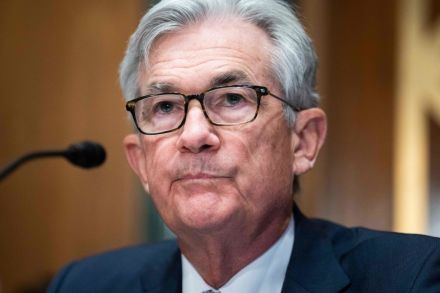
Federal Reserve Chairman Jerome Powell looked calm when he testified before the Senate Banking Committee in February 2021. He’d just been asked by the folksy Louisiana senator John Kennedy whether he had concerns about the dollar supply being the highest it had been since 1946. “Right now, I would say the growth of M2, which is quite substantial, doesn't really have important implications for the economic outlook,” Powell stated. “M2 was removed some years ago from the standard list of leading indicators, and just that classic relationship between monetary aggregates and economic growth in the size of the economy, it just no longer holds. We've had big growth of monetary aggregates at various times without inflation, so something we have to unlearn, I guess.

interest inflation

Inflation is here to stay

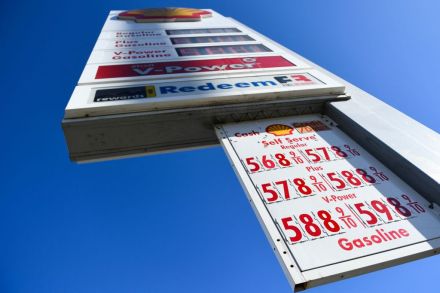
Inflation last month increased to 8.5 percent over a year ago. That’s up from 7.9 percent just last month. It’s the sixth straight month that inflation has been over 6 percent, and the highest it’s been since 1981. The Fed will almost certainly be raising the funds rate steadily for the rest of the year, perhaps by fifty basis point increments instead of the usual twenty-five basis points. The trick, of course, is to rein in the inflation without causing a severe recession. The price of gasoline rose a staggering 18.3 percent in March alone. But even if you take out the cost of fuel and food, which tend to be much more volatile than other commodities, the “core inflation” was 6.5 percent, again the highest in decades.

The new ‘conservative’ cancel culture

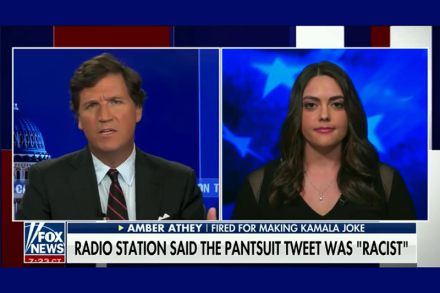
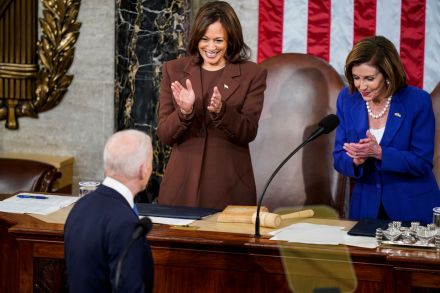
Working at The Spectator has its perks. The unflinching resolve of the world’s oldest English-language magazine in the face of cancel culture is just one of them. Cockburn has been threatened by shrill delusional mobs in his time with the Speccie — but now it’s the turn of his glamorous colleague Amber Athey, who was defenestrated from her radio side hustle at WMAL-DC following complaints about a joke she tweeted about Kamala Harris’s State of the Union outfit. In the week that Amber went public with the reasons for her ouster, WMAL-DC issued the following unrelated tweet: BREAKING: @elonmusk takes a majority steak in @Twitter . Big tech is shaking! - Tune in live for more on the stories that matter to you: https://WMAL.

cancel culture

The trouble with the right’s hands-off economic approach

On the American right today, economics trumps all else. While conservatism has always been bedeviled by the tension between economic science and traditional, family-focused values, the last four decades have witnessed a decided shift toward embracing economics as the sole indicator of a successful society. Those who create wealth, in theory and in practice, are accorded the closest thing to nobility an egalitarian society will tolerate. And indeed the American free market remains the most powerful lever the world has to erase class, poverty, and privilege in the equal pursuit of opportunity.

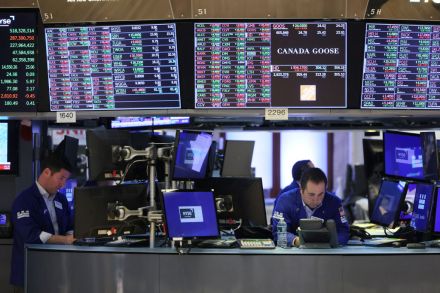
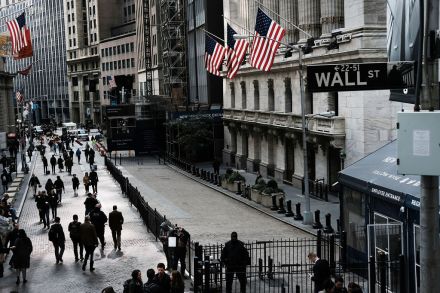
trump economy economic new york stock exchange wall street

Return of the congressional earmark zombie

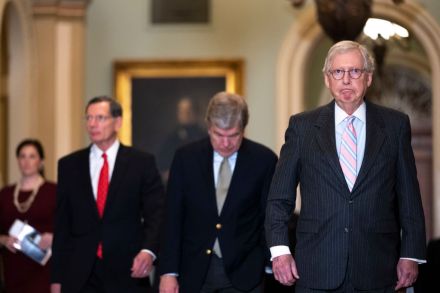
Much like a Hollywood movie monster franchise, earmarks are back in the federal government. Congress’s $1.5 trillion omnibus bill contains pages upon pages of so-called “member-directed spending” for hundreds of pet projects in congressional districts across the country. Senator Mike Braun put the final earmark count at $8 billion, taking up 367 pages of the 2,700-page bill that funds the government through the end of the fiscal year. Congress banned earmarks in 2011 thanks to a rather rare show of bipartisanship by House Republicans and then-President Barack Obama. Congressional bipartisanship then unanimously brought back earmarks last year.

I was fired for a joke about Kamala Harris’s outfit

I am no stranger to cancel culture — or what we know more commonly (and accurately, in my opinion) as censorship. When I was one of a handful of conservatives on a liberal college campus, my peers on the left reported me to our resident advisor for "creating an unsafe environment" and demanded the administration step in to cancel speaker events I hosted through the College Republicans. They later would ask the university to revoke my degree. Throughout my six years as a political journalist and commentator, left-wing activists have tried every trick in the book to drive me out of the industry: digging up old tweets, demeaning my appearance and harassing my employers. None of it has worked... until now.

cancel culture

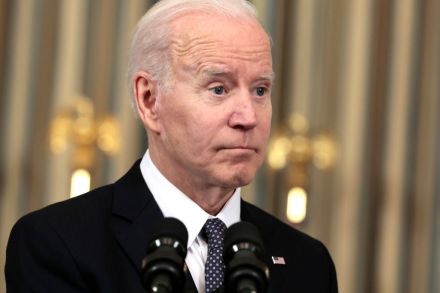
Biden’s budget doesn’t matter

Every year, the president puts forth a budget. And every year, the media diligently reports on it as if it matters to what the government will do over the coming year. Don’t get me wrong: budgets are important. They provide a sense of their crafters’ priorities and a roadmap for achieving their goals. But budgets don’t hold the force of law, which means — in our government — they serve as non-binding blueprints and little else. This is especially true of presidential budgets. That’s because while the budgetary process starts with the president, where it goes from there is determined by Congress alone. During the Trump years, Congress didn’t even bother bringing the president’s budget to a vote.

budget

The United States of Uber

I’m getting into the backseat of an Uber in Washington, DC with a cup of coffee in one hand and a tattered, floppy cloth mask in the other. I’ll make a half-assed attempt to mask up! indulging the Democrats’ last gasps of Covid political theater, only on airplanes and in Ubers, and that’s just to avoid the hassle of getting banned if you don’t. My mask — I only own one — is about as snug as a Kleenex with too-wet noodles for straps. It covers my contagion holes for only a few moments at a time when the loose cloth rests on the tip of my nose. The struggle to keep it up for the duration of the journey is my own bit of theater. “Do you need to switch that mask out?” a flight attendant once asked me. “Oh, no, I could never do that.

uber
energy

Energy independence is a false hope

In the wake of Russia’s attack on Ukraine, gasoline and energy prices soared in the United States. While they’ve come down a bit since, it’s worth examining why war in Eastern Europe caused a spike in prices thousands of miles away — and whether a common proposal in response would have made a difference. Over the last decade, Republicans and Democrats have made “energy independence” a major policy priority. The goal in a nutshell is to produce the energy we need at home, so that the United States is more insulated economically from international disputes abroad. On this goal, advocates have made progress — in fact, the United States is already energy independent by some measures.

What does the Fed’s interest rate hike mean?

The Federal Reserve raised interest rates by 0.25 percent last week, the first increase since December 2018. Back then, Donald Trump had been very vocal in his criticisms of the Fed and its chair Jerome Powell, demanding no more rate increases. There was no resistance from the White House this time with press secretary Jen Psaki saying that the Biden administration respected the Fed’s independence. Powell called the rate increase necessary due to inflation coupled with rising prices. “As we emphasize in our policy statement, with appropriate firming in the stance of monetary policy, we expect inflation to return to 2 percent while the labor market remains strong,” said Powell, before warning that it will take longer than expected for inflation to sink.

interest inflation

Don’t buy Biden’s ‘Putin price hike’

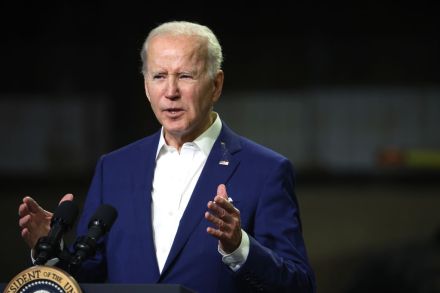
The Putin price hike. That’s the line the Biden administration is using to absolve itself of blame for higher gas prices. “Russia is one of the three largest oil producers in the world,” White House spokeswoman Jen Psaki said in a social media video meant to deflect criticism from President Joe Biden. “And the fact that they started this conflict, invaded a foreign country, and they are such a big producer of oil in the world is the reason why the global oil markets are disturbed and why gas prices are going up.” The administration banned Russian oil imports this week, with the House of Representatives approving a similar ban on Thursday.

Sanctions on Russia will shake the world economy for years

The war in Ukraine will dominate the news for the foreseeable future. But while the bombings will eventually cease, the economic consequences for the world have just begun. That’s because in an era of increasing interconnectedness, economic impacts don’t stop at borders. Most attention has been focused on the immediate impacts of sanctions on Russia, and they are significant. In the past, sanctions have proven largely ineffective at punishing foreign enemies. President Barack Obama, for example, failed to use them effectively in 2014 during the last Ukrainian-Russian dispute. But this time, the actions taken against Russia were largely unprecedented, with even traditionally neutral countries like Switzerland and Sweden calling for restrictions that are “as big as they can be.

economy

America’s rural population is shrinking

A new report finds that for the first time since these things have been kept track of, rural America’s population has shrunk. This trend is a shame for all Americans (except for a few of us who inhabit rural America and enjoy the solitude). The University of New Hampshire Carsey School of Public Policy findings are based on Census data from April 2010-April 2020, pre-dating the Covid outbreak and its dubious effects on people’s migratory habits (a Pew Research survey suggests that reports of a mass urban exodus during the height of the pandemic were overblown).

Good riddance, Jeff Zucker

Longtime CNN president Jeff Zucker resigned today citing an undisclosed consensual relationship with his long-time colleague Allison Gollust. There’s clearly more to the story, as Puck News founder Matthew Belloni tweeted, “Potentially important: I’m told CNN received a litigation hold letter recently from Chris Cuomo lawyers, demanding, among other things, preservation of all communications between Zucker, comms chief Allison Gollust and Andrew Cuomo.” The news left CNN ombudsman Brian Stelter decrying how shocking and stunning Zucker’s exit was, even as several other journalists and media personalities noted that the relationship between the CNN chief and Gollust was an open secret.

jeff zucker

The inevitable return of inflation

The Labor Department reported this week that the December inflation rate hit 7 percent on an annualized basis, the highest since 1982. That was when the country was just beginning to recover from the inflation of the 1970s, the highest peacetime inflation in the nation’s history. The inflation rate for the last three months of 2021 was 9.1 percent. The price of gasoline is up almost 50 percent over a year ago, used cars are up 37 percent and furniture is up 17 percent. Shortages cause by supply-chain disruptions are partly responsible for the upsurge (supermarket shelves have been notably empty in recent days). As grocery and food workers return to work after the latest surge of Covid, those prices should begin to drop.

inflation

Blame Congress, not companies, for staggering inflation

Observers had mixed reactions to yesterday’s announcement that inflation rose 7 percent last year. It all depended on where they fell on the ideological spectrum. President Joe Biden attempted to spin the report, saying that gas and fuel price growth was starting to slow, while acknowledging that more work needed to be done. He’d previously blamed rising inflation on used car prices and supply chain issues, swearing that increased government spending had nothing to do with it. The White House also compared America's Consumer Price Index report to indices in other countries, calling inflation a global phenomenon. Other Democrats blamed big business for the inflation jump.

An economy that’s good, not just efficient

After serving in World War Two and many years working in the dental supply business (sans a high school diploma), my grandfather made a decision as a husband and father of five young children: he went into business for himself. It takes guts to start your own enterprise, especially when it means leaving the relative safety and security of steady employment. My grandfather worked long hours. He recruited his children to help with all manner of odd jobs, such as cleaning the warehouse. With no retirement package to speak of, he might have worked into old age, except for a clever merger with another small business aimed at attracting the attention of a UK-based company that in time bought him out. I suppose you could say the global capitalist system worked for my grandfather…sort of.