Economy

  • AAPL

    213.43 (+0.29%)

  • BARC-LN

    1205.7 (-1.46%)

  • NKE

    94.05 (+0.39%)

  • CVX

    152.67 (-1.00%)

  • CRM

    230.27 (-2.34%)

  • INTC

    30.5 (-0.87%)

  • DIS

    100.16 (-0.67%)

  • DOW

    55.79 (-0.82%)

UBI will make us miserable

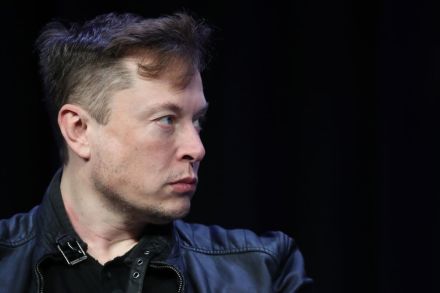
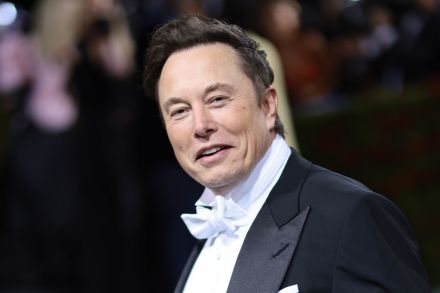
It’s hard to avoid the constant prophecies of doom about how AI is going to take our jobs – with some of these already being borne out. However, AI leaders such as Elon Musk have declared that the population will be supported by Universal Basic Income (UBI) instead, in which the government will financially support everyone through the huge revenues produced by AI. “Universal HIGH INCOME via checks issued by the Federal government is the best way to deal with unemployment caused by AI,” Musk posted on X earlier this year. Musk imagines that we wouldn’t be unemployed but rather liberated – UBI would allow us to live without the mundane tasks of everyday life, like making PowerPoint presentations, writing emails or finding synergies in our deliverables.

Spotlight

Featured economics news and data.

Cutting Britain’s giant welfare bill would be an act of kindness

Does having money really matter that much? There are those, usually with quite a bit of it, who want us to care less about materialism. But, unequivocally, money really does matter – not because of any status it supposedly brings, but for the freedom it buys: freedom to choose how we live and how we look after others. Considering this, it seems that the deep disillusionment with mainstream politicians in recent years stems from a protracted and ongoing period of stagnant living standards over which they have presided. But the truth is that the average person has not got poorer since the global financial crisis. They have got a little bit richer. Employment levels are still exceptionally high. And, both historically and internationally, we are a very rich country.

Inside the Kanye West-Parler deal

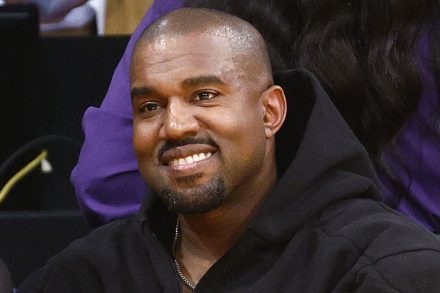
After emailing a nameless press contact for Parler, the last thing I expected was to get a flattering reply from George Farmer, the CEO himself. “I’m a Spectator subscriber, nice to e-meet,” he said. Farmer joined the right-wing social media app Parler in March 2021 as operating chief, and was promoted that May to CEO. “My goal is to provide the platform for the disenfranchised and the voiceless who feel that the mainstream has cut them out,” Farmer told the Financial Times at the time. “It is almost like we are an ‘anti’-company.” Just over one year on, and that "anti"-company has been acquired by rapper and businessman Kanye West. After a string of recent controversies, Kanye and Parler are under the spotlight.

george farmer parler

Biden is in no position to attack Liz Truss

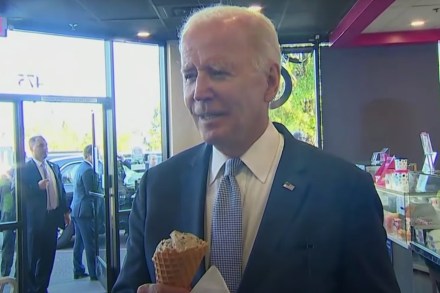
A transatlantic tiff is in the works. During a recent visit to an ice cream shop in Oregon, President Joe Biden lit into British prime minister Liz Truss and her recent (and recently withdrawn) tax proposals. Because this is how we do foreign policy in this country now: spouting off at random while the Chunky Monkey melts all over our hands. "I wasn’t the only one that thought it was a mistake," said Biden of Truss's tax cuts, brandishing a vanilla cone all the while. "I think that the idea of cutting taxes on the super-wealthy at a time when…I disagree with the policy, but it’s up to Britain to make that judgment, not me." And lest the Brits think they were being singled out, Biden also had tough words for the globe's other 193 countries.

kanye west candace owens parler

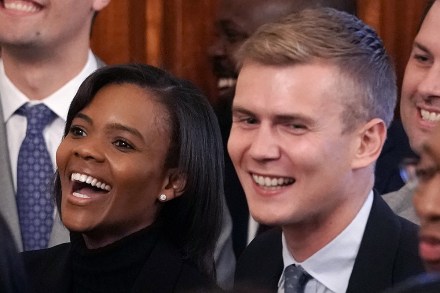
Is Candace Owens cashing in on Kanye West?

A great American poet once wrote: I went to the malls and I balled too hard/ “Oh my God, is that a black card?”/ I turned around and replied, “Why yes/ But I prefer the term 'African-American Express.’” How times change. Following a failed presidential run, a bitter divorce and two poorly reviewed records, for Kanye West, “balling too hard” now means buying a right-wing social media site from Candace Owens’s husband. It was announced today that Kanye, who now goes by Ye, is to buy the social media platform Parler, in a move the company characterized as “a bold stance against his recent censorship from Big Tech.

A rogues’ gallery of diversity consultants

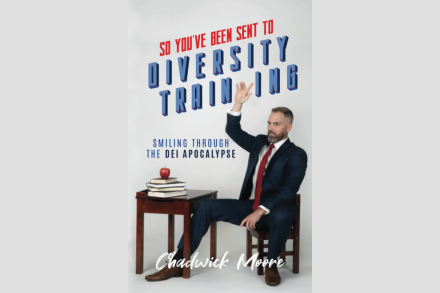
Last Thursday, the Biden administration launched what its calling a Chief Diversity Officers Executive Council to help implement strategy for diversity, equity, and inclusion training across the federal government. While researching my book, So You’ve Been Sent to Diversity Training: Smiling Through the DEI Apocalypse, I was plagued by the question: what kind of person aspires to become a diversity czar? Unfortunately, no czars would speak to me, perhaps suspecting I may not have their best interests in mind. Instead, I talked to workers from across the economy about their experiences with DEI training on the job. From our conversations, I drew up a taxonomy of the DEI consultant.

dei

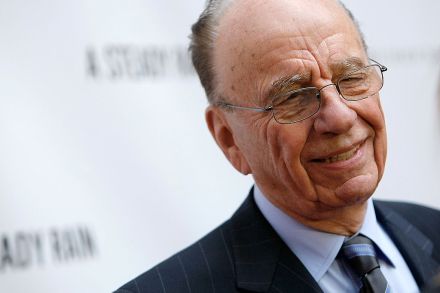
Rupert Murdoch goes west

Each year I return to my native Montana, my English husband and our two small children in tow. We try to explore new parts of the state; this summer we decided to check out Beaverhead County. This happens to be where Rupert Murdoch recently bought a 340,000-acre ranch in the biggest land sale in Montana’s history. On our way south to Beaverhead County we inadvertently took the same route as William Clark on his return journey from the Pacific in 1806. It’s hard not to: there are few options for crossing the Bitterroot Mountains. Lost Trail Pass reaches a height of over 7,000 feet and we stop here to eat our ham sandwiches and Cheez-Its.

montana

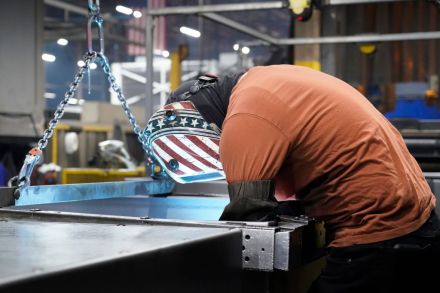
Manufacturing in the US shouldn’t be so hard

There’s an automotive parts manufacturer in my hometown. The company has grown over the course of its 19-year life, from around 20 employees two decades ago to 45 full-time employees today. Despite the dirty nature of much of the work, the facility is kept clean, open, airy, and bright. There are no shavings on the floor or fumes in the air. The men who weld, bend, blast, and powder coat the metal parts and send them to the warehouse for packaging and shipment do so energetically. “Honestly, [the work] is very satisfying,” the shop’s lead welder, Joe, told me during a recent tour of the facility. “I’ve always wanted to do things with my hands, and I’ve always enjoyed welding.

Is Amazon’s newest competitor a Trojan horse for China?

Chinese e-commerce is synonymous with one company: Alibaba. With a market cap of $400 billion, the multinational tech giant is responsible for 80 percent of online sales in China. Yet while Alibaba is ridiculously popular in China, it’s not popular in the US. It’s notorious, yes, but it’s not popular. That’s why there’s another e-commerce giant trying to penetrate the American market. As TechCrunch’s Rita Liao recently noted, Pinduoduo, a sort of Alibaba 2.0, “has quickly gained momentum for its first international endeavor in the U.S.” Headquartered in Shanghai, the financial capital of China, Pinduoduo recently launched Temu, an American online shopping site. The site, we’re told, seeks to challenge Amazon, the king of online shopping.

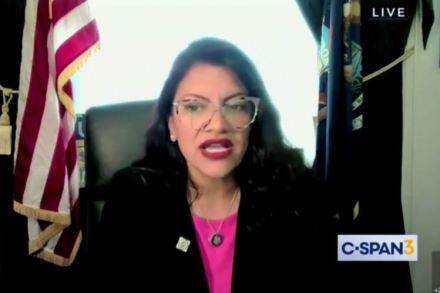
Rashida Tlaib demands banks stop funding new oil and gas products

Cockburn was busy vigorously shaking his evening martini, James Bond-style, last night, so he missed the first half of Representative Rashida Tlaib’s insufferably long-winded and self-righteous speech ahead of a really dumb question. Her overly accentuated red lips (a similar shade of blood sported by fellow Squad member AOC) spewed all sorts of nonsense, while her attention-grabbing glasses risked flying from her face as her head gestured dramatically back and forth on screen. Cockburn’s mixology ended just in time to hear Tlaib charge J.P. Morgan CEO Jamie Dimon with: “Please answer with a simple yes or no, does your bank have a policy against funding new oil and gas products, Mr. Dimon?

More rail trouble could be on the horizon

Economic news over the last few months has been bleak. Whether it’s inflation, supply chain disruptions, or the threat of recession, worrying news abounds. But among the headlines, there was a topic that briefly bubbled to the surface before being all but forgotten: a potential strike by the country’s railroad workers. Amtrak, in anticipation, canceled all cross-country routes, but Labor Secretary Marty Walsh averted a strike at the eleventh hour by negotiating quite literally through the night to find an agreement with the workers. It’s easy to forget about rail. In a time when inflation and potential recession are dominating headlines, transportation issues just don’t seem as interesting.

What the Figma acquisition means for Adobe’s future

After three decades of watching Silicon Valley, I have concluded that a company’s slogan is the opposite of its intent. For example, Google used to say, "Don’t Be Evil." Or Facebook’s mission statements — well, they keep changing. Facebook wanted to “make the world more open and connected.” What they really meant was a “closed walled garden.” Adobe wants you to believe they’re a cloud company that sells software on demand. They say it in their every earnings release. Adobe sells desktop software grafted on the “cloud” to turn the old desktop software model that allows you to get paid once into a subscription business. It has turned them into a very profitable company — worth almost $175 billion in market capitalization. It is not a cloud-native company.

Nancy Pelosi, stock trader extraordinaire

Cockburn doesn’t believe in coincidences. That’s why when he saw that Nancy Pelosi and her multimillionaire husband Paul saved hundreds of thousands of dollars by selling shares one month before their stock price plummeted, he thought that it was probably more than just an educated guess. According to a report from the Washington Free Beacon, model citizen Mr. Pelosi sold 25,000 shares of technology company Nvidia, at around $165.05 in July which resulted in a loss for him of $341,365, a set of disclosures showed. Luckily he dumped the stock in time, as one month later, Nvidia revealed that the government had imposed export restrictions on the company’s A100 and forthcoming H100 circuits.

pelosi

How Netflix saved comedy

Comedy has been absorbed into Twitter’s zeitgeist tornado: a whirling panopticon inhabited by 23 percent of the most humorless and opinionated denizens of the internet (and the top 25 percent of them produce almost all the tweets, according to a study by Pew Research Center). Twitter’s superusers are journalists who have never left the eye of the storm; Twitter has become their “ultimate editor.” It has what the New York Times calls an “outsized role in shaping narratives around the world.” But what kind of comedy clicks for these dopamine-addicted trend chasers?

Netflix
barber

The scissor sisters

I needed a quick cut and shave, my usual guy was closed, and the shop down the road was a tinge more masculine, or so I thought, than the other joints nearby. It was still one of those Brooklyn neo-barbers, complete with tatted-up staff, dark walls, steel accents with live edge countertops, trailing golden pothos and old-timey photographs of men sporting dramatic mustaches. On the Brooklyn scale of pretension, it ranked low compared to the rest, where you’ll find a bundle of demure waifs stationed in leather aprons as they balance brass clippers with outstretched pinkies, like martini glasses, delivering fades with delicate upward flicks of the wrist — that’ll be $150. “She’s running a little late,” the owner said of the barber to whom I’d been assigned. She?

fracking

The revenge of the analog economy

The last few decades have seen the emergence of two rival economies: an older analog one built on the actual production of goods, and another that profits from financial transactions, images and customer surveillance. The contest between the two has been rather one-sided, with the “laptop economy” the big winner, particularly during the pandemic. But while lockdowns made this one-sidedness clear, recent developments have been an unwelcome reminder that the pain suffered in the analog economy still matters. Whether through inflation, energy shortages or supply chain issues, we are getting an uncomfortable lesson in the enduring relevance of the material world. Sadly, the needs of the analog economy aren’t taken seriously enough in Washington.

Blaming Saudi Arabia won’t make energy cheaper

How outraged should we be that Saudi Aramco has reported a world-record quarterly profit of $48 billion, representing a giant bonus from the global oil price spike provoked by the war in Ukraine? Well, that’s how the cookie crumbles when you’re sitting on oil reserves so abundant and so easily accessible that your marginal cost of producing the next barrel is less than $10 when the market price has just doubled to $130 — as it did in March, before settling back to around $95 today. And you might think that this recent price retreat is likely to continue as oil demand begins to shrink with the onset of recession in developed economies – just as you worry that your own reserves will one day dwindle.

saudi arabia

Farewell Brian Stelter… for now

One of cable news infotainment’s most shameless hosts is out of a job. On Thursday CNN canceled the Sunday morning show Reliable Sources and released its host Brian Stelter. The media’s janitor, as I’ve come to call him, is unemployed for now, but don’t expect it to last. The New York Times has had a media columnist opening since Ben Smith left in January — and that’s where Stelter made his name. I hate to burst the bubble of those celebrating the departure of one of the most dishonest figures in the national media, but Stelter, for some reason or another, is highly respected in the industry. His CNN newsletter is one of the highest circulated among journalists, whom Stelter worked to shield from controversy from atop his perch on the wall at CNN.

brian stelter

The Biden team’s ‘0 percent inflation’ lie

To all of the bitter skeptics who doubted President Joe Biden, Treasury secretary Janet Yellen and the Federal Reserve, I have a message for you: come forth now with your most heartfelt apologies. For a few months the Ivy League know-it-alls had to back-pedal their claims that inflation was transitory. But that changed this week. After months of ridicule, it is Joe Biden and his team of Nobel Laureates (all seventeen of them) who are getting the last laugh. Inflation changed faster than anyone could have imagined. In fact, according to the White House, we went from 9.1 percent inflation in June to 0 percent inflation in July. Joe Biden — as pleased with himself as ever — couldn’t wait to break the news to the American people.

Is this the right’s answer to woke corporatism?

Woke corporatism has taken over America. Nike nixed a sneaker launch featuring the Betsy Ross flag after noted anthem-kneeler Colin Kaepernick claimed it was offensive. Coca-Cola and other companies threatened to boycott doing business in Georgia over the state's new election security legislation. Levi's allegedly booted its president over her anti-school closure views during the pandemic, and nearly every major retailer features pro-Black Lives Matter or Pride Month messaging on its storefronts and websites. It can seem impossible as a conservative to avoid giving your hard-earned money to businesses that hate you. Even for moderate or apolitical consumers, it can be frustrating and tiresome to be hit with a wave of political messaging when you're just trying to purchase a product.

A Nike store in Manhattan (Getty Images)

Prince Harry’s ‘toxic’ mental health startup tied to royal ventures

For a man that supposedly wanted to cut his connections with the Big Bad Royal Family, Prince Harry still appears to be reaping the rewards of his blue-blooded lineage. Last week, Cockburn discovered that BetterUp, the mental health company that named the Duke of Sussex as its “chief impact officer” in 2021, has been branded by people purporting to be former employees as a “psychologically unsafe place to work” on Glassdoor, a website where posters can review companies. Posts on the site allege that the leadership “lie, play games, test/watch/spy on employees” and say the company “a pretty nasty underbelly.” BetterUp did not respond to a request for comment regarding the claims.

betterup

The top five things Paul Krugman has gotten wrong

Every two years or so, the Spectator World issues a takedown of New York Times columnist and “expert” economist Paul Krugman, who has a notable history of being wrong about absolutely everything. Well, it seems it's that time of year again. The Australians are getting in on the Krugman-dunking game so why shouldn't we? Here’s Cockburn's authoritative ranking of Paul Krugman's Greatest Hits. Krugman denies the recession Fresh from his New York Times opinion piece titled “I Was Wrong About Inflation,” Paul Krugman decided it was time to be wrong about the recession. On Brian Stelter's CNN show Reliable Sources, Krugman said, “I think that what's happening now is that there's been a kind of a negativity bias in coverage.

paul krugman