Economy

  • AAPL

    213.43 (+0.29%)

  • BARC-LN

    1205.7 (-1.46%)

  • NKE

    94.05 (+0.39%)

  • CVX

    152.67 (-1.00%)

  • CRM

    230.27 (-2.34%)

  • INTC

    30.5 (-0.87%)

  • DIS

    100.16 (-0.67%)

  • DOW

    55.79 (-0.82%)

Why Xi thinks he has the upper hand

Taiwan is “the most important issue,” Xi Jinping warned Donald Trump. “If mishandled, the two nations could collide or even come into conflict, pushing the entire China-US relationship into a highly perilous situation,” according to Chinese state media. The contrast with Trump’s comments was striking. Trump had earlier named trade as the most important issue. In opening remarks, the American President stuck to bland flattery, saying he and Xi had a “fantastic relationship,” that Xi was a “great leader” and that “it is an honor to be your friend.” “The relationship between China and the USA is going to be better than ever before,” he insisted.

Spotlight

Featured economics news and data.

Cutting Britain’s giant welfare bill would be an act of kindness

Does having money really matter that much? There are those, usually with quite a bit of it, who want us to care less about materialism. But, unequivocally, money really does matter – not because of any status it supposedly brings, but for the freedom it buys: freedom to choose how we live and how we look after others. Considering this, it seems that the deep disillusionment with mainstream politicians in recent years stems from a protracted and ongoing period of stagnant living standards over which they have presided. But the truth is that the average person has not got poorer since the global financial crisis. They have got a little bit richer. Employment levels are still exceptionally high. And, both historically and internationally, we are a very rich country.

Here comes the next recession

There is no shortage of reasons to feel gloomy about the American economy right now. First, there’s inflation. In 2021, the Biden administration claimed that the cost of a summer barbecue had declined by 16 cents from the year before. It probably now wishes it hadn’t made that claim. This summer, the cost of that barbecue is up not 16 cents but 17 percent. Hot dogs are up 37 percent over a year ago. This is the highest inflation in forty years, with the consumer price index up 8.6 percent from a year ago. Some necessities, such as gasoline and food, have risen even more sharply, with gas having gone from $2.18 a gallon when Biden was inaugurated to $5.

Biden is strangling small business creation

As a recession looms, policymakers have predictably turned to entrepreneurs to start new businesses and jumpstart the economy. While this may be a good political talking point, the fact is that new business formation has never shortened a recession or reduced its impact. Some economists have looked to Covid to explain the unprecedented number of new businesses that sought IRS tax IDs during the pandemic. Washington’s touted “surge in entrepreneurship” is proving evanescent, however. Many individuals, facing economic lockdowns and the prospect of extended unemployment, decided to create businesses, often from home. Few of these companies will ever employ anyone except their founders — and rates of new business formation are already falling back to pre-pandemic levels.

Cardi B says we’re in a recession, Janet Yellen responds

Cardi B, the well-known rapper and mixologist, has finally acknowledged the financial reality facing many Americans today. Last week, she tweeted, “When y’all think they going to announce that we going into a recession?” Cockburn notes that such astute words perfectly capture how the Biden administration has raised costs for everyone, from the working class to those who can afford to live in this economy, also known as millionaires. Thankfully, the administration responded to her concerns. Janet Yellen, the secretary of the treasury, replied, “Don’t look to me to announce it. I’m not going to announce it. I don’t think we’re going to have a recession. I expect growth to slow down. We have a very strong economy.

Things at the Washington Post are great!

We need a complete and total shutdown of the Washington Post until we can figure out what the hell is going on. Internal drama at the Post has spilled out into the open on Twitter, resulting in the month-long suspension of national reporter Dave Weigel for a retweet of a supposedly “off-color” joke. The charge was spearheaded by politics reporter Felicia Sonmez, who days later remains on her online crusade on Twitter, divulging gossip and musing on newsroom ethics, or lack thereof. Features writer Jose A. Del Real found himself embroiled in the drama as well when he stood up for Weigel and drew Sonmez’s ire. “So I hear the Washington Post is a collegial workplace,” she tweeted, alongside a screenshot showing that Del Real had blocked her.

washington post

Is stagflation in America’s future?

All is not well with the economy. It’s true that 390,000 jobs were added last month, exceeding estimates, while hourly income is up 5.2 percent since May 2021. However, analysts guessed unemployment would drop a tenth of a percent, which didn’t happen. Gas prices keep rising, as GasBuddy.com reports a 43 cent jump over this time last month. It’s enough of a problem that OPEC has agreed to increase production in July and August. The economy remains stricken by inflation, with Treasury Secretary Janet Yellen issuing a mea maxima culpa earlier this week. “I think I was wrong then about the path that inflation would take," she told CNN on Tuesday.

Woke is truly going broke

It looks like Susan Sontag was ahead of her time. Back in 1966, she (in)famously wrote that “the white race is the cancer of human history.” (After her own bout with cancer a few years later she emended that statement, noting that, on reflection, she thought it was unfair — to cancer.) Back then, such statements were “provocative,” a euphemism for outrageously mendacious. But it wasn’t long before lots of white liberals, abetted by sundry black race-hustlers, got in on the game. To accompany its 1993 biennial exhibition, the Whitney Museum of American Art passed out little pins that said, “I Can’t Imagine Ever Wanting to Be White.

woke
inflation

The moral cost of inflation

Inflation is about far more than rising prices. In this excerpt adapted from Inflation: What It Is, Why It’s Bad — and How to Fix It, the book’s authors explain how the debasement of money ultimately corrupts society. The scenario is fairly standard: central banks devalue money; prices shoot up. Governments look for ways to tamp down inflation by keeping people from spending. They also respond with price controls, capital controls, higher taxes. Governments grow larger and often impose more constraints. People lose their freedom, and worse.

Sorry State Farm: we’re boycotting now

State Farm learned the hard way that you don't come for people's kids. A leaked email released by Consumers Research on Monday revealed that the insurance company planned to mobilize its agents to indoctrinate children as young as five into woke gender theory. State Farm agents in Florida were told by a "corporate responsibility analyst" that the company is partnering with the GenderCool Project, the goal of which is to "increase representation of LGBTQ+ books and support our communities in having challenging, important and empowering conversations with children 5+." The analyst, who helpfully put his pronouns in his email signature, asked for agents to donate LGBTQ books to local schools, libraries, and community centers.

state farm

NPR memo: rat out your unmasked colleagues so we can fire them

Cockburn missed the office during the pandemic. After months cooped up, he was eager to return to the hustle and bustle, the gossip, the happy hours, the flirting with married secretaries, the subsequent HR meetings and informal warnings. Thank goodness, therefore, that Cockburn doesn’t work at NPR, the nationwide radio network headquartered right here in DC — as over there they seem much less keen for a return to normalcy. Cast an eye over this memo sent out to NPR employees regarding their in-office mask mandate: https://twitter.com/DylanByers/status/1527359877554704392 Station staff are reminded that: masking is still required, unless recording alone in a studio, working alone in an office with the door closed, or actively eating or drinking.

npr

Free markets deliver real American greatness

Since its postwar rise, the American conservative movement has staked its reputation on defending the free market as an abiding principle. Conservatives pointed to the liftoff in the American economy caused by the Reagan tax revolution and the deregulation of heavily controlled parts of the economy. Less government and less regulation were better for the American economy. The left disagreed with this fundamental axiom of conservative wisdom. Now, surprisingly, many on the right have joined them. Something obviously changed in the post-Cold War period. China’s entry to the World Trade Organization in 2001 resulted in the so-called China Shock, or the loss of 15 to 20 percent of manufacturing jobs in America.

free market

How we got to inflation

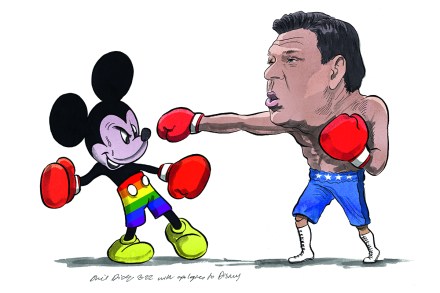
And just when everything was looking so tidy — the Ukraine war, a new Covid subvariant, mass shootings, a woked-up Disney operation — what should come along to light up our lives but 8.5 percent inflation? And who, I ask you, ought to wonder? Like acid reflux and obstreperous two-year-olds, inflation ranks high among human durable goods: always looming, never gone for long, even when it pulls back, and even then leaving its indelible marks. This, due to another human durable: the determination of governments, autocratic as well as democratic, to mishandle the pretended spreading of economic joy.

bewilderment

Cheugy, Gu and you

New executives at Tiffany, the venerable American jeweler, have decided to hawk what used to be called “bling.” Just before Covid hit in late 2019, LVMH bought Tiffany & Co. for $16 billion. LVMH, which started out as the high-end luggage company Louis Vuitton, has taken over all manner of fancy wine, perfume and clothing emporia. The Tiffany buyout was the largest in luxury-sector history. Bernard Arnault, chairman of LVMH, installed one of his sons, Alexandre, as executive vice president. “It’s time,” Alexandre said recently, “to push the boundaries a little bit.” In a bunch of recent press reports, we’ve been given a hint of what that means.

cheugy
young

How the boomers robbed the young of all hope

"Young people do not degenerate; this occurs only after grown men have already become corrupt.” — Montesquieu, The Spirit of Laws, 1748. The great test of a generation is whether it leaves better prospects for its descendants. Yet by virtually every indication, the baby boomers, and even the Gen Xers, are leaving a heritage of economic carnage — as well as a growing social and cultural dissipation that could shape our future and the fate of democratic self-rule, and not for the better. This legacy comes not from outside forces, but the investment bankers, tech oligarchs and their partners in the clerisy who have weakened their national economies and undermined the chances of upward mobility for most young people.

The government didn’t miss inflation, they ignored it

Federal Reserve Chairman Jerome Powell looked calm when he testified before the Senate Banking Committee in February 2021. He’d just been asked by the folksy Louisiana senator John Kennedy whether he had concerns about the dollar supply being the highest it had been since 1946. “Right now, I would say the growth of M2, which is quite substantial, doesn't really have important implications for the economic outlook,” Powell stated. “M2 was removed some years ago from the standard list of leading indicators, and just that classic relationship between monetary aggregates and economic growth in the size of the economy, it just no longer holds. We've had big growth of monetary aggregates at various times without inflation, so something we have to unlearn, I guess.

interest inflation

Inflation is here to stay

Inflation last month increased to 8.5 percent over a year ago. That’s up from 7.9 percent just last month. It’s the sixth straight month that inflation has been over 6 percent, and the highest it’s been since 1981. The Fed will almost certainly be raising the funds rate steadily for the rest of the year, perhaps by fifty basis point increments instead of the usual twenty-five basis points. The trick, of course, is to rein in the inflation without causing a severe recession. The price of gasoline rose a staggering 18.3 percent in March alone. But even if you take out the cost of fuel and food, which tend to be much more volatile than other commodities, the “core inflation” was 6.5 percent, again the highest in decades.

The new ‘conservative’ cancel culture

Working at The Spectator has its perks. The unflinching resolve of the world’s oldest English-language magazine in the face of cancel culture is just one of them. Cockburn has been threatened by shrill delusional mobs in his time with the Speccie — but now it’s the turn of his glamorous colleague Amber Athey, who was defenestrated from her radio side hustle at WMAL-DC following complaints about a joke she tweeted about Kamala Harris’s State of the Union outfit. In the week that Amber went public with the reasons for her ouster, WMAL-DC issued the following unrelated tweet: BREAKING: @elonmusk takes a majority steak in @Twitter . Big tech is shaking! - Tune in live for more on the stories that matter to you: https://WMAL.

cancel culture

The trouble with the right’s hands-off economic approach

On the American right today, economics trumps all else. While conservatism has always been bedeviled by the tension between economic science and traditional, family-focused values, the last four decades have witnessed a decided shift toward embracing economics as the sole indicator of a successful society. Those who create wealth, in theory and in practice, are accorded the closest thing to nobility an egalitarian society will tolerate. And indeed the American free market remains the most powerful lever the world has to erase class, poverty, and privilege in the equal pursuit of opportunity.

trump economy economic new york stock exchange wall street

Return of the congressional earmark zombie

Much like a Hollywood movie monster franchise, earmarks are back in the federal government. Congress’s $1.5 trillion omnibus bill contains pages upon pages of so-called “member-directed spending” for hundreds of pet projects in congressional districts across the country. Senator Mike Braun put the final earmark count at $8 billion, taking up 367 pages of the 2,700-page bill that funds the government through the end of the fiscal year. Congress banned earmarks in 2011 thanks to a rather rare show of bipartisanship by House Republicans and then-President Barack Obama. Congressional bipartisanship then unanimously brought back earmarks last year.

I was fired for a joke about Kamala Harris’s outfit

I am no stranger to cancel culture — or what we know more commonly (and accurately, in my opinion) as censorship. When I was one of a handful of conservatives on a liberal college campus, my peers on the left reported me to our resident advisor for "creating an unsafe environment" and demanded the administration step in to cancel speaker events I hosted through the College Republicans. They later would ask the university to revoke my degree. Throughout my six years as a political journalist and commentator, left-wing activists have tried every trick in the book to drive me out of the industry: digging up old tweets, demeaning my appearance and harassing my employers. None of it has worked... until now.

cancel culture

Biden’s budget doesn’t matter

Every year, the president puts forth a budget. And every year, the media diligently reports on it as if it matters to what the government will do over the coming year. Don’t get me wrong: budgets are important. They provide a sense of their crafters’ priorities and a roadmap for achieving their goals. But budgets don’t hold the force of law, which means — in our government — they serve as non-binding blueprints and little else. This is especially true of presidential budgets. That’s because while the budgetary process starts with the president, where it goes from there is determined by Congress alone. During the Trump years, Congress didn’t even bother bringing the president’s budget to a vote.

budget