Economy

  • AAPL

    213.43 (+0.29%)

  • BARC-LN

    1205.7 (-1.46%)

  • NKE

    94.05 (+0.39%)

  • CVX

    152.67 (-1.00%)

  • CRM

    230.27 (-2.34%)

  • INTC

    30.5 (-0.87%)

  • DIS

    100.16 (-0.67%)

  • DOW

    55.79 (-0.82%)

Could your 50p coin be worth much more?

‘I have not found anybody yet who has a good word to say for the new coin,’ Sir Douglas Glover complained to the House of Commons in November 1969. ‘The great mass of the people are very hostile to the shape, size and look.’ So hostile, in fact, that retired colonel Essex Moorcroft formed the Anti-Heptagonists, calling the coin an insult to the sovereign. Crucially, nobody had called it a ‘jolly good coin’. Luckily, by 1973 heptagon-hate had waned. It was during this lull that the first commemorative 50p was issued, marking Britain’s entry into the European Economic Community. Designed by the sculptor David Wynne, it showed nine hands clasped

Spotlight

Featured economics news and data.

Cutting Britain's giant welfare bill would be an act of kindness

Does having money really matter that much? There are those, usually with quite a bit of it, who want us to care less about materialism. But, unequivocally, money really does matter – not because of any status it supposedly brings, but for the freedom it buys: freedom to choose how we live and how we look after others. Considering this, it seems that the deep disillusionment with mainstream politicians in recent years stems from a protracted and ongoing period of stagnant living standards over which they have presided. But the truth is that the average person has not got poorer since the global financial crisis. They have got a little

How could the Co-op be so insensitive to Jewish shoppers?

Between news bulletins of the Manchester synagogue attack last week, I popped into my local Co-op for some groceries. When the public address system said something indistinct about ‘solidarity’, I paused to listen: it was an advert for Sun & Stone lager, produced in Scotland in collaboration with Taybeh, a Palestinian microbrewery, and with a slice of any profits going to the Disaster Emergency Committee’s Gaza appeal. The Co-op is a benign beacon of alternative capitalism, owned by its members and valued by millions of customers. At their annual meeting in June, those members voted to ‘cease all trading with Israel’, as the Co-op has also done with the likes

Britain's steel industry must die

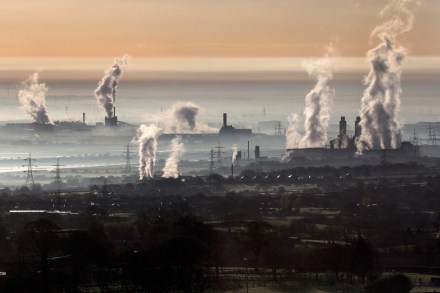
It already faced tariffs in the United States, and it has been struggling to cope with some of the highest industrial energy prices in the world. Now what remains of the British steel industry faces what could well be a terminal blow. The European Union is about to impose tariffs of 50 per cent on steel imported from the UK. Labour ministers will no doubt start cobbling together rescue packages, and trying to devise a new strategy to rescue the industry. But perhaps it would be best just to be honest – and let the industry die.  The EU has set out plans to cut the amount of steel imported

Kemi is right to preach fiscal responsibility

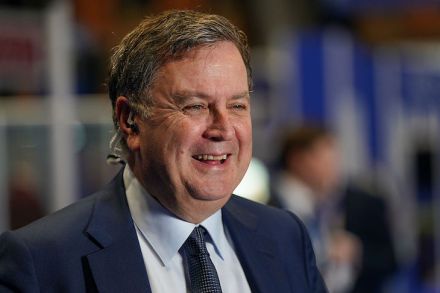
At the mausoleum that is this week’s Conservative party conference one of the bodies has just shown a slight muscular twitch. Kemi Badenoch will this morning try to reclaim the one subject on which the Tories can reasonably hope to base a revival: fiscal responsibility. Mel Stride has already proposed £47 billion worth of spending cuts. His boss will now announce a ‘golden rule’ whereby half the proceeds of those cuts will go to reducing the deficit rather than on tax cuts. I know that for the Tories to try to make a thing of fiscal responsibility is a bit rich given that public spending was allowed to balloon out

What happened to Reform’s Doge?

When Linden Kemkaran (formerly of The Spectator) was elected leader of Kent County Council, she presented herself as the poster-child for Reform in power. ‘The electorate,’ she said in June, ‘are looking to judge whether they can put their trust in a Reform government at the next election.’ Her administration set up ‘Dolge’, a ‘department of local government efficiency’, modelled on Elon Musk’s original, and instructed it to cut wasteful spending and find cash-saving efficiencies. After just five months, however, its efforts appear to have faltered. The council is already ‘down to the bare bones’, Diane Morton, Reform’s cabinet member for adult social care in Kent, told the Financial Times yesterday. Reform has

Are the Tories really the party of ‘fiscal prudence’?

The message the Tories want you to leave their conference with is that they are the party of prudence. The party of fiscal responsibility who will make the first ‘serious down payments’ on the size of the state, as shadow chancellor Mel Stride explained at a Spectator drinks reception last night. Today, he will set out his plan to achieve that. Stride will ‘recommit’ his party to ‘fiscal prudence’ by announcing £47 billion in savings for the public purse. Those measures include: Welfare reforms that will include stopping claims from people with ‘low level mental health problems’ and foreigners and reversing any lifting of the two-child benefit cap to bring

Putin is mortgaging Russia's future to pay for Ukraine

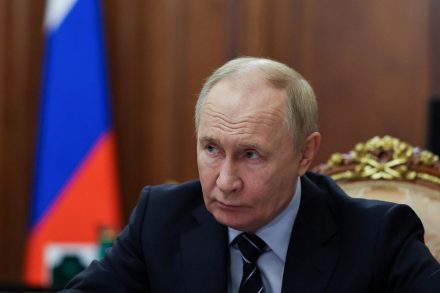
We will wage the war in Ukraine for longer and make you pay more for it. That was the message the Kremlin sent its subjects following the Russian government’s presentation of next year’s budget and the accompanying economic outlook. The budget, which reached parliament for rubber-stamping on Monday, outlines the Kremlin’s vision ahead of the war enterring its fifth year next February: the war will continue at the expense of the economy and people’s incomes. Higher taxes are expected to keep the budget deficit at 1.6 per cent of GDP next year. For three years, rising fiscal spending stimulated both economic growth and climbing incomes. The downside of this amphetamine-fuelled

Don’t surrender to soulless self-checkouts

A friend runs a small factory employing 60 skilled workers. He exports industrial components worldwide, competing with Europe for quality and China for price: a model enterprise for the productive economy we wish we had more of. Earlier this year, his top concerns were the hike in employers’ national insurance (costing the equivalent of several new apprentices) and the advent of Donald Trump’s tariffs. Since then, he’s been hit by a cyber-attack – and his story, a miniature of Jaguar Land Rover’s, is a parable for business everywhere. Like most companies today, this one is paperless: IT-dependent in everything from product design to accounting and HR. It also happens to

Ed Miliband can't ban fracking forever

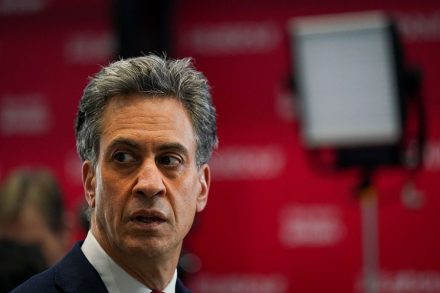
He wasn’t able to announce the £300 off household energy bills that was promised during the election campaign. Nor could he unveil any massive new solar farms or wind turbines. Still, the Energy and Climate Change Secretary Ed Miliband did have one message to cheer the party faithful in his conference speech today: he is going to ban shale oil and gas for all time. ‘Let’s ban fracking and send the frackers packing,’ he thundered. But can Miliband really do that and outlaw fracking forever? Only a fool would pretend that he can. Right now, there is a moratorium on extracting shale oil and gas in the UK, which could,

Do Palestinians want Hamas gone?

Discussion of Donald Trump’s peace proposal for Gaza revolves around one question: who is for it and who is against it? Israel is for it, though mostly because it is backed into a corner and has no choice. The Arab states are for it, which is to be expected since they wrote it. The European Union is for it, which is to be expected since the Arabs are for it. Palestinian Islamic Jihad and the Houthis are against it, and Hamas is expected to be too. I don’t know what the UK government has said and, in concert with the rest of the world, I don’t really care. This is

Will Trump turn Gaza into the 'Riviera of the Middle East'?

There are plenty of legitimate questions to be asked about the Trump-Blair peace plan for ending the conflict with Israel. Will Hamas ever agree to it? Will any peace deal hold? Will the wider Middle East get behind it? And will Sir Tony Blair ever be able to overcome the legacy of his earlier military adventures in the region to establish any kind of authority? But there is also another question that we must ask. If this peace does hold, can Trump and Blair turn Gaza into a cross between Dubai and Singapore – or is that completely deluded? All the immediate attention will, of course, be on whether this

When will Rachel Reeves deliver on her promises?

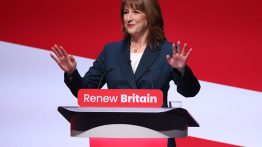
Security, security, security was the message from Chancellor Rachel Reeves as she addressed the Labour party today in Liverpool. A Labour government, she said, would stand for a British economy first. An economy that would put the British worker above all else. That, Reeves proclaimed, was the key difference between a Labour government and a Tory one. In fact, the line ‘don’t let anyone tell you there is no difference between a Labour government and a Conservative government’ was delivered so many times that by the fifth or sixth iteration it received only limp applause. The Conservatives were the main target of Reeves’s speech; they mismanaged the economy and allowed

Rachel Reeves takes the fight to Reform

The Chancellor has just finished her speech at the Labour party conference. It has been a pretty torrid 12 months since Rachel Reeves’ last appearance in Liverpool. Since then, the Budget and borrowing costs have left her precariously exposed, in both Westminster and the City. But Reeves – a Labour tribalist to her core – seemed to draw heart from the conference floor. In a solid, if unspectacular performance, her peroration contained some red meat for the party to cheer: the abolition of long-term youth unemployment, new libraries and plans for an EU youth mobility scheme. Yet it was the first half of Reeves’ speech which highlighted the ghosts of

Is it too early to tell Rachel Reeves 'I told you so'?

‘I told you so’ – the most irritating four words in the English language, dripping with self-satisfaction and schadenfreude. So, forgive me. A year ago I – or rather, ‘we’, the House of Lords Economic Affairs Committee of which I was chair – told you, the great British public, that the UK risked economic catastrophe. A cross-party group including Corbynites and Thatcherites, we came to one crushing conclusion: unless this government took tough decisions this Parliament, the UK’s sky-high debt might well become unsustainable.  A year on, what had been the subject of intense but largely ignored scrutiny in Lords’ Committee Room 2A has, at last, become the dominating issue. Being

Will Labour MPs stand for Rachel Reeves' benefits crackdown?

When Rachel Reeves speaks at Labour party conference today, she has a tough message to deliver. The Chancellor will announce her plans to ‘abolish youth unemployment’ by forcing Britain’s jobless youth into work. There’s a moral case to be made for welfare reform and the Chancellor must make it today The ‘youth guarantee’ scheme will offer the carrot of a guaranteed work placement once unemployed 18 to 21-year-olds have spent 18 months out of the workforce. Those who turn down job offers or training places, however, will face the stick via sanctions such as having their benefits docked. With nearly one million 16 to 24-year-olds classified as not in education,

Are central bankers too powerful?

Donald Trump’s political and legal assault on the Federal Reserve has provoked concern and indignation from the defenders of central banks’ operational independence. Amid the sound and fury, some simple points are being forgotten. Whether or not this distracts central bankers from their main goal of controlling inflation is a matter of debate First, public trust and confidence in central banks is critical if banks are to be operationally independent. That trust was shaken when many central banks lost control of inflation in 2021, erroneously seeing it as ‘transitory’. In the inquest that followed, many central bankers blamed this mistake squarely on their forecasting models. Clearly models had much to answer

The problem with removing the child benefit cap

Despite having a £30 billion fiscal hole to fill Rachel Reeves might be about to splash the cash. If reports are to be believed, in the coming weeks the lifting of the two-child benefit cap will be announced. The cost is £3bn every year.  The cap was introduced under George Osborne to stop families claiming the child element of UC for three or more children. A committee of ministers and officials are due to make a series of recommendations to tackle child poverty before the November Budget, and it’s now widely expected that this will include scrapping the cap.  But will lifting it do anything to improve child poverty? There

Let Jaguar crash

‘Copy nothing,’ implored Jaguar’s weird advert featuring multicoloured changelings swivelling their heads on a car-free planet. That includes, it seems, copying other large multinationals in taking out insurance to cover themselves against cyber attacks. Jaguar Land Rover (JLR), it turns out, had none. Now, following such an attack, it finds itself in the soup. It has had to close its factories and send its workers home as it tries to repair the damage. The government is now reported to be thinking of stepping in with state aid to ensure that the company and its suppliers do not go bust. Why should our taxes be used to bail out a woke

Housebuilding’s in crisis? Bring back Angela Rayner!

Barely noticed amid all the other bad news and political shenanigans, there’s a slump in UK housebuilding that makes Labour’s promise of 1.5 million new homes within this parliament not just ‘stretching’, as the departed minister Angela Rayner called it, but a Truman Show fantasy of utopian suburbs that will never exist. Glenigan, a data provider for the construction industry, reports that residential ‘main contract awards’ in the three months to the end of August were down 44 per cent on last year and detailed planning permissions down 42 per cent. In London, only 2,158 new homes – a tiny fraction of anyone’s target or expectation – were started in

Ed Davey pitches himself as the anti-Farage

11 min listen

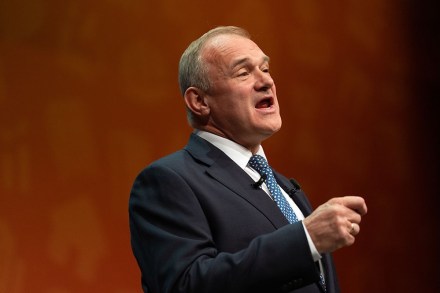
The Liberal Democrat party conference in Bournemouth has concluded with a speech from leader Sir Ed Davey. While the current crop of Liberal Democrats are the most successful third-party in 100 years, they have faced questions about why they aren’t cutting through more while Reform is. It’s something Davey is aware of and – hoping to exploit how divisive the leader of Reform is – he sought to pitch himself as the anti-Farage. Will it work? Plus, more bad news for the Chancellor. Labour had pledged to aim for the highest growth in the G7. New figures from the OECD did upgrade their global growth forecast, including for Britain, but