Book Reviews

Our reviews of the latest in literature

Spectacular invective: Jonathan Meades lets rip about Boris and Brexit

The title alludes to Jonathan Meades’s first collection of criticism, Peter Knows What Dick Likes, and to the album by Peter Cook and Dudley Moore in their scabrous personae of Derek and Clive. Meades explains the title in his introduction: ‘It’s akin to “Two-Hour Dry Cleaners” where the operative, out of her head on perchloroethylene, tells you that’s just the name of the shop and it’ll be ready a week Tuesday.’ This does not exactly clear matters up but at least I found it funny. And there is much to find funny here. A critic or essayist who is incapable of humour should be discarded. That said, bear in mind

An unsuitable attachment to Nazism: Barbara Pym in the 1930s

Novelists’ careers take different paths, and sometimes don’t look much like careers at all. It’s true that some start publishing between 25 and 35, and write a novel respectably every two or three years until they die, like Kingsley Amis. Others don’t start until they are 60, like Penelope Fitzgerald, or stop abruptly without warning, like Henry Green, or write one novel and no more, like Harper Lee. Inspiration, or interest, comes and goes, and both the audience and the industry will have their wilful way with creativity. The ultimate aim of a novel, to be read with pleasure decades after its creator’s death, is reached in tortuous ways. Who

The scramble for the Middle East: Britain and America fall out

One of the many pleasures offered by Lords of the Desert, which narrates the rivalry between Britain and the United States in the Middle East from the end of the second world war through to 1967, is the quotations that are liberally strewn across its pages. They have been culled from memoirs or official documents unearthed in British or US archives and testify to the research that has gone into this dense but consistently fascinating account. Some reveal the deep complacency of influential individuals. Ralph Brewster, an American senator who undertook a round- the-world tour in August 1943 to investigate the progress of the war and report to President Franklin

lords of the desert

How a faulty map led to the discovery of America

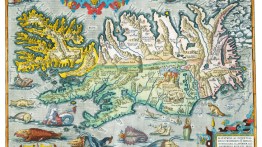
Reflecting on the genesis of Treasure Island, the adventure yarn that grew from a map of an exotic isle he had drawn to amuse a bored schoolboy on a rainy day, Robert Louis Stevenson observed: ‘I am told there are people who do not care for maps, and I find that hard to believe.’ It’s fair to say that Thomas Reinertsen Berg cares very deeply about them, and his book, sumptuously produced with lots of full-colour images, is a kind of potted treasury of cartographical history that gleams with pieces-of-eight-like snippets of information. With a title that tips its hat to Theatrum Orbis Terrarum, the first modern atlas produced by

Theatre of the World

The personality test that conned the world

The other day in the Guardian’s Blind Date column, two participants, or victims, finished off an account of their frightful encounter by dismissing any chance of a future relationship: ‘I’m sure two ENFPs might wear each other out.’ The acronym is perhaps not familiar to everyone, but that, coming from a couple of young people steeped in human resources gibberish, would have been the point. The woman involved was showing off her Myers-Briggs personality type. Myers-Briggs is an American analysis of personality first used in the 1940s, which gained huge success in the 1950s. It was a decade in which, as Merve Emre poetically says, ‘the stench of political paranoia

myers-briggs

Hoping to find happiness

It is a truth universally acknowledged that a serious novel must be in want of a theme. Paris Echo soon makes it clear that it has several. It’s about the shifting nature of history and the mysterious footprints of the past in the present. It’s also concerned with the myriad and biased interpretations that we place on past events. Another preoccupation is the ambiguities of spoken and written French. Modern Paris, the novel’s main setting, allows Sebastian Faulks to explore his themes through two main viewpoints. There’s Tariq, a precociously self-aware 18-year-old Moroccan from a middle-class family in Tangier, who comes to Paris in search of himself, his mother’s French

paris echo sebastian faulks

A date with Venus in Tahiti

There is something about the Transit of Venus that touches the imagination in ways that are not all to do with astronomy. The last Transit occurred in 2012, and if nobody who watched it will ever see another, the sight of that small black dot, making its almost imperceptible progress across the disc of the sun, offered, across the span of 243 years, an oddly moving connection with the scientists and sailors who quartered the globe and, sometimes, risked their lives in 1769 to attempt the first comprehensive observations of the event. There is no shortage any more of ‘global events’ — a good, old fashioned footballing brawl between England

endeavour
ernest hemingway adriana ivancich

The old man and his muse: Hemingway’s toe-curling infatuation with Adriana Ivancich

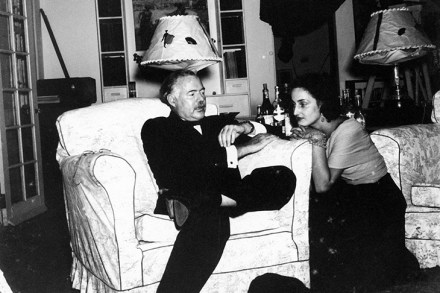
One rainy evening in December 1948, a blue Buick emerged from the darkness of the Venetian lagoon near the village of Latisana and picked up an Italian girl — 18, jet black wet hair, slender legs — who had been waiting for hours at the crossroads. In the car, on his way to a duck shoot, was Ernest Hemingway — round puffy face, protruding stomach and, at 49, without having published a novel in a decade, somewhat past his sell-by. He apologised for being late, and offered the rain-sodden girl a shot of whisky which, being teetotal, she refused. So did Papa, that ‘beat-up, old-looking bastard’, encounter the siren he

The translator and spy: two sides of the same coin

Translators are like bumblebees. In 1934, the French entomologist August Magnan pronounced the flight of the bumblebee to be aerodynamically impossible, and though long since scientifically disproved, this factoid is still routinely trotted out. Similar pronouncements about the impossibility of translation have dogged practitioners since Leonardo Bruni’s De interpretatione recta, published in 1424. Meanwhile, bees, unaware of these deliberations, have continued to flit from flower to flower, and translators continue to translate. As a distinguished translator whose labours have brought English-language readers to works by Marguerite Duras, Gustave Flaubert and the Nobel winner Patrick Modiano, Mark Polizzotti gives short shrift to the idea that translation is impossible, quoting the great

smoking
jimmy page capricorn

Jimmy Page is a Capricorn – that says it all

In 1957, aged 13, Jimmy Page appeared with his skiffle group on a children’s TV programme dedicated to ‘unusual hobbies’ — skiffle apparently qualifying as one. During the show, he was interviewed by Huw Wheldon who, following an old-fashioned BBC lunch, arrived in the studio with a hearty cry of ‘Where are these fucking kids then?’ Asked what he planned to do when he grew up, Page gave a perhaps unexpected reply: find a cure for cancer. As we now know, this plan failed — but already, it seems, the young Jimmy wasn’t lacking in the swaggering self-confidence that true rock stars are required to possess (or at least to

american short stories

Too much American angst: the latest short stories

In ‘A Prize for Every Player’ — one of 12 stories in Days of Awe, a new collection by A.M. Homes (Granta, £14.99) — Tom Sanford, shopping with his family in Mammoth Mart, soliliquises (loudly and nostalgically) about the America he remembers, and finds himself with an audience of shoppers who nominate him as the People’s Candidate for President. Absurd? Not quite so absurd perhaps as in pre-Trump days. Days of Awe (the title comes from Rosh Hashanah, the ten days of repentance in the Jewish calendar) is Homes’s third collection and her first book since winning the Women’s Prize for Fiction in 2013. The stories balance on a narrative tightrope

whales

Will all whales soon be extinct?

Nick Pyenson, curator of fossil marine mammals at the Smithsonian Institute in Washington, is quick to tell us he’s not a ‘whale hugger’. ‘I didn’t fall asleep snuggling stuffed whales or decorate my room with posters of humpbacks suspended in prismatic light.’ Pyenson sees whales through their ancestral bones, and their contemporary entrails, digging up their past or scrying their future. Spying on Whales begins its surveillance in the fossil-rich site of Cerro Ballena (‘Whale Hill’) in the Atacama desert. Here, in the Miocene layers, he uncovers an entire pod of ancient, stranded whales, stilled in the moment of their deep-time death. It’s an Indiana Jones moment. He may disavow

hamlet

Glenda Jackson might have made a magnificent Hamlet

The role of Hamlet is, Max Beerbohm famously wrote, ‘a hoop through which every eminent actor must, sooner or later, jump’. In this book, and in its online supplement, Jonathan Croall charts the flight through that hoop of pretty well all of the ‘eminent actors’ — male and female, young and not so young, white and black — who have taken the leap in British performances, from Michael Redgrave with the Old Vic company in 1950 to Andrew Scott at the Almeida in 2017. The trajectory of the actor’s flight is of course different in every production. No play text is complete until it is performed, and every time it

modernist architecture

Modernist architecture isn’t barbarous – but the blinkered rejection of it is

When I was younger, one of my favourite books was James Stevens Curl’s The Victorian Celebration of Death. His latest is much less cheerful. Like one of those innocents who re-enact the Civil War in embarrassing costume on Bank Holidays, Curl has been time-travelling backwards into a pre-modern world. He returns from the past with a crude message that has been familiar since Reginald (Menin Gate) Blomfield told us in the 1930s that modern architecture is a godless conspiracy of foreigners, Jews and Bolsheviks to eradicate an established culture of building, patiently evolved over three millennia. This is less than a half-truth. Yes, modernist principles, misunderstood by unimaginative planners, often

How do we envisage Shakespeare’s wife?

Despite his having one of the most famous names in the world, we know maddeningly little about William Shakespeare. His private life was lost in the swirling debris of the early modern world. Buildings such as the Globe or New Place (the house he retired to in Stratford) were demolished in the centuries after his death. Not a single letter survives, no first drafts of the plays have surfaced and it is disputed whether his portraits even look like him. Scholars are forced to find other ways of peering into his soul. Some look to the plays and sonnets, boldly presenting fictional and contradictory poetry as concrete evidence. Others examine

A feast for foot fetishists

It is always interesting to see what art historians get up to when none of the rest of us is looking. It is hard to know what the inspiration for The Mummy’s Foot and the Big Toe can possibly have been, but if this very short book offers the kind of approach that will go down well in the enclosed world of the academic conference, Alan Krell might find the common reader a tougher nut to crack. Having said that, however, those with a taste for such things will probably find plenty to enjoy in a book that ranges from the bare foot as symbol of freedom to the foot

robert graves

Ménage à quatre with Robert Graves

‘I have a very poor opinion of other people’s opinion of me — though I am fairly happy in my own conceit — and always surprised to find that anyone likes my work or character.’ This admission by Robert Graves — made to his then friend Siegfried Sassoon in the mid-1920s — goes to the heart of his character as a man and a poet. It projects a powerful mixture of defiance and neediness, which in his personal life produced a series of highly disruptive assertions and reversals, and in his writing life an equally striking set of commitments and walkings-back. Jean Moorcroft Wilson, who has previously published fluent biographies

‘We are not cattle, we’re people’: everyday hell in Stalin’s labour camps

‘No testimony from this time must ever be forgotten,’ the great Lithuanian poet Tomas Venclova says in his afterword to Dalia Grinkeviciute’s memoir. The author was 14 in 1941, when the Soviets deported her with her mother and brother from their native Kaunas, Lithuania’s second largest city. In 1949, the women escaped from Siberia and went into hiding. Grinkeviciute began writing about her ordeal, but soon, facing another arrest, she buried the unfinished manuscript in a garden. More prisons and camps followed before she eventually returned home in 1956. Found in 1991 after her death, the memoir was published and became part of the school curriculum in Lithuania. The book

The selective breeding of pets: how far should we go?

It was in his play Back to Methuselah that George Bernard Shaw honoured a lesser known aspect of Charles Darwin’s originality as a thinker, when he described him as ‘an intelligent and industrious pigeon fancier’. Britain’s greatest natural scientist was indeed a keeper of fowl, with pigeons among his favourites. The habit arose from Darwin’s instinctual recognition that in the animal-rearing experiments conducted over millennia by our ancestors, we had inadvertently stored away crucial evidence about the way in which all of life can change in response to environmental stimuli. It was part of his world-changing insights that he proposed how all the 200- plus pigeon breeds recognised in Victorian