Arts Reviews

The good, bad and ugly in arts and exhbitions

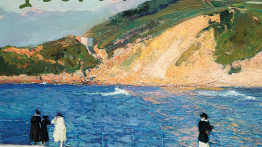
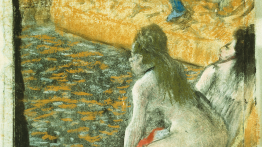
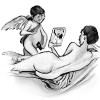
Condoms in 18th-century painting

Waldemar Januszczak and Bendor Grosvenor’s art podcast has returned after nearly five years. It is, says Januszczak, ‘the podcast they could not stop – but they did have a jolly good try’. What happened? It isn’t clear; there are teases that it revealed too much, which is anyway a good ploy for attracting listeners. ‘Subversive’ is not the first word that springs to mind when tuning in to the two unlikely chums. Their regular feature, ‘Shocking News from the Artworld’, is more Apollo than Nigel Dempster. For example: Christie’s has closed the digital art department that dealt in NFTs, the crypto tokens going the way of the dodo. And Gabriele

The dying art of costume design

At the receptionist’s desk in Cosprop’s studio and costume warehouse, a former Kwik Fit garage, the sloping bleakness of Holloway Road is held at bay by a small chandelier, brassy lighting and a bound guest book. It’s a bit stagey, like a filmset for a cheap foreign hotel or an expensive shrink’s office, quite out of place in the real north London high street. But as the entrance to a costume house that builds worlds and people out of bits of fabric, feathers and jewels, it’s appropriate. Suspend all disbelief, ye who enter here. Cosprop was founded by the costume designer John Bright in 1965. What began as a small

Save art history!

A few weeks ago I went along to a lecture on the Welsh artist, poet and soldier David Jones. Kenneth Clark considered him ‘the most gifted of all the young British painters’. The talk, by a recent art-history graduate with a first-class degree from a reputable university, began at a cracking pace. It was only when he started to show slides to illustrate his talk that I began to feel very hot and sweaty. The paintings were not by Jones but his near-contemporary Stanley Spencer. Jones did share with Spencer the experience of serving with the British Army during the first world war. And both were stimulated by this immersion

This museum is a lesson for all curators

The National Railway Museum is 50 years old, and it’s come over all literary. A quote from Howards End stands at the entrance to the newly refurbished Station Hall: railway termini, proclaims Forster, ‘are our gates to the glorious and the unknown’. T.S. Eliot salutes you on the way out: ‘You are not the same people who left that station.’ Big claims, but as it turns out, largely to the point. The changes to the Station Hall are subtle but numerous, making the argument that as well as being the foundational technology of modern civilisation, railways are a culture in their own right. The aim, say the curators, is to

I could watch Balanchine's Theme and Variations on repeat

R:Evolution is a pun, presumably intended to suggest that tradition is not static and the obvious truth that change always grows out of what has come before. A useful idea, of course, even if it’s one that the four short works selected under this title by English National Ballet doesn’t smoothly illustrate. The management is, however, due a pat on the back for trying; budget cuts and the power of the grey men in marketing means that such programming is becoming increasingly rare, victim of the regressive fashion for full-length narratives and fairy tales. ENB starts by juxtaposing two works conceived in 1947. Balanchine’s Theme and Variations is one of

What does it feel like to perform the same show 355 times in one year? 

I have my routine down to a science. At 6.59, I’m sitting in the stairwell, typing on my laptop or scribbling in a book. At 7.01, I’m speeding down the hall to Dressing Room 18, where the rest of the girls are semi-apparelled, laughing, blasting out Tyla; or some days, silent, headphones in, munching pre-show snacks and staring blankly into space. From 7.01 to 7.05, I’m putting on my costume as the ambient noise of my cast mates getting dismantled by the demogorgon plays over the intercom. At 7.07, I’m sprinting down the dozens of stairs between Dressing Room 18 and the ground floor. And at 7.09, I’m stepping out

The mind-bendingly creative works of Louis Couperin

The French lutenist Charles Fleury, Sieur de Blancrocher, is one of those unfortunate historical figures who are chiefly remembered because of how they died. He was climbing the stairs to his apartment near the Louvre after a court dinner in November 1652 when he slipped, fell head over heels and was dead a few hours later. We don’t know, though people have wondered, whether the wine was to blame. Only one piece of music by him survives, and he would probably be forgotten if he hadn’t been memorialised in several tombeaux – slow memorial dances – by royal composers, one of whom was a young harpsichordist whose genius is only

Has Taylor Swift been reading The Spectator?

The Last Dinner Party received quite the critical backlash when they arrived amid much fanfare in 2023. Posh, precocious and theatrical, armed with lofty ideas that matched their station as four young women who had benefited from very expensive educations, the band encountered widespread suspicion that they were industry ‘plants’, or had somehow bought their way to instant recognition. Happily, their debut album, Prelude To Ecstasy, proved sufficiently accomplished to repel these waves of hostility (strange how the success of privileged young women tends to attract far greater opprobrium than that of privileged young men). In any case, the excellence of the follow-up should settle the matter. Rougher around the

Excruciating: Netflix's House of Guinness reviewed

First the surprising news: not a single one of the four Guinness siblings in 1868 Dublin is black; and only 25 per cent of them – surely a record for Netflix – is gay. Now the bad: despite these oversights, House of Guinness remains very recognisably the work of Steven Knight, the Peaky Blinders screenwriter who once set a drama in 1919 Birmingham and said to himself: ‘I know just what this period needs to make it more echt: a cameo appearance by dub poet Benjamin Zephaniah.’ As a Brummie (more or less), I loathed Peaky Blinders. I hated the accents (some were OK, but too many were a melange

The death of cinéma vérité

Oh, how we lived. Or, how we thought we lived. Despite the numerous criticisms levelled at the BBC on a daily basis, the BBC Archive YouTube channel is one aspect of its work that cannot be faulted. It is a fascinating collection of broadcast material going back many decades, a portal into Britain’s past presented in film grain-soaked HD. A sobering reminder of what the BBC once was – and what it no longer dares to be. Much of it is made up of documentaries, many aspects of which will be peculiar to millennials and Gen Z. The form is strange: long, single-camera shots of people talking in living environments.

An album that proves Martinu was one of the great quartet composers

Grade: A Bohuslav Martinu was a patchy composer; worse, he was also a prolific one, meaning that if you dip into his music at random you never quite know if you’re going to have your day made, or just half an hour wasted. Ideally, you need someone to do the choosing for you, and praise be, here’s one of today’s brightest and best chamber ensembles doing exactly that. Seriously: listen to one of the big-name string quartets of the CD era – the Alban Berg Quartet, say, or the Emersons – and ask yourself, hand on heart, whether the Pavel Haas Quartet doesn’t play the socks off them. The vitality,

The art of dining

Ivan Day pulls out an old Habsburg cookbook from his library. The 300-year-old volume is so thick it’s almost a perfect cube, and by some miracle the spine remains intact as he opens it. ‘It’s like a big Harry Potter spellbook,’ he jokes while flicking through drawings of pastry baked in the shapes of dolphins, tortoises, pelicans and griffins. I recognise one design from the half-eaten pie in his kitchen: a cross between a soup tureen and an embroidered throw pillow. Ivan is a curator, self-trained cook and Britain’s premier historian of food. Historic houses and institutions around the world – including the Museum of London, the Met, the Getty

Pure feelgood: ENO's Cinderella reviewed

‘Goodness Triumphant’ is the alternative title of Rossini’s La Cenerentola, and you’d better believe he meant it. Possibly my reaction was coloured by last week’s experience with the weapons-grade cynicism of Stephen Sondheim’s Follies, but honestly – it’s just so sweet. A gentle, put-upon girl gets her fairy-tale ending in the face of stepsisters and a stepfather who are basically buffoons rather than outright villains. We’re in the realm of panto, or children’s TV: nothing really dark can happen here and the only sorcery is worked by Rossini, whose fountain of laughing, crystal-bright invention is as life-affirming as Haydn, if he’d been born 50 years later and in Italy. Pure

The best Turner Prize in years

So, the Turner Prize: where do we start? It’s Britain’s most prestigious art award, one that used to mean something and now attracts little more than indifference. Taking place every year, it grants £25,000 to a winner chosen from four shortlisted artists, all of whom are obliged to display work together either at Tate Britain, or at a regional gallery. The latest iteration, at Bradford’s Cartwright Hall, is the best in a while – but before we get to that, some context. The Turner was established in 1984, but only really grabbed anyone’s attention when Channel 4 began televising the prize-giving ceremony in the 1990s. That this coincided with a

Propulsive, funny – and what a car chase: One Battle After Another reviewed

Is Paul Thomas Anderson’s latest as good as everyone is saying? That it has a run time of nearly three hours and I didn’t drop off, and didn’t have to fight dropping off, may say it all. But if you want more, I can also vouch that One Battle After Another is funny and fantastically propulsive, and it also, I should add, reinvents the car chase – which I don’t believe any of us expected to see in our lifetimes. So while you can search for a deeper meaning if you want (many have), you can also simply enjoy it. (I give you permission.) The car chase at the end?

Every line in the new Alan Partridge is perfect

By now, viewers of TV thrillers are no strangers to a baffling prologue – but this week brought a particularly extreme example. Nine Bodies in a Mexican Morgue opened with shots of a desert, a cactus, an animal skull nailed to a cross and a moustachioed man driving a battered pick-up truck with a Virgin Mary on the dashboard. So we were definitely in Mexico. For a while, however, that was about all that was clear, as the words ‘Day Nine’ flashed up and the truck’s unidentified female passenger spied on a dilapidated military base through binoculars. Nor did anything fall into place when the base’s soldiers talked about a

Like Gabor Mate set to club beats: Lady Gaga, at the O2, reviewed

Lady Gaga’s show was to begin at 7.30  prompt, we were told. No opening act. And at 7.30 something did happen: the big screen over the stage started showing a film of Ms Gaga, clad in scarlet finery, writing on a scroll with a peacock-feather quill, while the PA played opera’s greatest hits. For more than an hour the film ran, an impassive Gaga doing nothing but writing. An hour. It was nearly as dull as a Paul Thomas Anderson film, and it’s a miracle it took 45 minutes for the handclaps to start ringing around the arena. Was she about to do a Madonna – who had to keep

Was Serbia the real birthplace of the Renaissance?

Where did the Renaissance begin? There has been an official answer to that question since 1550, the date that Giorgio Vasari’s Lives of the Artists was first published. According to this version, it all began in Florence and the first painter in the long line that ended with Leonardo, Raphael and Michelangelo was named Cimabue. But here’s another suggestion: you could just as well try looking in the rolling hills of Serbia. My wife and I went travelling there earlier this year. For a couple of nights we stayed in the town of Novi Pazar in the south-east of the country. From the religious point of view this town is