Arts Reviews

The good, bad and ugly in arts and exhbitions

Mumford & Sons are trolling themselves: Prizefighter reviewed

It is axiomatic that most artists spend the first few years of their career trying to achieve some level of success; the next few years building and maintaining it; and the following period trying to dismantle all the bothersome preconceptions such success creates. After the passing of a further period of time – and by now, perhaps, a little chastened – most artists desire only one thing: to return to that happy, uncomplicated first stage where, they now realise, they had never had it so good. Often, this tactical retreat proves to be significantly harder than they imagined. You get the sense that everybody involved desperately wants it to be
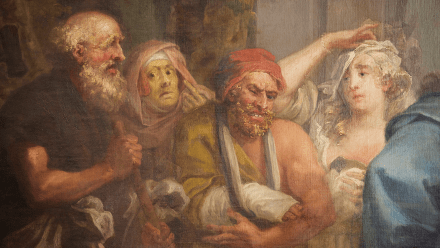
No chemistry between the performers: Arcadia at the Old Vic reviewed

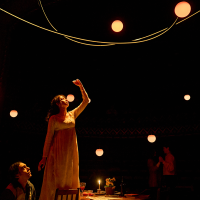
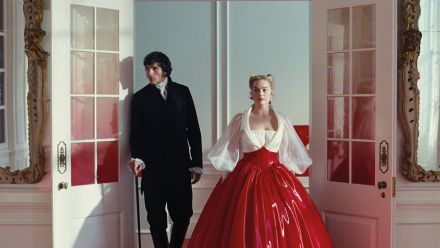
The Old Vic’s production of Arcadia by Tom Stoppard has a vital component missing. The house. Stoppard’s brilliant historical comedy is set in a country manor owned by the Coverly family and the script examines, among other things, the evolution of decorative taste during the 18th and 19th centuries. But no architecture is present on stage. The audience has to imagine what the show fails to supply because the Old Vic’s interior has been redesigned ‘in the round’ with a central playing area encircled by pews as seats. This leaves no room for a large-scale set. Arranging the venue like a boxing ring ensures that parts of the action are

Warhol meets Rauschenberg: John Giorno retrospective reviewed

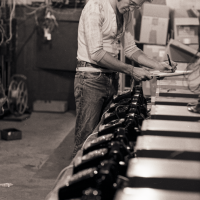
At the end of last week, I caught a budget flight to Milan to see a woman. As soon as I arrived I was bundled into a Fiat Panda and sped southwards for Bologna’s annual art weekend, its events ranging from the reverential to the ridiculous. In the latter camp was MAMbo’s John Giorno retrospective, which – for Giorno is a bona fide hero – promised to be superb. It wasn’t, but a bad homage to Giorno is a homage to Giorno all the same. Born in Brooklyn in 1936, he joined the merchant navy as a young man and, on returning to New York, became both a highwire avant-garde

The early-music movement is ageing well

The early music movement: it’s grown up so quickly, hasn’t it? The Orchestra of the Age of Enlightenment is 40 years old in 2026 and if you can remember its debut, back in the 1980s when Beethoven on period instruments was pretty much the wildest thing going, you’re going to feel terribly, terribly old. Right from the start, the OAE was in the vanguard of the second wave. As late as 1978, the gut-strings and Bach brigade had assumed that Mozart was beyond them. The newly founded OAE was straight out of the traps with Weber, Mendelssohn and Schubert – halfway down the 19th century without drawing a breath. They’re

Old songs for an audience of elderly people: The Damned’s Not Like Everybody Else reviewed

Grade: B I remember hearing ‘Neat Neat Neat’, the Damned’s second single, and actually falling off a chair laughing. Is that really the future, I wondered, clutching tight hold of my New Riders of the Purple Sage album. Yes, reader, I’m afraid it was, with the Damned pre-eminent, handmaidens to the whole thing. They made by my reckoning three half-decent singles – ‘New Rose’, ‘Smash It Up’ and the ‘Ça plane pour moi’ facsimile ‘Jet Boy, Jet Girl’. And that was it. Pantomime punk that morphed into pantomime Goth, mostly. Now they are back doing what pensioned-off boomers have been doing for years, the 1960s (largely) covers album, a last

The problem with the new Shakers biopic

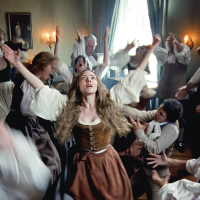
Ann Lee was a sharp-tongued woman from the back streets of 18th–century Manchester, celebrated for put-downs worthy of Coronation Street’s Bet Lynch. But instead of calling time on regulars at the Rovers Return, she announced that it was closing time for the whole of humanity. As a young woman Ann had joined a maverick Protestant sect that became known as the Shakers, or ‘Shaking Quakers’. In fact their shaking was the least of it: they howled, gurned and gibbered while flirting with the notion that God would return to Earth in the form of a woman. All sexual activity, even between man and wife, was forbidden. Ann then had a

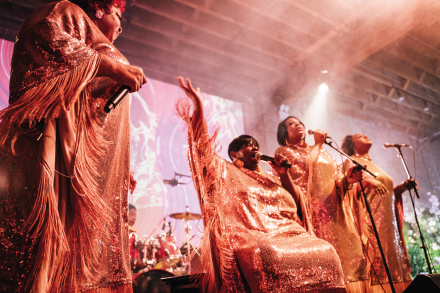
Electrifying: Annie & the Caldwells, at Ronnie Scott’s, reviewed

Annie & the Caldwells are a long-running family gospel ensemble from West Point, Mississippi – father and sons playing guitar, bass and drums, mother and daughters singing. The chaps offer a sinewy, stripped-down funk redolent of the late 1970s: dad, Willie J. Caldwell Sr, is a fantastic guitarist, and mother and daughters tear the roof off the place. They came to attention when David Byrne put out a record on his Luaka Bop label, and suddenly they were no longer just a local gospel group. Except they are. In an early show at Ronnie Scott’s, Annie – seated centre-stage in what looked like a black leather housecoat – was there

Fascinating: The Fabulous Funeral Parlour reviewed

The Fabulous Funeral Parlour ended with possibly the least necessary caption in TV history: ‘Filmed in Liverpool’. Whenever I go back there (quite often these days for family reasons), I’m struck all over again by how the whole city seems engaged in the production, distribution and promotion of Scouseness. Yet, even by normal Liverpudlian standards, the people in this old-school, narrator-less documentary put in an impressive shift. Leading the way was Hayley, the owner of both the parlour in question and, despite fierce competition, the most extravagant trout pout we saw. Hayley’s mother died five years ago aged 59, and it was then that she decided to set up Butterflies

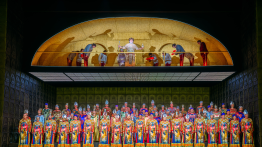
Richard Jones’s Boris Godunov feels like a parody

Mussorgsky’s Boris Godunov is back at Covent Garden, and there are ninjas. This isn’t a spoiler. There hasn’t been a note of music at this point, and it’s almost the first thing you see. A ginger child in a weird mask is playing with a spinning top when the black-clad assassins stalk on and slit his throat. Cue gasps. Well, the director is Richard Jones, after all; quirky, garish and occasionally macabre is what he does. And the (alleged) murder of a child pretender to the Russian throne is the horror that drives the entire plot, at least in the first (1869) version of the opera, which is what we’re

Marvellously conservative: Cable Street reviewed

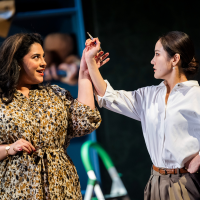
Cable Street is a musical that premièred last year at the Southwark Playhouse and has now migrated to the Marylebone Theatre. Fans of beautiful staging will be instantly smitten by the amazing achievement of the designer, Yoav Segal. The script by Tim Gilvin and Adam Kanefsky tells the story of a violent stand-off in October 1936 between cockney activists and Oswald Mosley’s British Union of Fascists. The authors treat the East End during the depression as a panto or a moral fairy tale. It’s good vs evil. The socialists are hard-working, golden-hearted heroes who rise up against the wicked landlords and their cruel rent hikes. The fascists are angry, misshapen

The joy of Paul Taylor

When the American choreographer Paul Taylor died at the age of 88 in 2018, he should have been consecrated a patron saint of modern dance. He had respectfully lifted the pall of earnestness and mythic archetypes that his mentor Martha Graham had stiflingly cast over it, and let the sunshine in. Graham may have been a pioneering genius and an earth mother, but she wasn’t much of a laugh, and after performing in her company as a young man for seven years, he needed a break. Martha Graham may have been a pioneering genius, but she wasn’t much of a laugh Fortunately for posterity, he only flirted with the alternative

The demise of London’s junk shops

‘The place through which he made his way at leisure was one of those receptacles for old and curious things which seem to crouch in odd corners of this town and to hide their musty treasures from the public eye in jealousy and distrust.’ In Dickens’s The Old Curiosity Shop, Nell Trent’s grandfather loses his precious shop to the malicious money-lender Quilp. London’s junk shops have, it seems, always been under some form of threat. But the forces against them today appear unstoppable. The junk shop is increasingly the sole preserve of the city’s ‘odd corners’ – pushed out by hiked rents, the charity-shop boom with its variety of cost

The alt-right are clueless about neoclassicism

The adherents of the American alt-right are not known for their delicate aesthetic sensibilities, but there is an exception. They love neoclassical architecture and are calling for it to be deployed in the 250th celebrations this year of what they still call ‘the country of liberty’. Judging from the desecration of the Oval Office and its surroundings, and the plans for the world’s most expensive dance hall, what they have in mind is a style derived not from ancient Greece and Rome but 1950s Technicolor movies. Donald Trump’s White House interior reminds me of Hogarth’s crisp verdict on French 18th-century rococo interiors: ‘All gilt and beshit.’ Expect more of the

Who stuck the great Emmylou Harris in a sports hall?

Somebody obviously thought it a good idea that Emmylou Harris play her last ever Scottish show in a soulless sports hall in the east end of Glasgow. Built for the 2014 Commonwealth Games, the feel of the Emirates Arena on a chilly January night was less Sweet Home Alabama, more Home Counties Ikea. As well as kicking off this year’s Celtic Connections, the city’s annual festival of roots music, Harris was also kickstarting her farewell tour of Europe. She plays her final UK shows in May, including one at the Royal Albert Hall, which seems a more fitting setting for a regal adieu than a pimped-up cycling track. Presumably, the

The Neapolitan Horowitz

‘You play Bach your way, and I’ll play it his way.’ That remark by the Polish harpsichordist Wanda Landowska is often described as an ‘infamous put-down’, but it was really just a playful quip directed at Pablo Casals after they disagreed about trills. Anyway, the line has been running through my head all week because I’ve been listening to a recording of the Goldberg Variations – Wandowska’s signature piece – by a pianist who was quite determined to play them her way, not Bach’s. Maria Tipo was born in 1931 and died last year – the same dates as Alfred Brendel, though it’s hard to think of two pianists with

Beautiful if hagiographic portrait of Godard

Richard Linklater’s Nouvelle Vague dramatises the (chaotic) making of Breathless (1960), Jean-Luc Godard’s French New Wave classic. It’s a film about a film, told mostly in the manner of that film, with the same kind of liveliness. Godard is as impossible to comprehend by the end as he was at the beginning  It isn’t necessary to watch Breathless first by the way, although why not? It’s widely available on streaming platforms and, while it remains one of the most influential movies of all time, it’s just 90 minutes long. Christopher Nolan take note. You too, James Cameron. (His latest Avatar is three hours and 20 minutes, for heaven’s sake.) Linklater

Our verdict on the new In Our Time presenter

Melvyn Bragg’s first ever intro to In Our Time in 1998 clocked in at 21 seconds. Misha Glenny, meanwhile, took one minute and four seconds to get through his. The initial public reaction to Glenny taking over from Bragg was positive. The prevailing sentiment was ‘thank Christ it isn’t Stephen Fry’. But now you felt as though you could hear two million people shouting ‘Get on with it!!’ at the radio as he stressed and elongated virtually every syllable. John Stuart Mill and his wife had been labouring over ‘On Liberty together for soooome yeeaarrss’. Then we were away. And he’s all right, thank God. With In Our Time, there