Arts Reviews

The good, bad and ugly in arts and exhbitions

The orchestra that makes pros go weak at the knees

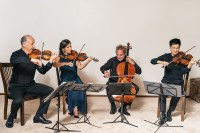
Stravinsky’s The Firebird begins in darkness, and it might be the softest, deepest darkness in all music. Basses and cellos rock slowly, pianissimo, in their lowest register; using mutes to give the sound that added touch of velvet. Far beneath them rumbles the bass drum: a halo of blackness, perceptible only at the very edge of the senses. In Liverpool Philharmonic Hall, with Sir Simon Rattle conducting the Bavarian Radio Symphony Orchestra, you felt your hairs tingle before you discerned a note. Seconds later, the very air within the hall seemed to be quivering with sensuous, engulfing bass warmth. You can be sure that Rattle anticipated that sensation; planned for

The tedium of softboi rap

A male British rapper who is unafraid to show tenderness and vulnerability is not a particularly new phenomenon: Dave, Stormzy, Headie One and Kano have all walked this path in recent times. None, however, has made emotional fragility his USP to quite the same extent as Loyle Carner, who writes about his children, his masculine role models, mental health, race and inherited trauma in an unthreatening sing-song style which has made him both a pop star and a bit of a poster boy for Feeling Things. His tour is named after his fourth and most recent album, hopefully!. To his credit, he has put his money where his rhymes are.

Pluribus is a mess

Pluribus is another drama set in the dystopian future. But on this occasion the integrity of the entire human race depends not on someone ordinary and likeable who could almost be you, but on a bolshie, misanthropic middle-aged lesbian called Carol. Carol (Rhea Seehorn from Better Call Saul) is so grumpy that when in flashback we see her wife Helen treating her to an expensive jaunt to a romantic ice hotel in Scandinavia, she refuses to snuggle beneath the fur bedspread, sip designer vodka and gaze at the Northern Lights above. Instead, all she wants to notice is that sitting on a bed made of blocks of ice makes her

The best thing Cathy Marston has ever done

The Royal Ballet has scheduled what – on paper at least – looks like one of the most dismally dull and cautious seasons I can recall. The company is hobbled by a £21.7 million government loan (that had tided the place over during Covid), which the Royal Opera House is being forced to ‘service’. One bright spot of interest comes with the commissioning of a new work from Cathy Marston and an import from New York City Ballet’s Justin Peck, slotted into a triple bill alongside Balanchine’s nocturne, Serenade. There’s not much to say about Peck’s Everywhere We Go. Big, bold, bright and much too long, it is devoid of

The babyishness of Hunger Games on Stage

The Hunger Games is based on a 2008 novel  about a despotic regime where brainwashed citizens are entertained with televised duels between teenagers. Not a bad idea. We go behind the scenes and watch Katniss (Mia Carragher) being selected to fight Peeta (Euan Garrett) who secretly adores her. As soon as the plot starts, it seizes up. Instead of a gripping tragedy about two lovers forced to kill each other on TV, we’re given a masterclass in the show’s elaborate format. The duellists take part in interviews, coaching sessions, target practice, public parades and a popularity contest which permits them to attract ‘sponsors’ whose role is opaque. At the same

The cult of Powell & Pressburger's I Know Where I'm Going! 

I know where I’m going. I’m on the sleeper train chugging out of Euston and heading to Fort William. A wedding dress hangs on the wall in its transparent cover. I know from my printed itinerary that upon arrival at Fort William, there will be a car, then a ferry from Oban, and finally a gin and Dubonnet waiting for me at the Western Isles Hotel in Tobermory. But no one is getting married. Something much stranger than that is happening: an event that lies somewhere between a fandom convention and a secular pilgrimage. I’m on my way to the Outer Hebrides to celebrate the 80th anniversary of Michael Powell

'Ballet is antiquated, and it works': Royal Ballet principal Matthew Ball interviewed

The history of the male ballet dancer is a chequered one. In the early 19th century, he was the star of the show, albeit more as an acrobat and tumbler than fairy-tale prince. The vogue for sylph-like damsels floating in white tulle put paid to that, reducing him to the auxiliary role of porter and attendant. Then came the comet of Nijinsky, introducing a note of mysterious Slavic androgyny that left the male dancer suspiciously homosexual and prone to the ‘pink tights’ cliché. Nureyev and Baryshnikov cemented the exotic Russian connection, until the late 1990s when the allure of the musical Billy Elliot and Matthew Bourne’s version of Swan Lake

Was Elgar really a snob?

There’s not much point pretending to be an expert on Elgar (or so The Bluffer’s Guide to Music assures us) because everyone already thinks they are. And there’s definitely no point getting hung up on the historical accuracy (or otherwise) of Alan Bennett and Nicholas Hytner’s new film The Choral. It’s set in a West Riding mill town during World War One and the plot pivots around the local choral society’s performance of The Dream of Gerontius. This being Bennett, of course, there’s rather more to it than that, but in any case – spoiler alert, and there’ll be more – Sir Edward himself makes a cameo appearance: Simon Russell

Labour's war on heritage

Britain’s heritage is slowly going up in smoke. Medlock Mill was Manchester’s oldest standing textile mill until it burnt down in June. It joins Grade I-listed Woolton Hall – destroyed by a catastrophic fire in August. But it’s not just the buildings that are under threat, but the entire system designed to protect them. Prior to the disaster, the architect Stephen Hodder had proposed gutting the mill and converting it into a 37-storey block of student flats. A coalition of concerned citizens and conservation charities fought for a stay of execution by applying for the mill to be listed. After reviewing new archaeological evidence, Historic England concurred and recommended it

There's a lot to like in Rosalia's new album

Grade: A Welcome to the Andalusian cadence, the minor fall and the major lift, the descent from Am through G and F to E. Welcome also to Rosalia Vila Tobella, who is not Andalusian, but Catalan, but uses that cadence an awful lot, much as Status Quo prefer to stick to C, F, G. She has been much praised for the depth and ambition of her compositions – and commercially much rewarded when those compositions, sometimes appended to fairly straightforward EDM, get the kind of downloads you would more usually expect from Ariane Grande. Though I find a good few of the compositions comparatively slight, there is no doubting the

In defence of Katie Mitchell

Janacek’s The Makropulos Case is a weird and very wonderful opera, but its basic plot isn’t hard to follow. Still, it seems to send directors into a tailspin. One recent production (since revised) had a cast member break character and pull out a flipchart to recap the story so far. Katie Mitchell’s new staging for the Royal Opera takes the more familiar route of updating the action to the present, and it’s always fascinating to see what opera directors think we’ll find relatable. Luxury hotels, recreational heroin use, Tinder hookups with locally sourced hotties: no, me neither. How the other half live, eh? In short, it’s a bit like Mitchell’s

Bleak but gripping: Channel 4's Trespasses reviewed

Yeats famously summarised Ireland in the four words, ‘Great hatred, little room’. But, as Louise Kennedy’s 2022 debut novel Trespasses showed, in 1970s Northern Ireland the hatred had grown even greater and the room even littler. Channel 4’s faithful adaptation began – as it would continue over its four parts this week – with the suffocating omnipresence of sectarianism. As 24-year-old Cushla (Lola Petticrew) drove through her small town, everything she saw screamed Catholicism or Protestantism: the graffiti, the flags, the ash on children’s foreheads at the start of Lent. By night, Cushla worked in a bar where the punters were either nervously or aggressively aware of each other’s religion.

Mrs Göring is far too sympathetic: Nuremberg reviewed

Nuremberg is one of those films that falls short on everything it wants to be and everything it could be. It’s a historical drama, set just before the trials, where an American psychiatrist (Rami Malek) is charged with assessing whether Hermann Göring (Russell Crowe), Hitler’s second in command, is fit to stand trial and to ascertain what his defence might be. This should be electric and terrifying and take us inside the Nazi mind. In other words, I had expected a tense two-hander. But it’s serviceable rather than inspired, plodding rather than tense, its running time (two and a half hours) trying. (Keep a Red Bull to hand.) It also

Was Queen Victoria's doctor the first psychoanalyst?

Queen Victoria began to experience dark visions after giving birth to her second child. Concerned that she might have inherited the madness of her grandfather, George III, Prince Albert summoned her doctor. Robert Ferguson was not the obvious man for this scenario – he was an obstetrician – but the doughty queen had heard that he ‘paid much attention to mental disease’, and willingly consulted him. It wasn’t until 2009 that the precise nature of Victoria’s ‘mental disease’ came to light. Dr Ferguson’s diaries, formerly kept in private hands, came up for auction that year and entered the collection of the Royal College of Physicians. Their contents made for sad

The rise of psychedelia

On YouTube – and I urge you to look it up – there is a magnificent piece of footage from German TV, in which big band leader James Last leads his orchestra into a medley of hard rock hits, opening with Hawkwind’s deathless space-rock drone ‘Silver Machine’. And damn it if they don’t nail it. The members of the band with electric instruments play it just as Hawkwind did: the whooshing synth, the thudding bass, the fuzzing guitar. But instead of Lemmy growling out the topline melody, there is a huge rush of brass from the band, the brightness cutting unexpectedly through the murk. It is, unironically, brilliant. I have

This Othello is almost flawless

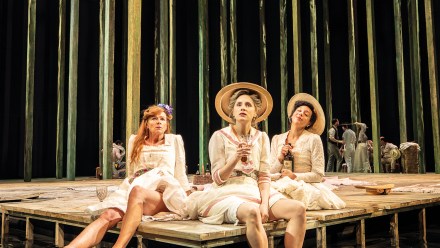
Othello directed by Tom Morris opens with a stately display of scarlet costumes and gilded doorways arranged against a backdrop of black nothingness. This is Venice at night with no hint of sea or sunshine. Crimson-robed senators gather to discuss Othello’s alleged abduction of Brabantio’s daughter. And here he comes, David Harewood as the Moor, wearing a gauche two-tone suit like a tasteless guest at a wedding. The scene is stiff, arid and over-ornate but the show opens up when the location shifts to Cyprus. Warmth and light fill the stage and the costumes improve. Othello and his men wear creamy white battle fatigues that look stylishly and subtly masculine.

Del Toro's Frankenstein offers nothing new

Guillermo del Toro’s Frankenstein stars Oscar Isaac (Baron Victor Frankenstein) and Jacob Elordi (‘the creature’) and retells the basics of Mary Shelley’s story – man creates monster, man rejects monster, monster goes off on one – with high-camp sumptuousness. Del Toro’s spin is to include a redemptive arc, plus he throws in some invented characters. ‘The creature’, meanwhile, is portrayed with great sympathy, as a soulful, mistreated innocent. In other words, there’s no Boris Karloff lumbering around in that blazer a size too small with a bolt through the neck. It opens with a Danish expedition-ship stuck in the Arctic ice and the crew rescuing an injured Victor. They are

My unofficial music teacher

In the early 1970s my father moved offices and I was plucked out of my cosy prep school in Surrey to land in the eccentric surroundings of Presentation College. My new school’s modern block was surrounded by decaying Edwardian villas occupied by Irish teaching brothers with impenetrable accents. There was a broken aeroplane on one of the lawns; I never found out how it got there. Talk about a culture shock. Already I was besotted with classical music; to say that the brothers didn’t share my enthusiasm is putting it mildly. There wasn’t a flicker of interest in eight years – something that puzzled me until I read Thomas Day’s