Arts Reviews

The good, bad and ugly in arts and exhbitions

Facts and fantasy

The Unforgettable Bob Monkhouse (ITV1) might be thought a slightly coat-trailing title, though not perhaps as much as its follow-up, The Unforgettable Jeremy Beadle. Still, I don’t suppose we’ll ever be treated to the unforgettable Jim Davidson. Or the all-too-forgettable Freddie Starr, or Whoever Remembers Bobby Davro? Monkhouse had this highly veneered gloss, and symbolised for a lot of people all that was wrong with commercial television. Smooth, unfazed, just condescending enough to the public to make your teeth feel furry. If you can fake insincerity, you can fake anything. Privately, he had a pretty miserable time, losing one son to cystic fibrosis, another — already estranged — to drugs.

Hackwatch

Tom Scott – who I’m pretty sure I saw taking part in BBC4’s spiffing quiz show Only Connect – has been waging a mini-guerilla war against mediocre journalism. He explains his mission here and this is the kind of sticker he’s taken to leaving in copies of spare newspapers he finds on the Tube… Plenty more here. You might need an entire sheet just for a single edition of some of our magnificent papers…

The new alternatives

William Cook goes to Skegness and watches Cannon & Ball attract an adoring audience It’s August and Edinburgh is full of fashionable young comedians, but here in Skegness the Festival Fringe seems a million miles away. With its amusement arcades and fish and chip shops, this unpretentious place feels forgotten by the metropolitan arts establishment. There are no TV producers on the windswept promenade, no theatre critics in the bingo halls. Yet Skegness boasts a theatrical heritage far older than the Edinburgh Festival — traditional seaside entertainment. And this summer it’s playing host to Britain’s most seasoned seaside entertainers, Cannon & Ball. Throughout the 1980s Cannon & Ball were one

It’s a knockout

Die Walküre Longborough Not having been to Longborough and its opera festival before, I was bowled over by it in all respects. The much-referred-to extended garage is an extremely comfortable theatre, with more than 400 seats, and with plenty of space in the foyer to make intervals a far more agreeable affair than they are in London’s two major opera houses. The setting is, of course, enchanting, the trimmings slightly playful, no hint of pretentiousness such as one finds in several other country-house operatic establishments, and no lengthy hectoring before the performance gets under way. However, none of that would count for anything if the performances weren’t well worth the

German challenge

The Prince of Homburg Donmar, until 4 September Danton’s Death Olivier, in rep until 14 October Welcome to London. This month we’re hosting the world’s very first, but probably not its last, Useless German Playwright Festival. Here’s a scribbler you may not have heard of. Heinrich von Kleist, born in 1777, angered his Prussian family by quitting the army and setting up as a dramatist. After an energetic start he decided he had better things to do with his life and killed himself. His final play, The Prince of Homburg, shows that he still had much to learn before his premature exit. It takes him an hour to tell us

My all-time Top Ten

Regular readers may have noticed an embarrassing lacuna in this column. Having urged you to come up with your top ten albums of all time, to which you responded in such numbers, and with such entertaining and illuminating results, the sadist who set you the task has so far failed to deliver a selection of his own. This isn’t a matter of cowardice or mere idleness on my part, I promise. For months now I have been cogitating on it, agonising about it, tearing up the list and starting all over again. But it’s been fun, too, listening to much-loved albums that had somehow been allowed to gather dust on

Looking back

Bolshoi Ballet Royal Opera House, until 8 August At the beginning of the second week of its new London season, the Bolshoi Ballet presented the classic Giselle, a ballet which, not unlike other 19th-century works, underwent myriad changes, cuts and choreographic adaptations. It was only after Mary Skeaping attempted to restore the original text in the 1970s that most ballet companies adopted what has today become a sort of standard text. Interestingly, this is not entirely the case with the 1987 Bolshoi production, in which historical originality does not play such a central role. Although the production follows strictly the scene order prescribed by the ballet’s original musical and choreographic

Impossible questions

‘I wish I knew,’ said the doctor in a rare moment of candour when asked, ‘What do you do with children who don’t want to take the tablets? ‘I wish I knew,’ said the doctor in a rare moment of candour when asked, ‘What do you do with children who don’t want to take the tablets?’ He was talking about Tanya, an HIV-positive teenager who was refusing to take the life-giving anti-viral drugs he had recommended. She’d been born with HIV, her mother had died of Aids when she was still a baby, and she’d been raised by an aunt in ignorance of why she was always falling ill with

‘A totally irresponsible art’

Nina Conti appears convinced that her puppets are real. Freddy Gray investigates Isn’t Nina Conti too good-looking to be a ventriloquist? One thinks of blokes in working-men’s clubs with frazzled hair, not Nina with her smiling face and big brown eyes. It’s hard not to look at her, which must be a professional disadvantage: isn’t the audience meant to watch the puppet? I want to put this technical question to Nina, but worry that it might sound creepy. Instead, feebly, I ask if she believes reports that ventriloquism is making a comeback. ‘I’m not sure I really buy into that,’ she says, with a kind and apologetic shrug. But the

Summer round-up | 31 July 2010

Cornwall is looking beautiful under summer sun and outdoor pursuits beckon, but St Ives provides the perfect alternative when the beach palls or rain threatens. Besides the Tate, there are a number of commercial galleries, and chief among them is Wills Lane, which offers a stimulating variety of fine and applied art. For the summer period I have selected a Critic’s Choice for the gallery (until 5 September); of 14 artists, some better-known than others: Maggi Hambling, David Inshaw and Colin Self rubbing shoulders with Tyrel Broadbent, Roland Collins and Nigel Ellis. Landscape is one theme, the sea another. Ceramic fish by Marcia Blakenham flee the marauding black-headed gulls evocatively

Great expectations

La Traviata Royal Opera House Jette Parker Young Artists Summer Performance Royal Opera House The Royal Opera ended its season with yet another revival of Richard Eyre’s production of La Traviata, and the Jette Parker Young Artists Summer Performance, the latter a most interesting affair, but without much of a critical presence, presumably because it was at 1 p.m. on a Saturday. The distinctive feature of the Traviata revival was that Angela Gheorghiu returned to sing the role of Violetta, in which she had her first great international success, and which she has not sung at Covent Garden since 1996. I attended the third performance (First Capital Connect had thwarted

Back to the future | 24 July 2010

Charles Moore on how to renew and maintain life in the deserted villages of rural Romania To understand this story, one must go back nearly 25 years. As Soviet Communism moved towards collapse in the late 1980s, people were in danger of forgetting Romania. Because of Romania’s relative independence from Moscow, the West played down the insane policies of its despot, Nikolai Ceausescu. The Spectator, I am glad to say, did not. We sent in journalists under cover, and started a scheme, paid for by kind readers, to send free copies of the magazine, much sought after by print-starved intellectuals. The world finally took notice of Ceausescu’s horrors when he

Queens of camp

Homosexuals are tired of being portrayed on television as sexually obsessed, hilariously narcissistic, outrageously dressed queens each carrying a boxed set of Abba CDs – ie, Clary, Norton, Carr and so on. They want a bit more realism, believing that this sort of stereotypical depiction is hardly better than the Black and White Minstrels, or Al Jolson. Well, maybe. But be careful what you wish for. Inaccurate it may well have been, but at least it was an agreeable stereotype which probably advanced the cause of homosexual equality. If we suddenly discover that gay people aren’t always the life and soul of every party, but can be as crushingly dull

Turn on, tune in, drop out

Don’t knock daytime TV, says Lloyd Evans. It may be mindless and banal, but it is entertainment in its purest form It’s happening right now. I just had a flick-through and it’s all going on. You wouldn’t believe it. A Labrador called Pongo has been squashed by a tractor and is having his broken paw fixed at the vet. A grandmother from Dartford is trying to raise funds for her daughter-in-law’s wedding by auctioning a trunkload of heirlooms. And Mandy and Oona (in the blue), are hoping to make a bigger profit at the car-boot sale than Vaughan and Sanjay (in the red). It’s gripping stuff, take my word for

Psychological approach

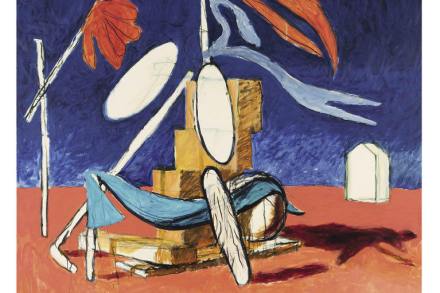
Alice Neel: Painted Truths Whitechapel Gallery, until 17 September Paula Rego: Oratorio Marlborough Fine Art, 6 Albemarle Street, W1, until 20 August The last time I wrote about Alice Neel (1900–84), on the occasion of an exhibition mounted six years ago by the commercial gallery Victoria Miro, a reader wrote in to correct my statement that Neel’s work had not been shown outside her native America. The point I was making was how relatively little known Neel was, particularly in England, though that situation has now changed. At Victoria Miro (until 30 July) a host of international artists pay tribute to Neel’s work, and at the Whitechapel there’s a major

Easy listening

The Prisoner of Second Avenue Vaudeville, until 25 September Lingua Franca Finborough, until 7 August Neil Simon has received more nominations from Oscar and Tony than any other dramatist in history, so his comedies ought to be playing constantly in London. But revivals of his plays are rarities. Something of the Simonian essence seems to fall off the plane mid-Atlantic. Perhaps it’s the awareness that we’ve seen his favourite terrain, bourgeois anguish, charted more vividly and tellingly by homegrown talents. Simon’s conception of human character is fundamentally soppy. More trickster than magician, he builds his drama by postulating secure, loving relationships and smothering them in frothy layers of petty bickering.

Cooking up a rom-com

The Rebound 15, Nationwide Here is my recipe for making your very own lame rom-com. It is a good recipe and a sound recipe but you will need to follow it to the letter — for example, never ever add fully rounded, believable characters — should you wish to make a film like The Rebound, as well as so many others. This recipe can serve an entire Odeon at one sitting and, astonishingly and depressingly, will probably even make money at the box office, even though the best accompaniments are boredom and ennui.  Ingredients: A woman; a man; a few secondary characters (don’t worry too much about these. Simply buy

Life experience

The Proms are back, hoorah, and along with them the nightly treat on Radio 3 of interval talks: those 20-minute sessions of directed chat, either through an interview or often just one person speaking about an idea, a memory, a transformative experience. It’s the perfect radio format: long enough to have some real content but not too long to permit the invasion of those distracting thoughts that swirl around like angry bluebottles, waiting for the right moment to settle and take over your mind. On TV such few precious minutes would be gone in a flish-flash of camera angles and tricksy music; on radio you can be taken right inside