Arts Reviews

The good, bad and ugly in arts and exhbitions

But is it any good?

Writing to his friend and fellow-author William Dean Howells in 1907 about the Prefaces to the New York edition of his novels, Henry James said, ‘They are, in general, a sort of plea for Criticism, for Discrimination, for Appreciation on other than infantile lines — as against the so almost universal Anglo-Saxon absence of these things; which tends so, in our general trade, it seems to me, to break the heart.’ Happily for him, he wasn’t at all interested in music, or specifically in opera, otherwise his heart might have broken a long time before it did. For there isn’t much writing about opera which even pretends to be criticism,

One day

‘History is not a dull subject,’ warned Caryl Phillips, the novelist, at the end of his 9/11 Letter. ‘It’s a vital, contested narrative, peopled with witnesses to events which touch both head and heart. It’s the most important school subject because not remembering is the beginning of madness.’ Perhaps he should have said ‘not remembering correctly’ in this week of commemoration of the events of ten years ago. Phillips’s letter was the most powerful of the five that were specially written for Radio 4’s Book of the Week (and produced by Julian May and Beaty Rubens). Most of them were fuelled by personal memories of being in the city on

Money for nothing

When future historians sift through the wreckage of Western Civilisation to try to find out where it all went wrong, I do hope they chance upon at least one episode of The World’s Strictest Parents (BBC3) and one of Deal or No Deal (Channel 4). The World’s Strictest Parents is another TV variant on the Lad’s Army/Wife Swap theme. Unruly, selfish, vile teenagers are sent from their grotesquely overindulging middle-class British homes to far-flungplaces, there to spend two weeks under the kind of old-fashioned parenting regimes where they still uphold traditions like family meals, respect, discipline and a strict moratorium on dope, booze and the wearing of nipple rings. They

Black gold: the key to Libya’s future

Tripoli The Roman theatre in Sabratha simmers in the afternoon sun, glowing a warm terracotta. It is a magnificent site as we head west from Tripoli to the Mellitah Oil and Gas Complex. Dating back to the irrepressibly commercial Phoenicians, who founded a trading post here sometime between the fourth and seventh centuries BC, Sabratha is essentially a Roman creation, built in the late second century AD at the outset of the Severan dynasty. Septimius Severus was Africa’s first Roman emperor and he liked to build big. The word imperial scarcely does justice to his finest creation, Leptis Magna, east of Tripoli towards the wreckage of Misratha. Enough pink and

Something old, something new

Very last chance to see the inaugural exhibition at the magnificently revamped Holburne Museum — a selection from the collections of Peter Blake, together with some of his own work. If, as Geoffrey Grigson suggested, the mind is an anthology, and the museum case or exhibition is a map of that mind, then what a remarkably diverse but ordered person Mr Blake must be. The new temporary exhibition gallery at the top of the Holburne’s new wing is filled with images of fantasy, dream and even nightmare, but everything is calmly laid out with great clarity and precision. The result is obsessional but intriguing. The museum reopened in May, its

Blackpool’s ups and downs

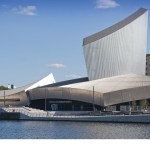
The town’s first visitors were daytripping mill workers; now it’s a place for hen and stag parties. William Cook charts its changing fortunes, as a photographic exhibition reveals Think of Blackpool and fine art probably isn’t the first thing that springs to mind, but Britain’s biggest, brashest seaside resort is the unlikely home to one of Britain’s loveliest little galleries. Hidden behind the grey seafront, a drunken stumble from the North Pier, the Grundy Art Gallery was founded in 1911 by two brothers — local philanthropists and art lovers — and this summer it celebrates its centenary with a photographic exhibition that spans the past 100 years. No other town

Don’t wait for One Day

The correct response to the film One Day is, apparently, to cry your eyes out. Me, I couldn’t squeeze a single tear; in fact the sentiment I could barely suppress throughout was rising irritation. If ever two characters needed a slap it’s the hero and heroine of One Day. Let me explain. This is a film based on David Nicholls’s best-selling novel — and I don’t think I’m giving too much away here given the number of spoiler reviews — about a boy and a girl who never quite get it together for years and years, almost until it’s too late. For most of 20 years, in fact, between 1988

Speech impediment

Anna Christie, an early Eugene O’Neill play, has brought Jude Law to the tiny Donmar Warehouse. Set in New York among migrant longshoremen, the script takes ages to get to the point. Mat Burke, a randy Oirish loon, wants to marry Anna, a winsome worldly blonde, but faces opposition from her narky, knife-wielding dad, Chris. But never mind the drama, listen to the accents. Jarring phonetics dominate the stage. David Hayman’s Chris spits out gnarled Scandinavian curses. ‘I svair to Gott, Anna, I don’t font hear it.’ Ruth Wilson’s Anna has a hard-to-place American accent which harbours many a stowaway syllable. And Law, playing de Oirishman, speaks a dialect that’s

Short and sweet | 3 September 2011

During August the only opera-going possibility used to be a festival, of a fairly grand kind, but in recent years the small, ‘alternative’ opera companies that are proliferating have sensibly taken either to continuing throughout the summer, as the big opera houses don’t, or to having their own festivals. During August the only opera-going possibility used to be a festival, of a fairly grand kind, but in recent years the small, ‘alternative’ opera companies that are proliferating have sensibly taken either to continuing throughout the summer, as the big opera houses don’t, or to having their own festivals. In London in the past couple of weeks there was Tête-à-Tête in

The odd couple | 3 September 2011

Years ago I did some charity gig with Will Self, a sort of Desert Island Books. He had chosen a Raymond Chandler, and I remarked on the similarities between Chandler and P.G. Wodehouse. Both were educated at Dulwich College, both were wonderfully stylish and stylised writers, both were masters of the dazzlingly witty, totally unexpected metaphor. Will Self favoured me with the de haut en bas curled lip familiar from television. There was no comparison, he said. Wodehouse wrote about a discredited imperialist age; Chandler by contrast tackled the gritty reality of life on the mean streets of LA — or words to that effect. He was wrong. Chandler’s world,

The bees’ knees

‘It makes you happy that something like that exists,’ says Devente, a young beekeeper from Hackney as he emerges from his protective suit in a halo of smoke, having just checked that all is well in the colony. ‘It makes you happy that something like that exists,’ says Devente, a young beekeeper from Hackney as he emerges from his protective suit in a halo of smoke, having just checked that all is well in the colony. You could almost hear the puffs of smoke. ‘Once you understand the bee,’ he says, ‘then your perspective changes from swatting to staying still.’ Devente has been keeping bees for a while now, with

Danger zone

If you ever experienced the adrenalin of a Quasar or Alien War birthday party as a child, part of you is going to love Our Days of Rage, a play by the winners of the Write to Shine competition, at the Old Vic Tunnels (until 15 September). ‘Security guards’ hustle us in, then lead us from cavern to cavern, past hanged prisoners and corpses in bathtubs. One moment we’re in Tripoli, guiltily leaving the scene as a dissident journalist is dragged away kicking and screaming. The next we’re in London, pinned between pro- and anti-Gaddafi protestors, riot police blocking our escape. This is brilliantly done: all the thrill of danger

Down and out in Edinburgh

Lloyd Evans mingles with sozzled Scots, benumbed punters and performers with nothing to lose at this year’s Fringe It’s for losers, Edinburgh. The world’s down-and-outs come here in droves every August. This year I was one of them. Having failed to secure my usual lodging, a spartan cell on the university campus, I had to book a backpackers’ refuge on the Royal Mile. It was better than a park bench. Just about. The website promised ‘fitted sheets’ and ‘lounge with real fire (gas/coal effect)’ as tokens of its commitment to luxury. I rented a towel (20p, no deposit), which turned out to be fairly clean on one side. The accommodation

Beyond belief | 27 August 2011

The subtitle of Treasures of Heaven is ‘saints, relics and devotion in medieval Europe’. The key words here are medieval and Europe. The subtitle of Treasures of Heaven is ‘saints, relics and devotion in medieval Europe’. The key words here are medieval and Europe. There’s not much from England because we suffered the autocratic cleansing of the Reformation in the 16th century, and much of our native tradition of what was then dubbed idolatry was destroyed or swept away. And because our Church was reformed in this way, those of a C of E persuasion tend to be suspicious of relics and devotional aids. Our unadorned worship does not encourage

View finder

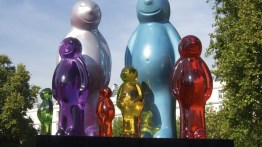
Bold Tendencies is a seasonal sculpture exhibition, events venue and bar — in overall effect, a sort of hipster adventure playground — concealed in the disused upper levels of the multistorey car park opposite Peckham Rye railway station. Bold Tendencies is a seasonal sculpture exhibition, events venue and bar — in overall effect, a sort of hipster adventure playground — concealed in the disused upper levels of the multistorey car park opposite Peckham Rye railway station. It recently opened for its fifth year, and it has become one of the regular joys and oddities of the metropolitan summer. The tone is set this time with a slogan in fluorescent lights

Edge of darkness

I’ve got this idea for a book, when I get the time, called Everything You Know Is Wrong. Its job will be to attack all the idiot received ideas of our age — what my father-in-law calls ‘notions’. High on the list of candidates, most definitely, is the commonly held belief (especially among stand-up comics) that Bill Hicks was the greatest comedian who ever lived. I’ve got this idea for a book, when I get the time, called Everything You Know Is Wrong. Its job will be to attack all the idiot received ideas of our age — what my father-in-law calls ‘notions’. High on the list of candidates, most

Personal best

Two programmes, two very different worlds, and all in the space of a Sunday afternoon. Imogen Stubbs gave us a Radio 4 moment when she used the network to campaign against those personal statement forms which young students have to write as part of their applications to colleges and universities. The instruction booklet (or guidance for parents) obtainable from Ucas (the centralised organisation otherwise known as Universities and Colleges Admissions Service) suggests that this is an opportunity for the prospective candidate ‘to demonstrate their enthusiasm and commitment and, above all, ensure that they stand out from the crowd’. Orwell would have been horrified by the use of that meaningless cliché.

Tale of the unexpected | 27 August 2011

When I know I’m going to see a film, I like to prepare. I’ll watch the trailer. Then maybe the second trailer. Sometimes a featurette. When I know I’m going to see a film, I like to prepare. I’ll watch the trailer. Then maybe the second trailer. Sometimes a featurette. I’ll read reviews, the director’s statement of intent, interviews with the cast. It’s a terrible habit, really, arming myself with this glut of information; it is difficult to avoid spoilers in among the noise and it makes me want to talk about it, often while it’s on. ‘Oh, this is the bit where that actress messed up her lines but