Arts Reviews

The good, bad and ugly in arts and exhbitions

I don’t get it

The basic problem with I Don’t Know How She Does It is that we are meant to sympathise with a rich woman who has an absolutely amazing life and great hair and is nannied to the hilt and I Don’t Know How To Do That. How do you do that? Can you take classes? If so, where? Actually, it’s a shame, and disappointing, and I sort of can’t help taking it personally. I had my son in 1992, when I was working on a national newspaper — stick with me; this anecdote almost has a point — and when I told the managing editor I would be requiring maternity leave,

Losing the plot | 24 September 2011

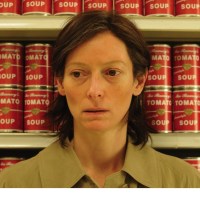
A world première at the Almeida. My City written and directed by Stephen Poliakoff. Is it any good? Well, let’s see. Plot, first. It’s not that Poliakoff can’t write a plot; he can’t even think one up. Instead he sets himself a high-minded riddle and examines its possibilities. Take an archetype, ‘the kid-fearful-of-the-dark’, turn it inside-out and you get ‘the adult-fearful-of-the-light’. That’ll do for starters. Bung in a few extra brushstrokes and you’re off. An insomniac teacher (Tracey Ullman with too much grey hair) bumps into two former pupils and tells them about her odd little secret. Every night she trudges London’s streets encountering weirdos and listening to their offbeat

Mammoth enterprises

Next month it will be five years since the death of my former boss, Peter Hepple, and I still miss the man who saved my career and very possibly my sanity. Peter was for 20 years, from 1972–92, the editor of the Stage newspaper, often affectionately known as the actors’ Bible. But he contributed to it for more than half a century. His first article appeared in 1950, a review of the long-forgotten male impersonator Ella Shields who was topping the bill at the Queen’s Theatre, Poplar. His last, a piece on stage psychics, appeared posthumously in the week of his death. Peter would review almost anything that moved, from

Musical chairs

It’s such a relief to come back from a trip to America, to switch on the first available radio and fall into Francine Stock talking about Nicholas Ray on The Film Programme. Americans have lost the radio habit. You won’t find sets in any, let alone every, room in the house. No one I know there listens to radio except in the car, where all you can find are music stations devoted to just one type of music, country, Cajun or classical, or the terrifying fire-and-brimstone lectures of the evangelist broadcasters. In the run-up to the presidential election, they’ll be joined by a flurry of far-right ear-bashers, dedicated to rustling

How to behave

‘I don’t suppose the war will leave any of us alone by the time it’s done,’ prophesied one of the characters in the new series of Downton Abbey. Oh, dear, I’m sure she’s right. So I wonder which will be the character who comes back with shellshock, which one with no legs, and which one a hero. For the last, I’m guessing Matthew Crawley, the worthy but slightly dull heir to the worthy but slightly dull Earldom of Grantham. That would be nice: then, after many travails and obstacles, cold, aloof (but really quite hot) Lady Mary will get to realise in the final episode that, yes, of course, he

Battle lines | 17 September 2011

The introductory room to Women War Artists at the Imperial War Museum confronts the visitor with a large canvas of a women’s canteen in 1918 by the little-known Flora Lion. It’s an honest painting, workmanlike but dull. Hanging to its left is Laura Knight’s famous ‘Ruby Loftus Screwing a Breech-ring’ (1943), and in between is a monitor playing a wonderful film clip of Dame Laura and Ruby going to see the painting at the Royal Academy. Ruby, overcome by emotion, kisses Dame Laura; Dame Laura bobs about, smoking furiously. Of course, Laura Knight on film and in paint grabs the attention; Flora Lion is inevitably sidelined. And that sets the

Led Zep’s favourite folkie

Without Roy Harper’s baroque, mellifluous, melancholy folk there would have been no ‘Stairway to Heaven’. James Delingpole meets a neglected genius In 1970, shortly before the release of Led Zeppelin III, guitarist Jimmy Page invited his folk-singing chum Roy Harper up to his Oxford Street offices to have a look at the new album. ‘What do you think?’ asked Page. ‘It’s nice,’ replied Harper, toying with the amusing picture wheel built into the sleeve. ‘Look at it!’ said Page. ‘Yes, it’s nice,’ said Harper. ‘No. Look at it!’ said Page, growing exasperated. And then Harper noticed the title of track five, side two. ‘Oh. Oh! Thanks! I don’t know what

Rebellious Prommers

The Promenaders have excelled themselves this year. I thought initially they were slightly more docile and slightly less dotty than usual, but no. Not only at the Last Night, but also at the Israel Philharmonic Prom on 1 September, they found their voice — so strongly that the BBC actually suspended the broadcast of the latter. One Prommer told me the atmosphere that night was verging on the violent. The members of the Israel Philharmonic must have wondered what had hit them. With this concert they were concluding a lengthy worldwide tour, which had passed without a murmur. Suddenly, in the Albert Hall, every piece they played was interrupted with

Marvel of compression

This adaptation of John le Carré’s 1974 novel is so beautifully executed and so visually absorbing and so atmospherically hypnotic that I wonder this: would it have been awfully greedy to have hoped to have wholly understood it, too? I thought the plotting might be an issue — what do I know about spying? Me, who is nervous travelling beyond Brent Cross? Me, who has never broken down in Budapest, spouting all I know about Moscow? — so I took my father to the screening, who is keen on le Carré, and he was able to debrief me. Although, you know what? It kind of didn’t matter, and I kind

North star

Das Rheingold used to have the reputation of being a difficult opera, in that it not only lasts for two and a half hours without a break, but also involves a considerable amount of discussion, immense quantities of plot, and lacks stretches of lyricism, with a few obvious exceptions. It is one of the operas that have shot up in popularity and esteem thanks to surtitles. Now that it is possible to follow every movement of the drama, audiences find it to be an enthralling, extremely anti-romantic study of some fundamental human urges, and a great deal more complex than the usual ‘love versus power’ formula that it used to

Novel experiment

Having argued last week that it takes time (maybe a couple of generations) before fiction can be appropriately applied to traumatic historical events along comes a Radio 4 season celebrating the work of the Russian writer and ‘heroic war journalist’ Vasily Grossman, who wasted no time in translating his bitter experiences into a series of novels. Grossman witnessed the struggle for Stalingrad in the winter of 1942–3 as the war correspondent of the Red Star newspaper. He followed the Nazis’ retreat from Russian soil, and was one of the first reporters to enter and then write about the extermination camps at Treblinka and Auschwitz. But as Stalin’s iron grip on

Out of sight

There are some things television can do which no other medium can manage. Take one of those little-noticed programmes, Hidden Paintings on BBC4. It’s presented by Laurence Llewelyn-Bowen, the chap with the King Charles spaniel hair, who used to do Changing Rooms, in which people found parts of their house redecorated while they were away, causing them to fly into a rage. The theme is fine works of art which for various reasons aren’t on public view. This week LLB considered David Inshaw, still with us, whose two best-known paintings are both hidden. One, ‘Our Days Were a Joy’, shows an enigmatic young woman in a graveyard. The technique is

Conversation piece | 17 September 2011

Dr Johnson would be thrilled. His name up there in lights in the West End. He craved theatrical fame, and was cruelly disappointed that his only play, an exotic tragedy set in Constantinople, had just nine performances in 1749. But here at the Arts Theatre on Great Newport Street (London WC2, until 24 September) he is brought to vivid dramatic life by Ian Redford. In A Dish of Tea with Dr Johnson, the rough-mannered and ill-figured dictionary-maker also finds himself on stage with a glamorous woman, Trudie Styler, who as Hester Thrale even pecks his cheek. Did they ever kiss? Who knows? Their friendship has puzzled scholars for 200 years.

Killing comedy

There is a ban on comedy flyering in Leicester Square. Westminster Council has decided that flyers are litter and that the flyerers — usually anxious baby comedians – ‘harass’ the tourists. This is ridiculous. Most comedians would scream at their own reflection in a pint. Even so, if the council finds any flyers it will remove the venue’s licence. As if comedians did not have enough woes — manic depression, calm depression, depression that is not really depression but suppressed rage, poor rates of pay, joke theft, Frankie Boyle — their solitary reason for living, which is attention, is now at threat. And this from a council that lets Hollywood

Out of this world | 10 September 2011

Lloyd Evans meets Tara FitzGerald and is struck by her uncanny beauty and her desire to hear what he thinks Tara FitzGerald’s beauty is fabulous. Literally, there’s something unworldly about the surfaces and contours of her face. It’s as if the codes of her biology had been transmitted to earth from a higher realm, from alien beings. The wide cheekbones are angular yet softly curvaceous. Her eyes have a luminous purity, a revelatory greenness. Her dark hair glows, and her immaculate skin is invitation-card white. She speaks in a low, smokily textured voice that occasionally surges into a throaty giggle. I meet her at the Tricycle theatre in Kilburn where

In the face of terror, Britain has surrendered to men in yellow fluorescent jerkins

Had your fill of 9/11 porn yet? I guarantee if you turn on the TV at this moment on some channel there’ll be a plane crashing into a building and a nutter from the Midwest telling you it was organised by the Jews via the offices of the Zionist Occupation Government, the towers packed with thermite, the Pentagon hit not by an aircraft but by a missile, Rumsfeld an alien lizard creature, Charlie Sheen or some other madman asking why They keep lying to us. Or one of the more upmarket programmes — same shot of the planes crashing in and people jumping out of the windows, but done in

Divine punishment

Once or twice a season Shakespeare gets booted out of the Globe. In his place a modern author is given a chance to shine. The Scottish writer Chris Hannan’s new play, The God of Soho, opens with a frolicsome nod to classicism. We are in heaven where two demotic deities, Mr and Mrs God, engage in caustic marital banter. Mrs God wears a colostomy bag and her affliction triggers many a harrumphing sound of flatulence from an on-stage tuba. This is hilarious, of course, and even more hilarious if you happen to be six years old. Hannan’s carping immortals turn out to be very hard to engage with. Perhaps he