Arts Reviews

The good, bad and ugly in arts and exhbitions

Bad habits | 31 March 2012

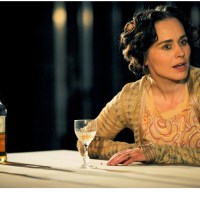
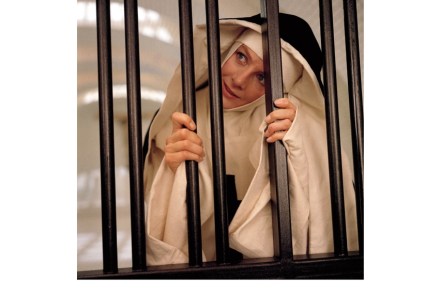
When the late Ken Russell published his autobiography in 1989, he called it A British Picture. That title could just as easily describe The Devils, his 1971 adaptation of Aldous Huxley’s The Devils of Loudun, relating the true story of supposed demonic possession among Ursuline nuns in north-west France in 1634. Here is a world-class film by a British director, with British stars and crew,  sets by Derek Jarman and a score by Peter Maxwell Davies. So why is it only now getting a DVD release? Combining sexual abandon, outright blasphemy and scenes of convent life unlikely to be mistaken for The Sound of Music, The Devils fought a notorious
Losing the plot | 24 March 2012

You know those sad, confused people you sometimes see, standing on street corners and shouting dementedly at passing cars. Well, the other week, that madman was me. I was in Sheffield to cover the Crucible’s Michael Frayn season, and had risen early to write my review. And then my usually reliable laptop failed to come up with an email connection. I kept trying, and failing, to get the copy across, then realised that unless I got a shift on I would miss my train. So I ordered a taxi and checked out. Only the taxi didn’t come and catching the train looked less and less likely. And it was then

Seeing the light

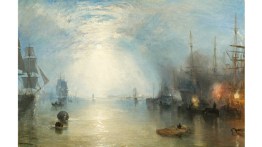
One of the more considerable pleasures of exhibition-viewing outside London recently was the Claude show at the Ashmolean. London exhibitions are becoming mobbed by crowds, and there is little enjoyment in shoving or being shoved in the supposed pursuit of artistic enlightenment, and absolutely no chance to contemplate individual pictures in the hurly-burly. As the devout will queue up to kiss the wizened toe of a saint, now the football fans of art will jostle to snatch the merest passing glimpse of a Leonardo or a Freud. The being there is all: the experience has very little to do with serious looking. Afterwards, you join the ranks of the blessed

Poirot power

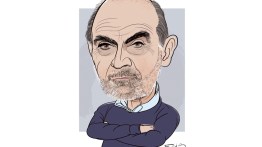
Will Gore talks to David Suchet about his forthcoming West End role and his debt to the Belgian detective The first thing I notice about David Suchet is his facial hair. It isn’t a stick-on Poirot tash, unfortunately, but a grey beard that he has grown for his latest role, James Tyrone, in the West End revival of Eugene O’Neill’s Long Day’s Journey into Night. The second thing is his smile. He greets me with a broad grin, and beams amiably throughout our time together. He has rehearsals to be getting on with, but is happy to let our scheduled 30 minutes stretch to an hour. Suchet is the most

Rhythms of the Caribbean

There should be a sign on the door. ‘Plotless play in progress.’ Moon on a Rainbow Shawl, by Errol John, won first prize in a 1957 scriptwriting competition organised by Kenneth Tynan and judged by Alec Guinness, Peter Ustinov, Peter Hall and others. The West End promoters thought the script uncommercial and never gave it a decent shot at success. They had a point. Errol John, an apprentice writer, hadn’t learnt how to shape his tale for the theatre and give it that insistent rat-a-tat-tat rhythm of twists and surprises that audiences expect. His languid drama is set in a Trinidad ghetto where a crew of washouts and wanna-bes bicker

Fatal flaw | 24 March 2012

Judith Weir’s Miss Fortune, whose UK première was at the Royal Opera last week, has received the severest critical panning I can recall for any new opera. It is no masterpiece, but I wonder why it has been rounded on when so many new — not to mention old — pieces with no more going for them, so far as I can tell, get greeted warmly or at least tepidly. Admittedly, it takes an ambitious subject — Fate — and treats it in a largely unpretentious way. But Verdi’s La Forza del Destino takes the same subject and treats it in an utterly preposterous way, and has some dreadful passages

JAM today

On the page a minute’s worth of words doesn’t look like much. A hundred and forty-four or thereabouts. But try spouting forth for 60 seconds on any given subject without hesitation, deviation or repetition and those 144 words become an awful lot to find, especially when they have to be summoned up at speed from some inner reservoir of thoughts and phrases. Maybe that’s the reason why Just a Minute is still such a fixture on the Radio 4 schedule. The panellists make it sound so easy that we’re always puzzled when a new, unpractised contestant struggles to survive for longer than 20 seconds. We’re puzzled but we also relish

Of God and men

Two documentaries this week made us ponder what our country, with its 1 per cent of the world’s population, exists for. How God Made the English (BBC2, Saturday) had the historian Diarmaid MacCulloch musing about the way we have believed for a thousand years that we were God’s chosen people, having taken that baton from the Israelites — thanks to the Venerable Bede. I am not sure that he made the case. Most nations have believed at one time or another that God was their principal cheerleader. When the Israelites were in the smiting business, anyone they successfully smote, such as the poor wretches who lived in Jericho, were simply

Healing art

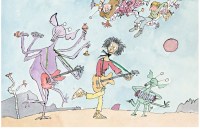
‘It’s like acting,’ says the illustrator Quentin Blake about his latest project. ‘You imagine yourself there, in that situation. You imagine you are that person.’ The first-ever children’s laureate has been taking his acute eye for gesture, for character, into hospitals, as part of the Nightingale Project. His funny, colourful, bursting-with-life paintings are now decorating the walls of a mental health ward at Northwick Park, the Vincent Square Clinic and a maternity hospital in France, and are being celebrated in an exhibition at the Foundling Museum (40 Brunswick Square, London WC1). They reflect so accurately the experience of illness, parenting, age and infirmity that Blake has been asked, ‘How do

Shape shifters

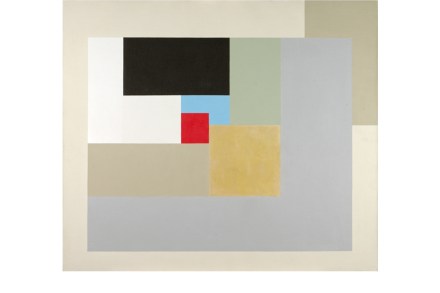
Someone asked me recently whether I actually liked Mondrian’s paintings. The implication being that his form of geometrical abstraction was too pure — or too antiseptic — to contain the necessary germ of human warmth required to engage the emotions; and that though one could admire his work intellectually, it was difficult to be passionate about it. There’s plenty of passion in Mondrian, but it is controlled fire, banked down to burn with a white-hot flame. Perhaps it should be termed the Higher Passion, as it does not immediately affect the ordinary emotions, but inspires instead to the spiritual ecstasy of the saint. Looking at a handful of his pictures

Knock-off Chekhov

Calling all thespians. Roll up, you theatre folk. The Hampstead’s new show is a dramatic love-in you can’t afford to miss. Farewell to the Theatre introduces us to Harley Granville-Barker, one of the greatest playwrights of the early 20th century, as he enjoys a sabbatical in Massachusetts in 1916. Everything is languid, atmospheric and high-minded. Granville-Barker is busy giving lectures and watching American productions of Shakespeare while one of his chums, a literature professor, has had a bust-up with another academic. It’s a pity this off-stage conflict doesn’t test or expose Granville-Barker at all. He just lolls around the garden of a country house making cold, lofty speeches about the

Succulent pleasures

It was about time a dance-maker exacted revenge on dance academics. In Alexander Ekman’s 2010 Cacti, a voiceover explains the alleged semantics of the choreography by resorting to theoretical clichés and the known modes of that mental self-pleasuring that many academics indulge in. As the vacuously pompous words bear little or no relation to the quirky actions, the contrast between the taped voice and the dancing becomes explosively comic. Later on, recorded voices are also used to let viewers peep into the minds of two dancers performing a duet, humorously highlighting the kind of artistically detached thinking performers frequently engage in while dancing. As stated by the voiceover in the

Redeeming creatures

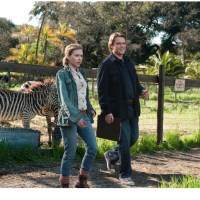
We Bought a Zoo — in which a family buys a zoo — does what it says on the tin and if you like this sort of film you will like this and if you don’t you won’t, and you have to ask yourself why you buy The Spectator every week? It’s for analysis like this which, I think you will find, is unavailable elsewhere. But do I like this sort of film? Actually, I rather do. There are no surprises. It is comfortingly straight up and down. It is heartwarming, to the extent you can buy it. There are animals: lions, tigers, a grizzly bear, and a funny little

Listen up!

Life-changing moments are not always as dramatic as Saint Paul’s Damascene experience. Often they emerge from conversations that begin with mundane exchanges about last night’s Masterchef, the film you saw last week, the last time there was a drought. Then gradually the talk moves on to other, deeper matters. Something is said, some connection is made which opens up a shaft of light on a problem, a question, a source of confusion that’s been troubling you for years. You might not realise for a while that the conversation marks a change, but looking back on what was said leads you to recognise how from that moment your life has taken

Downton on sea

If Titanic hadn’t actually sunk on its maiden voyage not even Jeffrey Archer would have dared invent such a hammily extravagant plot. The passenger list — Benjamin Guggenheim, John Jacob Astor IV (Macy’s owner), Isidor Straus, the silent film actress Dorothy Gibson, inventor of the New Journalism W.T. Stead, and sundry English toffs — was just too implausibly rich and diverse. The sudden social levelling induced by disaster too neat and melodramatic. The background details — the band playing on, the lifeboat shortage, the men’s Birkenhead drill stoicism as their female loved ones and children clambered into the lifeboats (or not) — were too upsetting, maddening and moving. And the

Surviving the Ides of March…

I’m indebted to Patrick Kidd for unearthing this terrific advertisement for Scotsh Whisky, published in the Western Morning News in 1927. These are indeed treacherous times so it is pleasing to be reminded that March winds hold no peril for those who are fortified with Scotch Whisky. As Patrick says, what a shame the liquor industry can no longer offer sage advice like Scotch Whisky can be taken at the strength and in the volume best suited to the individual constitution, the time and the climate. Good to be reassured, too, that whisky is The safest & best drink in any climate. That said, it seems a stretch to suggest

Road to Mecca

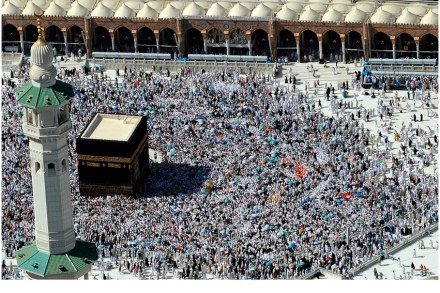
The British Museum’s latest exhibition Hajj: journey to the heart of Islam (until 15 April) sets out to explain the mysteries of this annual pilgrimage. Last year, a total of 2,927,719 pilgrims went to Mecca, Saudi Arabia, something that all Muslims should try to do at least once in their lifetime. Such huge numbers are hard to visualise, so a film, projected on to a wall, is a great help: one sees, I suppose, hundreds of thousands of pilgrims arriving in the city, and walking round Islam’s most sacred site, the Ka’ba, confined as they are to the courtyard of the Grand Mosque and surrounding areas. And because of its

Spring round-up | 10 March 2012

The fashion for museum-quality exhibitions in commercial galleries continues apace with two notable shows in Mayfair: Cy Twombly at Eykyn Maclean, and Julio González at Ordovas. Both galleries specialise in this kind of display, which must be more to do with impressing potential clients than with generating income, given that both are loan shows. I hope there’s also an altruistic motive here, however slight: to provide another forum for the public to view high-quality art they might not see elsewhere. Certainly these venues offer a new and welcome resource to the London gallery-goer, and should be better known. Chistopher Eykyn and Nicholas Maclean, who both have many years of experience