Arts Reviews

The good, bad and ugly in arts and exhbitions

Comic clockwork

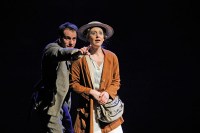
Pinero’s comedy The Magistrate is a marvellous confection of shameful secrets and multiplying concealments. Agatha, a beautiful widow of 36, has trimmed five years from her age in order to bag her second husband, Aeneas Posket, an agreeably pompous magistrate. Her subterfuge is imperilled by her 19-year-old son who must pretend to be 14 in order to make the maths work. To please his mother, the young buck behaves like a child at home. But elsewhere he pleases himself. He keeps a private room at the racy Hotel des Princes in town. One evening, he persuades his weakling stepfather to accompany him for a night of drunken antics. The police

Caravan killers

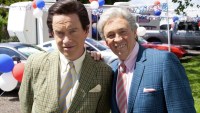
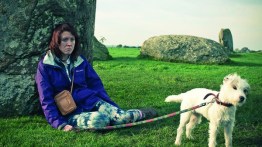
Here’s a fun diversion for all the family: how many ‘high-concept’ film ideas can you think of in a single minute? These are the films with premises that can be summed up — and pitched to expectant, impatient Hollywood producers — in only a few words. ‘Jaws in Space’, say, or ‘Arnie versus Hitler’. Get started now, and you could soon have the studios drooling a path to your door, eager to turn your aphorisms into easily marketable products. Red carpets and golden paycheques await. I mention this because, at first glance, it seems as if Ben Wheatley’s Sightseers is the result of a similar game. Its plot concerns a

Decline and fall

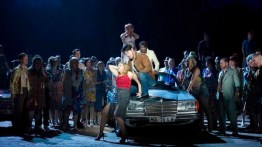
Some operas become, thanks partly to the frequency with which they are produced, victims of their own popularity. The most obvious sufferer is Carmen, which is a no-winner for singers and directors alike. As soon as the curtain rises and you see lemon trees and swaying hips, your heart sinks and you spend the interval agreeing with everyone that it’s just another tired old cliché; while if the scene is a mortuary or a garage you complain — and fairly — that it’s wholly inappropriate for the drama and the music that gives it substance. Last time it was produced at ENO, in 2007, it failed on all scores and

The Ladies’ Man

The ladies that he spoke to, soft and sure, Believed in dresses longing to be made Of no material but that very shade Of fabric he laid out. So his demure Debs’ fingers would dip gracefully to azure Yards of silk, and his housewives’ eyes, displayed A deep vermillion with a silver braid, Would find themselves seduced by its allure. On flipping round the CLOSED sign for the day, Before easing his scissors on their hook, The pleasant-suited draper paused a while At his tall mirror, practising his smile, Trying to figure quite how he might look Now all his many ladies were away.

Lonely Lakelander

Five years ago I had never heard of Percy Kelly (1918–93). I knew the work of some Cumbria artists, and much admired the dark and moody landscapes of Sheila Fell (1931–79), for instance, but Percy Kelly had not then registered on my radar. He was already highly regarded in the Lake District, but it was not until after his death that his work was really exhibited and promoted. He was one of those artists who believe in their own value, and want others to share their high opinion, but are not prepared to sell their work to achieve this. Time and again Kelly was offered exhibitions and sabotaged them, while

Keeping the faith

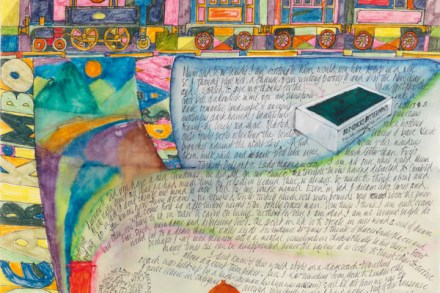
In 1929 the founder of Italian Futurism, Filippo Tommaso Marinetti, reported from Milan that, after a wartime setback, the movement was ‘in full working order’ under the leadership of ‘the very young and very ingenious Bruno Munari’. Bruno Munari (1907–1998) was 22 at the time. He had arrived in Milan two years earlier as a refugee from his family hotel business in the Veneto and embraced with enthusiasm Giacomo Balla’s suggestion in The Futurist Universe that ‘useful and pleasing’ consumer products in shop windows were ‘a much more rewarding sight than the grimy little pictures nailed on the walls of the passéist painter’s studio’. Although he was only active in

Dressed to impress

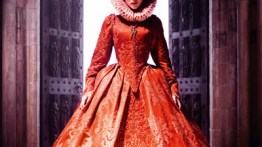
Does the costume make the man or the man the costume? Well, a little bit of both if the Hollywood Costume exhibition at the V&A is to be believed. Five years in the making, this collection of more than 100 of the most iconic outfits in movie history, from Scarlett O’Hara’s green ‘curtain’ gown to Darth Vader’s suit, is a bold undertaking. The very nature of motion pictures means that there is something a little ghoulish about seeing static ensembles, with the clothes divorced from their character and digital images of famous faces floating above them. But movie-goers have an insatiable appetite for anything that gets them closer to their

The effects of rain

Rain keeps us indoors, so we live by constraint and denial. No walk on the beach, no sea-swimming, no bicycle ride, no watching the peep-and-vanish of lizards. Instead, the clock ticks and one page of the book turns to another. Our fingertips now and again touch as if to suggest the inside and outside of love are the same.

Short changed

Was that it? Was that the sum total of 90 years of radio? Radio Reunited, the three-minute ‘celebration’ of the first BBC wireless broadcast in November 1922, was a very odd affair. Billed as a revolutionary simulcast to a ‘potential’ 120 million listeners round the world, playing out on all the BBC’s radio stations at the same time, it was so short, so compressed, you couldn’t take in the many layers of sound at once, or decipher what the different soundbites could possibly be, now, then, or from the future. After about four or five listens, the babble of voices, Big Ben, Morse Code, birdsong and beeping did begin to

Top of their game

God, I’m jealous of Michael Gove. Not for being a cabinet minister in the same coalition as Nick Clegg and Vince Cable, obviously, but for being outed as a queer in the new series of Harry & Paul (BBC2, Sunday). Now that’s what I call fame. Harry & Paul has had mixed reviews. Some of the sketches — the ‘I’m a cop’ one; the US car salesmen — simply aren’t funny. But so what? Even at its best The Fast Show, arguably the funniest-ever broken-sketch comedy series, contained some sketches that weren’t funny. It goes with the territory. Unfunny sketches are the equivalent of the ‘darlings’ that William Faulkner advised

Warring outcasts

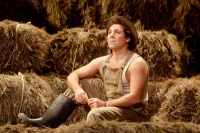
Are we barmy or what? Our mawkish obsession with the first world war demonstrates that we’re in the grip of a mass delusion: institutional sentimentality. The latest symptom of our death-mania is Nick Dear’s engaging play about the pastoral poet Edward Thomas, who was killed in action in 1917. Thomas began writing verse aged 36 at the suggestion of his American chum Robert Frost. We first meet the pair in a West Country croft in 1914. Frost is a smug, wily and sententious trustafarian who likes the idea of tilling the earth but stops short of actually tilling it himself. Thomas, a suicidal depressive, is incapable of showing warmth to

Change of heart | 22 November 2012

I think I have developed a crush on Donizetti’s L’elisir d’amore, which is strange, considering that it is so evidently adorable a work that most opera-goers fall for it straight away. I have never been averse to it, in the way that I am to quite a lot of Donizetti’s work, but in the light of the last two performances I’ve seen, within a few weeks, it has risen in my estimation to the level of being a masterpiece. The first was the Met’s broadcast, delightful in all respects, but with an interestingly unusual balance of sympathy towards the characters. Now, at the Royal Opera, Laurence Pelly’s production is revived

Faking it | 22 November 2012

The star of Gambit, it seems, is the Savoy. And why not? Nobody else seems to want to lay claim to this movie, a refashioning of the 1966 art con caper that starred Michael Caine. Not even Colin Firth, who spends a fair amount of time in the new film unhappily legging it, trouserless, up and down the hotel’s refurbished corridors. If you want to make an artistic copy, it had better be really good or you might as well not try, is the inadvertent message of this film. Scriptwriters the Coen brothers have taken the basic elements of the vintage Caine vehicle, which also had Shirley Maclaine, and made

The Dagenham Dustbin

For those of us who find passion in national iconography, this is a melancholy historical moment. It’s a very bad time for British manufacturing and an even worse one for British symbols. The Chinese-owned maker of the London taxi (which Charles Eames described as one of the greatest designs of all time) is going bust. Soon, all London cabs will be efficient but characterless Mercedes-Benzes, Peugeots or Nissans. Penguin Books, the most influential and well-meaning Modernist experiment of them all, more useful than its contemporary, the BBC, more international than London Transport, has been acquired by a grim German multinational. And Britain, spiritual home of the commercial jet, long ago

Israel’s Tragedy: Even If She Wins She Loses – Spectator Blogs

Next time someone bores on about the so-called decline of the British literary novel you might consider pointing out to your dinner-party companion that this is not such a bad thing. It suggests, if the thesis is true, that there aren’t too many problems in this realm that are still worth exploring, far less solving. Consider, by contrast, the twin and warring agonies of Israel and Palestine. Is there a better, bigger, subject for any novelist working today than this? I suspect not which is one reason why the likes of Amos Oz and David Grossman (and, doubtless, others too) are vital in every sense of the word. These dual

Mark Rylance the star attraction

There was some TV stardust at Stephen Fry and Mark Rylance’s all male production of Twelfth Night at the Apollo on Friday night. Gary Lineker and his wife Danielle were part of an ecstatic audience that gave a standing ovation to the players in this wildly successful show, which has recently transferred from the Globe to the West End. For those of you who are surprised to find that the perma-tanned resident of the Match of the Day sofa and his good lady wife take in Shakespeare of an evening, I hear that the Linekers count themselves as massive Mark Rylance fans after seeing him star as Jonny ‘Rooster’ Byron in

Everything goes

When I first began rehearsing a musical, I discovered to my genuine surprise that I was breaking an unwritten rule…that directors of serious ‘legitimate’ theatre should not dirty their hands by contact with such a lower form of entertainment! Since that time, it’s become almost impossible to name a leading play director who has not been successful and influential with musicals. It’s just possible that, back in 1986, our Royal Shakespeare Company show Les Misérables, which survived a universal critical drubbing in this country, was a vital step forward in proving that a musical could actually be about something — poverty, injustice, revolution, religious fundamentalism, that sort of thing. But

Unexpected structures

There are only eight single paintings in the current show of early work by Gillian Ayres (born 1930) — eight paintings and the four panels of a mural created for the dining room of Hampstead High School for Girls. The mural is over seven feet high and 27 feet wide, and its scale and achievement are remarkable for a young painter. (Ayres was 27 when she painted it.) But it is less original than the paintings it prepared the way for, and which now hang in the Foreshore Gallery of the Jerwood Foundation’s splendid new space in Hastings. The mural has an undeniably decorative impulse and looks very much of

Weaving magic

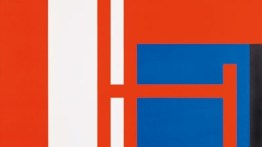
Tapestry, papal and princely, never quite went away. Today it satisfies a need for conspicuous displays of skill of the kind celebrated in the V&A’s recent show Power of Making. The surprise hit of last year’s Venice Biennale was Penelope’s Labour: Weaving Words and Images, an exhibition of weavings and tapestries old and new, while the reception of Grayson Perry’s six narrative hangings, ‘The Vanity of Small Differences’, confirms our current fascination with crafted art. Miraculously, true tapestry weaving survives in these islands (see William Crozier’s 2010 ‘Untitled rug’, above), and this year the Scottish Dovecot Studios celebrates its centenary with a touring exhibition (currently at Compton Verney in Warwickshire