Arts Reviews

The good, bad and ugly in arts and exhbitions

Northern brag

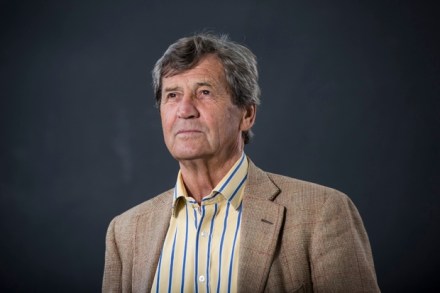
The last thing we need right now, in these divisive times, is a series that spends all its time crowing about how special the North is, that continually insists it’s the fount of English art, faith and civilisation and also the region where our notions of justice and equality have been forged. The Matter of the North, Melvyn Bragg’s new ten-part series for Radio 4 (Monday to Friday mornings), is not simply a history of the region that spreads north from the Humber river and as far as Hadrian’s Wall, encompassing the Pennines (‘the backbone of England’), Lakeland (‘the crucible of the idea of the transforming power of nature’), Manchester

The Allen way

Woody Allen has made a film nearly every year in the four decades since the release of the award-winning Annie Hall. Every one is hailed as a potential return to form, and of course some definitely are. Blue Jasmine, say. Possibly Midnight in Paris. How do the late-era Allens compare with the earlier ones? It’s an increasingly tricky question to answer the more prolific the writer/director is. However, perhaps a more useful question than ‘how good is it?’ is ‘will you actually enjoy Café Society?’, his latest. And the answer, most probably, is ‘Yes’. Woody Allen is banking on the amiable, half-witted quality of this latest work, enveloping audiences in

My idea of fun

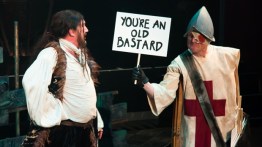
We don’t really do operetta in Britain these days — and at this stage in the game, I don’t really need to tell you why, do I? We’re simply too philistine in these benighted islands, goes the argument; too coarse, too provincial, too clodhoppingly Anglo-Saxon ever to grasp the ineffable lightness and sophisticated wit of Offenbach, Lehar and Strauss. So anyway, here’s Offenbach’s Croquefer, or The Last of the Paladins: a one-act comedy set in the time of the Crusades, which climaxes with the leading characters belting out a stormy ensemble as they succumb to a collective attack of explosive diarrhoea. Basses heave; the brass section emits ripe, flatulent parps.

Pussy galore

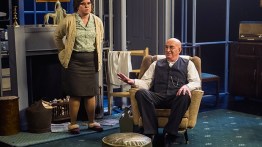
I think I might be turning into Alf Garnett. When I was growing up I saw him as an obnoxious, cantankerous, ranting old git that my grandparents’ generation seemed to find funny but who left me cold. Now I’m beginning to identify with him as an unfairly maligned and surprisingly youthful fount of wisdom whose tragedy is to be ignored by maddeningly unsympathetic womenfolk and infuriating kids. That was my thought, anyway, watching Till Death Us Do Part (Thursday, BBC Four) — a one-off remake of one of Johnny Speight’s original Sixties scripts, with The Fast Show’s Simon Day as Alf. It’s part of a short season, ‘Lost Sitcoms’, commissioned

The National Trust is on a mission to Disney-fy Britain

The latest National Trust row highlights a depressing truth: the Trust is rapidly becoming a mammoth eco-warrior, rather than the preserver of historic houses and beautiful landscapes it is meant to be. It’s just paid £200,000 over the guide price to buy land at Thorneythwaite Farm, Borrowdale in the Lake District, without buying the old farmhouse that went with it. Bang go the chances of a sheep-farmer buying the land and the farmhouse. And now the 300 acres of land enter into the National Trust’s Disney-fied version of the countryside, where the eco-religion holds sway – at the expense of the farming practices that have carved out our exceptionally beautiful landscape. Chief

House style

Last Sunday, I went to see two of the greatest paintings in Britain — at least in the estimation of our Georgian ancestors. When they first arrived here, in 1790, they were accompanied by a special naval escort. After Turner saw one of them, he said the experience made him both ‘pleased and unhappy’, because it seemed beyond his powers to imitate. These are the so-called ‘Altieri’ Claudes, by any reckoning among the most spectacular pictures produced in late 17th-century Rome. Today they hang at Anglesey Abbey, Cambridgeshire, where — at least on the afternoon I was there — few others had found their way to see them. Not that

Distant voices

One of the weirdest responses when someone close to you dies is the gradual realisation that now at last you know them fully. They become to you complete, rounded, fully themselves, in a way that just does not seem possible while they are still alive. It’s so frustrating. Just when you’re at last ready and able to talk to them in the way you’ve always wanted, in full knowledge of who they are, seeing clearly every aspect of their person, they are no longer present. Radio 4 has come up with a partial antidote to this aspect of death, loss, grief, and so too of life and living, with its

Doctor Death

‘European premiere of classic American musical’ is a phrase that deeply alarms the experienced playgoer. As I tootled along to Southwark Playhouse I asked myself why this Rodgers and Hammerstein masterpiece had taken so long to plough its way across the ocean. In 1947 the Broadway prodigies decided to follow up their first two hits, Oklahoma! and Carousel, with a brand new storyline drawn entirely from their imaginations. The plan was to extoll the life of the ordinary Midwest Joe and they created a figure (Joe Jr, after his dad), living in a backwater in the early years of the 20th century. The script doggedly stalks Joe Jr through every

Red hot

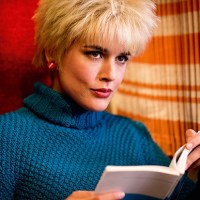
Everything about Julieta feels totally Almodóvarian. It’s a family saga that smoothly blends tragedy and levity, with exquisite performances from a company of passionate actresses. It looks carefully ravishing. Many of the director’s abiding themes are here: terminal illness, sudden death, a mother’s love for her child, men hanging about the fringes. And yet it is based on a most un-Hispanic source. The Julieta of the title was originally Juliet, who features in three interlinked short stories from Runaway, the 2004 collection by Alice Munro. Munro won the Nobel Prize for Literature three years ago after a lifetime writing quiet stories that conceal hammer blows. In the originals, the setting

When autumn comes

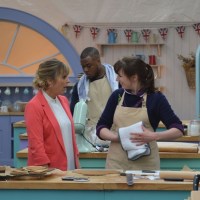
You know when late summer has arrived because conkers are starting to form on the horse chestnuts, your eagerness to get the kids back to school has reached fever pitch, and another season of The Great British Bake Off (BBC1, Wednesdays) has begun. If it feels like there has never, ever been a time when GBBO wasn’t on, this is because there hasn’t. Here are some key facts about our favourite telly comfort blanket you won’t find on Wikipedia. 1. Mary Berry has barely aged at all since the show’s first edition was broadcast in 1946 immediately after Muffin the Mule. Mary was 11 at the time and was chosen

Where new is good

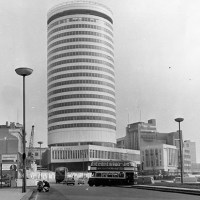
On Saturday night, the City of Birmingham Symphony Orchestra makes its first appearance at the BBC Proms under its new music director, the 30-year-old Lithuanian Mirga Grazinyte-Tyla. It’s all a bit sudden. Grazinyte-Tyla only conducted the CBSO for the first time last July, and she’ll have made her debut as official successor to Simon Rattle, Sakari Oramo and Andris Nelsons at Symphony Hall, Birmingham, the previous night. The programme comprises Mozart, Tchaikovsky, and the London premiere of Hans Abrahamsen’s Grawemeyer Award-winning song cycle let me tell you. That’s right, the ‘London premiere’. It says so on the BBC website. Auntie has blessed the venture; the metropolis is poised to give

Out – and not proud

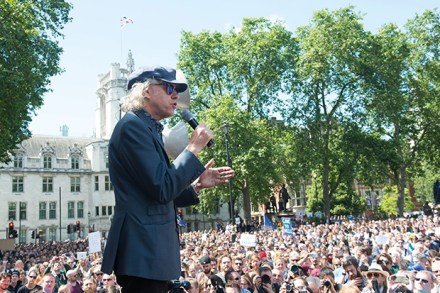
‘Many people are mourning,’ said Sam West on a BBC panel show discussing the response of the arts world to Brexit. According to West’s figures, ‘96 per cent of those polled were for Remain. Collaboration and connection are our bread and butter.’ The atmosphere of bitterness and anger was palpable at the Edinburgh Festival. I spent four days immersed in comedy shows and I heard only one pro-Brexit gag. The excellent Geoff Norcott said he was puzzled to meet Remainers who told him the result had been swung by ‘thick’ Leave voters. ‘Thick?’ he said. ‘The Remain campaign waited until after 23 June to stage their street protest.’ Lloyd Evans

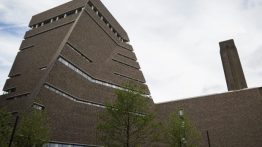
The dull piety of the new Tate Modern

I happen to like the new Tate Modern building. The content’s the problem. The art currently on show there sums up some of the worst defects of the art world. Just when it should be exuberant and joyous it is pious, timid, cold – like a sparky young woman who goes all bluestocking on you. This isn’t a whinge about modern art – I love the stuff most of the time. But it can be overtaken by nervous self-consciousness. Called to boldness, it plays it safe. The new space currently focuses on performance. But there was no performance – no little burst of arty theatre to amuse or challenge us.

Business as usual | 18 August 2016

I should probably nail my colours to the mast and state that The Office is possibly my favourite TV sitcom of all time (bar My Family, which surely goes without saying), but some comedies that have ended should simply stay ended, as no one has ever said, but should have. (Or maybe John Cleese has said it?) There are a few decent jokes here. Some of the bad songs are really good bad songs. But it’s a repetitive rehash rather than a worthwhile continuation of the character, and the comedy and pathos is in exactly the same place as it always was. That is, in the gap between the winner

What’s love got to do with it?

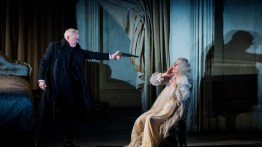
Tchaikovsky’s The Queen of Spades is probably his greatest opera, certainly the one in which his characteristic strengths are on display. Pondering on them inevitably leads one to think about what the operas lack, too, and it turns out be quite a lot. Unlike the finest opera composers, of whom there are regrettably few, he can’t create complete characters: what he is interested in is characteristics, especially — or perhaps only — obsessions, even if the obsession, as with Eugene Onegin, is with not being obsessed with anything, until close to the end. In The Queen of Spades the anti-hero Herman is doubly obsessed, though Tchaikovsky and his librettist brother

Young at heart

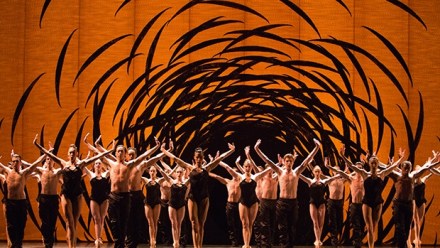
The second half of the Bolshoi tour brought much fresher fare than the first: following the ubiquitous warhorses Don Quixote and Swan Lake, we got three jolly nights of Moscow speciality: an iffy Shakespeare comedy nailed by superb performing, a giddy rewrite of Stalin’s favourite ballet and a breathtakingly fruity restoration of a 19th-century ballet entertainment, with pirate ships, dancing gardens and a vision of the hedonistic life of abducted women somewhat at odds with Boko Haram’s. The sexual politics of Shakespeare’s The Taming of the Shrew are potentially tricky for ballet since the woman is physically dependent on the man. But Monte Carlo choreographer Jean-Christophe Maillot was quite smart

Rio, Rio

Stuff I have learnt after two solid weeks watching the Olympics on TV. 1. Tennis and golf shouldn’t be Olympic sports. Yes, I know we won both and Rose’s final chip on to the 18th green was great to watch. But you can see this sort of thing done with a tougher range of competitors at any number of majors all the time. Olympic medals should be there to reward the Corinthian spirit not just an opportunity for millionaires to add something a bit different to their mantelpiece. 2. I still don’t understand the judging system for the diving but had arse quality been included in the women’s events —

The Capability controversy

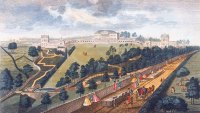
In a piece of light verse from the 1770s ‘Dame Nature’ — out strolling ‘one bright day’ — bumps into the great landscape designer, Lancelot ‘Capability’ Brown. Immediately the goddess lays into him for plagiarism. How, she wants to know, does he have the impudence to show his face? All the items he claims to have created — ‘the lawn, wood and water’ — were made in fact by her. Brown, for his part, is not at all disconcerted. He admits that Nature has provided him with good raw materials. But the beautifying refinements? Those are all his. ‘The swell of that knoll,’ he points out, ‘is mine… the ridges