Arts Reviews

The good, bad and ugly in arts and exhbitions

Why has the world turned on the Waltz King?

On 17 June 1872, Johann Strauss II conducted the biggest concert of his life. The city was Boston, USA, and the promoters provided Strauss with an orchestra and a chorus numbering more than 20,000. One hundred assistant conductors were placed at his disposal, and a cannon shot cued The Blue Danube – the only way of silencing the expectant crowds. Estimates vary, but the audience was reckoned to number between 50,000 and 100,000; in all, there must have been a minimum of 70,000 people present. This month’s Oasis reunion only played to 80,000. The result, in an age before modern amplification, was much as you might expect. ‘A fearful racket

Beguiling grot, TfL surrealism and Insta-art: contemporary art roundup

Last month, I got the train down to Margate to interview the Egyptian-Armenian artist Anna Boghiguian (b. 1946), whose exhibition The Sunken Boat: A glimpse into past histories was about to open at the Turner Contemporary. Long story short, the conversation did not go well: Anna reacted to my questions with some irritation, swatting them away like low-flying bluebottles. I got flustered, she got bored, and eventually so did I. We wrapped things up around the 20-minute mark and I ran away to stare into the abyss. It was a shame, because the show was, for the most part, really good. A political scientist by training, Boghiguian makes installation art

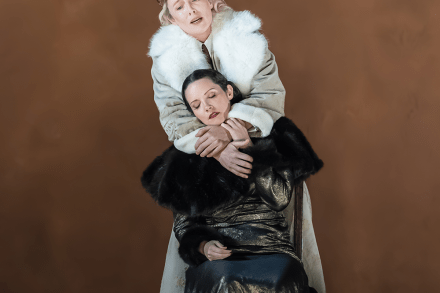
Brilliant rewrite of Shakey: Hamlet, at Buxton Opera House, reviewed

‘There is good music, bad music, and music by Ambroise Thomas,’ said Emmanuel Chabrier, but then, Chabrier said a lot of things. I adore Chabrier – who couldn’t love the man who wrote España and turned Tristan und Isolde into a jaunty quadrille? – but it doesn’t do to take him too literally. Thomas ended his career as a notoriously crusty director of the Paris Conservatoire, and when the French musical establishment puts you on a pedestal younger composers invariably start hurling the merde. Scraps of Thomas’s music survive in all sorts of odd corners (a snippet from his opera Mignon crops up in The Life and Death of Colonel

Magnificent: Stevie Wonder at BST Hyde Park reviewed

The highs of Stevie Wonder’s Hyde Park show were magnificently high. The vast band were fully clicked into that syncopated, swampy funk, horns stabbing through the synths, the backing singers adding gospel fervour. And Wonder – now 75 – sang like it was still the 1970s, his voice raspy one minute, angelic the next. Anyone who heard that phenomenal group play ‘Living for the City’ or ‘Superstition’ and didn’t feel ‘ants in my pants and I need to dance’, as James Brown once put it, should resign from life: they do not deserve such joy. That said, there were oddities. We were blessed with visits from four of Wonder’s nine

Irritatingly, Wet Leg's new album is pretty good

Grade: B+ There’s quite a lot to dislike about Wet Leg, even aside from their stupid name. The entirety of their lyrical canon, for starters – vapid and petulant millennial inanities, 50 per cent performative braggadocio, 50 per cent adolescent carping. Or there’s the commodification of their sexualities: they’ve traded up to being bi, just before the market peaks. Or there’s Rhian Teasdale’s frequent, bone-idle recourse to an affected, half-spoken monotone in lieu of, y’know, a tune – that shtick had begun to pall even before the end of their debut single, ‘Chaise Longue’. Or the unremitting chug chug chug of the guitars and the fact that Teasdale sings in

I watched it between my fingers: Bring Her Back reviewed

The Australian twins Danny and Michael Philippou started off as YouTubers known for their comically violent shorts – Ronald McDonald Chicken Store Massacre (2014) has accrued 67 million views. They then raised the money to make their first feature. This was the quietly disquieting Talk To Me (2022), which cost $4.5 million and made $92 million. Bring Her Back (they like three-word imperatives, these lads) is their second and it may not be as successful. It stars Sally Hawkins and this isn’t, alas, horror at its most fun, inventive and camp. This is horror horror: gory, grisly and one that properly goes for it at the end – which, if

The podcast of the summer

The cover painting for The Specialist, a new podcast from Sotheby’s, looks like a scene from Mad Men. The people are so good-looking and so well dressed that you barely notice how odd they are. One chap’s walking along with a porcelain bowl as if it were a macchiato; a lady holds a plant in her palms in the manner of receiving communion; someone else walks the street with a gavel. The admen have done their job: intrigued, I press play. It becomes apparent that the people who work at Sotheby’s have no interest in persuading anyone that they are normal. I listen to Ottilie, Julian and Gregory, and to

The National have bungled their Rishi Sunak satire

The Estate begins with a typical NHS story. An elderly Sikh arrives in A&E after a six-hour wait for an ambulance and he’s asked to collect his own vomit in an NHS bucket. The doctors tell him he’s fine and sends him home where he promptly dies. His only son, Angad, inherits all his property, which irritates his two daughters, who receive nothing. The personality of the dead Sikh is left deliberately obscure. Newspapers in Britain and India publish glowing accounts of his achievements but his youngest daughter calls him ‘a slum landlord’ who owed his fortune to ‘a lifetime of tax-evasion’. The bad-tempered tussle over his will takes place

What I saw at Ozzy’s last gig

Ozzy Osbourne and Black Sabbath did something British groups had not done before. Before them, the British Invasion groups – from the Beatles, the Stones and The Who down to Herman’s Hermits and Dave Dee, Dozy, Beaky, Mick and Tich – had taken American music and sold it to the British public as the American dream, as exotica. And when they exported it back to the States, the Americans – most of whom had never heard the music the groups began by copying – heard in it something fresh and exciting and joyful. Sabbath instead sold the American nightmare back to the United States, filling arenas across North America, a much bigger

Ozzy Osbourne, the accidental rock star

To conjure an image of England on Thursday 16 October 1969 you could do worse than compressing all of Withnail and I into one day. The country was crippled by strikes. The bubble-gum pop track ‘Sugar Sugar’ was number one. And the first episode of Monty Python’s Flying Circus had just aired.  At Regent Sounds Studios in London’s Denmark Street four musicians from Birmingham recorded seven songs in 12 straight hours then went to the pub. Their name had been Earth, and before that The Polka Tulk Blues Band. When the album hit the streets the following year, on Friday 13 February, they were Black Sabbath. On the microphone was 20-year-old John ‘Ozzy’ Osbourne.

The objects we take for granted that were designed by disabled people

Back in the 1990s, if you were disabled in the UK or US, and you believed that being disabled was more about self-determination and less about being left in care homes, you might have protested with banners declaring ‘Nihil de Nobis, sine Nobis‘ (‘Nothing about us without us’).  The call – allegedly first used by a 15th-century Polish political party – was taken up by disability activists who wanted the non-disabled world to consider how the material world was rarely designed or included disabled people. This fact itself was ‘disabling’.  Thus, they asked, why not build a ramp, instead of a staircase, so we can all use it? Or make print

Xbox Adaptive Controller, developed by Microsoft. © Victoria and Albert Museum, London
'Play within a Play within a Play and Me with a Cigarette', 2024-2025, by David Hockney. Photograph: Jonathan Wilkinson/David Hockney, © Jonathan Wilkinson

A plea for painting: David Hockney 25, at the Fondation Louis Vuitton, reviewed

The exploding sails of Frank Gehry’s Louis Vuitton building in Paris are currently packed with the exhilarating visual explorations of the octogenarian artist David Hockney. The exhibition begins with a roomful of the paintings that made Hockney famous in the 1960s: his graffiti-style canvases, packed with secret codes and illicit kisses. The next gallery is full of the very different paintings that made him even more famous: swimming pools in sunshine and boys sprawled on beds. Gays straight on, square to the picture frame – images, pure and simple; no hidden hints, no text. This gallery also contains a couple of the portraits that further spread his fame. Sadly, none

The joys of mudlarking

Imagine a London of the distant future. A mudlark combs through the Thames foreshore, looking for relics of the past. What would they find? A rusted Lime bike, a message in a takeaway soy sauce bottle? ‘Vapes,’ says Kate Sumnall, curator of the Secrets of the Thames exhibition at the London Museum Docklands. ‘Lots of vapes.’ Mudlarking – the practice of scavenging at low tide for washed-up historical treasures, oddities or mundane objects – has become a well-gatekept hobby over the past five years. More than 10,000 people are now on the waiting list for mudlarking permits. Of course, anyone can go down to the foreshore to look around and

Definitely the film of the week: Four Letters of Love reviewed

In the brief lull between last week’s summer blockbuster (Superman) and next week’s (Fantastic Four) you may wish to catch Four Letters of Love. Based on the internationally bestselling novel (1997) by Niall Williams, it’s a quiet, lyrical, Irish love story featuring a superb cast (Helena Bonham Carter, Pierce Brosnan, Gabriel Byrne) and no dinosaurs marauding through town. Or none that I noticed, I should add. (See: Jurassic World Rebirth, week before last.) Williams has adapted his own book and the director is Polly Steele (The Mountain Within Me, Let Me Go). The film is set in 1970 or thereabouts and our narrator is Nicholas (Fionn O’Shea), a Dublin teenager

The Alfred Hitchcock of British painting

Carel Weight, the inimitable painter of London life and landscape, was my godfather. I remember a clownish-faced elderly man with an air of mild quizzical enquiry, who for 16 years held one of the most important teaching jobs in Britain. In charge of painting at the Royal College of Art when David Hockney passed through, Weight taught the ‘Pop People’ (as he called them) – Peter Blake, Patrick Caulfield and R.B. Kitaj – as well as Bridget Riley, Leon Kossoff, John Bellany and the singer-songwriter Ian Dury. Weight himself never received the critical recognition he deserved. He was overshadowed to a degree by abstract expressionism, which crash-landed from the US

A cross between Peter Rabbit and Queen Victoria: Bliss: The Composer Conducts reviewed

Grade: A– There’s a classic trajectory for British composers: a five-decade evolution from Angry Young Man to Pillar of the Establishment. Right now, you can watch it happening in real time to Thomas Adès and Mark-Anthony Turnage – inevitably, unwittingly, falling unto the pattern established by Sir Arthur Bliss, who shocked critics in the 1920s but died in 1975 as a KCVO, CH and Master of the Queen’s Music. I knew musicians who played under him at the end of his life. One described him as ‘a cross between Peter Rabbit and Queen Victoria’. Bliss was a very capable conductor and this collection of live broadcasts of his own music

A theatrical one-woman show: Billie Eilish at the OVO Hydro, Glasgow reviewed

Like spider plants and exotic cats, certain artists are best suited to the great indoors. Lana Del Rey, for instance, proves the point that just because you can sell enough tickets to fill a stadium doesn’t mean you should necessarily perform in one. Some music blossoms in the sun, some ripens in the shadows. Billie Eilish belongs in the latter camp. Even though her biggest hit, ‘Birds of a Feather’, was the most streamed song on Spotify last year and is now approaching three billion listens, and her duet withCharli xcx on ‘Guess’ was another ubiquitous sound of 2024, her appeal remains slightly subversive. Eilish’s songs – composed with her

A bland, reverential portrait of a socialist martyr: Nye at the Olivier Theatre reviewed

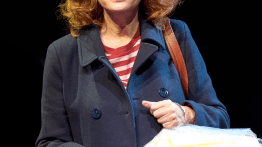
The memory of Nye Bevan is being honoured at the National Theatre. Having made his name as a Marxist firebrand, Nye was quick to take advantage of the privileges enjoyed by the governing classes whom he affected to despise. He entered parliament in 1929 and began to hang around the Commons bar plying female MPs with double gins. His future wife, Jennie Lee, referred to him as a ‘rutting stag’. Was he a serial bed-hopper as well as a problem drinker? It’s hard to tell from this bland, reverential portrait of a socialist martyr. The director, Rufus Norris, adds song and dance routines, requiring the services of two choreographers, as