Racism

My guide to thuggery

“Don’t they speak English?” asked my husband, tossing over a copy of the Daily Mail as though it were my fault. The headline read: “Missing in action.” It referred to Dan Jarvis disappearing from view in his new job as Defence Secretary. The headline writers should know that, militarily, those missing in action are presumed dead. The Mail meant AWOL – absent without leave. In 2024, I remarked how odd it was that Sir Keir Starmer, the Prime Minister, should say about mob violence outside a migrant hotel near Rotherham: “It is organized, violent thuggery.” Now Hilary Benn, the Northern Ireland Secretary, is at it.

thuggery

Henry Nowak and the politics of deflection

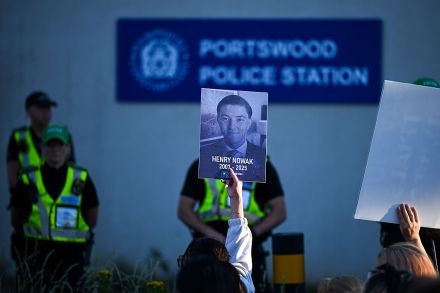
While Britain is still reeling from the horrific murder of 18-year-old student Henry Nowak, an astonishing article has appeared in El País, Spain’s largest national newspaper. Rather than focus on the failures of the police officers, or the institutional bias within the force, the headline steers its readers away from the case and towards the outlet’s own obsessions. The headline translates as "Farage’s far right stirs up hatred in the UK after a young man is stabbed to death by a Sikh man." As Alejo Schapire (an Argentine journalist based in France) has pointed out, this is the first and only article produced by El País on the subject of the Nowak killing. Instead of an image of the victim, the newspaper has opted for a photograph of Nigel Farage.

henry nowak
George Floyd

Black families suffered after white college kids used George Floyd to dismantle society

Five years ago, we watched a man die under the knee of a police officer. The footage of George Floyd gasping for breath wasn’t just horrifying – it was galvanizing. For a brief moment, America stood still, and it felt like we all agreed: this was wrong. This shouldn’t have happened. And something needed to change. But instead of coming together, we fell apart. What should’ve been a rare moment of national consensus turned into yet another front in the culture war. The left veered toward revolution, and the right veered toward denial. And somewhere in the wreckage of hashtags, riots, cable news rants, and billion-dollar DEI schemes, the real moral clarity of that moment was lost. Let’s start with the obvious: what happened to George Floyd was a tragedy.

Does a propensity for crime depend on one’s DNA?

From our UK edition

This book begins strangely. Kathryn Paige Harden and her man Travis go off into the Texas desert to take some LSD in the hope that it will provide a ‘hard serotonergic reboot’. They have not so far had sex, but Travis has plans. ‘You’ll come back with your third eye,’ he says, ‘and then we’ll fuck. You’ll be glad we waited.’ At this point you may be tempted to hurl the book across the room. The self-centredness is oppressive. But persist. It rapidly becomes a very powerful read. Harden is a psychologist and behavioural geneticist, and the primary theme of Original Sin is the way in which science raises questions about morality and the law. For example, is a psychotic man who murders his wife less guilty than a sane man who does so with a clear head?

John Mulaney at his best is unstoppable

From our UK edition

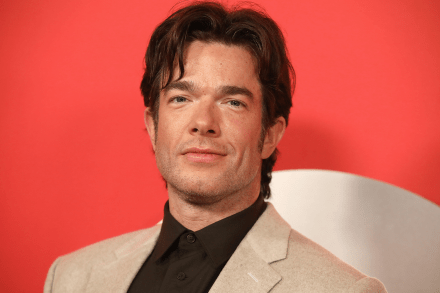
John Mulaney appeared to be just another of those identical, slick, clean-cut, young comedians in suits until Covid. But all was not well. In December 2020, a bunch of his showbiz pals staged an intervention and sent him to rehab for his addictions to cocaine and various prescription drugs. Out of rehab, he promptly parted from his wife, the artist Annamarie Tendler, and met the actress Olivia Munn. As he noted in Mister Whatever, his latest show, when their son was born, he and Munn had known each other for ‘nine months and 45 minutes’. They are now married.

The evasions of smalltown Alabama: The Land of Sweet Forever, by Harper Lee, reviewed

From our UK edition

Harper Lee’s writing career was brief, but her single novel became one of the most famous in American history. To Kill a Mockingbird (1960) won the Pulitzer Prize, sold tens of millions of copies and remains a fixture of classrooms and popular memory. She published almost nothing else until Go Set a Watchman – an earlier draft of Mockingbird – appeared in 2015, just before her death and perhaps without her meaningful consent. The Land of Sweet Forever gathers apprentice stories written before Mockingbird, along with a few later magazine pieces. Most are slight and the volume is more commercial than literary.

Robert Jenrick is right

From our UK edition

I’ve just got back from doing a spot of shopping in my local town – and do you know what struck me? How white it was. Absolutely heaving with ghostfaces. In fact, in the hour or so that I spent there I don’t think I saw a single non-white person, apart from some young ladies leaving the local tanning salon who were the colour of a glass of Tango and that doesn’t really count. It is OK to say this, incidentally, if you then use it as a basis to attack the town’s lack of diversity and demand the government ship a few ethnics in, regardless of whether or not they fancy the idea. It is not OK if you are expressing happiness in the fact that the town is all white – if, for example, I had written the words ‘Thank the living Lord Jesus Christ!’ after my second sentence.

The end of the race hustle

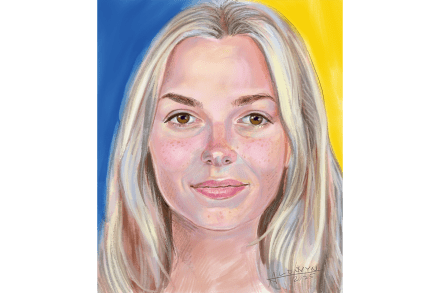
Decarlos Brown Jr. should never have been on the streets. The man suspected of murdering 23-year-old Iryna Zarutska, a Ukrainian refugee, in Charlotte, North Carolina, in August had been arrested 14 times in almost as many years, charged with armed robbery, shoplifting and property damage. According to his sister, he is a schizophrenic who suffers from paranoid delusions. But he was free to roam in part because of the race hustle. Want to fire an employee? Good luck if that employee is black; such a dismissal would be presumptively racist For decades, pointing out that any action, public or private, had a black target or fell disproportionately on black people was sufficient to discredit that action, regardless of whether it was couched in terms of race or had a racist intent.

race

Is Labour ‘racist’ too? Plus Trump’s Gaza gamble & Rowling vs Watson

From our UK edition

48 min listen

This week, Michael and Maddie report from the Labour party conference in Liverpool and unpick Keir Starmer’s big speech. Was his attempt to reclaim patriotism for Labour a genuine statement of values – or a clumsy exercise in stereotypes about steelworkers, chip shops and football nostalgia? And why does Labour’s attack line on Nigel Farage risk sounding like political ‘nuclear warfare’ that could backfire outside the conference hall? And what about the Tories? With Labour bringing the fight to the Reform party, where does this leave Kemi Badenoch and the Conservatives ahead of their conference later this week? They then turn to Donald Trump’s extraordinary new Middle East peace initiative.

Is this America’s most racist town?

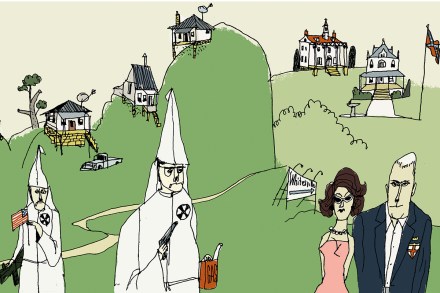
On a suffocatingly humid Friday morning in August, I sat in a rental car parked outside the home of Thom Robb, the leader of the Ku Klux Klan, wondering if I should knock on his door. A shirtless, muscle-bound, heavily tattooed carpenter who lived down the road – and swore he wasn’t racist or a Klansman – said Robb was “a really nice guy” who wouldn’t mind my turning up at his house without an appointment. Klansmen, I reckon, aren’t “nice” guys by definition, and as Robb’s mean-sounding dog barked at me from the other side of his fence, I feared the neighbor was setting me up to get my head blown off.

racist

A summer romance: Six Weeks by the Sea, by Paula Byrne, reviewed

From our UK edition

After Jane Austen’s death, her sister Cassandra destroyed the majority of her letters.  This act, often interpreted as an attempt to preserve Jane’s reputation, has had the opposite effect of fuelling fervent – at times prurient – speculation about what the letters contained. While Cassandra may simply have wished to shield her relatives from the lash of Jane’s sharp tongue, later writers, drawing on the author’s fiction and family lore, have surmised that the missing correspondence concealed evidence of a love affair. Such an affair formed the basis for Gill Hornby’s fine 2020 novel Miss Austen and now inspires Paula Byrne’s pleasant if unremarkable Six Weeks by the Sea.

The scourge of the sensitivity reader

From our UK edition

‘Something strange is happening in the world of children’s and YA [young adult] literature,’ writes Adam Szetela, and his horrifyingly compelling book certainly bears that out. It offers a sobering report from the front lines of how identity politics and online pile-ons against anyone who sins against the latest pieties actually play out in the world of American publishing. Such is the atmosphere that many of the interviewees, who include presidents of the Big Five companies, senior agents, directors of public library districts and award-winning writers, are almost paranoid about preserving their anonymity. At the heart of That Book is Dangerous!

The powder keg of 1980s New York

From our UK edition

The Bonfire of the Vanities, Tom Wolfe’s romp through the status and racial anxieties of 1980s New York, begins with an unnamed mayor being Mau-Maued by Harlem activists. As he soaks up the abuse, he fantasises about the confrontation spreading: Come down from your swell co-ops, you general partners and merger lawyers! It’s the Third World down there!... Staten Island! Do you Saturday do-it-yourselfers really think you’re snug in your little rug? You don’t think the future knows how to cross a bridge? This fictional world, a collision of riches and poverty and criminal justice and electoral politics, maps neatly on to the period described in Jonathan Mahler’s new book.

Britain’s new role as a bastion of black culture

From our UK edition

One of the great works of journalism to have come out of the Jamaican-British encounter is Journey to an Illusion by the late Donald Hinds. Published in London in 1966, the book is made up of a series of interviews with Commonwealth citizens who had settled hopefully on these shores after the war. Hinds, who was born in Jamaica in 1934 and worked in London as a bus conductor, was disappointed to find that the British were not only unmindful of the Commonwealth, but disinclined to help African-Caribbean immigrants. (Gallingly for him, Italians in the Soho confectionary business were extended a warmer welcome, even though they had fought on Hitler’s side.) Inevitably as a ‘clippie’ on double-deckers, Hinds was exposed to racism.

Bristling with meaning: the language of hair in 19th-century America

From our UK edition

In Whiskerology, Sarah Gold McBride combs through a bristling, tangled mess of data, facts and theories about gender, race, national identity and their relationship to – yep, you guessed – hair. Do not buy this book if you are looking for a fun read about vintage updos, goatees and ponytails; Ye Olde Horrible Haircuts it is not. It’s a book about hair as a kind of cultural text; readable, manipulable, highly permable and ideologically curled. One does not, it turns out, simply go and get a haircut: one enters a vast semiotic salon, more Saussure than Sassoon, where you’re lucky to get out without a scalping. McBride is a 21st-century American scholar writing about 19th-century American hair, but the manner is classic mid-20th-century French plait.

America’s top medical schools still hire by race

The institutions just won’t quit. Even after the Supreme Court made it abundantly clear that race-based admissions violate the Constitution, many of America’s top medical schools are digging in their heels – and, apparently, digging graves for meritocracy. A new report by Do No Harm, a group of physicians and health policy experts, reveals that public medical schools continue to admit students with dramatically different qualifications based largely on race. In other words, the diversity-industrial complex is alive and well – just operating in the shadows. The numbers don’t lie. According to the report, black students admitted to these schools had average MCAT scores significantly lower than their white and Asian counterparts.

Hospital

We must reclaim the word ‘progressive’

I’ve grown tired of hearing the term progressive used to describe people and policies that embody anything but progress. The word suggests a movement toward liberty, reason and human dignity. But what now passes for “progressive” ideology is a regressive assault on foundational principles: race-based social engineering, denial of biological truth, hostility toward the rule of law and an obsession with censorship disguised as compassion.Progress gave us the abolition of slavery, universal suffrage, constitutional government and equal protection under the law. It was built on Enlightenment ideals – reason, open inquiry and the primacy of the individual over tribe. The ideologues now claiming the label have rejected those very foundations.

Poll: college-educated women end friendships over politics

New polling data shows what you may already suspect: your experience of losing friends since the 2024 election of Donald Trump is absolutely real – if very divided depending on your political tribe. When national pollster Cygnal offered me the opportunity to suggest a question or two for their latest national survey, it was a chance to put to the test the experience of many Americans I know: in the past six months, they’ve lost at least one friend over the result of the 2024 election. The direction of lost friends seemed very politically consistent in my experience, but anecdotes aren’t data, and knowing more people on the right than the left, it’s possible this personal experience was skewed. It turns out that it isn’t.

poll

Is Shiloh Hendrix the new Luigi Mangione?

When a white mom called a black kid the N-word the immediate expectation was that she’d be canceled, possibly arrested. It was not that just a few days later she would have $700,000 in the bank.Shiloh Hendrix accused a five-year-old Somali boy of rummaging through her diaper bag in Rochester, Minnesota, last week. “Did you call that child the N-word,” a man who filmed her asked. “Yeah,” Shiloh snarled back, “if he’s gonna act like one.”She didn’t back off. She repeated the accusation, then turned on the man filming her with a string of insults. The video quickly went viral. But Shiloh didn’t follow the usual playbook of hunkering down to weather the online storm. She fought back. On GiveSendGo, Shiloh painted herself as the victim.

shiloh hendrix

Joe Biden recalls ‘colored kids’ to be hero of their struggle

In his first public remarks since leaving office, Joe Biden recalled – without a hint of self-awareness – the moment from his childhood he first saw “colored kids” on a bus going by.” It was, in his telling, a pivotal experience, one that sparked his youthful sense of outrage growing up in Scranton, Pennsylvania.Let’s stop right there.At best, the speech – billed as his first major intervention since Donald Trump took office – reveals how deeply stuck in the past Biden’s racial worldview really is. At worst, it’s an embarrassing reminder that the Democratic Party continues to view black voters, especially black men, not as equals or thinkers, but as props in white liberal moral storytelling.As a black conservative, I've heard this record before.

colored kids