Hypocrisy

Love and loneliness in the Outer Hebrides: John of John, by Douglas Stuart, reviewed

From our UK edition

For his third novel, Douglas Stuart moves north from the Glasgow tenements of Shuggie Bain and Young Mungo to the island of Harris in the Outer Hebrides. John-Callum, known as Cal, returns to his family croft after spending four years at a mainland textile college, following a call from his father, John, to tell him that his grandmother is dying. John is the precentor of his local church, a congregation of Free Presbyterians, who adhere to an extreme biblical morality. The 26 remaining members attend four services each Sabbath and believe that fathers have authority over children and husbands over wives, since women ‘rarely know what is best for themselves’. Stuart treats this faith, which will be inimical to the majority of his readers, with great respect.

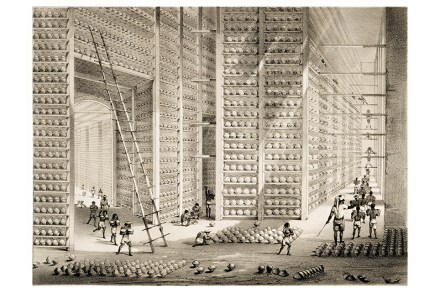
The greed and hypocrisy of the opium trade continue to shock

From our UK edition

‘A fact that confounds me now when I think back on it,’ writes the acclaimed Indian author Amitav Ghosh at the start of this expansive and thoughtful book, ‘is that for most of my life China was for me a vast, uniform blankness.’ There were many reasons for this, he says. The war between India and China in 1962 might have played a part, along with the complex relationship between the two countries since then; but also the way that ‘an inner barrier’ has been ‘implanted in the minds’ of many around the world – one that blocks out China but allows in the ‘language, clothing, sport, material objects and art of the West’. Smoke and Ashes is a lovely blend of historical writing, travelogue and personal reflection stemming from what the author calls his ‘epiphany’.

Septuagenarians behaving badly: Stockholm, by Noa Yedlin, reviewed

From our UK edition

My grandmother wore a bikini long after she’d turned 60. As a teenager, I couldn’t think of anything more embarrassing than to be seen with her on the beach. When the day came, on an inescapable family holiday, I begged her to reconsider. ‘I’ve never understood why they say the body betrays you,’ she replied. ‘The body is simply doing what it’s supposed to. It’s the soul that refuses to do its part in the deal.’ I remembered this reading Stockholm, a delightful dark comedy by the Israeli author Noa Yedlin about four elderly people conspiring to conceal the sudden death of their friend, the renowned economist Avishai Har-Nof, so as to secure his award of a Nobel prize.

Has Germany finally shaken off its dark past?

From our UK edition

In 1982, a board game appeared in West Germany. If you landed on square B9 you were sent to a refugee camp in Hesse where you became ill from loneliness, unfamiliar food and not being allowed to work. Worse still, you had to miss a go and spend the free time thinking about ‘how you would feel in such a situation’. Even if, like me, your childhood was spent crying over lost games of Monopoly, nothing could quite prepare you for the cheerless experience of playing ‘Flight and Expulsion Across the World’. It’s unlikely an updated version has been commissioned for our home secretary, with players assigned counters representing the Bibby Stockholm, inflatable life rafts and Rwanda-bound jets, but you never know.

Polly Toynbee searches in vain for one working-class ancestor

From our UK edition

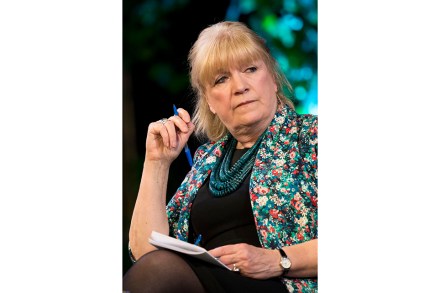
Polly Toynbee’s fascinating, multi-generational memoir comes with a caveat to a Spectator reviewer. While her book is written with ‘self-conscious awareness’, Toynbee predicts, with a cautionary wag of the finger, that it will be reviewed in publications where ‘introspection is inconvenient’. Not a page goes by without a reference to the iniquities of class, accent, snobbery or patriarchal dominance Of course, introspection drives her narrative. Toynbee, a self-confessed ‘silver-spooner’, was born into a family of towering academic and literary influencers who, while enjoying connections and lifestyles as posh as they come, almost consistently resisted and campaigned against conservative elitism and privilege.

Britain’s recent darkest hour: the betrayal of the Chagos Islands

From our UK edition

Philippe Sands’s compelling new book opens in 2018 at the International Court of Justice in The Hague, where Liseby Elysé – ‘a distinctive lady dressed in black’, who can neither read nor write – is making a video statement before 14 judges. In Creole, she describes how, in 1973, she and the last of her 1,500 fellow islanders from Peros Banhos (part of the Chagos archipelago, south of the Maldives) were forcibly deported to Mauritius. They were herded in the dark onto a boat for a four-day passage, with neither notice nor explanation given, restricted to one wooden trunk of possessions apiece, homes abandoned and all their pets rounded up and gassed. The boat’s captain said he had ‘never transported people in such terrible conditions’.

Mask off, DC

The nation’s capital is finally dropping its vaccine and mask mandates…mostly. DC mayor Muriel Bowser reluctantly followed the science and ended the vaccine requirement for the district’s businesses effective Tuesday — rendering the city’s “get the vax to see the acts” campaign null and void. The decision to require proof of vaccination now falls to individual businesses in the city — a civil rights victory, surely, given that just under a quarter of DC’s black residents remain unvaccinated. Bowser’s move comes after a lengthy battle with venues such as The Big Board on H Street, which had its license suspended by the ABC Board earlier this month for refusing to enforce the mandate.

mask washington dc

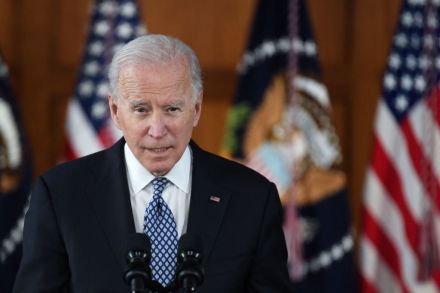
Joe Biden daydreams about civil rights

What a civil rights legend is Joseph R. Biden. You can almost picture it if you daydream hard enough: the discordant chants of "we shall overcome, man! I mean, c'mon!"; the sermons that sound just a bit too identical to the previous speaker; the Millions Against Malarkey March of '67. Naturally no one spends more time daydreaming about this than Biden himself. So it was that last week, the president falsely asserted again that he'd once been arrested as a young man during a civil rights march. It was a claim he’d made previously and been forced to retract, and it was such an obvious fib that even the Washington Post took a break from fact-checking Tucker Carlson’s facial expressions to award the president four Pinocchios.