
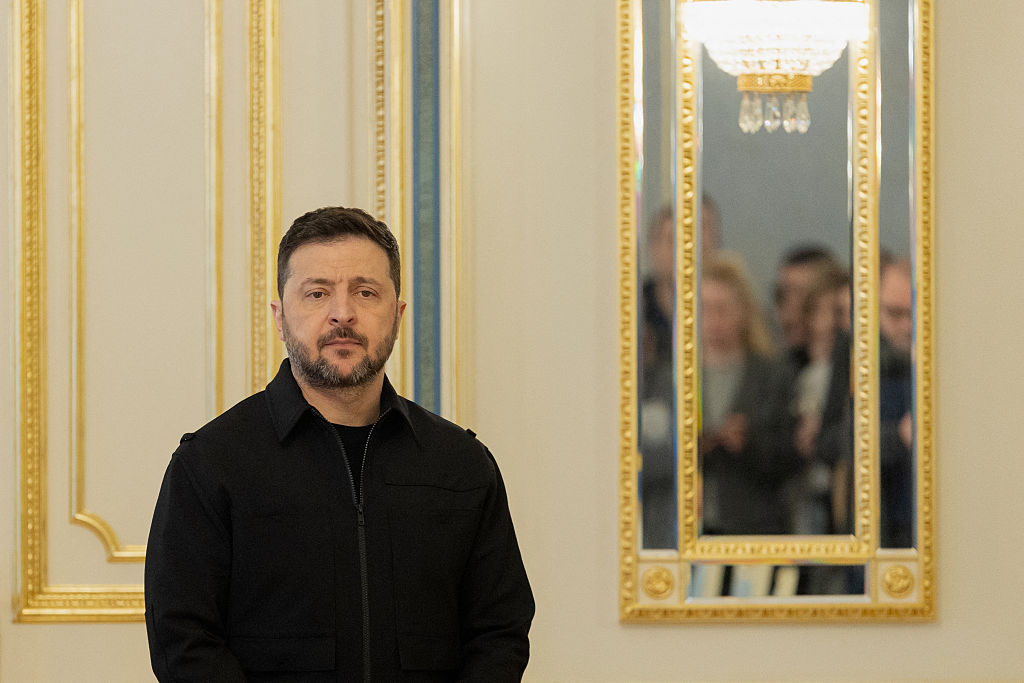
The long war in Ukraine has morphed into a new and decisive phase, one that could lead to Ukraine’s upset victory over its much larger, more aggressive neighbor. The global consequences of Russia’s loss – and Vladimir Putin’s humiliation – would be enormous.
What is this new phase? Is there really evidence the tide has turned in Ukraine’s favor?
To sort out the answers and understand what’s new about the war’s current phase, we need to do a brief tour of the three phases that preceded it.
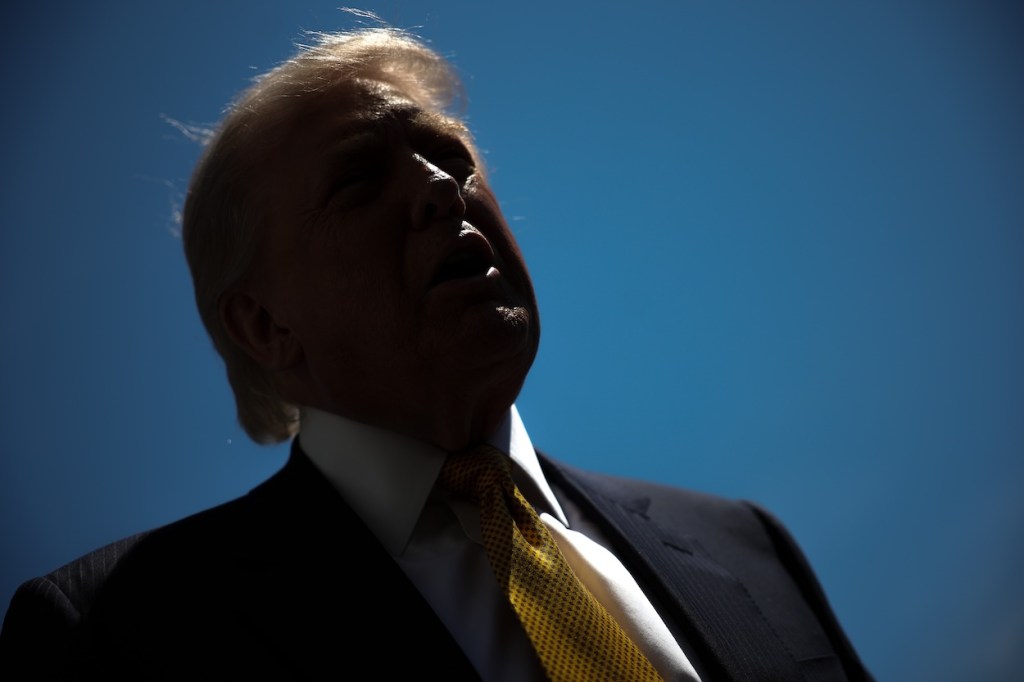
The first phase began well over a decade ago, in February 2014, when Barack Obama was president. Ukraine fatefully signaled it wanted much stronger ties with Europe and the United States, not Russia, at the very moment US deterrence was weak. Since the Kremlin considered Ukraine part of its “near abroad” and vital to Russian security, it objected strongly to Kyiv’s new tilt.
Putin, who considered Obama weak and NATO worthless, seized the opportunity to invade Crimea and the Donbas region in eastern Ukraine, which borders Russia. He has held that territory ever since, inserting permanent military installations and puppet political leaders.
After Putin’s success during the Obama years, he stayed put during Trump’s first term, only to move forward again during Joe Biden’s somnolent presidency. That’s when Putin launched the war’s second phase. His invasion in late February 2022 was designed to finish what he had left undone eight years earlier.
Putin’s new “special military operation” (he has never called it a “war”) was meant to last only a few days. That would be enough time, he figured, to seize Ukraine’s capital, install a friendly puppet regime, and solidify Russia’s control over Crimea without objection from Ukraine’s new rulers. He expected the local population to welcome the Russians.
Seizing Crimea was especially important. It occupied a dominant position on the Black Sea and had been part of Russia (and its Soviet successor) since the 18th century. In 1954, Nikita Khrushchev transferred the peninsula from a Russian oblast to a Ukrainian one. It was considered a minor move at the time. After all, Ukraine remained firmly within the USSR.
The transfer became important, retrospectively, after the Soviet Union collapsed. Crimea, having been part of the Ukrainian oblast, now became an integral part of the newly-independent Ukrainian nation.
Putin wanted it back, just like he wanted the rest of Ukraine. Indeed, as he repeatedly stated, he did not consider Ukraine to be an independent country.
In 2022, with US deterrence at a low point under Biden, Putin decided to complete the job in Ukraine. The US and its European allies not only failed to deter this second invasion, they grimly predicted it would succeed and did little to stop it.
It wasn’t that the invasion caught them by surprise. They could see Putin building up forces on Ukraine’s border for months and considered an invasion likely. But they also believed arming Ukraine was worse than useless. Once the Russians won, as expected, they would capture all those valuable weapons. (That was exactly what happened in Afghanistan during the botched withdrawal under the same US administration. The US left behind a vast arsenal for its enemies to exploit).
The Biden administration’s mistaken forecast about a swift Russian victory is why the US failed to arm Ukraine. It is why, when the Russians did cross the border, Pres. Biden phoned Volodymyr Zelensky and offered him a safe ride out of the country instead of military assistance.
Zelensky famously declined the offer, saying the Ukrainians needed ammunition, not “a ride.” The Ukrainians then launched a tenacious fight that stalled the Russian invasion before it could reach the capital city of Kyiv. Its warriors also prevented the capture of the country’s other major cities and its fortified locations in western Donbas. That resistance began a brutal fight that has now lasted longer than World War II.
This prolonged, inconclusive war of attrition marked the third phase of the conflict. What began as Putin’s “three-day special military operation” sank into a protracted slugfest to see who could last longest. While Russia suffered well over one million casualties, Putin sought to minimize the political impact on St. Petersburg and Moscow by recruiting soldiers only from outlying regions. He gradually cut off Russian civilian communications with the outside world to minimize the flow of damning information and potential protests (over shortages and rising prices, not over the war itself).
Still, Russians were bound to learn about four major devastating consequences of the special military operation: Enormous troop losses, minimal territorial gains, crushing economic pain at home from Western sanctions, and a domestic economy that inexorably shifted away from civilian consumption and into military production.
Together, those developments mean that Russians feel the direct effects of the war and can see it has been a costly failure. They also realize, but cannot say, that Putin cannot escape the consequences if he ends the war with so little to show for such a gargantuan (and costly) effort.
Putin himself must share those fears. He has gone into hiding and is almost never seen in Moscow. Uneasy is the head that wears the crown.
Putin’s paranoia is one sign that the war has now entered a fourth stage, one that is far more favorable to Ukraine. It is far from the only sign. Another is Russia’s inability to replace the vast contingent of soldiers lost on the battlefield, at least 30,000 each month killed or seriously wounded. Despite an intense recruiting effort, Russia is only able to replace about 70 percent of those lost. The strain is so difficult that the new recruits are thrown into the field with little training. They are sent into a charnel house to be counted among the next month’s 30,000.
They are not being killed by tanks or fighter jets. They are being killed by drones, a major change in how the war is being fought. Remember how differently the drive for Kyiv began in 2022. Russia deployed a tank column, a familiar blitzkrieg strategy, used since World War II.
In the Great Patriotic War, tanks were crowned the “queens of the battlefield.” In the Ukrainian war, the queen was dethroned by the lowly drone, which has been used to increasing effect by both Russia and Ukraine.
Putin’s position isn’t just weakening on the battlefield. It is weakening on the home front
It was Russia that began this tactic by purchasing Iran’s large Shahed drones and then copying them in local factories. Ukraine followed suit, first by copying the Iranian/Russian models and then going on to build more sophisticated models with its own technology.
Both sides are now building drones by the tens of thousands – edging toward a million – some of them small and short-range, others long range with heavy payloads. Russia may have started the competition but it is now Ukraine that has a decisive advantage in numbers, software, and satellite intelligence. The Russian military has been denied that satellite data, which is crucial for targeting.
This drone-saturated battlefield is the fourth phase of the war, and it is one that Ukraine dominates. That domination wiped out Russia’s tank inventory, ended large-scale Russian attacks, and killed Russian soldiers by the thousands in their new, small-scale concentrations. Longer-range drone attacks have gradually destroyed Russia’s air defense radar and counter-battery missiles, including stations that protect oil production facilities far away from the front lines. Those production facilities have been destroyed, too, creating fuel shortages on the front lines and on the home front.
As more and more radars are destroyed, Russian commanders are left with stark choices. Which vital sites should they try to protect and which one should they leave open and exposed to Ukrainian attack? The Ukrainians know exactly what to do with the exposed sites.
This predicament means Russia has lost what was once its major advantage: a vast territory on which to position military resources and production, including territory far from the front lines. Today’s Ukrainian drones can reach those distant locations with precision at a time when Russia lacks the equipment to protect them.
The daily grind of war is filled with Ukrainian operators finding those defensive gaps and attacking them. The gaps are getting wider, too, as Ukraine destroys Russia’s radars and missile defenses, well over 100 of them in 2026 alone. Putin has no way of replacing them. Nor can he defend Crimea against daily assaults by drones and cruise missiles or resupply the troops and Russian civilians there.
Putin’s position isn’t just weakening on the battlefield. It is weakening on the home front. For the first time, we are seeing Russia’s “milbloggers” (military bloggers) openly saying the war cannot be won. A few have even ventured it may already be lost. Some “man on the street” interviews say the same thing. They are filled with complaints about inflation and shortages of consumer goods. What’s new here is not the worsening situation, bad as it is. What’s new is the open criticism, even though it dare not mention Putin by name. The Kremlin seems unable to silence it.
The final sign that the war has entered a new stage is Putin’s recent signal that, for the first time, he is ready to meet directly with Zelensky. Trump will undoubtedly pressure Zelensky to accept some kind of compromise solution. But the Ukrainians will surely resist ceding part of their country and will receive European support in that resistance. Trump has hardly been a friend to Ukraine, though the US has offered significant help behind the scenes.
Why not take a compromise deal? Because the Ukrainians now think they are winning a war of attrition and can outlast a failing Putin regime. They have the weapons, the software, the satellite intelligence, and the national resolve. The only question is whether they will have the international support and funds they desperately need to stay in the fight.



Comments