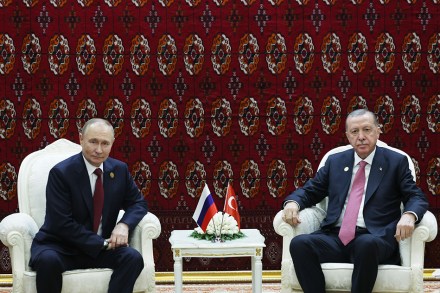
Putin

The tide has turned in Ukraine

The long war in Ukraine has morphed into a new and decisive phase, one that could lead to Ukraine’s upset victory over its much larger, more aggressive neighbor. The global consequences of Russia’s loss – and Vladimir Putin’s humiliation – would be enormous. What is this new phase? Is there really evidence the tide has turned in Ukraine’s favor? To sort out the answers and understand what’s new about the war’s current phase, we need to do a brief tour of the three phases that preceded it. The first phase began well over a decade ago, in February 2014, when Barack Obama was president. Ukraine fatefully signaled it wanted much stronger ties with Europe and the United States, not Russia, at the very moment US deterrence was weak.

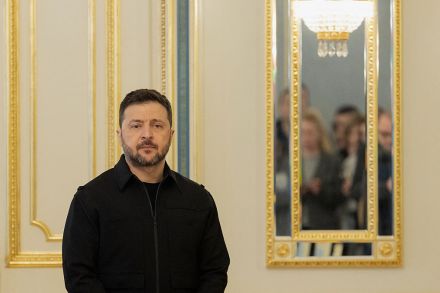
Zelensky

The Kremlin’s secret plans for post-war Russia

A top-level Kremlin policy document discussing post-war political planning and how to neutralize potential ultranationalist discontent has been leaked to the Russian investigative site Dossier Center. Entitled "Images of Victory," the paper gives a rare insight into the inner workings of Russia’s political machine. Crucially, it shows that while the Kremlin remains officially indifferent to peace talks, behind the scenes apparatchiks are working hard on selling an inevitable stalemate to the Russian people by dressing it up as a species of victory. The document was leaked before President Trump's announcement today of a three-day ceasefire between Russia and Ukraine.

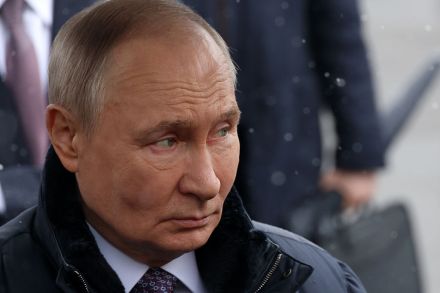
Putin

Putin moves troops into Trump’s backyard

Clandestine US military forces are not the only foreign military troops operating in Venezuela. Russia has quietly dispatched military advisors of its own to the country, moved to reinforce Venezuela’s air defenses and signaled readiness to deepen military cooperation. While Donald Trump has authorized the CIA to conduct covert ops on Venezuelan soil and just days ago approved the seizure by US troops of an oil tanker leaving Venezuela, Vladimir Putin has pledged his support for Nicolás Maduro. In a phone call with Maduro on Thursday after the tanker was captured, the Russian president “expressed solidarity with the Venezuelan people.

Witkoff’s Ukraine peace proposal is unworkable

With Ukrainian president Volodymyr Zelensky’s political authority already under grave assault in the wake of a major corruption scandal, he now faces a new challenge – this time from his erstwhile ally, the United States. A high-level US delegation led by army secretary Daniel Driscoll is meeting Zelensky in Kyiv today to present the latest version of a peace plan aimed at ending the war. The contents of the plan have not been officially revealed and so far it has not been publicly endorsed by Donald Trump. But two things are already clear. One is that there’s nothing new in it. And two, there’s nothing good in it for Zelensky.

ukraine

So much for Trump’s peace push

Here we go again. Now that Russian president Vladimir Putin has resumed his bombardment of Ukraine, President Donald Trump is responding by sanctioning the oil giants Rosneft and Lukoil. So much for the vaunted peace push that Trump has been engaging in since he met with Putin in August in Alaska.  The atmosphere has turned distinctly frostier since they held their pow-wow. Budapest was supposed to be a reprise of the brief thaw that took place in August but Trump has got cold feet after the Kremlin indicated that it was in no mood to compromise over the actual boundaries between it and Ukraine.

Ukraine

Trump, the foreign policy president?

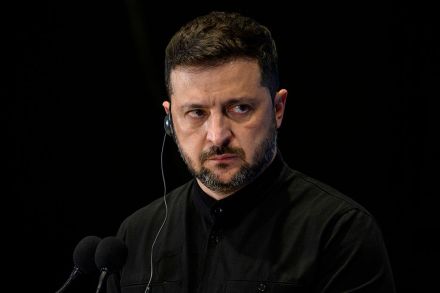
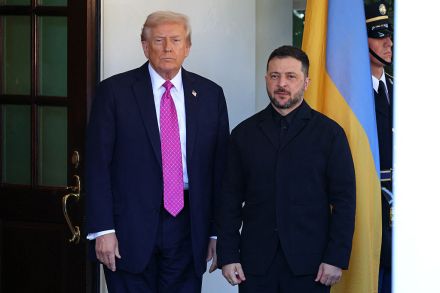
President Volodymyr Zelensky of Ukraine continued his excellent sartorial adventure at the White House, appearing in an elegantly cut black suit and shirt on Friday as he met with President Donald Trump in the Cabinet Room. But while they may have helped avoid any emanations of wrath from his host, his habiliments did not appear to prompt Trump to approve the dispatch of Tomahawk missiles to Kyiv, a coveted item indeed. “We’d much rather not need Tomahawks,” Trump said. “We’d much rather get the war over. It could mean a big escalation. It could mean a lot of bad things could happen.”  Back to square one, in other words. In August, Trump had claimed that his summit meeting with President Vladimir Putin would lead to a breakthrough. It never happened.

Trump

No, Trump has not changed course on Ukraine

President Trump has once again played the global foreign-policy commentariat for fools. They have taken a startling statement from Trump’s Truth social-media account on Tuesday as a sign of a new policy – or at least a new attitude – toward the Russia-Ukraine war. Yet what Trump actually wrote says nothing of the sort.  If Trump really were newly committing himself to Ukraine, why would say, as he’s so often said before, “I wish both countries well”? One country has invaded the other; wishing one of them well means wishing defeat on the other. Wishing them both well indicates indifference.

Trump Ukraine

The West can’t afford to shun Russian oil

Donald Trump is a radical foreign-policy innovator. Over the past few decades, the US has tried a range of non-military means to nudge, squeeze and occasionally strangle its adversaries. These range from travel bans and banking restrictions, to export controls and trade limitations. But never has the US – or indeed anyone – tried to use import tariffs as a species of economic sanction. Trump has threatened Vladimir Putin with introducing “secondary sanctions” against countries that import Russian oil – a threat intended to strike at the heart of Russia’s war economy. And on August 4, Trump appeared, for the first time, to make good on that threat.

oil

Europe is a paper tiger

“The purpose of NATO,” Lord Hastings Ismay, the alliance’s first secretary general, once quipped, was “to keep the Americans in, the Russians out, and the Germans down.” That formula defined Europe’s security for decades, and it worked because US power anchored the alliance. But as President Donald Trump’s administration demands its European allies carry their share of the burden, shows little appetite for sending troops to Europe and worries more about the Southeast Asian theater, Europeans are being forced to confront their lack of political will for their own security, underinvestment in defense and dwindling public appetite to fight for their country.

europe

The Alaska summit went much as expected

The summit between Presidents Donald Trump and Vladimir Putin ended predictably, without a ceasefire deal or, it seems, assent on much else. Trump said “Many points were agreed to, and there are just a very few that are left,” but failed to offer any details. Even if true, the leftovers are critical, and the gulf between the two governments on the war remains huge. Critically, Putin cares more about security than image or economics, and understandably believes that he would lose leverage by agreeing to halt military operations before winning the concessions he demands from Ukraine. Nevertheless, the summit improved, however slightly, the prospects for negotiating an end to the war.

Trump Putin

Trump, Putin, and the hidden power of the Bering Strait

Ahead of the Trump-Putin summit in Alaska to discuss Ukraine, President Trump said there would be “some land swapping.” He waxed lyrical about “prime real estate.” The summit’s location is a good example of land swaps and prime real estate and is in a region of growing geopolitical importance.   In 1867 Russia "swapped" Alaska for $7.2 million in a deal mocked as Seward’s Folly after Secretary of State William H. Seward who negotiated the exchange. It turned out to be a snip. Commercially viable oil was discovered three decades later and has brought in more than $180 billion in revenue since Alaska became a state in 1959.

Trump Putin Alaska Bering Strait

Can Ukraine secure its military survival?

The Trump-Putin honeymoon is over. After three months of lengthy one-on-one phone calls, a handful of false starts on negotiations and flashes of Trumpian boosterism over the prospect of great commercial deals with the Kremlin, a fourth summer of war in Ukraine looks inevitable. Vladimir Putin will pretend to negotiate, while at the same time continuing to pound Ukraine’s cities with missiles and pressing forward on the ground. The Ukrainians will continue to scramble for men and resources with which to defend themselves. And the White House will continue to blame both sides for not reaching a deal. Over these three months of false hope, Putin has made two things very clear.

Ukraine

My DC bunker

Washington, DC My office this week has been the Starbucks on Capitol Hill. Any random subscriber to my Substack can get a half-hour with me if they book a slot. I do this a lot when I travel and oddly, given the rot of this rotting world, I rarely come away with the feeling that here were 30 precious minutes I’ll never see again. I often want to spend an hour or two. And no one yet has killed or even attacked me. A leftist policy wonk did show up without an appointment, but he just wanted to talk about Ezra Klein. One of this week’s characters was a Russia expert at a foreign policy thinktank, who seems to really know his stuff. He filled in important nuances ofthe Prigozhin coup. Yevgeny Prigozhin never meant to overthrow Vladimir Putin, he said.

curtis yarvin dc
nightmaring

Play Putin at his own game by ‘nightmaring’ his world order

There’s a delicious Russian verb that derives from the criminal underworld: “koshmarit,” literally “to nightmare someone.” It usually denotes how authorities give criminals, or anyone they dislike, so much relentless hassle from so many different angles they bend them to their will. Vladimir Putin, always keen to bring mafia language into politics, was the first Russian statesman to make use of it in public – he once instructed his authorities to stop “nightmaring” the business community. I keep returning to that word when I think of how Putin’s own foreign policy could be restrained to make real the Reaganite slogan that helped Donald Trump win the election: “peace through strength.

Why Putin could reject a ceasefire

With all the good news coming out of the Jeddah talks about a 30-day ceasefire in Ukraine, there’s only one question that needs to be answered: Will President Putin be interested in any kind of deal right now? President Trump is convinced that Putin wants peace. But if the Russian leader truly wants to end his war, will he do so on America’s terms, or will he wait until he achieves one of his main objectives — the total subjugation of the four provinces in eastern Ukraine that he claimed to have annexed in the first seven months of the invasion? At a ceremony in St. George’s Hall at the Kremlin in September 2022, Putin declared that Russia now had four new regions: Donetsk, Luhansk, Kherson, and Zaporizhzhia.

Putin

Why Europe needs to take the Putin threat more seriously

Russia’s war on Ukraine presages a dire future for all of Europe unless Vladimir Putin’s military is decisively defeated. That is the powerful and persuasive argument advanced in Keir Giles’s new book. To appreciate fully the importance of his contentions, you must acknowledge not only Giles’s own status as a supremely well-connected senior fellow at the famed Chatham House think tank in London but even more so the all-star cast of international military luminaries who have publicly endorsed his analysis: the now-retired US generals John Allen and Ben Hodges, UK general David Richards, Australian general Mick Ryan, plus former Estonian president Toomas Hendrik Ilves. Giles’s assertions thus should be taken with the utmost seriousness.

Giles

Bill Clinton’s latest memoir sees him at his chirpiest — and most combative

In February 1974, the British prime minister Edward Heath, then facing one of his country’s cyclical economic crises, called a snap general election. The result was close; Heath’s Conservative Party won the popular vote but secured fewer parliamentary seats than the Labour opposition. After power-sharing discussions broke down, Heath resigned from office. A fifty-seven-year-old bachelor without a London home of his own, he lodged for the next several months at a small Westminster flat owned by his political secretary Timothy Kitson. The man who had served as his nation’s head of government for the previous four years was left with a typist, a single daytime detective and a part-time driver at his disposal.

Clinton

The endgame: Biden’s quest for a foreign policy legacy

President Joe Biden only has a few more months before he steps out of the White House, hands over the keys to his successor and spends his remaining days soaking in the Delaware sun. But before he enjoys retirement, the lifelong public servant has a big piece of unfinished business: scoring a major foreign policy win that will secure his place in the history books. Unfortunately, dreaming about being a statesman is one thing; being one is quite another. The two conflicts that would give the president that coveted status — the wars in Gaza and Ukraine — aren’t presently amenable to diplomatic resolution. And while Biden and his advisors may be committed to doing the impossible, all the commitment in the world won’t do much if the combatants are intent on slugging it out.

Biden

Seized Russian assets should be used against Putin

The seizure of enemy treasure, formerly known as plunder and pillage, is an ancient tool of war. Though still practiced in the world’s nastiest conflict zones, it’s a tricky business within a rules-based international order. The G7’s agreement to lend $50 billion to Ukraine — using income from $300 billion of frozen Russian assets to cover interest and repayments on the loan — is a vivid case in point. And some would say, a lily-livered half-measure. The key feature of the deal is that it does not actually claim ownership of Russian loot — which however ill-gotten is mostly held in EU banks in the form of western government bonds. It merely diverts interest payments due on the bonds from the issuing governments.

Russian

Russian failure is a lesson for America

We may never understand the series of events and decisions that led Yevgeny Prigozhin to stage an armed rebellion against Russian president Vladimir Putin’s administration with his Wagner Group private military company, or PMC. Prigozhin was opposed to the planned forcible incorporation of Wagner into the Russian armed forces. He also came to be a sharp critic of the fabricated rationale for Russia’s war on Ukraine and the sloppy way it was being waged by its generals, who are more focused on politics than on defeating Kyiv.

russian military