A guaranteed way to spoil the convivial ambiance at a sparkling Parisian dinner party with journalists is to mention the generous tax breaks granted to their exalted profession. Watch the room fall into uneasy silence, before one brave scribe gulps down his Haut Médoc and insists that the advantages are entirely merited.
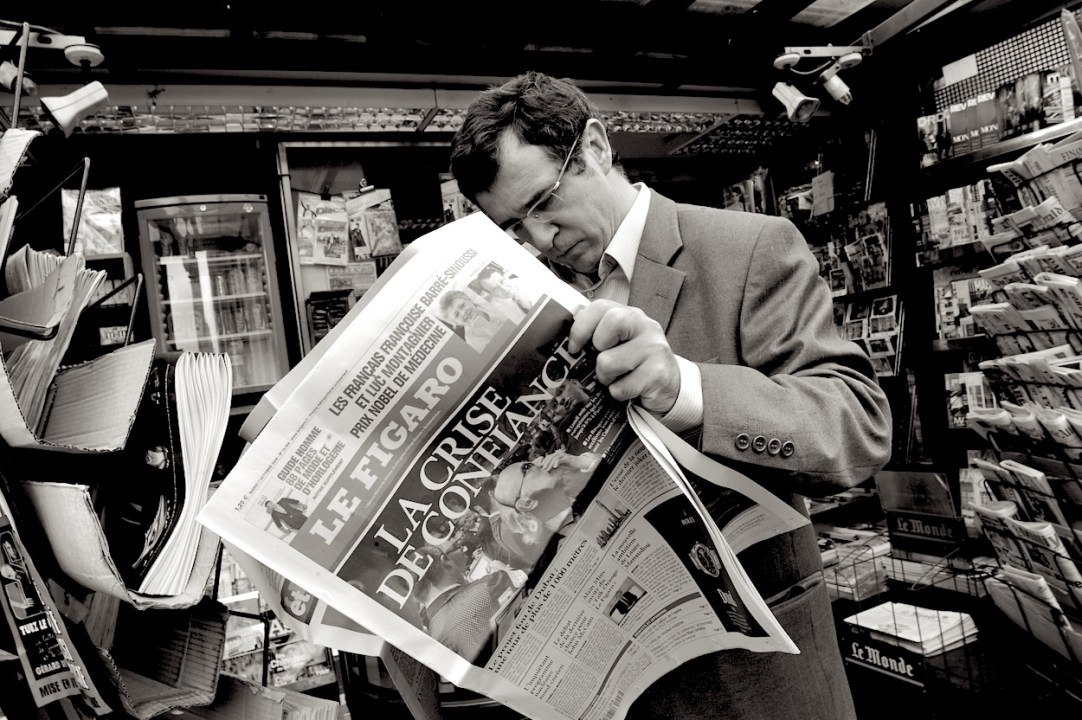
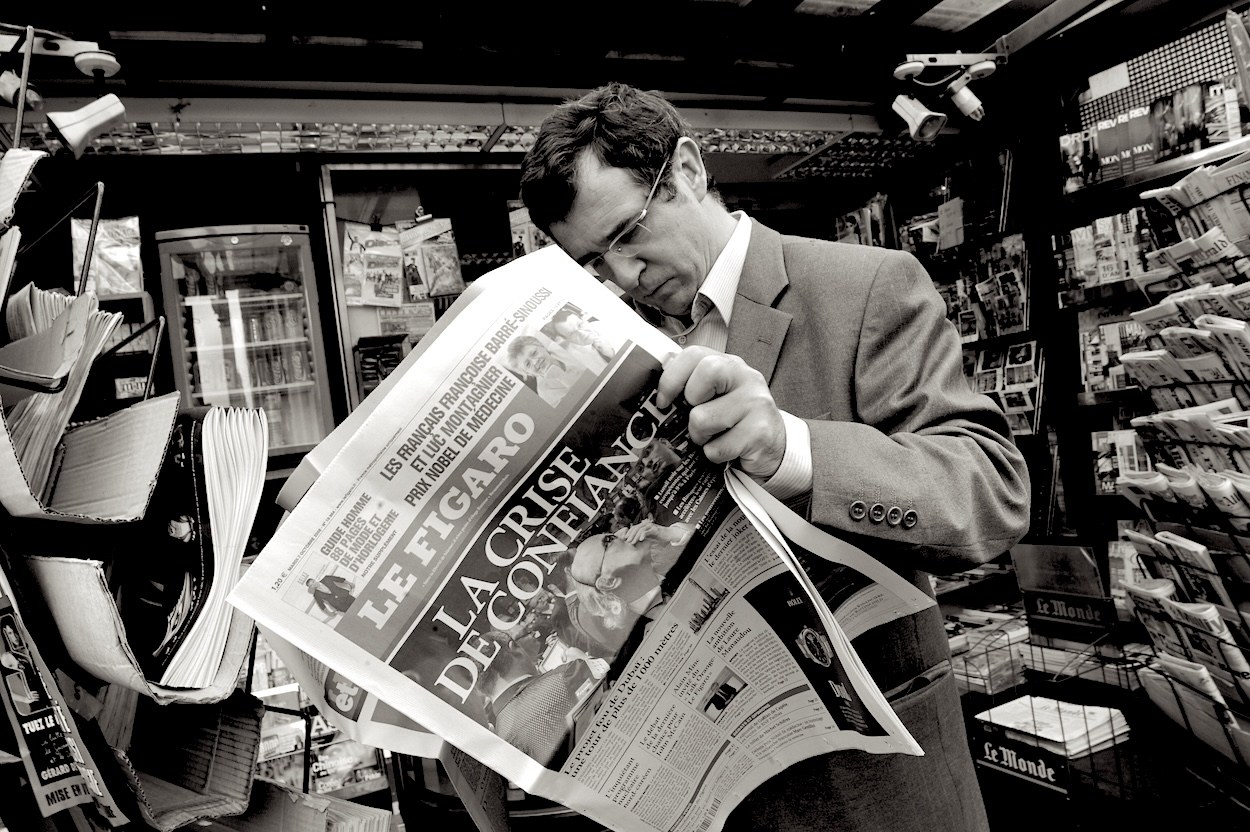
Yes, journalists in France are one of the privileged categories that benefit from a “niche fiscale” to lower their income tax. Every year, a journalist can deduct €7,650 ($8,375) from taxable income. Total cost to French taxpayers is estimated to be as much as €50 million ($54 million).

The French state has a long tradition of spoiling journalists. Tax breaks stretch back to the Third Republic in 1934, when the government awarded journalists a 30 percent tax deduction on their salaries. That tax benefit was in place for 60 years, until 1996, when Jacques Chirac’s government abolished it. When the Socialists returned to power the following year, however, they brought back the tax advantage in a different form.
You might think that the French government, crippled today by crushing debt and scrambling to squeeze billions from public expenses, would target tax gifts to journalists. But even in times of belt-tightening, this spending envelope is unofficially off limits. So are hefty subsidies lavished on the French newspapers and magazines.
France has a long history of direct state subsidies for print journalism, unlike in the UK which has almost none. In Britain, a new Local News Fund devotes £6 million annually to support small newspapers and regional media outlets. That’s chicken feed compared with France’s vast arsenal of subsidies, direct and indirect, totaling €438 million ($480 million), which benefit some 600 print titles every year. Direct cash grants amount to €194 million ($212 million).
Some of these handouts are awarded in the name of high-minded principles, notably media “pluralism.” Subsidies, it is claimed, help foster a diversity of voices in the French press. This works to some extent, especially in local news. The Dordogne Libre, for example, is a regional newspaper with 15 journalists and a daily print run of 4,000 copies. Last year it received a subsidy of €324,745 ($355,545).
Nationally, the weekly Franc Tireur magazine, put out by a group of well-known Parisian intellectuals, adds a distinct voice to political commentary. Last year, the French state sent Franc Tireur a check for €637,661 ($698,121). Well-known leftist papers also receive substantial subsidies in the name of pluralism. The ex-communist paper L’Humanité pocketed €5.6 million ($6.1 million) last year. Libération took €5.7 million ($6.2 million), while Le Monde received €5.3 million ($5.8 million)
Critics observe that, while state subsidies do help small and independent titles, a big chunk of the largesse (about 35 percent) goes to large press groups owned by the country’s richest families. Last year, the top two beneficiaries of press subsidies were the national edition of Le Parisien owned by billionaire Bernard Arnault, and Le Figaro whose proprietor is the Dassault family dynasty. Arnault, who controls the LVMH luxury goods empire, owns several press titles including Le Parisien, Les Echos, Paris Match and L’Opinion. In total, Arnault’s press titles are the largest recipients of state subsidies, adding up to a total of €15.8 million ($17.3 million). Le Figaro received €7.7 million ($8.4 million) last year. The weekly magazine Le Point, owned by billionaire François Pinault, took nearly €2 million ($2.2 million). Even upstart Franc Tireur is owned by a billionaire, Daniel Křetínský.
If state subsidies to billionaire-owned print titles in the name of “pluralism” are contestable, it is also difficult to find a convincing rationale for income tax deductions granted to journalists. Some argue, perhaps cynically, that these tax benefits are a mutually convenient arrangement between political and media elites. It is doubtful that tax breaks buy complicity from journalists, though they create the appearance of a culture of privilege.
Politicians, for their part, are reluctant to abolish these perquisites, mainly for fear of irritating the journalists who write about them. While it’s unlikely that the French population would take to the streets to defend subsidies for journalists, newspapers and magazines (and their unions) have a powerful voice and could marshal compelling (and self-interested) arguments in favor of subsidies.
These fiscal privileges, however, may soon be coming to an end. As France’s presidential election looms, the populist élan on the radical left and far right threatens to sweep away the old centrist ruling class that have long defended subsidies and tax gifts for media elites. On the radical left, Jean-Luc Mélenchon is hostile to subsidies for the press owned by capitalists such as Bernard Arnault, whose papers and magazines regularly portray him as a danger to French democracy. On the far right, Marine Le Pen is also against subsidies and tax breaks for left-leaning newspapers and journalists who, she claims, have demonized her political movement for decades.
Moves are afoot to crack down on these cash gifts
Le Pen’s party spokesman, MP Jean-Philippe Tanguay, argues that tax gifts to a “privileged caste” of journalists are unjustifiable. Le Pen moreover promises to privatize most of France’s massive public broadcasting system, which costs taxpayers about €4 billion ($4.4 billion) annually.
Le Pen has support from ultra-conservative press baron Vincent Bolloré, owner of a private television and radio empire and print titles including Le Journal du Dimanche and Valeurs Actuelles. Bolloré-owned papers have been calling for an end to press subsidies for years. His paper Le Journal du Dimanche receives €1.2 million ($1.3 million), but that’s only a fraction of the amounts raked in by leftist papers such as L’Humanité and Libération. Last year, Bolloré’s weekly magazine Valeurs Actuelles told its readers: “In France the press lives less off their readers than off your taxes.”
Emmanuel Macron, who cultivates influential journalists (and exchanges text messages with them), has kept subsidies and tax breaks intact. But in parliament, where power has shifted in the dying days of Macron’s last government, moves are afoot to crack down on these cash gifts. Last month, Le Pen’s party introduced a motion to abolish tax breaks for journalists altogether. It lost by only four votes. Mélenchon’s far-left party, however, subsequently tabled an amendment that would scale back fiscal benefits for journalists to a maximum of €850 ($930). Macron’s government party voted against the motion – but lost. The vote passed with the support of Le Pen’s party.
These maneuvers are doubtless a sign of things to come, especially as Le Pen and Mélenchon look certain to advance to the final runoff for the French presidency. Both know that depriving the chattering classes of generous fiscal privileges will appeal to their populist voter base.




Comments