Journalism

My top tips for Andy Burnham

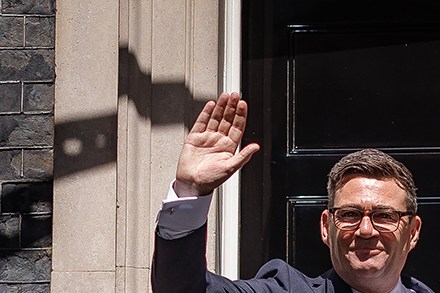
I am cautiously optimistic about our new leader. For one thing, the fact that Mr Burnham went to Cambridge not Oxford, did not study PPE, is not a lawyer and did not grow up in Surrey makes him something of a diversity hire among our more recent UK prime ministers. This gives us hope. It is a near-universal law of problem-solving that you cannot think your way out of problems using the same mindset that created them in the first place. Occasional catastrophes cause much less annoyance than frequent peeves One tip. Government needs a marketing function. Rather than explaining itself to the public, it has endlessly sought to cadge publicity by ingratiating itself with the news media.

Distant shadows: Frame 37, by Nicholas Shakespeare, reviewed

From our UK edition

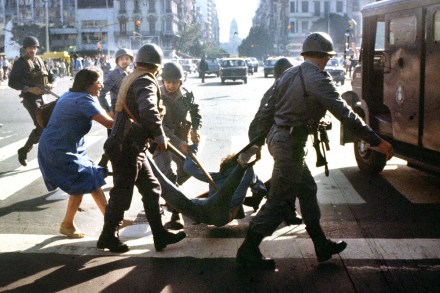
In photography, balance, whether radial, conceptual or symmetrical, is critical to the success of a composition. An unbalanced photograph can confuse, obfuscate or otherwise diminish an image. It is the same for a literary writer (Nicholas Shakespeare has twice been Booker-longlisted) taking on the thriller genre. Finding an equilibrium between prose styling and fine plotting requires considerable skill and a gentle touch. In his second outing for the former journalist John Dyer, Shakespeare treads this tightrope nimbly. Following the events of The Sandpit (2020), Dyer is in Tasmania, engaged in research for a book on the Tupian peoples of the Amazon. He is soon interrupted by a voice from the past, that of Miguel Girondo de Belew, an Argentinian photo-journalist.

Keir, please, take my phone away

From our UK edition

As seen on Substack I was in the middle of a mindless scrolling binge, when Isabella and Tash told me that Keir Starmer was finally going to stand up to the social media companies. I opened the BBC app to check if it was true that the government would be banning harmful content – putting an end to the era of digital commodification, online hatred and violent pornography for good. I let out a little shriek of joy. But this soon turned to a guttural moan, as my friends and I realised that – as young women in our early twenties – we would miss out on these protections since they would be limited to the under-16s. I threw down my phone in disgust, before picking it up again.

Riddled with contradictions: the enigma of Jan Morris

From our UK edition

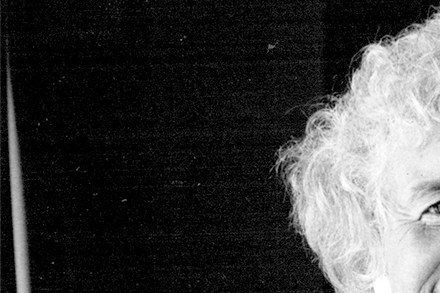
Jan Morris was driven by almost super-human levels of energy and ambition, producing more than 40 books as well as news and travel articles, introductions, interviews, reviews and essays, travelling incessantly and taking on every job that was offered. That’s as far as I can go without a pronoun, because of course Morris’s life is divided into two parts. For the first half he was James, for the second she was Jan. James Morris was born in 1926, aware from early on that she was female, trapped in a male body. The transition to Jan, made in the early 1970s, remains at the heart of our fascination with Morris.

The cut-throat world of school magazines

From our UK edition

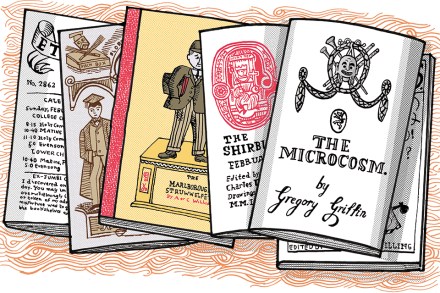
In my mind, there was always a sense of hubris in the air of our tucked-away offices at the Chronicle, Eton’s main student magazine. As in many other domains of our school’s life, we idly assumed ours was the first, as well as the only really consequential, example of a public-school magazine. The early 2000s, when I was a boy there, were a particularly suitable time in which to indulge in such a view; we were all acutely aware of the rise of Boris Johnson. If you were devoid of athletic, dramatic or musical talent, editing the Chronicle was the obvious crown The record for first school magazine does belong to Eton, but it is in fact for a much earlier and odder production, puckishly called the Microcosm, which ran for 40 issues in 1786-7, published as a book the next year.

The real reason I left Britain

From our UK edition

This is a two-parter, albeit linked. If you’re interested in the duplicitousness of British journalists, then keep reading. If you’re only interested in self-destructive British tax policy, skip to the middle. Burnt repeatedly by hacks who pretend to be enraptured by my latest novel while snooping through my cupboards, I long ago learned the hard way not to let British journalists into my home. Thus for years I only conducted interviews in the safely impersonal lobby of a West End hotel. But lessons learned are too often lessons lost. That may be an overly kind formulation of: I am an idiot. In my new hang in Portugal, I reverted to gormless naivety last month and let a British journalist into my house.

Horror in Victorian Hampstead: Mrs Pearcey, by Lottie Moggach, reviewed

From our UK edition

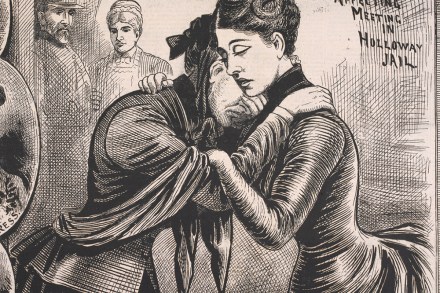
Our appetite for true crime is nothing new. The Victorians devoured it and, as Lottie Moggach’s fourth novel shows, they were as gawking and prone to erroneous judgments as any crowd on social media. Mrs Pearcey is about two women in 1890s London: sparky young Hannah Teale, engaged to a rising journalist on the Star and living with her widowed mother in Camden Square; and impoverished Mary Pearcey, who lodges in a Hampstead boarding house and is accused of the grotesque murder of a woman and her baby. It was a celebrated case in its day, coming soon after the Ripper murders, and it is now revived in Moggach’s vivid, immersive imagination. Part of the novel’s attraction lies in its setting in and around Camden Town.

Olivia Nuzzi and the return of ‘celebrity journalism’

There are two competing ideas going around about “the old days” of journalism. In one, journalism was a sober public service, safeguarded by editors and ethics, untainted by the capital-A, capital-E Attention Economy. In the other, it was a racist, sexist boys’ club we managed to leave behind – even if only briefly, for long enough to support Teen Vogue’s politics vertical. (May they rest in peace.) The current pile-on concerning celebrity reporter Olivia Nuzzi, whose ex Ryan Lizza has revealed her affair with Robert F. Kennedy Jr., leans hard on the first fantasy. Once there were newsrooms; now there are “personal brands.” Once we had Walter Cronkite and Edward R. Murrow; now there is a woman in a Lana Del Rey cosplay Mustang with 1990s porn-star brows.

olivia nuzzi

My life as a writer

From our UK edition

It was roughly 55 years ago, at the tail end of the 1960s, that I took the monumental decision to become a writer. It wasn’t exactly an agonising one. By then I’d been on the European tennis circuit for a decade, and was kaput. Joining the circuit at 19, I travelled non-stop seeing the world. I was never tired or hungover no matter how much I partied – and I partied relentlessly. And, needless to say, there were constant thump-thumps in the heart, as at every opportunity I pursued beautiful women. Right out of the box, I found writing easy. Well, it was not exactly writing; copying is the better word I had a great advantage in this regard. As one of the worst players on the circuit, I was usually free to pursue the fairer sex by the second day of the tournament.

Was the BBC’s Trump edit outrageously wrong?

I should begin by making something clear. Splicing together two parts of a speech to give the impression they were one unbroken excerpt is a grave professional error, and would be viewed as such by any broadcaster in the business. The error would be egregious even if there were no suggestion it reinforced the accusation that Donald Trump was inciting riotous behavior, simply because what viewers thought they witnessed did not occur. There is no excusing what the BBC did to Donald Trump’s January 6, 2021 speech. Nobody in the senior ranks of the BBC is to blame for not knowing about this at the time; but once it did become known, an immediate and unconditional apology should have been made.

bbc

The battle for Anna Wintour’s Vogue empire

When Anna Wintour announced she was stepping down as editor-in-chief of Vogue in June, it appeared to be the end of the ice queen’s reign. Yet Wintour retained her large, chintzy corner office as well as her two other roles – as Condé Nast’s global chief content officer and Vogue’s global editorial director. If you looked closely, you might have seen a steely determination lurking behind her trademark sunglasses, the look of a generational editor intent on more power – and perhaps even revenge. The Condé Nast Union naively regarded Wintour’s move as that of a then 75-year-old drifting into quiet retirement, the old guard surrendering to youth.

De Blasio ‘imposter’ hoodwinks British paper

Of all the people to go as for Halloween, why would you choose Bill de Blasio, an undistinguished Mayor of New York and flame-out 2020 presidential candidate?  That’s a plausible explanation for the recent howler from the Times of London – Great Britain’s newspaper of record – whose veteran US correspondent Bevan Hurley quoted a man identifying himself as de Blasio on his misgivings about Zohran Mamdani. “While the ambition is admirable, the cost estimates – reportedly exceeding $7 billion annually – rest on optimistic assumptions... about eliminating waste and raising revenue through new taxes,” this total imposter told Mr. Hurley, with strange eloquence. “In my view, the math doesn’t hold up under scrutiny, and the political hurdles are substantial.

Bill de Blasio

Life in Chicago with ICE and the National Guard

Every day, Chicagoans outside the immediate areas where federal forces are deploying pick up fragments of what feels like an unfolding drama. Here’s a representative example: on the app NextDoor, the Chicago subreddit and in neighborhood Facebook groups, we watch cell-phone footage from Logan Square of smoke spreading through an intersection as a federal vehicle pulls away. Eventually, local outlets verify that a masked federal agent dropped canisters outside the Rico Fresh supermarket near Funston Elementary. It appears the air was filled with a chemical irritant, causing people to panic, and the vehicle departed.

national guard

Stray shells and suicide bombers in Kabul’s finest hotel

From our UK edition

No one who flies into Afghanistan’s capital is left indifferent. In one of the many deftly drawn scenes in The Finest Hotel in Kabul, Lyse Doucet describes a snowy Hindu Kush on the skyline, the packed homes of the poor on the brown hills, a steep corkscrew descent carried out while firing flares, ‘bursting outward with white-hot fire’ to avoid missiles. Once safely on the ground, she decides to make her way to Kabul’s Intercontinental Hotel, drawn by ‘better telephone and telex links, food worth eating and a certain faded splendour’.

Sebastian Faulks looks back on youth and lost idealism

From our UK edition

I must say, calling a book Fires Which Burned Brightly promises much. At best, from the jaded reviewer’s point of view, an autobiography of delusional self-aggrandisement; at worst, a wild mismatch between the, well, incendiary language of the title and the potentially humdrum contents. It might have been dreamed up by a master satirist intending to inflict maximum damage to the reputation of that noted gentleman of letters, Sebastian Faulks. I once invented a novelist named Julian Sensitive, whose only claim to fame was an autobiographical novel called, after T.S. Eliot’s Prufrock, ‘My Trousers Rolled’. That was a crude joke compared with the hilarity inspired byFaulks’s title.

Julie Burchill, remembered

From our UK edition

When I was told that a newspaper had asked someone to write my obituary, my first instinct was excitement. I’m not easily offended and I’ve always been an attention-seeker. Once, when I was fat, a magazine printed a photograph of Jabba the Hutt and said it was me. I cut it out and pinned it on the wall above my typewriter with other images that inspired and amused me. Another time, when I was doing loads of drugs, I made it on to an online Death List of the ten public figures most likely to turn their toes up in the near future; again, I found this highly entertaining, and went around boasting to my drug buddies about it.

How The Spectator shaped John Buchan

From our UK edition

Amid the hullabaloo attending the 150th anniversary of the birth of John Buchan on 26 August – the walks and talks, the screenings of The 39 Steps, the think pieces in elevated publications, the new collection of essays – one facet of his extraordinary life is unlikely to get much of an airing. I am thinking of his work for The Spectator, little known now, yet crucial to his development as a writer. In early 1900, The Spectator was enjoying success as a readable Liberal Unionist, free trade, anti-Home Rule, political and literary magazine, popular with educated opinion-formers of a mildly conservative bent.

A sensory awakening: the adventures of a cheesemonger

From our UK edition

Food memoirs, as distinct from cookery books, and from the relatively new genre of ‘biographies’ of ingredients, used to fall into three rough groups: foraging, hunting or gathering food; producing or cooking food; and eating. Like the restaurateur Keith McNally’s recent I Regret Almost Everything, Michael Finnerty’s The Cheese Cure adds a fourth category, memoirs of those who sell or serve food. These foodie books often blur at the margins and merge at the borders but usually share the characteristic of being narrated in the first person – and if recipes are given they are often incidental. (Of course, many of these authors also write cookery books.) There is a canon of such tomes by writers including Elizabeth David, M.F.K.

My victory over Mohammed Hijab

From our UK edition

One of the occupational hazards of being a journalist is being hounded by litigants. Indeed, one of the reasons why much of the media finds it easier to report fluff than to write about difficult issues is that the latter can be costly in terms of money, as well as time. Three years ago I wrote a column in this magazine about some of the downsides of diversity. At the time there had just been serious disturbances in Leicester between local Hindus and Muslims. One of the people who decided to throw himself into the middle of that trouble and to try to make things worse was an online pugilist known as Mohammed Hijab. Hijab had already been filmed intimidating Jews in Golders Green and whipping up a crowd of masked men outside the Israeli embassy in London.

Why you should never trust a travel writer

From our UK edition

After one of Jeffrey Archer’s minor tangles with the absolute truth, his friend the late Barry Humphries remarked: ‘We all invent ourselves to some degree. It’s just that Jeffrey has taken it a little further than most.’ The remark came to mind last week as the media storm over the veracity (or otherwise) of the Winns’ account in The Salt Path reached its peak. As Dame Edna might have said, all travel writing is invented to some degree. It’s just that Raynor and Moth may have taken it a little further than most. ‘In Patagonia?’ Bruce Chatwin’s lodger is said to have remarked of the eponymous book. ‘I doubt Bruce even went downstairs.’ That’s unfair. Chatwin undoubtedly visited Patagonia.