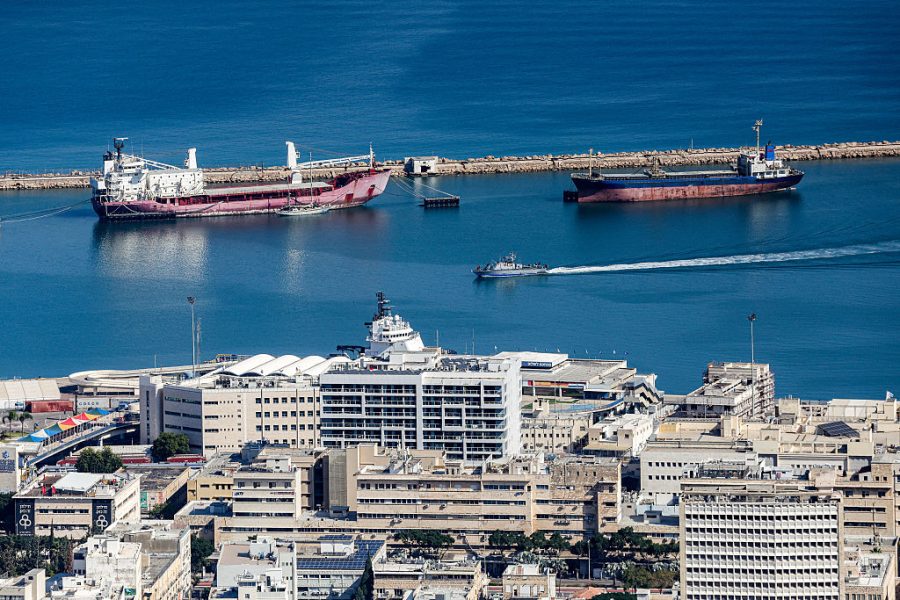
The diplomatic spat between Kyiv and Jerusalem over the Russian vessel wanting to unload stolen grain from occupied Ukrainian territories in Israel appears to have reached a conclusion this morning. The Panama-flagged Panormitis, which was carrying more than 6,200 tons of wheat and 19,000 tons of barley, arrived at the port of Haifa early this week. Today, after days of diplomatic sparring, its Israeli importer Zenziper reportedly turned the vessel away. Israel’s Grain Importers Association added in a statement: ‘The Russian supplier of the wheat cargo will have to find another destination at which to unload it.’
The Panormitis is not the only Russian vessel carrying illegal grain to have docked in Israel in recent weeks. Earlier this month, the Abinsk ship unloaded 44,000 tons of wheat looted from Ukrainian territories at Haifa. Israeli authorities responded to Kyiv’s request to seize the ship only after it had sailed away, taking with it the proceeds for Vladimir Putin’s bungled war effort. When Kyiv tracked a second ship – the Panormitis – approaching Israeli shores this week, Ukrainian officials called for the ship to be seized before it could unload its cargo and leave the port like the one before.
The diplomatic crisis might never have erupted had the Panormitis been carrying gold bars
On Monday, Ukraine’s foreign minister Andrii Sybiha lashed out at Israel’s ‘lack of appropriate response’. He announced on X that he had summoned the country’s ambassador to present a ‘protest note’ and demand Israel seize the vessel. His Israeli counterpart Gideon Sa’ar dismissed the criticism, saying Kyiv had presented no legal evidence that the grain was ‘stolen’. Echoing US Vice-President J.D. Vance, he implied that Ukraine should be grateful for ‘Israeli humanitarian support’ and scathingly rejected ‘this type of Twitter diplomacy’.

Sybiha pushed back, insisting that he had approached Israel through diplomatic and legal channels. He added that Ukraine’s highest prosecutor had submitted an official request asking Israeli authorities to detain the ship based on a court ruling. Ukrainian foreign ministry spokesman Heorhiy Tykhy later said that Israel had received two Russian shipments of agricultural products from occupied territories this month (Israeli newspaper Haaretz reported that at least four shipments of stolen Ukrainian grain had been unloaded in Israel this year). Tykhy said Kyiv had informed Israel about each case through closed diplomatic channels. However, after ‘dozens’ of appeals, it became clear that Israel ‘was not going to take any action regarding these shipments and Ukrainian concerns’ unless Kyiv protested publicly.
The diplomatic crisis might never have erupted had the Panormitis been carrying gold bars instead of grain. Ukraine – known as the ‘breadbasket of Europe’ – regards grain as sacred following the Holodomor famine in 1932 and 1933, when at least 3.9 million people died after Stalin ordered all grain harvests be seized from Ukrainian farmers and sent to Russia. Almost a century later, when war became an expensive whim for Putin, he turned to Stalin’s old tactics to generate income – siphoning off grain and corn from occupied lands and into Africa and the Middle East. Last year alone, Russia exported more than two million tons of agricultural products from occupied Ukrainian territories, adding more than £300 million to its war chest. It explains why Ukrainian officials consider the purchase of stolen grain so immoral: it legitimises Russian occupation and allows the Russian President to continue his invasion.
That’s why Volodymyr Zelensky joined the social media fight on Tuesday. He accused Israel of undermining relations when Ukraine is helping its allies against Iran and threatened sanctions on those transporting the grain or seeking to profit from the scheme. The EU also reportedly threatened Israel with a sanctions package – before Jerusalem backed down and agreed to examine the Panormitis. When the vessel was finally turned away from Haifa for neutral waters this morning, Ukraine’s ambassador to Israel Yevhen Korniichuk said criminal proceedings and sanctions would be closed. Jubilantly, he declared: ‘We have won.’
But, given the scale of Russian trade flowing through other foreign ports including Turkey, Egypt and Algeria, it seems unlikely that this hard-won diplomatic victory will truly tip the scale in Ukraine’s favour.





Comments