Christopher Sandford

Christopher Sandford is the author of The Rolling Stones: Sixty Years (Simon & Schuster).

A progressive mayor puts Seattle to sleep

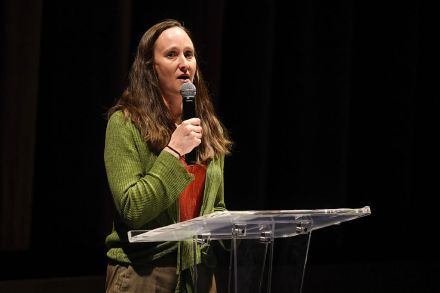
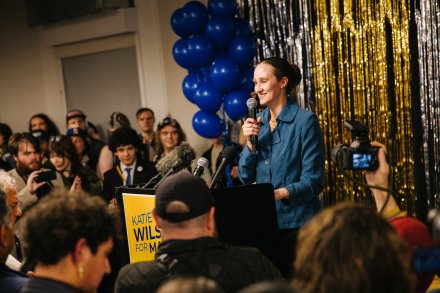
Back in April 1971, a large billboard appeared by a freeway near the Seattle-Tacoma airport. “Will The Last Person Leaving Seattle Turn Out The Lights?” A reference to the Boeing company’s decision to lay off 40,000 local employees, and the ensuing rapid downturn in the area’s economy. Among other problems, the aircraft manufacturer had suffered a crippling blow when the US Senate rejected further funding for its proposed SST supersonic jet, Boeing’s would-be competitor to Concorde. I was reminded of the 1971 slogan just last month, when Seattle’s newly-elected mayor Katie Wilson told a university audience that she was “really, really excited” about the recent passage of a 9.

Wilson

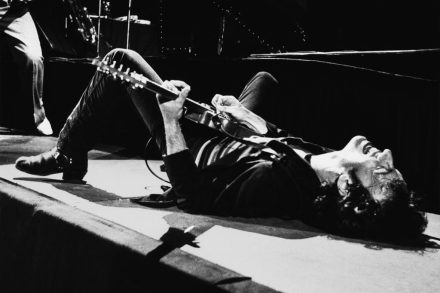
Will the Stones ever play live again?

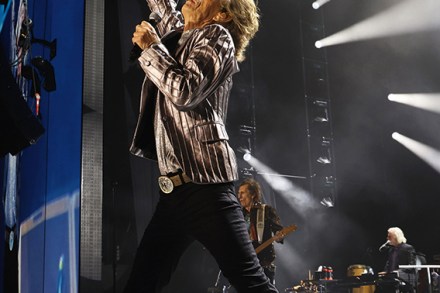
How times change. Our forebears once thought that full-figured Bill Haley was at the razor-sharp, frighteningly decadent and anarchic edge of pop culture. Compared to the Rolling Stones’ subsequent carnival of drug busts, court appearances, car crashes, house fires, paternity suits and chosen or enforced overseas exile, not to mention the matter of Keith Richards’s alleged blood transfusion, or of his unusual choice in dispersing his father’s ashes (cocaine, nostril), Haley’s act now seems as quaint as the background accompaniment to an Edwardian tea-dance.

Why does Taxi Driver still resonate?

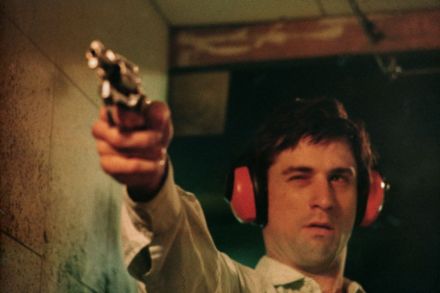
Even if you haven’t seen the movie, you probably know the macabre legacy of Martin Scorsese’s early masterpiece Taxi Driver. Released 50 years ago this month, the tale of the eponymous cabbie Travis Bickle, played by Robert De Niro, still has something potent to say about what can happen when a brooding loner finds himself adrift amid the menace and jammed chaos of New York’s streets with a .44 Magnum for company. Perhaps one of the reasons Taxi Driver resonates with so many people is because of this human void that lies at its center. At one time or another, we’ve all felt as alone as Travis Bickle.

Taxi Driver

Inside the mind of Cheryl Hines

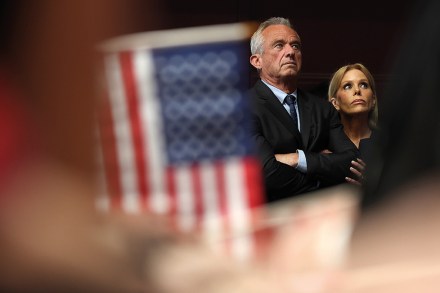
This book shouldn’t work. A memoir written by a 60-year-old actress – who, frankly, has never threatened to become a major movie star – hardly sounds promising. Then there’s the author’s personal baggage. Since 2014, Cheryl Hines has been married to Robert F. Kennedy Jr., the raspy-voiced Health and Human Services Secretary who served as one of Donald Trump’s chief surrogates during his last presidential campaign. Rarely has a book so straddled the worlds of Hollywood and conservative politics, let alone those embodied by the current administration. Yet, against all the odds, Unscripted is an enthralling read. To address the burning topic first: no, not all of Hines’s friends were entirely happy with her husband’s appointment, nor with his views on Dr.

Sir Anthony Hopkins, outsider actor

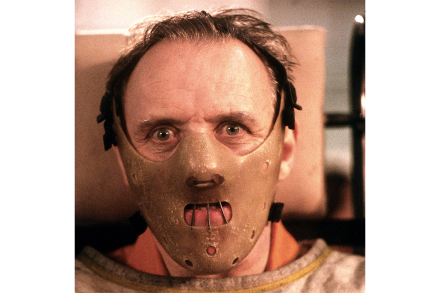
Yes, Sir Anthony Hopkins did have a life before The Silence of the Lambs. And after it, too. But most casual moviegoers would be hard pressed to add too many other entries to his filmography. Like his most famous screen creation, the cannibalistic serial killer Hannibal Lecter, Hopkins has always been something of a study in contrasts. As an actor, he sits in the middle of the Venn diagram where the mainstream and the fringe overlap, seemingly as happy to mug his way through the Transformers franchise as to direct and star in a project like 1996’s August, a drily worthy adaptation of Uncle Vanya that barely registered on the sordidly commercial level.

Anthony Hopkins

Mini-Mamdani is (finally) new mayor of Seattle

Perhaps living in Seattle should inure you to shock. This is the city where, in the name of the George Floyd riots of mid-2020, armed fanatics took over a four-block chunk of downtown, a development Seattle’s moonbeam mayor of the day said reminded her fondly of the Summer of Love, only for the good vibes to dissipate when the commune’s residents started shooting one another on a nightly basis. And the squalor: in recent years, the general look of America’s Emerald City has passed from one characterized by its backdrop of snow-capped mountains and sparkling lakes to something more like one imagines central Berlin to have been after a particularly hard night of bombing in April 1945.

Katie Wilson

A compelling account of actor Robert Shaw’s life

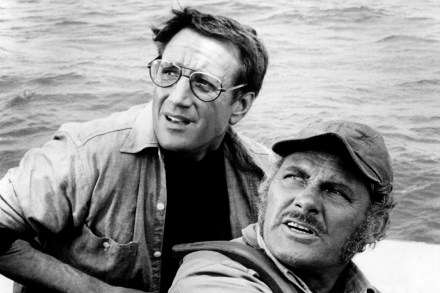
A narrative biography by a member of its subject’s family is, if not unique, something of a novelty. Here, Christopher Shaw Myers writes the story, while his uncle Robert Shaw’s life (1927-78) provides the book’s framework. Shaw Myers has previously written the as-yet-unfilmed screenplay Jaws & Mrs. Shaw and revisits some of the same material here. In both cases, a pivotal moment comes when Robert Shaw’s mother visits the set where Jaws is being shot in 1974 off the coast of Martha’s Vineyard, and thus happens to be present when her son polishes off the monologue about the shark attack on survivors of the USS Indianapolis that anticipates the gory finale of the film.

Shaw

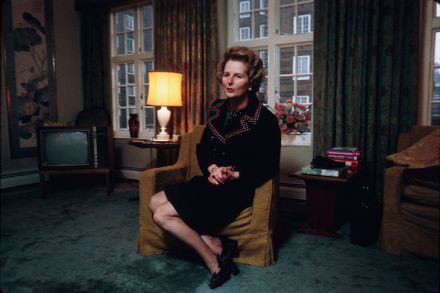
What happened when Thatcher, the ‘milk snatcher’, came to my school

From our UK edition

When Margaret Thatcher, who was born hundred years ago today, came to visit my school I was in the midst of my stroppy-leftie phase. To my shame, I remember announcing that all Tories, let alone Thatcher – the notorious kiddies’ milk-snatcher – should be put up against a wall and shot. When Margaret Thatcher, who was born hundred years ago today, came to visit my school I was in the midst of my stroppy-leftie phase ‘That’s not exactly civilised,’ my friend Owen Paterson, who became a Tory MP later in his life, retorted. ‘What makes you think we’re civilised?’ I said. ‘I didn’t say we are,’ said Owen. ‘But we can at least try to be.’ He had me there.

Springsteen’s Born to Run turns 50

Bruce Springsteen chuckled when I asked him about the making of Born to Run. “I was just a kid in my 20s trying to keep a record deal together – there was nothing more to it than that,” he told me. One way to see the Springsteen of the summer 1975, just before Born to Run released, is to imagine a wispy-bearded, 25-year-old man hanging around a beachfront New Jersey bar, telling you about his life. He relates slightly improbable tales of having attended a local Catholic high school, where one of the supervising nuns expressed her misgivings about his scholastic performance by stuffing him upside down in a garbage can in the classroom.

The mechanics of cancel culture

Must we approve of an author’s private life in order to enjoy his or her books? Possibly not, to judge by the continuing popularity of writers as diverse as Charles Bukowski, Allen Ginsberg, P.L. Travers, Roald Dahl and Norman Mailer, to name but a few of those whose domestic affairs have fallen short of the temperate or monogamous ideal. And what of the sage of Cornish, J.D. Salinger, most of whose interactions during his long years of New Hampshire exile involved hanging around with local teenagers? In 1972, a fresh-faced journalism student named Joyce Maynard left college and went to live with the 53-year-old author of The Catcher in the Rye at his invitation. After eight months, she was unceremoniously dumped.

Bailey
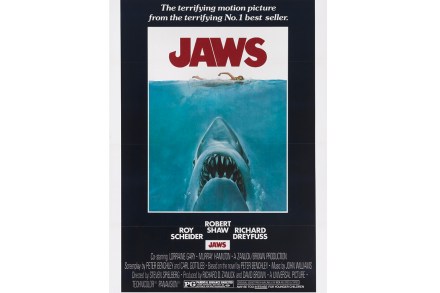
Jaws

The enduring appeal of Jaws, 50 years on

It’s been 50 years since audiences first thrilled to the thudding theme music and bared teeth of the original Jaws. The movie, released on June 20, 1975, immediately had customers lining up around the block, recouping its then-astronomic $20 million production cost within a week. It still stands alongside Rocky and Star Wars as one of a trio of enduring “high-concept” mid-70s blockbusters. In keeping with Sylvester Stallone’s boxing picture and George Lucas’s space opera – and most other Hollywood money-spinners – it’s easy to forget that there was nothing inevitable about the film’s long-lasting success.

Who was William F. Buckley Jr., really?

What more can be said of the American conservative commentator, novelist, musician, sailor, talk-show host and tireless public intellectual William F. Buckley Jr. (1925-2008), that he or his previous biographers haven’t already said or written? After all, this is an individual who in 1983 wrote a 90,000-word book, called Overdrive, covering the events of a single week of his life. Plenty more, it turns out, as Sam Tanenhaus proves in his thousand-page biography Buckley: The Life and the Revolution That Changed America. Buckley was blessed with a voice that sounded like he let it marinate in a cask of port between appearances Buckley was 58 when he wrote Overdrive, and kept to a schedule that would have taxed the energy of a man half his age.

Buckley

Bill Gates’s memoir offers an oddly revealing look into the Microsoft founder’s psyche

In 2024, a Swiss company called FinalSpark claimed to have built the world’s first computer processor fired by human brain cells. To do this, the company evidently took small samples of living brain tissue, and — so the press release says — “connected them to specialized electrodes to perform computer processing and digital analog conversions to transform neural activity into digital information.” Frankenstein undertones aside, the whole FinalSpark initiative raises the issue of how far a computer can be humanized, made not only to respond with factual accuracy but with something approaching emotional intelligence.

Gates

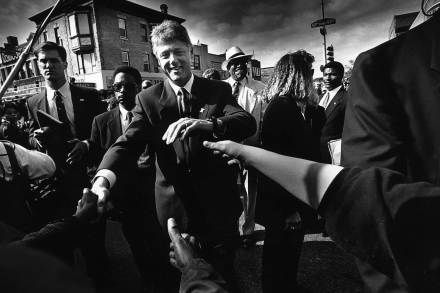
Bill Clinton’s latest memoir sees him at his chirpiest — and most combative

In February 1974, the British prime minister Edward Heath, then facing one of his country’s cyclical economic crises, called a snap general election. The result was close; Heath’s Conservative Party won the popular vote but secured fewer parliamentary seats than the Labour opposition. After power-sharing discussions broke down, Heath resigned from office. A fifty-seven-year-old bachelor without a London home of his own, he lodged for the next several months at a small Westminster flat owned by his political secretary Timothy Kitson. The man who had served as his nation’s head of government for the previous four years was left with a typist, a single daytime detective and a part-time driver at his disposal.

Clinton

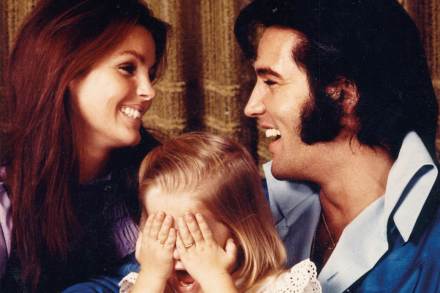
Lisa Marie Presley’s posthumous book exposes the horrors of celebrity

The title of this book may offer a clue to its prevailing tone. There’s a certain amount of showbiz gossip involved, but it is essentially a protracted rumination of the “What’s it all about, Alfie?” variety, with plenty of unflinching discourse on matters such as spirituality, depression, addiction and the precariousness of the human condition. “I wondered how many times a heart can break,” the authors write near the end of their tale of untold material privilege and wrenching emotional grief. All too often, is the inescapable answer. The book is freighted with a certain amount of woe from the start, because its principal author, Elvis Presley’s only child, herself tragically died in January 2023, aged fifty-four, due to weight-loss surgery complications.

Lisa Marie

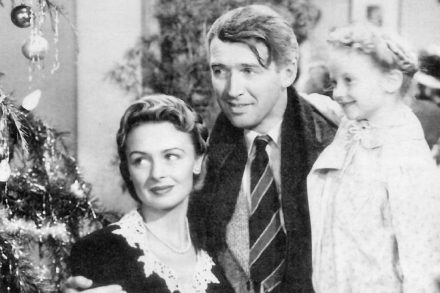
Karolyn Grimes looks back on her role as Zuzu in It’s a Wonderful Life

The title tells it all. It’s a Wonderful Life was first released back in December 1946, in the same week that President Truman was issuing Proclamation 2714, which officially ended hostilities in World War Two, and for that matter prefiguring Donald Trump by proposing that the US buy Greenland. The movie may be seventy-eight years old, but it’s one of those timeless classics, like Casablanca or The Searchers, that actually improve with familiarity. It’s also long since woven its essential message of good cheer into the fabric of our festive season. It’s an unusual plot for a film synonymous with feel-good family entertainment.

it's a wonderful life

The Cuban ER doctor’s long-shot Senate bid in Washington State

Dr. Raul Garcia seems to follow a long Republican tradition in Washington State. He’s a fifty-three-year-old, Cuban-born ER physician who’s emerged from the primaries to challenge the four-term Democratic incumbent Maria Cantwell for her US Senate seat this fall. On the face of it, Garcia’s candidacy is just the latest in a line of plucky but ultimately doomed bids by a GOP outsider to unseat a tenured politician in this part of the world. A couple of years ago, a self-described farm girl from the Seattle suburbs with the striking name of Tiffany Smiley gave Washington’s other senator Patty Murray a run for her money, but in the end the incumbent scraped through for her sixth turn at the public trough.

raul garcia

Michael Richards’s memoir is heavier on introspection than laughs

An unusual disclaimer greets the reader on the title page of this memoir of an actor chiefly known for starring as the lovable goofball Cosmo Kramer on the hit TV sitcom Seinfeld. “Neither the US Army nor any other component of the Department of Defense has approved, endorsed, or authorized this book,” it notes. But in the event the Pentagon probably needn’t have worried. Drafted into the army in 1970, the actor in question, Michael Richards, seems to have avoided any Sergeant Bilko-like shenanigans and instead separated from the service with a heightened appreciation for the punctuality, discipline and meticulous preparation that characterized his later career.

Richards

Biden and Nixon: presidential history is repeating itself

One of the advantages of not having been born yesterday is the ability to recognize certain trends of the news cycle when they come around again. Am I alone in thinking that every major American political manifesto since about 1848 has made a promise of reducing the taxation burden on its hardworking citizens, for example? Or that for Brits, like me, of a certain age (sixty-eight), our whole lives have been spent in the shadow of a stale and still unresolved debate about the nation’s place in Europe? More recently, I was struck by a sense of déjà vu all over again when comparing the final meltdown in Joe Biden’s White House to the events preceding Richard Nixon’s departure from office fifty years ago. The case for presidential history repeating itself isn’t hard to make.

nixon 1974

Pat Nixon, ambassador of goodwill

The Watergate scandal already commands a wide bookshelf. In the fifty years since Richard Nixon fell on his sword, we’ve had the big-ticket books by the tag-team of Woodward and Bernstein, and others, by contrast, seeking to exonerate Nixon and pin the whole thing on his adversaries; tales about secret sources and White House interns and plucky whistleblowers like the oleaginous John Dean and that human hand grenade Martha Mitchell; not to mention self-serving memoirs from all the principals, some now on their second or third helping at the table; or the ones saying it was all a conspiracy involving an unholy alliance of the FBI, MI6 and KGB, with the little green men from Mars thrown in.

Pat