Back in April 1971, a large billboard appeared by a freeway near the Seattle-Tacoma airport. “Will The Last Person Leaving Seattle Turn Out The Lights?” A reference to the Boeing company’s decision to lay off 40,000 local employees, and the ensuing rapid downturn in the area’s economy. Among other problems, the aircraft manufacturer had suffered a crippling blow when the US Senate rejected further funding for its proposed SST supersonic jet, Boeing’s would-be competitor to Concorde.
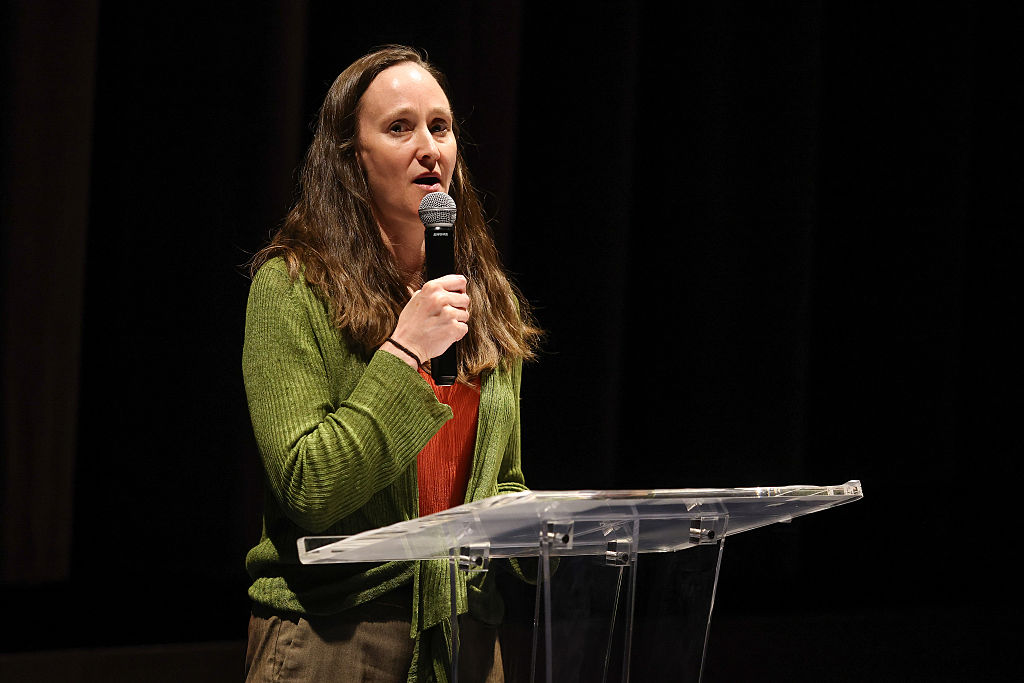
I was reminded of the 1971 slogan just last month, when Seattle’s newly-elected mayor Katie Wilson told a university audience that she was “really, really excited” about the recent passage of a 9.9 percent state tax that applies to any household or business with an annual income of over $1 million
“I think the claims that millionaires are going to leave our area are, like, super overblown,” she announced, displaying that rhetorical gift her supporters admire in her. “And if they do leave, like, bye” Wilson added, to whoops of laughter and applause from her audience.

Oddly enough, the suits at the Seattle-based Starbucks Corporation seemed not to share the mayor’s enthusiasm. The coffee-bean giant has since announced the opening of a new hub in Nashville, along with the transfer of 2,000 employees.
Crunching the numbers, Ryan Frost of the Washington State Policy Center predicts that the greater Seattle area is on track to lose $750 million in tax revenue over the next decade, assuming a 3 percent annual growth rate for Starbucks in Tennessee.
Mayor Wilson’s equanimity isn’t surprising in view of the fact that she recently announced “I’m not buying Starbucks, and neither should you” as a show of support for a group of striking baristas.
Perhaps now more aware of the weight of her words, she walked back some of the remarks this week. She admitted her comments were “not productive in the sense that they caused more harm than good.” And signaled a desire for a “multidimensional relationship” with corporations like Starbucks.
Alas, more of the mayor’s words are catching up with her. On the campaign trail, she opposed surveillance cameras but has angered her progressive supporters by failing to shut down the city’s camera network. Mayor Wilson walked out of a local TV interview after being challenged over her position on surveillance cameras amid rising gun violence in the city. A case of the revolution devouring its own.
Wilson, who’s 43 and married with a young daughter, is one of those plausible political chancers who tend to proliferate in the Pacific Northwest. Think of New York’s Zohran Mamdani, but dressed in egalitarian flannel and without the millions of volts of synthetic charm. Wilson had never held public office before her election last fall, although, a non-driver, she did at one time enjoy some success as a public-transport advocate.
Civic blunders, past and present, have helped turn Seattle from one of America’s most vibrant cities into the wasteland of boarded-up storefronts and vacant office buildings it is now. Boeing moved its corporate headquarters out of town years ago. Starbucks is following suit. And Microsoft’s president Brad Smith recently remarked that he was “more worried right now about the business climate [around Seattle] than at any point in the past 30 years.”
“I think the claims that millionaires are going to leave our area are, like, super overblown”
Referring to the last of the city’s big-four employers, Amazon, Wilson recently asked, “Would it be bad if they just slowed their growth a bit?” With the online retailer having since laid off 2,200 local employees, she may get her answer.
Wilson only took office in January, so she’s yet to eclipse the series of historically calamitous mayors who preceded her in Seattle’s city hall. Last up was Bruce Harrell, a legal hack whose one indelible moment came in his so-called Hungrygate response in a televised campaign debate. Asked whether “If someone has offended six, seven or eight times, do you hold them accountable?” Harrell replied: “When this person commits six or seven crimes, I don’t know his or her story. Maybe they were abused as a child. Maybe they’re hungry.” Comments of little comfort to the victims of the 100,480 “threat incidents” and 21,292 violent crimes recorded by Seattle police in 2025.
Before Harrell, Seattle endured the inept Jenny Durkan, who greeted news that armed activists had forcibly converted a six-block area of her city into a police-free protest zone as a latter-day flowering of the Summer of Love, notwithstanding the five shootings, two murders, and nightly reports of arson, robbery and assault that distinguished its brief tenure.
Before that came Ed Murray, who left office in 2017 amidst multiple allegations of rape.
Add the present incumbent to the list, and Seattle – which plays host to six of this summer’s World Cup games, with tickets starting at a mere $1,525 on the FIFA website – increasingly looks like the urban equivalent of a double-decker bus being driven downhill by the Marx Brothers.
Meanwhile, Seattle’s most recent homeless survey found that 17,000 men, women and children are living without a fixed roof over their heads. There were an additional 4,000 to 5,000 souls listed as residents in “emergency lodgings”, and a further unquantifiable number, presumably in the thousands, who eluded the census-takers. When all the figures are added up, it seems fair to conclude that there are some 25,000 individuals living without adequate shelter in the greater Seattle area, and that this gives the city the dubious distinction of hosting the third largest homeless community in the nation, behind only New York and Los Angeles.
What can be done about this humanitarian crisis? The more money Wilson and her myrmidons throw at the problem, the more of it is wasted or stolen. Last month, a “forensic audit” of the area’s Homeless Authority found $13 million missing, amidst a total deficit of $44.7 million. No one has been fired as a result.
By contrast, there’s an eight-story building on a hill overlooking downtown Seattle by the name of Mary’s Place Family Center. It provides a free-of-charge home for 300 men, women and children, who in addition to a clean bed and a warm bath have access to fully-equipped kitchens, a health clinic, and a prayer chapel. Along with its satellite buildings, it’s the largest such facility in Washington state. It might be worth noting that the shelter’s entire cost is met not by Mayor Wilson and her client taxpayers, but by private donations led by that unacceptable face of capitalism, Amazon.






Comments