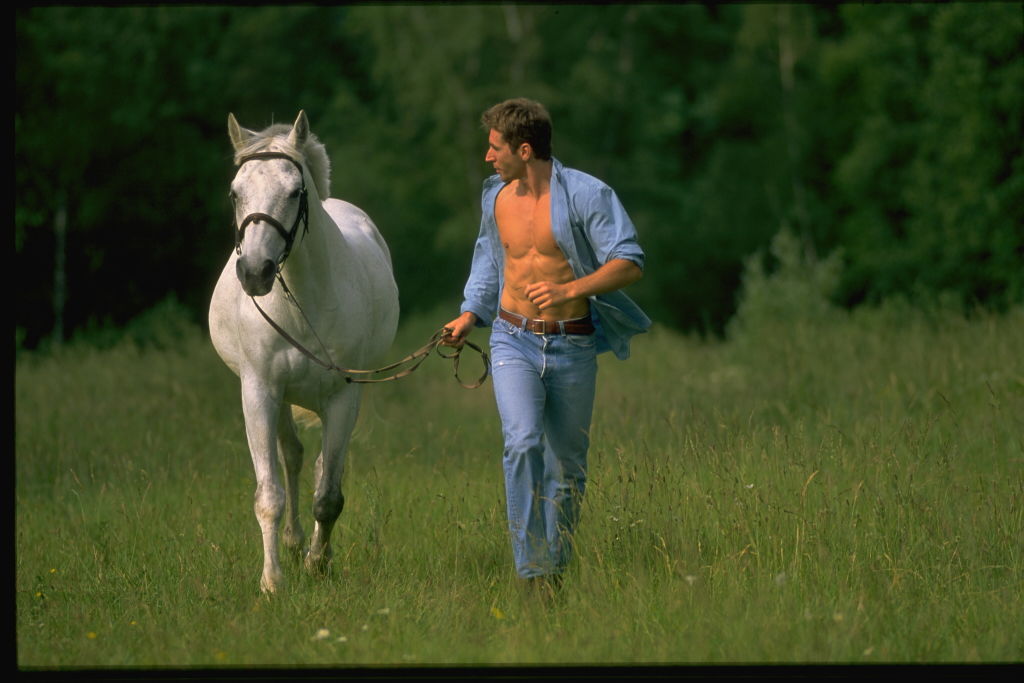
Is it gay to be a horse guy? According to my parents, the answer, hilariously, is “yes.” I never grew up riding in a very professional or competitive manner because, as I recently learned as an adult, my parents thought it was just too gay.
Everyone knows the stereotype of a horse girl. My parents certainly did, after raising two girls in the horse-show world. Linked to social privilege, emotional intensity and a bit of naivety, the horse girl eventually shifts the obsession with her horse into her boyfriend and becomes the caricature of a high-maintenance clinger. I can see why my parents wanted to avoid that type of socialization for their only son. But the stereotype isn’t all true (my sisters turned out normal.)
It feels distinctly American middle-class to think of equestrian sports, on the whole, as feminine
Socialization is the key here, however. It’s not that girls like this are inherently drawn to horses; rather, the feminized show world turns them into monsters. Despite media depictions, the average horse show is a thoroughly middle-class endeavor, giving sheltered young girls a shot at glamour and grace just outside their insular little worlds. Obsessive competition becomes a way of clinging to uniqueness, an identity. The show world caters to this dynamic with an entire ecosystem of low-level events, divisions and participation trophies, keeping these girls both validated and at each other’s throats. This is the reality of the show world, and it’s what most people think of when they think of horses.
Boys compete differently, however, with an emphasis on physicality and aggression. That’s why you rarely see “horse boys” at local amateur horse shows, but men dominate at the highest levels of show jumping. It would, admittedly, be quite gay for a young man to be drawn to the scene at his local training barn.
That said, in the literal sense, the American cowboys were all horse guys. The boys who watched movies about them in the 1950s all wanted to be horse guys too. Jockeys might be small, but they can certainly take a beating. Polo players are tough – and you should see the womanizing that goes on at their bars. Generations of English aristocrats prized their hunt horses, and you could hardly call the Winged Hussars gay. Masculinity and horsemanship went hand in hand for centuries, and it feels distinctly American middle-class to think of equestrian sports, on the whole, as feminine.
The purpose of this column is to reflect on life in the country, and that still exists in many forms. The posh country estate still keeps horses, either for leisure or rugged sports such as polo, fox hunting or steeplechase. Similarly, plenty of working ranches still rely on horses for moving cattle where vehicles struggle with terrain. Cultural heritage in these places continues without corruption from the modern horse-girl ecosystem. But still, these are outliers from what the horse industry caters to today; authentic country life is tough to find.
So is it gay to be a horse guy in today’s world? My parents are probably kind of right, because the young novice will likely be both drawn to and shaped by the show world. Yet it’s a matter of maintaining individuality within that world; although I grew up around the show circuits, I was always drawn to polo instead as a kid and shaped the farm today away from the conventional horse-girl model. You can be a literal horse guy but not a “horse guy,” if you choose to.
My parents never thought I would wind up with the farm. They did everything to keep me out of it, and half-joking resentment sometimes bubbles up about how they never even bought me a show pony. Ironically, their plan didn’t quite work out on either front – but they still love my boyfriend, who luckily always said he wanted to marry into a horse farm.



Comments