History

David Abulafia was a rare, truth-seeking historian

Death arrives on a day just like any other, often rudely unheralded. We all know that, but it never ceases to shock. So it was with news that David Abulafia had died on Saturday night. Notwithstanding his lifelong fascination with the Mediterranean, David was a Brexiteer in 2016 Readers of The Spectator will know him as one of the shockingly small number of professional historians who care enough about the historical truth – and the public’s perception of it – to risk woke ire in exposing ideologically fabricated history for the corrupting trash it is. So, last June here he was, in these pages, debunking yet another attempt to make the past a boring, narcissistic mirror of ourselves, by claiming that the "diverse" Vikings were sometimes black and Muslim.

david abulafia

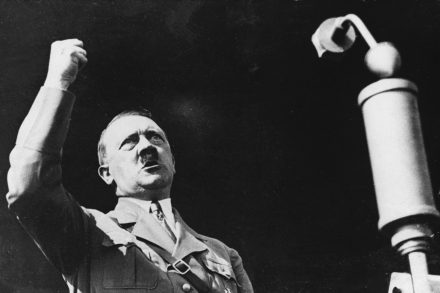
Why are we so obsessed with Hitler’s penis?

We care about Adolf Hitler’s penis, as a society. Quite a lot, it seems. A British documentary claims, finally, to have solved the mystery of the Nazi leader’s schwanz – was it big or was it small? – and to have proven, beyond a shadow of a doubt, that the famous chant of “Hitler’s only got one ball,” a favorite among British soldiers, wasn’t just an idle insult. The key evidence is genetic: a blood-stained piece of fabric from the Hitler bunker. The documentary filmmakers tested it against a sample from one of Hitler’s closest living relatives to make sure the blood was his. And it was. That meant his genome could be sequenced and then analyzed for genetic clues about his personality, health and, of course, his manhood.

Hitler

The strange death of England

Whatever happened to Britain, or the UK, or England, or whatever they're calling it? We can't even agree on what it's called. But what happened to England, the England that, if you're over 50, you grew up learning about, the England that controlled the world, the England that ran the largest empire in human history at the end of World War One?  Britain, which is an island in a pretty inhospitable climate, controlled literally a quarter of the Earth's surface – and not controlled in the way the United States controls the rest of the world with an implied threat or with economic ties through trade, but with administrators and people sitting at desks with eyeshades, counting things.

Andrew Ross Sorkin reconstructs the 1929 crash

During the great financial panic of 1907, the banker J.P. Morgan locked the titans of the financial world in his lavish private study to determine which banks to rescue and which to let fail. This intervention saved the banking system, restoring public confidence. But trust in Wall Street was shaken to its core. Six years later, Congress passed the Federal Reserve Act, which sought to stabilize the American financial system by establishing a central bank to regulate credit and serve as lender of last resort. By the mid-1920s, the very mechanisms that were designed to promote stability had fueled a surge in stock market speculation.

1929 crash
corkscrews

Cheers to corkscrews!

For the first 50 years of the corked bottle, there was no easy way to get into it. The combination of cork and a strong glass bottle came together around 1630, but the first mention of a device to open the bloody thing wasn’t until 1681. Cavalier get-togethers must have resembled the teenage parties I attended, with everyone desperately trying to open bottles using keys, pens, knives etc. Or using that technique where you bang the bottle against a wall with the heel of a shoe. Halcyon days. More likely the Cavaliers would have just taken the top off cleanly with a swift blow from a saber. Early devices for extracting corks were called “bottle screws.” According to wine writer Hugh Johnson, the word “corkscrew” was first used in 1720.

The sinister rise of Churchill revisionism

Winston Churchill is one of Britain’s enduring symbols. His relentless drive, deep conviction and steadfast leadership means that he remains admired by millions around the globe. Yet for years, the political mainstream has been compelled to defend his memory from spurious attacks from the left, such as the British politician John McDonnell calling him a “villain.” Depressingly that threat – and the same pernicious desire to denigrate one of the West’s greatest heroes – can now be found on the right. Spawned from a sinister fringe of the ultra-MAGA movement, these views have been propagated to millions. Tucker Carlson hosted the pseudo-historian Darryl Cooper on his podcast in an episode that has attracted over 33 million downloads.

winston churchill

Happy Birthday, Aleister Crowley

Aleister Crowley, who was born 150 years ago today, was once one of my idols. No one else seemed to match the panache of someone who could make a name for themselves as a magician, poet, artist, novelist, prophet, journalist, mountaineer, and spy. Yet, the outsized influence of such characters frequently attracts legions of charlatans. I met one during my adolescence when I became a student of a Tibetan Buddhist lama who claimed to be Aleister’s living son. It did not immediately occur to this bright-eyed seeker that the alleged son's chief interest seemed to be in shagging his female students, but eventually it did, and I grew disillusioned.

Crowley

The atomic bomb saved Japanese lives, too

It’s August 6, which means that it is the anniversary of the atomic bombing of Hiroshima.   Every year at this time there are a spate of articles about that horrific event. Some of the articles are condemnatory; some hand-wringing; some are defiantly supportive.  This year, the recent release of Christopher Nolan’s new movie about J. Robert Oppenheimer and the making of the atomic bomb has given the controversy over the development and deployment of that awesome weapon a new urgency.   Something else that has contributed to the fraught atmosphere is the war in Ukraine. After all, one side in that conflict, Russia, controls the world’s largest arsenal of nuclear weapons, more than 6,000 warheads. My friend Roger L.

hiroshima atomic bomb japanese

Milan Kundera’s ‘transcendental buffoonery’

I was just leaving France when I got the news that that the Czech novelist Milan Kundera had died, aged ninety-four. He had emigrated to Paris in 1975, when he was forty-six, a refugee from the crackdown in Prague following the Russian obliteration of the Prague Spring in 1968. He died in his adopted city on July 11, full of honors but also, or so it seems to me, largely forgotten.  I had not been following Kundera’s work for many years. But there was a moment, in the 1980s, when he was the talk of the posh, intellectual literary town. I wrote a longish essay about him for the New Criterion in 1986. I draw on that work here.  Kundera was in his late thirties when he published his first novel, The Joke, in Prague in 1967.

milan kundera

John F. Kennedy’s trip worth remembering

Sloppy Joe Biden may face strong political headwinds with just seven months to go before the first presidential primary, but at least he’s in good company. Assessing the Washington landscape in mid-June 1963, when John F. Kennedy set off on a European tour designed to bolster not only the NATO alliance but his own poll numbers, the British ambassador David Ormsby-Gore cabled back to London: He will be leaving behind a disquieting domestic situation, [with] economic troubles to the fore... The Negro leaders are beginning to talk about large scale civil disobedience on a nation-wide basis... Moreover, the racial crisis is causing new difficulties for [Kennedy’s] legislative program...

Kennedy in Berlin
test scores

Why civics test scores are falling in American schools

Twenty years ago, one of the most popular bits on late-night television was “Jaywalking,” where Tonight Show host Jay Leno quizzed passersby on world events, geography, history and more. He would ask random people on the street about literature, who the vice president was, or who we fought in World War Two. The clips that made the cut inevitably involved embarrassingly ignorant answers. Today, America is a nation of Jaywalking Allstars; whereas it was once a punchline for someone to be that ignorant, ignorance is now the norm. In early May, news emerged about record low scores for history and civics for eighth grade students nationwide.

Netflix’s Queen Cleopatra girlbosses against historical fact

The most controversial aspect of Netflix’s new drama-documentary Queen Cleopatra — not least in Egypt — was the casting of a black actress, Adele James, in the title role. After all, one of the few things that seems certain about Cleopatra’s early life is that she was a Macedonian Greek. Luckily, though, the show had a powerful counterargument to this awkward and Eurocentric fact. As the African-American professor Shelley P. Haley put it with a QED-style flourish, back when she was girl, her beloved (if uneducated) grandmother once said to her: "I don’t care what they tell you in school, Cleopatra was black.

queen cleopatra netflix

The difficulties of writing historical fiction

I was dozing, a little hungover, on the morning flight from Prague to London, when I saw them for the first time. Ten men on a beach, dragging a landing craft up the sands. Where? Can’t tell yet. When? The fourteenth century. Who? Don’t know, but they look like trouble. I woke up. Through my AirPods I heard the Blur singer Damon Albarn growling the final song from their 1997 album Blur. “In these towns, the English army grinds their teeth into glass / You know you’ll get a kicking tonight...” I opened my laptop and started making notes. The men came surprisingly well-formed. They were soldiers of fortune in the Hundred Years’ War. They already had names. Faces. Talents. Foibles. Yearnings. Secrets. I wrote down as much as they could tell me before the plane landed.

historical fiction

Titanic was the original White Lotus

When James Cameron’s Titanic sailed into US theaters twenty-five years ago, smashing box office records in the process, it subversively made the argument that the villain in the film was not the iceberg, but its first-class passengers. While it wasn't a satire like The White Lotus, Cameron's film feels like one of the pioneers of the over-the-top "eat the rich" criticism that produced the viral "send them to White Lotus" memes. One of those memes should have included the cartoonishly repellent Cal Hockley, played perfectly by Billy Zane — the epitome of bourgeois arrogance.

titanic

Ancient Apocalypse and the end of history programs

For those with a love of history who remember what the History Channel once was, its current state is a travesty. What was once populated with interesting documentaries is now home to Ancient Aliens and Swamp People. Despite the channel being quite literally called the History Channel, history was not bringing in the dough. Now Netflix is joining the party. In early November 2022, the streaming platform released Graham Hancock’s eight-episode series, Ancient Apocalypse. Hancock believes that there was an advanced civilization that was destroyed at the end of the last Ice Age, around 10,800 BC. Its members supposedly circumnavigated the globe, built wondrous feats of architecture, and may have left signs for future civilizations warning of coming catastrophes.

The last roadside ice cream stands in America

When I’m out on small New Jersey roads — sometimes Virginia roads, but I don’t see them there as often — I always take an extra second to look at ice cream stands. You know the place: a basic, boxy building with a little awning, an ornamented, angular front, one or two counters to order, and more often than not no inside seating or even a customer entrance. The staff are usually high-schoolers, maybe retirees. The prices, like everything, have crept up, but they’re still wallet-friendly. They’re refreshingly un-trendy, too. Nobody manhandles your ice cream on a frozen rock. I love these places. I have many fond memories of my parents pulling off the road for ice cream, sitting at a simple table on gravel under an awning and enjoying a treat. Simplicity. Contentment.

A visit to the Renaissance Faire

There exists a magical place where not only are you free to identify as who or whatever you wish, but you’re also encouraged to adopt a persona that defies reality. You aren’t restricted to the narrow LGBQTIA+ choices our unimaginative liberal elites have imposed, either. Nay, in this ultra-diverse, inclusive land, you’re expected to dream beyond this century — this planet even — and transition uninhibited into whatever strikes your fantasy. No, not the “metaverse”; I’m referring to the time-honored American tradition of the Renaissance Faire, where history buffs, fantasy nerds, down-and-out actors, and normal suburban families converge to create a giant freakshow that is innocent fun at its best.

renaissance

The end of history

Read chronicles of ancient peasant life, or examine photographs taken a century ago. Behold castes, tortures, and endless annals of servitude and uncertain order. Backbreaking work and darkness fill short lives in a cruel world of grandees, subjects, and slaves. The injustices and trials of 21st-century life in this thing we call the US and West pale by comparison. Did this freedom and plenty just happen by accident? Or should we rethink what seemed to be political, economic and social triumphs as crimes against nature, and for good measure reimagine world history as a global casualty of Anglo-European rapacity? History is in trouble. Less-than-progressive staff at historical societies, archives, and libraries have been retired or purged.

The culture war over the Middle Ages

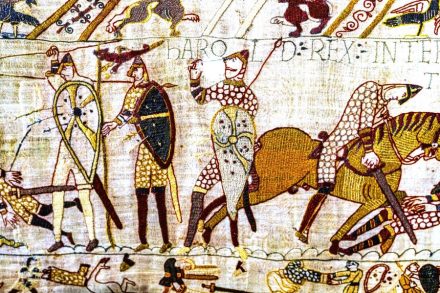
There is a war afoot, here in late civilization, over the meaning and legacy of the Middle Ages. Two distinct fronts have emerged from either side of our political spectrum. On the left, in the academy, medievalism is being diversified out of existence, its defining Western characteristics relegating it to a smaller place in a global mosaic. On the right, a certain breed of new conservative is reclaiming the Middle Ages as a keystone period in which order and reason ruled, instead of the swivel-headed “scientism” of pure observation brought on by the Enlightenment. The ground upon which this battle is joined is the traditional Anglosphere understanding of the medieval period, roughly the fifth to fifteenth centuries ad, a period most commonly thought of as the “Dark Ages.

Middle Ages

Picking daffodils with my ancestors

Pennsylvania winters can be unyielding. Though the extreme, single-digit temperatures and mounds of sometimes-onerous (but always beautiful) snow come and go, the bleak, overcast skies tend to overstay their welcome, hanging around like a monochromatic weight on one’s psyche. “Western Pennsylvania is known for two things,” UPMC psychiatrist Dr. Lawson Bernstein told CBS News, “producing linebackers and one of the highest prevalence of Seasonal Affective Disorder (SAD) in the entire country.” Sigh. While I grumbled this morning about having to continue bundling up well into spring (it was 36 degrees), a bunch of cheery golden blossoms near the edge of the woods reminded me this was no time to feel sorry my myself.