Masculinity

Is it OK to be a horse guy?

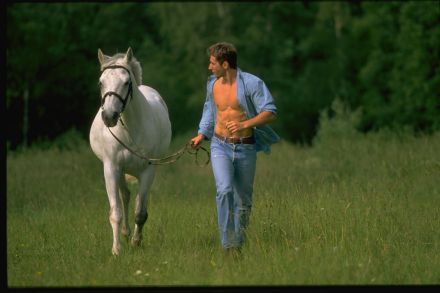
Is it gay to be a horse guy? According to my parents, the answer, hilariously, is “yes.” I never grew up riding in a very professional or competitive manner because, as I recently learned as an adult, my parents thought it was just too gay. Everyone knows the stereotype of a horse girl. My parents certainly did, after raising two girls in the horse-show world. Linked to social privilege, emotional intensity and a bit of naivety, the horse girl eventually shifts the obsession with her horse into her boyfriend and becomes the caricature of a high-maintenance clinger. I can see why my parents wanted to avoid that type of socialization for their only son. But the stereotype isn’t all true (my sisters turned out normal.

Nick Boles, James Ball, Andrew Rosenheim, Arabella Byrne & Rory Sutherland

From our UK edition

27 min listen

On this week’s Spectator Out Loud: Nick Boles says that Ukraine must stand as a fortress of European freedom; James Ball reviews If Anyone Builds It, Everyone Dies: The Case Against Superintelligent AI, by Eliezer Yudowsky and Nate Sores; Andrew Rosenheim examines the treasure trove of John Le Carre’s papers at the Bodleian; Arabella Byrne provides her notes on skip-diving; and, in the battle of the sexes, Rory Sutherland says the thing to fear is not feminisation, but emasculation. Produced and presented by Patrick Gibbons.

One of the boys: From Scenes Like These, by Gordon M. Williams, reviewed

From our UK edition

Although Gordon M. Williams died as recently as 2017, his heyday was the Wilson/Heath era of the late 1960s and 1970s. During that time he managed to appear on the inaugural Booker shortlist, dash off a ten-day potboiler, The Siege of Trenchard’s Farm, that would be filmed by Sam Peckinpah, and continue to file a series of ghost-written newspaper columns for the England football captain Bobby Moore. As these accomplishments might suggest, Williams was the kind of writer whom the modern publishing world no longer seems to rate. Essentially, he was a literary jack-of-all-trades, alternating straightforward hackwork with more elevated material as the mood took him, and eventually abandoning fiction for a desultory career as a screenwriter.

Twenty-five years of Fight Club and American Beauty

Sound the alarm: hypermasc beefcakes all over the world have an anniversary to celebrate! Beware women, children and the effete, this year marks the twenty-fifth birthday of both David Fincher’s notorious psychodrama Fight Club, adapted from the debut novel by Chuck Palahniuk, and Sam Mendes’s equally notorious American Beauty, which has gone from Oscar-winning acclaim to being a punchline on chat shows and animated comedies alike. If you haven’t seen Fight Club, shame on you. Go to Hulu and binge away. Revel in its anarchic ludicrousness and head-to-head carnage; inhale the feculent atmospheres of Lou’s Tavern and Tyler’s dilapidated mansion house, all tied together through Fincher’s iconic desaturated color palette. It is all too easy to taste the blood, sweat and tears.

Fight Club

Danny Dyer’s new C4 programme is deeply odd

From our UK edition

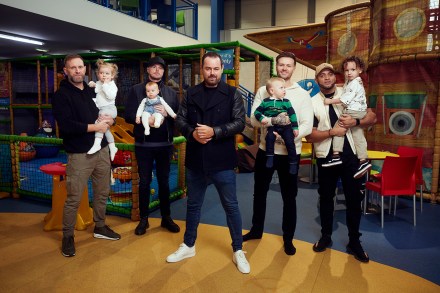
Who do you think said the following on TV this week: ‘I love being around gay men – seeing a group of men expressing themselves the way they do is beautiful’? The answer, perhaps unexpectedly, is Danny Dyer, whose admittedly convincing schtick as the world’s most Cockney bloke was applied to the question of contemporary masculinity in a new programme for Channel 4. The result was a deeply odd mix of the touching, the illuminating, the silly, the thought-provoking, the cheerfully comic, the pensive and the completely confusing. At first, it looked as if the cheerfully comic would predominate. Danny Dyer: How to Be a Man opened with Danny showing us around his man cave and breezily announcing that ‘Channel 4 bunged me a few quid to travel the country talking to geezers’.

Shades of Kafka: Open Up, by Thomas Morris, reviewed

From our UK edition

Thomas Morris has a knack of writing about ordinary things in an unsettling way and unsettling things in an ordinary way. He described his debut collection of ten stories set in Caerphilly, We Don’t Know What We’re Doing, as ‘realism with a kink’. Open Up, a slimmer second offering of five stories, amps up the Kafka. One is narrated by a seahorse, another by a vampire. Morris’s attitude towards his characters remains central: while displaying their darkest secrets, you sense he’s on their side. Here, the narrators are all male. From a young boy to a thirtysomething, they negotiate masculinity’s contradictory demands, accused of being distant, passive and unambitious.

The right’s dangerous embrace of Andrew Tate

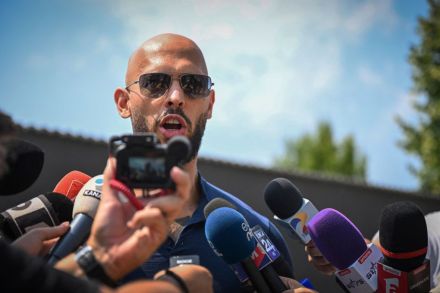
Why are conservative media personalities like Tucker Carlson and Candace Owens embracing Andrew Tate, an online celebrity known for misogynistic commentary, alleged abuse of women and foreign charges of human trafficking?  Because Tate sometimes has agreeable things to say about the importance of masculinity in culture, they ignore the clearly inexcusable parts of his lifestyle. Both Carlson and Owens’s interviews were generally peppered with mild questions and meant to give Tate a positive platform.  With 7.4 million Twitter followers and billions of TikTok video views, Tate already has his own exponentially influential platform — one that targets legions of young men with a destructive message of narcissism, sexual prowess and obsession with physical appearance.

andrew tate

What’s the media’s problem with black masculinity?

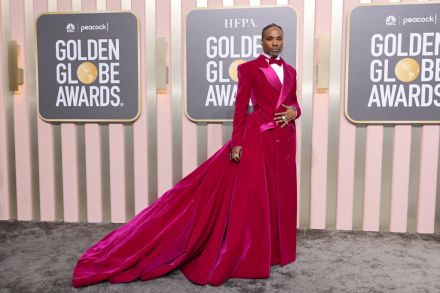
No experience in my many decades on this planet felt more degrading than being repeatedly referred to as “intimidating” by my former boss. As far as I know, the affluent, influential white women that I used to work with at Condé Nast lost their right to refer to their black male employees in such racially laden language long before the death of George Floyd. Especially when I was merely asking my (mostly white and female) underlings to simply do their jobs. I’m reminded of this charge every time I see a black man done up like a woman — which is seemingly all the time these days. Take Alex Newell and J. Harrison Ghee, who were awarded Best Actor statues at the Tony Awards in June, and both accepted them clad in colorful gowns and full makeup.

black masculinity

Napoleon heralds the return of the man’s movie

The trailer for Ridley Scott’s eagerly awaited magnum opus Napoleon has finally arrived — and it does not disappoint. Boasting what looks like another Oscar-worthy performance from Joaquin Phoenix, the trailer teases an intoxicating mixture of full-throttle battle scenes, executed and shot on a scale unparalleled in modern cinema, as well as insight into the complex psyche of the French emperor, to say nothing of his often-tortuous relationship with his wife Josephine (played here by Vanessa Kirby.)  https://www.youtube.com/watch?

napoleon

Phoebe Waller-Bridge is a franchise murderer — and Indiana Jones is her next victim

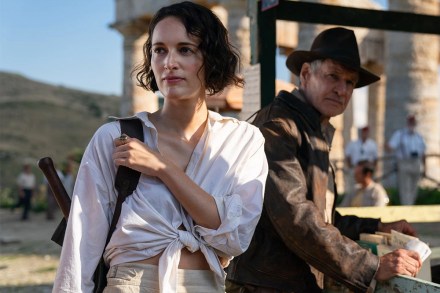
Phoebe Waller-Bridge must be destroyed before it's too late. The short-bob comedienne fond of wall-breaking and lazy edits has, in very short order, emasculated and destroyed multiple franchises thanks to the overwrought praise for her adaptation of her one-woman show, a descriptor that should itself elicit a bit of vomit in the back of the throat. Not content to politicize Star Wars as an irritating droid in Solo or to chop off the balls of James Bond in Daniel Craig's swan song whose name no one remembers, Waller-Bridge has now set her sights on a firmly American man to take down: Indiana Jones, whose fifth edition box office she will eradicate in spite of all the goodwill of these United States. https://twitter.

phoebe waller-bridge

Prince Harry and Andrew Tate are two sides of the same coin

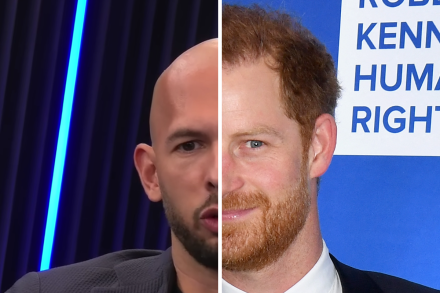
On the face of things, there is little in common between Prince Harry and Andrew Tate. Yet look closer and you see two sides of the same coin: a narcissistic version of modern masculinity that warps what's actually important about manhood for the demands of an addicted audience. Tate is a juvenile accused sex trafficker, who believes his right as an HGH-fueled muscle man entitles him to a Conan the Barbarian Romanian fantasy of Bugattis, baby oil and bitches. Harry is a pussy-whipped blue blood who wields his grief gestalt as a weapon against all comers — be they media or monarchy. Tate's narcissism is more aggressive.

andrew tate prince harry

Madison Cawthorn is right about metrosexuals on social media

Madison Cawthorn, the one-hit-wonder congressman from North Carolina who was defeated in his primary earlier this year, used his final address on the House floor yesterday to condemn “soft metrosexuals.” In the spirit of not kicking a guy when he’s down (Cawthorn will be gone by January), let’s cut him some slack and acknowledge that, melodramatic language aside, his speech made a valid point. Social media is to blame, at least in part, for weakening American culture. “America is weak,” Cawthorn declared. “Her sons are sickly, and her daughters are decrepit. Our country now faces the consequences of enabling a participation trophy society. We’re no longer the United States. We’ve become the nanny state.

Reclaiming the free and capable man

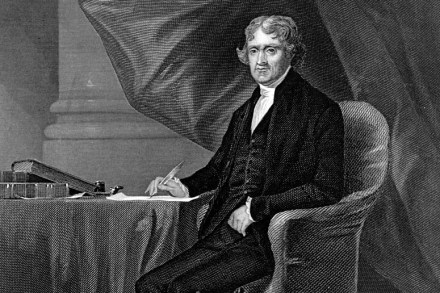
About two weeks after I graduated college, I realized I was pretty much useless. I was in North Carolina for a friend’s wedding, getting ready with the rest of the groomsmen, and I was having a hell of a time ironing my dress shirt. The shirt itself had an ungainly shape that I struggled to map onto the board, and each stroke of the iron seemed to create new creases. My mother handled the laundry at home, and in college I rarely had to dress formally. When I did, I’d transfer my shirts directly from dryer to closet, and that was usually good enough. Finally, I gave up and asked my friend John for help. John, a confident, capable guy who always made me feel inadequate, agreed.

jefferson education

A bitter sectarian divide: Young Mungo, by Douglas Stuart, reviewed

From our UK edition

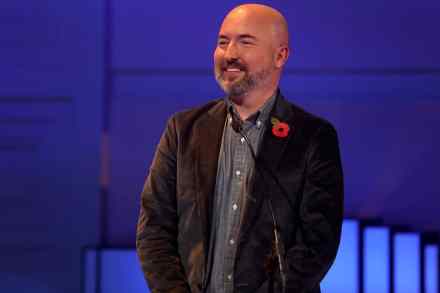
Douglas Stuart has a rare gift. The Scottish writer, whose debut novel Shuggie Bain deservedly won the 2020 Booker Prize, creates vivid characters, settings and images without letting his literary skill get in the way of plot. His second novel, Young Mungo, has a similar feel and is in many ways a kind of sequel. The characters are different, as is the Glaswegian housing scheme and the year – we are now in 1993 rather than the 1980s – but the milieu is familiar. The protagonist, Mungo Hamilton, is a frail, fatherless 15-year-old, but appears much younger. His complexion, vocal tic and poor-fitting clothes lead people to think he’s ‘thirteen, tops’.

Time for Europe to man up

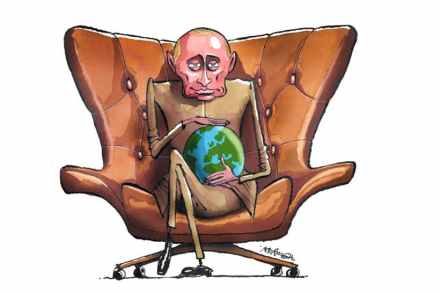
The End of History has ended. It officially ended with Vladimir Putin’s decision to invade Ukraine. Francis Fukuyama wrote The End of History in the early Nineties. It's a book that captures the optimistic zeitgeist of that decade — born of the fall of the Berlin Wall and the implosion of communism. The basic idea was that once communism faded away — the reality, not the ideal, which will forever exist in the minds of many intellectuals — the world would become a more liberal, democratic and commercial place. It was an argument with real legs. East Germany was digested by the West without a burp. The Baltic states prospered. Asia took off. A rising commercial tide lifted all boats.

sanctions putin russia davos oligarch

What conservatives get right about masculinity

Conservatives are taking a lot of heat these days regarding masculinity. David French in a recent piece at The Atlantic criticized Josh Hammer, David Azerrad, and Donald Trump, among others, for promoting what French labels a false view of manliness — namely, one that is unafraid to speak unpopular truths regardless of the consequences. It is a farcical “Trumpist toughness” that “treat[s] Twitter as their Omaha Beach.” Washington Post columnist Christine Emba, meanwhile, recently mocked Republican Senator Josh Hawley for being a “champion of masculine virtue” but failing “to engage more deeply on the level of policy and ideas.

trump

When did traditional masculinity become toxic?

From our UK edition

It’s hard for privileged white men to stay relevant in this age of identity politics but a number of fail-safe strategies have begun to emerge. Prince Harry and, to a lesser extent his older brother, have captured the mental health market by publicly discussing their issues. William’s school pal Eddie Redmayne, and pretty much the entire cast of the Harry Potter films, have spoken out in defence of the transgender community. Benedict Cumberbatch is going down the feminist route. Cumberbatch is calling time on ‘toxic masculinity’. Interviewed by Sky News ahead of the release of his latest film, a Netflix Western in which he plays the part of a rancher, Cumberbatch took the opportunity to chastise men.

Help! I’ve got ‘schlong Covid’

From our UK edition

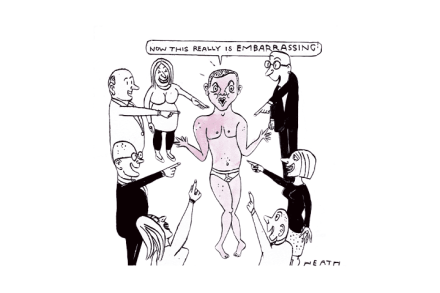
One of the difficulties with having difficulties in your gentleman’s area is describing it to your doctor. Saying 'I’ve got a problem with my willy,' makes you sound like a five-year-old. 'Penis' sounds whiny and American, and everything else sounds like you might be being deliberately rude. I went for 'I think I’ve got Covid on my cock,' which I hoped didn’t make me sound like a hypochondriac and was suitably forthright for a man-to-man encounter with one’s GP. 'OK,' says a politely interested Dr McCall. 'What’s precisely wrong with your cock?' I can’t find any figures for 'schlong Covid'. There are no studies in the Lancet or online support groups Now a crisis of confidence. 'Well… ever since I’ve had Covid...

Masculinity in crisis: Men and Apparitions, by Lynne Tillman, reviewed

From our UK edition

Masculinity, we are often told, is in crisis. The narrator of Men and Apparitions, Professor Ezekiel (Zeke) Stark, both studies this crisis and personally confirms it. ‘I came naturally — haha — to observing my posse and me, guys late twenties to forty, and our attitudes to women, ourselves as “men,” etc’ he says, by way of introduction to his anthropological thesis about growing up under feminism. Prepare for mansplaining littered with tedious verbal tics, which is oddly compelling to read. Zeke is between things. Born on the cusp of Gen X, a middle child to middle-class parents, he’s loitering on the tenure track of East Coast ‘Acadoomia’.

Masculinity isn’t toxic – corporate moralizing is

The first thing that astonishes about Gillette’s effort to alienate an entire customer base in a single two-minute slickly produced virtue signal is the arrogance. The unblinking temerity of a brand believing it’s somehow its duty not merely to make an appeal for commercial inclusion, but rather to instruct millions of people on how to lead their lives. If the ideological vacuum left by the decline of Christianity in the West really is being filled with a rush of competing forces, then surely we can view Gillette’s ad as consumerism’s most blatant effort yet from the pulpit of modernity to claim the hearts and minds (and souls) of the lumpen masses.

toxic masculinity