Authors hate it when reviewers refer to their book as a ‘weighty tome’ as it implies that the contents are going to be about as much fun as Deuteronomy. So I should make it clear that while Tim Hayward’s The Cocktail Hour (Quadrille, £20) is extremely weighty, that’s because the production values are off the scale. The monks at Lindisfarne could scarcely have put more effort into illuminating their work. And while the paper is heavy, Hayward’s writing is as refreshing as a perfectly made dry martini. There are hundreds of cocktail books out there, but none combine Hayward’s erudition, obsession and sense of humour. He is at once deadly serious and very, very funny. It’s the best book on the subject since Bernard DeVoto’s 1948 book The Hour.
Kathleen Burk’s Wine: A Global History (Profile, £30) is another weighty tome at nearly 900 pages long, but it does cover the subject from the beginnings of civilisation to the present day. The sections on the ancient world are particularly good. Connoisseurship has a long history: the Egyptians labelled their wine by origin, winemaker, vintage and quality, and even by the occasion on which it should be drunk, such as ‘merrymaking’. Burk writes with a light touch and the book makes a great introduction to a massive subject with a useful bibliography for those who want to take things further.

Next, a veritable tour de force (sorry, more reviewerese there): the ninth edition of The World Atlas of Wine (Mitchell Beazley, £60) by Hugh Johnson, Jancis Robinson and Julia Harding. What a gorgeous thing this is, full of beautiful maps and photos as well as all the excellent analysis you’d expect from the team behind it. It really is a wide world of wine now, with maps of the Baltic and, for the first time, south-east England, thanks to global warming. But while the wine world expands, some of the old guard are struggling. Sherry has lost around 70 per cent of its vineyard area since the 1980s. All over the world previously valuable land is on the market, but nobody wants to buy.
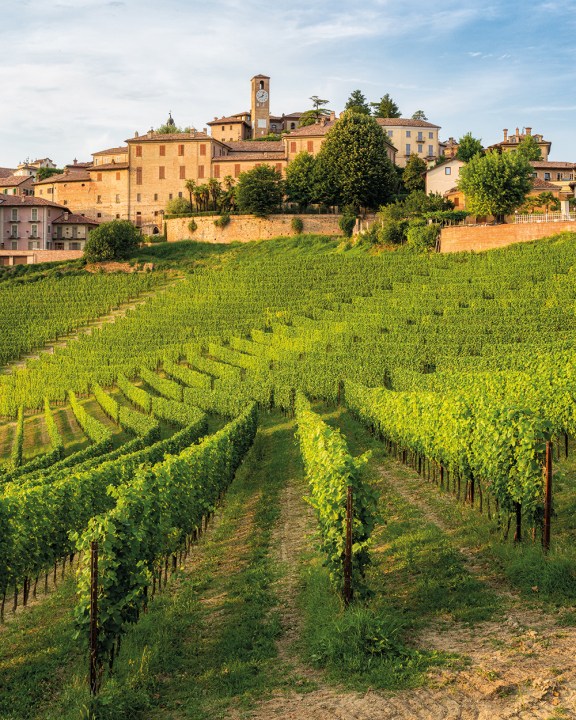
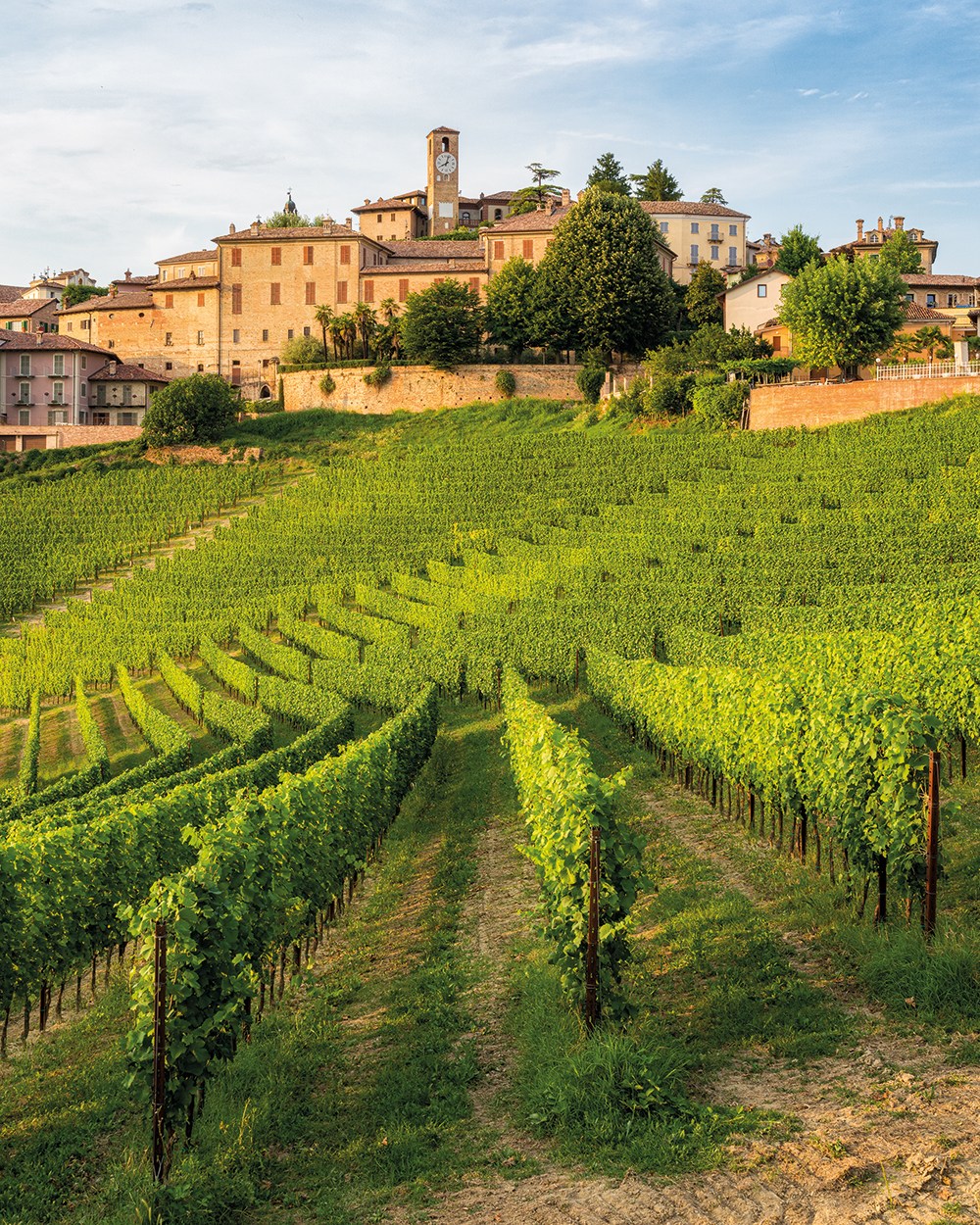
One place that currently seems immune to the global slump is Piedmont, or Piemonte as David Gleave insists on calling it in his book Barolo & Barbaresco (Académie du Vin Library, £75). It’s essential reading for nebbiolo lovers everywhere. Gleave, a Canadian and the founder of Liberty Wines, has been immersed in the area since the 1980s, when he worked with the late Nicolas Belfrage, the author of one of the best books on Italian wine.
The region is now awash with money, but what I learned from Gleave is how recent this all is. In the 1960s, now prestigious vineyards could be bought for a pittance. In fact, compared with Burgundy or Bordeaux, Barolo and Barbaresco are recent creations. Much of the wine was sweet until the early 20th century, and in the 1950s and 1960s many growers aged their wine in glass demijohns which they would allow to bake in the summer heat, turning the wine into something like a ferociously tannic Marsala. Thankfully, winemakers have learned to tame those tannins, though they now have another problem: rising alcohol levels. Yep, global warming again.
There’s an updated edition of one of my favourite books, Ian Buxton’s Whiskies Galore (Birlinn, £12.99). It’s an offbeat journey around the islands of Scotland with the amusingly curmudgeonly whisky expert, visiting distilleries such as Talisker, Ardbeg and Tobermory as well as more obscure ones. Each original chapter has a postscript bringing the story up to date, and there are two new chapters at the end. The book was originally published in 2017, during a period of almost lunatic optimism in the Scotch whisky business. Now we are suffering the hangover, with too much whisky and not enough customers. Buxton has a lot of fun saying: ‘I told you so’. He’s a very amusing companion, particularly when telling the story of a group of influencers invited to the newly revived Port Ellen distillery who, looking for the spa, were directed to the Spar instead.
Finally, a book to pack if you’re travelling around England’s vineyards: English Wine by Sam Caporn (Bloomsbury, £11.99). It’s an accessible though thoroughly researched guide to the best producers and, despite being a hardback, it’s light enough to put in a rucksack or saddlebag. Each entry provides a pen portrait of a vineyard, plus handy information for visitors. Autumn is a great time to get into the vines: there are fewer people, and you’re more likely to be shown around by the winemaker or owner than the tea boy. My only criticism is that Caporn sticks to southern England, so she may well incur the wrath of the wine critic of the Yorkshire Post.




Comments