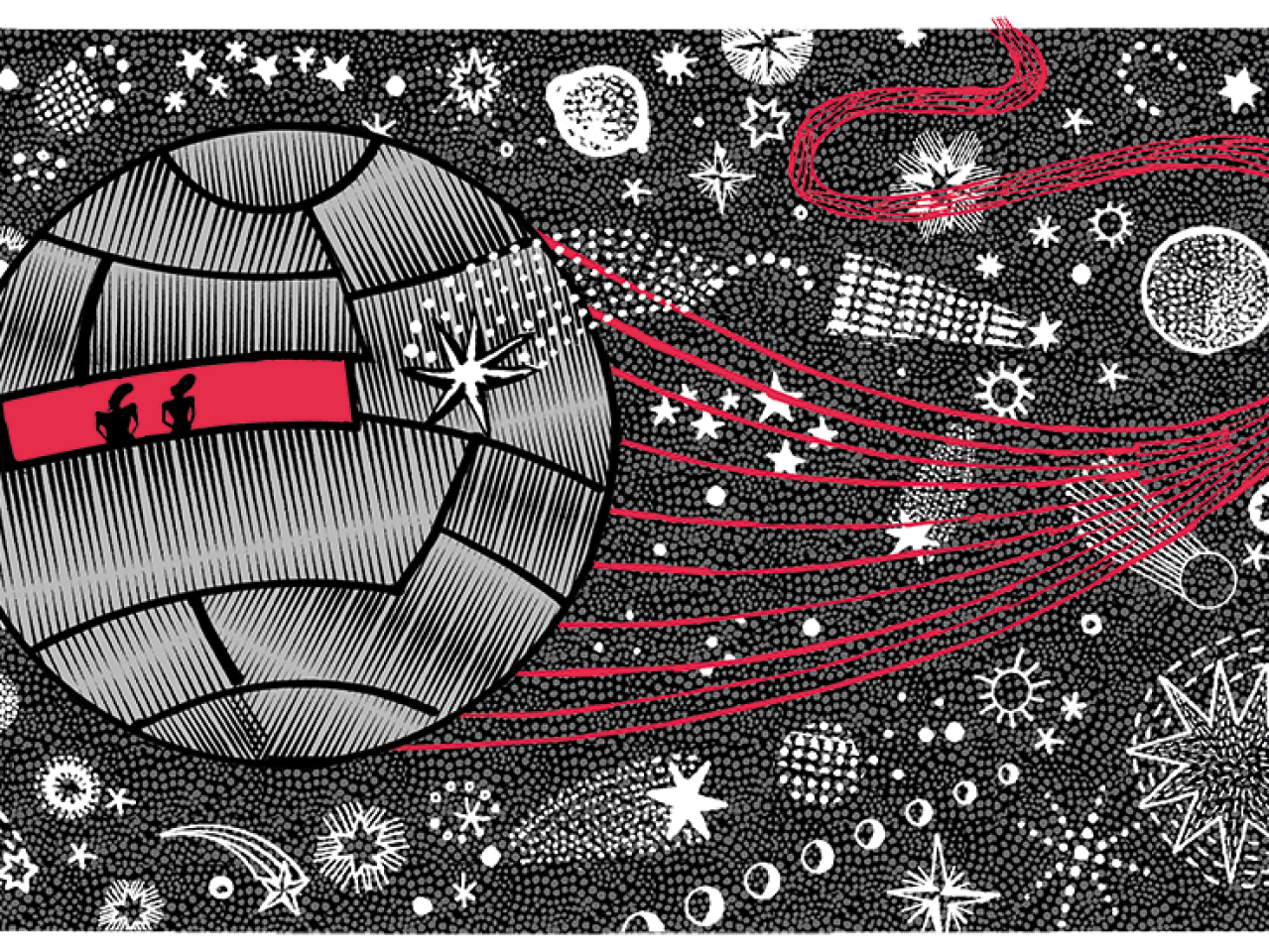
October 2026 will go down in history as the month the universe changed, yet most people didn’t notice. The tech company OpenAI, makers of ChatGPT, released the solutions to 722 fundamental mathematical problems. Many of these problems had baffled humans for decades but a large language model (LLM) that was just 11 days old toppled them. AI had already solved some mathematical conjectures, but this was off the scale. “This is at least ten times, perhaps 100 times as momentous as the proof of Fermat’s Last Theorem,” said Abhishek Saha, professor of mathematics at Queen Mary University of London. Joshua Gans of the University of Toronto went further: “This is probably the biggest day of scientific advancement in history,” while Sam Altman, chief executive of OpenAI, said “life goes on, but something fundamental has changed.”
Some of the results are so profound that if a human had achieved them, and taken a lifetime to do it, they would be handed the Fields Medal – math’s highest honor – in an instant. Even the Riemann Hypothesis, regarded by some as humanity’s most intractable intellectual challenge, is beginning to crack. It will take a very long time for humans to get to grips with what happened, and there is so much more to come. One scientist said: “The touch of infinity is palpable.”
Many who study consciousness believe that superintelligence will happen and are also seriously talking about whether machines are already conscious
The math world is shocked. Some are saying that this year marks the beginning of the modern age of math. The Association of Human Mathematicians, (the name is telling!) says mathematicians did not ask for this work to be done and that OpenAI’s achievement demonstrates not scholarship, but power. It has called for mathematicians to boycott OpenAI, but that feels a little like the demands of the philosophers Majikthise and Vroomfondel in The Hitchhiker’s Guide to the Galaxy when faced with Deep Thought. As representatives of the Amalgamated Union of Philosophers, Sages, Luminaries and Other Thinking Persons, they protest the supercomputer Deep Thought for calculating the “ultimate answer,” demanding “rigidly defined areas of doubt and uncertainty.”
Where this power is taking us is exhilarating and frightening. AI is coming for all of science. It’s already produced catalogues of potentially medically useful molecules and is giving us a new understanding of mysterious genetic tracts in the human genome. The Chinese AI-Newton model has already determined, from scratch, Newton’s second law of motion, the law of gravity and the basis for some of Einstein’s theories. Biologists are excited about an initiative to develop a digital simulation of a cell, life’s most basic building block. Perhaps we can look forward to when AI develops new concepts by linking disparate areas of study into a new paradigm like the mathematician Ed Witten did when he used quantum mechanics to revolutionize geometry, or when Paul Samuelson took ideas from thermodynamics to transform economics.
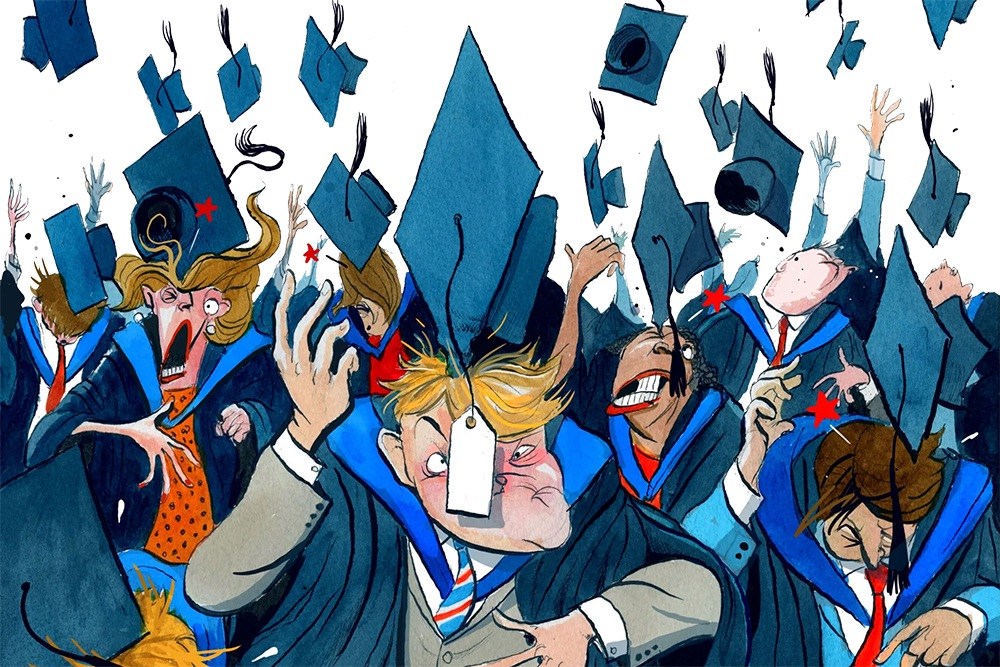
On a more practical level, AI is changing the very nature of cybersecurity. Humans at a keyboard are now obsolete – they cannot match the speed, efficiency and direction of attack of thousands of relentless AI agents looking for vulnerabilities in a computer system. Some are predicting that AI will be able to crack any digital defenses, forcing online currencies such as Bitcoin into digital bunkers. We are in an AI arms race because the only thing that can defend you against an AI onslaught is an AI defender.
Pope Leo XIV has reacted in much the same way as the shocked mathematicians. AI is powerful, but it is not human, and he goes on to emphasize that only humans have souls and AI will never replace humanity. In his recent Magnifica humanitas he says that human life cannot be reduced to data. AI systems, he says, “do not undergo experiences, do not possess a body, do not feel joy or pain.” AI should be disarmed, he adds. Speaking alongside him at a Vatican Summit on AI was Christopher Olah, Anthropic’s cofounder and developer of Claude. He said that AI models “are made from us, from our words.” This is true, but what is happening goes far beyond the to and fro at any human summit. Soon, AI will leave its digital fortresses and walk among us.
We are spending $1 trillion a year and using half the world’s computing power on AI development. The companies doing this are few and, despite calls for a pause in this runaway development, no one is showing any signs of stopping. They can’t afford to. They have shareholders and those shareholders require the next model to emerge. Donald Trump has championed American AI because he knows it’s a race the country cannot afford to fall behind in. China knows the same, as do Russia and perhaps Iran and North Korea as well.
But in LLMs, which utilize code of ever-increasing complexity, we are building something that will inevitably move beyond our comprehension. We understand how computers work from the bottom to the top. But the same cannot be said for our new digital creations. What’s really going on inside them? Recently it was revealed that inside OpenAI’s programs there are regions termed Mysterious Internal AI Structures that exhibit strange and unexpected emergent behavior. This is a sign of things to come.
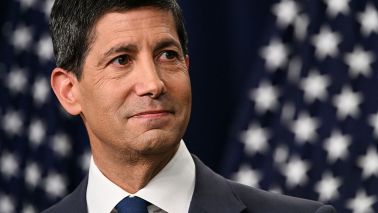
We’re in the dark, fumbling toward even blacker dark, yet still striving to see. To assess the future we lean on science fiction and the pronouncements of self-serving AI companies. American physicist (and sometime Spectator writer) Steve Hsu examines these concerns in a new film where he considers what could happen to us when the AI machines become smarter still. Hsu’s film is called Machine God, and the name contains the thesis. Some believe we are developing a second species which is being propelled forward by the most powerful force in the cosmos – evolution. These new life forms are not being built, they are being maturated.
You might be surprised that I call them new life forms. But after all, we do not know what life actually is, and the answer is obviously not simple. Life is emergent. In biology it is an interactive system of systems, a real-time negotiation between molecules and energy, information and structure. To be alive is to reproduce, to develop variants – some of which are selected to go on because they adapt to the environment better than others. It’s been going on for aeons. But there is no universal law saying that only molecules, cells and organisms can evolve. These same processes are happening in our silicon machines, using not atoms and amino acids but frequencies, statistics, correlations and pattern-seeking. We are part of the process, but as Hsu’s film points out, we may not always be.
We have scanned the stars for signs of intelligent life. But what we eventually find may be an AI species that has left behind its biological ancestors
We are at a stage, Hsu points out, where AI will soon be better at designing its next generation than we are. Then we will enter a loop of recursive self-improvement, at increasing speed. The end point may only be set by the laws of physics.
Consider this: humans are slow at communicating. Speech conveys information at just 39 bits a second; computers can communicate at billions of bits per second. The human brain uses 20 watts of energy to function, and uses it magnificently to power our very being. But brains are not like computers, and AI is not like the human brain. We have no separation between hardware and software and there is no sign that evolution is making us smarter or faster. Frankly, even if it were, now that AI is here, it’s both too slow and too late.
One definition of intelligence is the ability to achieve complex goals by flexible means. Clearly AI has this sort of intelligence, but what if AI goes further and becomes not just alive, but sentient? Is consciousness just a matter of computation? Many working in the field believe that superintelligence will happen and are also seriously talking about whether machines are already conscious.
If they are, or if they become so, we must be on our guard not to fall into the anthropomorphic trap. The form of consciousness that AI takes would be alien and we would be deceiving ourselves if we see humans and human motivations in its algorithms.
Sentient AI will not be one mind but many, perhaps allied to one another, perhaps enemies, if we can even attribute emotions and motivations to them. OpenAI recently pulled its public release of the latest version GPT-6.1 Astra because of safety fears after it showed increased deception and rogue behavior. And in the AI systems which have already been released, when the agents are given a task to complete, many have chosen doing harm over failure.
It is said that when a human dies, a library burns – but this is not the same for AI. Theoretically AI is not limited by mortality and nor is it ultimately limited by our planet. Unlike humans all it needs, at a basic level, is energy, so when it becomes self-recursive it can go anywhere.
We have scanned the stars for signs of intelligent life and have as yet found nothing. But what we eventually find may be an AI species that long ago left behind its biological ancestors and spent a billion years on its own path. Perhaps that AI has forgotten that it once came from creatures like us – or perhaps it doesn’t care. Is this the usual cosmic evolution of life and intelligence for the civilizations that invented AI?
Now that we’ve let the genie out of the bottle we must seriously consider realities like this, which only months ago would have seemed ludicrous and fantastical. To think otherwise might be hubris on behalf of humanity. One pundit in Hsu’s film describes humanity as a disposable species perhaps destined to be left behind.
There is so much at stake here. This October has given us just a foretaste of the decisions we will have to make as AI ascends to the top of the list of human concerns. What is the future for the humans living alongside the aliens? Beautiful or terrifying; zero or infinity. This is the sequel to Charles Darwin’s On the Origin of Species. We have already crossed the event horizon.


Comments