Wine

Drinking 2009 Mouton Rothschild at Butterworth’s

I have always wondered whether The Compleat Angler, Izaak Walton’s piscine classic, would have enjoyed its wide and longstanding recognition absent the antique spelling “compleat.” I somehow suspect that a book titled The Complete Angler would not have made the same impression, especially on modern readers. First published in 1653, the book went through many editions in Walton’s life and after. It is a charming, leisurely guide, “not unworthy,” as its original title page observed, “the peruſal of moſt Anglers.” (Those long “s”es add a little something, don’t you agree?) It is said that Walton, a staunch anti-Cromwellian, good fellow, was particularly fond of the saying “Study to be quiet.

Meet my snooty AI sommelier

My grandparents’ home was a proper house, on the cusp of the Hampstead Heath Extension, with roses and flagstones at the front. It was the sort that looked like it housed a robust wine collection – solid on account of good, aged European bottles, bought at a time when standards were, one assumes, higher.  There was one bottle in my grandfather’s possession that came with particular fanfare: a 1974 Bordeaux whose label was so far gone you couldn’t see exactly what it was. As a treat, I arranged to have the sommelier of the Connaught Hotel examine and open it. Once the cork gave way, a thud of brown sediment rocked the bottle. It was decanted and it breathed – inasmuch as a long-dead thing can breathe. Still hopeful, we tried the sherry-looking stuff – and it was nasty.

MPs don’t drink enough

From our UK edition

The heatwave no sooner ended than it was replaced by the Mandywave. Over the next few days, it may be hard to remember that there are other issues in British politics, including interventions by Tony Blair and Alan Milburn, plus a couple of important by-elections. When Lord Mandelson was forced out, Keir Starmer seemed to relish the defenestration. Mandy has now had an unexpected revenge. His comments on Sir Stumbler’s methods of running a government were meant to be sealed in the archives, and it will be amusing to watch Andy Burnham and Wes Streeting squirm when they are asked whether they agree with his comments on their leader.

Three delicious but unpronounceable wines

Some years ago, I edited and provided an introduction and notes for an edition of Walter Bagehot’s book Physics and Politics (1872). The book has nothing to do with physics in the modern sense of the word (though an argument could be made that it does bear on the original meaning of the Greek word physis, nature. Rather, its elaborate subtitle sheds light on the book’s content: “Thoughts on the Application of the Principles of ‘Natural Selection’ and ‘Inheritance’ to Political Society.” Bagehot was writing a scant dozen years after the publication of On the Origin of Species.

california

How California disrupted the French wine industry

Much as I love France, who sold us the idea of superior French taste in the first place? Why do we continue to beat ourselves up about their supposedly ultra-cool cinema, peerless fashion sense and exquisite food and drink? Has anyone contemplating the pool of congealing demi-glace set before them at a standard-issue Paris café been able to maintain any delusion of French grandeur? As it happens, a significant blow to French national pride in these matters came almost exactly 50 years ago, at the Paris Intercontinental Hotel, where, in a blind tasting watched over by the world’s media, ten of the host country’s best vintages were set in contest against upstarts from California.

‘It’s all small plates because the girls are the main course’: Rhino at The Windmill reviewed

From our UK edition

You don’t go to a strip club expecting to put something in your mouth unless you’re an incorrigible roué. So it came as something of a surprise to find myself doing just that in the new Spearmint Rhino club. The club recently launched in Soho’s old Windmill Theatre, famous for staying open throughout the Blitz, when girls appeared naked in static tableaux to get around the era’s indecency laws. Now the venue offers both flesh and – more shockingly – food. A restaurant in a strip club has both bacchanalian promise and the risk of comic disaster. Degustation sounds so like a combination of delicious and disgusting, it suggests there is a fine line between food and sex.

Resist the cult of ‘picky bits’

From our UK edition

We are, according to Marks & Spencer, in ‘picky bits’ season. I cannot bear the tweeness of it all. M&S is surely mere days away from launching a ‘Paddington Bear picky bits picnic range’. In search for an antidote to such horrors, I go on my annual pilgrimage to Bouchon Racine, which starts on Westbourne Park Road at midday, sipping Beamish Irish stout in The Cow. It is reputed to be David Beckham’s favourite London pub and is one of an increasing number of English pubs piggybacking on the phenomenal appetite for Guinness by serving alternatives to the Black Stuff. Beamish and Murphy’s are popping up on taps across the capital and we are the better for it.

Is this the end of house wine?

From our UK edition

We have all become only too used to the surging cost of heating our homes, filling up our cars or doing the weekly shop. But there’s one price increase that hurts me more than all of these combined: the cost of a bottle of wine in a restaurant. Just five years ago, it was rare to find a wine list without at least one bottle under £25; now it’s increasingly common to find one little under £40. We have reached a point where £35 house wine is now normal. Take Maggie Jones in Kensington. I used to eat there regularly in the late 90s and early 00s and recall it being fabulously cheap – a point emphasised by the magnums of house wine on which they’d mark with a pencil how much you had drunk. Often it was quite a lot.

White port is the new G&T

From our UK edition

Spring is here and, as the garden blooms, readers might find themselves reaching for the Pink Diesel to enjoy in the sunshine. But I have another idea: white port and tonic will make you thank God for inventing Portugal and being so good as to align it with England. The great promulgators of white port in Portugal nowadays can be found in the Symington Family Estates. In 1882, 19-year-old Andrew James Symington boarded a boat from Glasgow and headed for opportunities beyond the Clyde. On arrival in Portugal, he worked for Graham’s Port, before breaking out to do his own thing. Symington soon became one of the defining names in Portuguese wine production. A.J., as he’s known in the family, had such success that his descendants were able to acquire Graham’s in 1970.

Malbec: a conundrum worth solving

Malbec, observed Hugh Johnson, is a “conundrum.” Sometimes it is light in color as well as body. That’s what it tends to be like in the Loire, where the grape is called côt (apparently its original name). It used to be grown in Bordeaux, where it was used primarily as a sort of filler, rounding out the cabs and merlots. In Cahors, its major French venue today, it is sometimes called côt noir or Auxerrois. There malbec tends to be bold, spicy and dark. “Dark,” in fact, is one of the wine writer’s favorite adjectives for this allotrope of malbec. This was the “black wine” that Thomas Jefferson would sometimes add to his claret to deepen its color. But malbec is a fussy grape. The French climate is a challenge.

Is it time for me to renounce the Devil?

From our UK edition

As I spent much of January in dry dock in Tommy’s hospital (‘dry’ being doubly appropriate), other avocations were needed. One friend said that it sounded as if I had spent much of the time gazing at the glories of Barry and Pugin, reading poetry or teasing pretty nurses: all pleasant activities. But there was one disappointment. Geoffrey Elton helped to introduce the civilisation of the Rhineland to East Anglia Assuming that hospital wards were good stalking grounds for chaplains, I would have been happy to discuss the Trinity, the meaning of the first verse of St John’s Gospel, or whatever. But only one clergy creature appeared. There is a good old Scots word, ‘mouthless’ (pronounce ‘oo’); that poor fellow fitted the description.

Why is the wine industry dying?

Most wine columns resemble recipes from Larousse Gastronomique or Mastering the Art of French Cooking in this way: they have happy endings. This column, alas, proceeds with a melancholy burden. The world of wine, it pains me to report, is in the doldrums. Is it because of a new infestation of phylloxera, the blight that devastated French vineyards in the 19th century, or some other pest? Is it some novel tyranny of teetotalers, outlawing the production and consumption of wine? No. It is something closer to original sin or what Immanuel Kant on a dreary afternoon called “the crooked timber of humanity” out of which nothing straight can be fashioned. In short, it is the news that the wine industry itself is dying. Why?

Hell is Dry January

From our UK edition

‘Earth has not anything to show more fair.’ I have always believed that the notion of a Dry January must have been launched on the world by von Sacher-Masoch: one of his more obscene fantasies. I would no more subject myself to it than to any of the other 11 months. They all deserve better. This year, however, malign fate intervened. On 3 January I was strolling along (as it happens, stone-cold sober) when I suddenly felt rotten. I sat on a fence to work out what was wrong and promptly passed out, falling a few feet while bumping and bashing on the way. A neighbour spotted the fall and dialled 999 virtually before I landed. A few days later, on the phone, he told me: ‘When I first saw you, mate, I thought you was fucking dead.

My new discoveries from South Africa

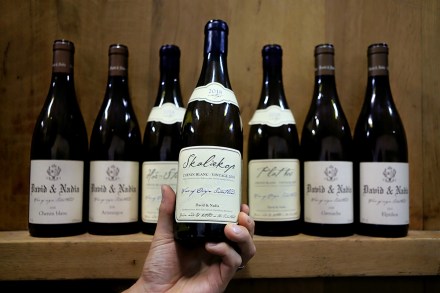
When I heard that Minnesota Representative Ilhan Omar had gotten into the wine biz, I thought “Hot dog! If she is as good at wine as she is at investing, this should be spectacular.” I mean, talk about creatio ex nihilo. Just a few years ago, Omar had a net worth of about $1,000. Now she is said to be worth some $30 million. Perhaps only Nancy Pelosi, the world’s most successful investor, is better at conjuring something out of nothing. In 2022, eStCru, the winery Omar’s husband had invested in, was touted as a “hot brand” by Wine Business Monthly. There was chardonnay from the Willamette Valley, cabernet from Mendocino and more.

Gripping: Amazon Prime’s The Tank reviewed

From our UK edition

I don’t know how it got past the increasingly powerful ‘All Germans were evil Nazis’ censors but Amazon has released a sympathetic portrait of a Tiger crew on the Eastern Front, translated, clunkily, as The Tank. It has been criticised in some quarters for its weird twist at the end, which the genre-literate will see coming a mile off. But don’t be put off by its structural and narrative shortcomings. This is still a very watchable, gripping and sometimes moving portrait of men at war, and likely the most realistic ever depiction of a second world war tank crew. It’s far superior to the ludicrous Fury, where Brad Pitt plays an implausibly elderly tank commander, and where a single Sherman successfully takes on virtually an entire SS Panzer Grenadier regiment.

Japan, the land of the rising wine industry

From our UK edition

Travel to Hokkaido, Japan’s northernmost island, and I imagine one of the last things you’d expect to find is a Frenchman making wine. But tucked away in Hakodate, Etienne de Montille, a ninth-generation winemaker from the 300-year-old Domaine de Montille in Burgundy’s Côte de Beaune, is challenging preconceptions about Japanese wine. The de Montille family has been synonymous with Burgundy for centuries, but Etienne decided in 2016 to try something different, setting up vineyards in both Hokkaido and Santa Barbara, California.  ‘I was touched by what I saw,’ Etienne told the Japan Times last year.

The quest for the perfect January red wine

From our UK edition

There are different ways to approach the tyranny of Dry January. One is to drink in secret. Another is to indulge only on feast days. Personally I have always refused to make January a miserable and puritan month, which means finding excellent red wine to transition from Christmas exuberance to the long, drawn-out evenings of the new year. And so the quest to find the perfect January red begins. It should not be too expensive, but nor should it be a false economy. After the excesses of December, value is key. Readers are forgiven for pursuing a bargain in the January sales – we have all done it. But the truth is many discounted offerings represent exactly the kind of wines one should not be drinking. They are the rejects, the failures, the lesser vintages.

The proof is in the glass

Here we are at the beginning of a new year. Since I don’t have any childcare “learing centers” to offer my readers, I thought, the weather being frigid here in the northeast, I would reach out with the warmth of – no, not “collectivism,” to which I am allergic – but of some recent discoveries in the world of wine. Much cheaper, believe me, and much more palatable. It is only fairly recently that the Santa Cruz Mountains have come into their own as a California wine-producing region. I was deeply impressed by the 2021 Estate chardonnay from Rhys Vineyards. Sourced from three spots in the mountains, with elevations ranging from about 700 to 1,400 feet on a variety of soil types, this chardonnay is exceptionally well-structured.

There’s nothing to fear from Madeira

From our UK edition

Perhaps because of the Flanders and Swann song in which a louche older gentleman tries to lure a younger lady to bed with Madeira wine, the drink has unfairly acquired a fusty image. While port and sherry have experienced a resurgence, Madeira remains underappreciated despite the fact it stands as a proud monument to the grand old Anglo-Portuguese alliance. One man, Jamie Allsopp, is intent on fighting a noble battle to promote the virtues of Madeira. And so to the Blue Stoops, Allsopp Brewery’s newish pub on Kensington Church Street, for their second annual Game and Madeira Dinner, named after the site in Burton-on-Trent where Jamie’s ancestors first brewed Allsopp’s Ale in 1730.

Dessert wine isn’t just for pudding

From our UK edition

At the end of the 1970s, when I had my first taste of wine, the choice was limited. It was either cloyingly sweet German Liebfraumilch, or something from the Don Cortez or Hirondelle types, both of which were sour and brash. That, younger readers, was how bad things were, and why many of us during that time stuck to lager and lime. When Le Piat D’Or came on the market, it was, frankly, a relief. But things have changed, including my palate. Sweet or semi-sweet wines can be delicious, and bear no resemblance to the cheap German variety of my youth. Many moons ago, invited to my first posh dinner party, I was bowled over when served a lightly sweet Riesling with a fruit crumble. Riesling is a key component in Liebfraumilch, but not all Liebfraumilch is Riesling.