Alcohol

I gave up drinking. Don’t call me teetotal

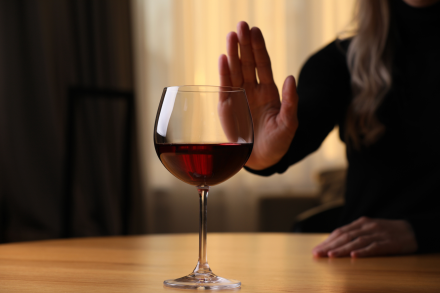
I hate teetotallers. The pitying looks they give you with their cold, unclouded eyes. Those patronising, bored smiles they smile, as though they are indulgently listening to the table-talk of children. Their uncouth early departures from the dinner table and tactless talk of early starts. Teetotallers are as bad as people who insist on whipping out their phones to film fellow guests when they’re dancing. They’re buzz-killing squares who should learn to live a little.   And yet … I have, despite my worse judgment, recently mounted the wagon. In my heart, I remain a devoted drinker. In my mind, I continue to see myself as the Falstaffian life of the party.

Americans have perfected the art of countertop cuisine

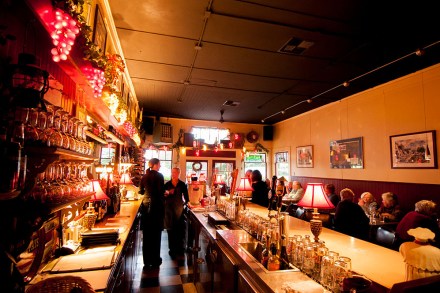
There are many reasons to admire America, and also a few reasons to disapprove. On the plus side there is free speech, the right to protect oneself, a relatively dynamic economy and 198 versions of beef jerky. On the downside, an inconsistent attitude to turning right at lights, too much fructose and the possibility of a civil war on the way. However, on a recent long trip up the American West Coast, from palm to pine, I came away realizing that America has one great advantage over Europeans: a serious understanding of the concept of eating at bars in restaurants. By which I don’t mean nibbling nuts and necking a cocktail while waiting for a table. I mean actual eating, of a proper meal, while seated on a barstool.

The proof is in the glass

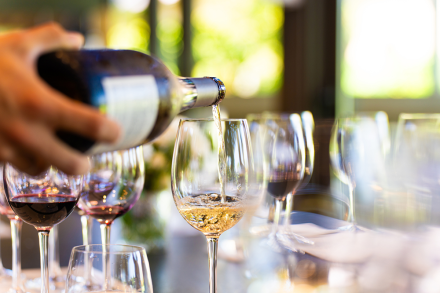
Here we are at the beginning of a new year. Since I don’t have any childcare “learing centers” to offer my readers, I thought, the weather being frigid here in the northeast, I would reach out with the warmth of – no, not “collectivism,” to which I am allergic – but of some recent discoveries in the world of wine. Much cheaper, believe me, and much more palatable. It is only fairly recently that the Santa Cruz Mountains have come into their own as a California wine-producing region. I was deeply impressed by the 2021 Estate chardonnay from Rhys Vineyards. Sourced from three spots in the mountains, with elevations ranging from about 700 to 1,400 feet on a variety of soil types, this chardonnay is exceptionally well-structured.

Young people should drink more, no great story starts with salad

According to a recent Gallup poll, young Americans are drinking less than ever before. Two-thirds of adults aged 18 to 34 now believe even moderate drinking harms their health, up from 30 percent in 2001. Only half say they drink at all, down from 59 percent in 2023, the lowest figure since Gallup began tracking alcohol consumption in 1939. What is happening to young people in America?Possible explanations pile up: a new obsession with health, better information about alcohol’s effects, swapping gin and tonics for weed or vaping, the cruel economics of $18 cocktails, or the quiet lure of staying home, where TikTok and Netflix bring the world to your couch instead of you having to find it in a crowded bar.

Drinking

Activist-academics push to Make America Teetotal Again

What constitutes a safe level of drinking? For some activist-academics there is none – and they are loudly lobbying for alcohol to be treated like tobacco in official US health advice. The Dietary Guidelines for Americans are under review and will be updated this year. Currently they recommend moderation: two drinks or less in a day for men and one drink or less in a day for women. Pressure, however, is being applied for a new recommendation: no safe level.But that would fly in the face of decades of evidence that has shown those who drink in moderation live longer than those who do not, mostly because alcohol consumption lowers the risk of heart disease, stroke and diabetes. The current guidance from 2020 is roughly where the sweet spot is from a health perspective.

pregnancy

Why I am confident the Champagne tariff will not last long

I have to begin this column with a glass of Pol Roger cuvée Winston Churchill. It’s fancy stuff, and — according to some — it’s a bit early in the day to be quaffing Champagne.  “How early is too early?” I’ve often wondered that. The jury is out but most of the best authorities say that any time before actually awakening is too early.   Why the shampoo (as David Niven was wont to denominate the beverage)?  It seemed like the appropriate expedient in response to a bulletin I received from a Trump-skeptical friend. It came in over the headline, “Trump’s first mistake.

palm beach wine champagne

What’s behind all the buzz about non-alcoholic beer?

There’s nothing quite like the third swig of a gin and tonic at the end of a long summer’s day. Or of an Old-Fashioned combating Old Man Winter’s chill. The bite on the tongue. The slow burn in the belly. The gradual easing of emotional and physical tension. Except for the hangovers. There’s nothing quite like those, either. As I — sigh — age, I’ve developed a relationship with alcohol that has become increasingly love-hate: I love it, it hates me. A slight intolerance to booze, German/Irish heritage notwithstanding, has always given me a rosy flush that on round three deepens to an unflattering scarlet that could be mistaken for theatrical rouge.

non-alcoholic

Inside Bannon and Burra’s post-CPAC blowout

National Harbor, Maryland “CPAC 2024 was a HUGE success!,” the conference’s account tweeted this morning. Cockburn isn’t sure how they’re measuring that: the gathering was decidedly muted when compared with previous Trump-era affairs. After the former president spoke on Saturday and Argentinian president Javier Milei offered attendees an economics lecture, Steve Bannon closed out proceedings. He led the CPAC crowd in chants of “Trump won, Trump won, Trump won” and branding Joe Biden “a usurper in 1600 Pennsylvania Avenue.” Bannon has never feared courting controversy.

bannon burra

New takes on the Negroni

Cocktails, for all their pleasures, rarely become memes. And yet, a variant of the Negroni did that last year, during the press tour for the Game of Thrones spin-off, House of the Dragon. When Olivia Cooke asked her co-star, Emma D’Arcy, what their favorite summer drink is, they replied: “Negroni sbagliato,” before flirtatiously adding, “with Prosecco in it.” Cooke’s response — “Ooh, stunning!” — turned the charming interaction into a viral moment. Bars were subsequently inundated with orders for them. For those unfamiliar, the Negroni is a classic Italian summer cocktail consisting of equal parts of gin (I recommend Bombay Sapphire), Campari and sweet vermouth (preferably Martini & Rossi). A dash of orange aromatic bitters is also a nice touch.

negroni

A drinker’s guide to flasks

During a recent chat with my twin brother, I told him about a wholesome community event I was preparing to attend. Being the evil twin, he joked, “You should bring a flask.” This idea got us talking about just how, when, and where one is supposed to use a flask. Is one supposed to use a flask? My experience has often been that flasks are shady things, carried by alcoholics or sipped from covertly at events that would be intolerable without a numbing agent. Yet I wonder sometimes if any public behavior these days is really off-limits. America’s major cities all reek of weed, a cohort of busy moms recommends micro-dosing psychedelics, it’s socially acceptable to self-identify as a cloud, and people actually vape in public.

Can booze break the gridlock in Congress?

Need a hit on Capitol Hill? Take your pick. Members and staffers alike are addicted to Twitter, where they log on for their daily stims of outrage. Cable news has also become a kind of drug, as congressmen stampede to the Fox News and CNN green rooms rather than go about the irritating business of legislating. But if we're looking for a way out of the present congressional gridlock, I think we need to turn to an older and wiser substance. "Alcoholism is as much of an occupational disease among politicians as black lung is among coal miners," Herman Talmadge once wrote. Talmadge, who served as a Georgia senator from 1957 to 1981, would know: he once took a month off from his senatorial responsibilities to get treated for alcoholism.

Does Taylor Swift have a drinking problem?

Being an eclectic chap, Cockburn has sampled his fair share of music. And he’s not ashamed to admit, contrary to Al Michaels’s suggestion that Taylor Swift only appeals to teenage girls, that he considers himself a “Swiftie” — not least of all because Swift makes repeated reference to one of his favorite activities: drinking alcohol. Swift just released her new album, Midnights, along with an official music video to accompany her catchy and oh-so-clever song, Anti-Hero. The video tells you all you need to know about Swift’s preferred method for dealing with her problems. Though she never mentions booze by name, she appears in the video taking shots and desperately shaking the last drop from a bottle of wine directly into her mouth.

taylor swift

In praise of liquor stores

Pennsylvania’s liquor laws are... vintage. But not in a single-malt Scotch kind of way that means they improve with age. The state legislature did move the needle to the right side of draconian in 2016, but the Philadelphia Inquirer’s 1983 assessment of “Pennsylvania’s backwardness” being “a hangover from the administration of Republican governor Gifford Pinchot, who was elected on a ‘dry’ platform in 1930,” remains accurate. The Inquirer reported that after Prohibition was abolished in 1933, Pinchot led a special session to establish the Pennsylvania Liquor Control Board and “state stores” to make the purchase of alcoholic beverages “as inconvenient and expensive as possible.

liquor

Is losing God making America miserable?

The number of Americans who believe in God has reached an all-time low, according to a Gallup survey that’s been tracking our nation’s “values and beliefs” since 1944. For a God fearin’ woman such as myself, it’s a disheartening statistic. But we are told never to abandon hope, and recent events — the Supreme Court rulings against abortion and in favor of prayer, a million swing voters switching their registrations to Republican, Keeping Up with the Kardashians finally airing its last season — betoken a more God-centered future. Gallup reports: The vast majority of US adults believe in God, but the 81 percent who do so is down six percentage points from 2017 and is the lowest in Gallup’s trend.

god

The need for mead

I used to be terrified of homemade alcoholic drinks. Someone would bring out the elderflower champagne at a picnic, and I’d wave it away: ‘I’d love to. But I’m driving...’ Bottles of homemade cabernet would be pressed on me with irrepressible warmth at Christmas time; I’d accept them with a lying smile on my lips and an inward resolution to boil the contents for seven hours with sugar, oranges and cinnamon sticks and fob it off on guests as mulled wine. And for my narrow-minded ways I now repent. As I must, because with maturity comes the realization that, as Solzhenitsyn said, there is no us and them. The line dividing good from evil, the poised socialite from the homemade-liquor inflictor, cuts through the heart of every man.

mead

Don’t listen to the health fascists — drink up

It was always likely that once the killjoys had done their work on smoking they would turn their attention to alcohol. Sure enough, with the Dietary Guideline Advisory Committee going through its twice-a-decade revision of what, and how much, Americans ought to be eating and drinking in order to look after their health, drinking alcohol is being subjected to the same demonization process that was once applied to smoking tobacco. There is a campaign to lower safe drinking limits in the US, in the same way that they have been lowered in other countries. Worse, there is pressure to eliminate altogether the concept of a ‘safe level’ of alcohol consumption — and make out that every drop brings a drinker a little closer to his or her demise.

drink alcohol

Jason Peters writes to entertain his friends and exasperate his enemies

Batavia, New York H.L. Mencken mocked the authors of I’ll Take My Stand, the classic 1930 manifesto of Twelve Southerners, as ‘typewriter agrarians’. The gibe was partly fair and partly not, but then a strict adherence to fact is a disability in a humorist — it is what adds those warning braces to his title and makes him that deadliest enemy of the lively reader: the ‘humorist’. Always self-reproving, never self-improving, Jason Peters, a scapegrace professor of something-or-other at Augustana College in Rock Island, Illinois, gemstone of the Quad Cities, is no ‘humorist’. Though his new book is titled The Culinary Plagiarist, he is no keyboard kebabist either.

jason peters

In defense of drinking in the street

A tiki bar opened across the street from my Upper West Side office shortly before all social life in Manhattan ground to a halt due to the pandemic. I visited once, had two to three of their specialty drinks and, despite a mild headache the next morning, could tell the place was going to be a hit. Then the shutdown came. Businesses of all stripes pulled and padlocked their security grilles. Helicopters and airplanes disappeared from the skies. Traffic, except for wailing northbound ambulances, all but disappeared. Genuine fear owned the spring.

lockdown drinking

Lacking liquor in Northern Virginia

It’s been one day since Northern Virginia closed its liquor stores and already civilization has collapsed. Fires burn on the horizon as the cry of the sober mob reverberates through the streets. People nail boards over their windows and spray paint ‘NO VODKA’ on them. Yuppies have descended into the underground Metro stations, where rumor is they’ve become something less than human. Harvesters, we call them, and last night they came for my friend Bone Saw… That, of course, is not what’s happened in Virginia since the state ordered the temporary closing of some liquor stores last week. Life in the quarantined DC suburbs has mostly continued as usual.

liquor alexandria northern virginia

Beware the COVID-19 nannies!

COVID-19 has suddenly made much of the western public health establishment effectively redundant. Unused to dealing with infectious disease, we have a legion of epidemiologists who have never studied an epidemic and a horde of public health professionals who are more comfortable discussing soda taxes than virology.If you’ve spent your career believing that drinking, smoking and obesity are the real epidemics, a potentially fatal virus forcing billions of people into hiding could make you question your priorities. But if the nanny state lobby was disoriented at first, it has quickly learnt to adapt. The public are temporarily willing to sacrifice a bit of liberty for safety and the lifestyle regulators sense fresh opportunities.

jerome adams nannies