Melissa Chen

Melissa Chen is a Spectator contributing editor.

Singapore should serve as a model for how to fix racial disparities

In theory, the SCOTUS decision to strike down affirmative action in higher education should be considered as part of the post-George Floyd racial reckoning to “dismantle systematic racism.” But judging by the hysteria going on over at MSNBC and condemnations from President Biden, it’s clear that the activist class and American intelligentsia have a very different conception of what exactly constitutes racial justice. Two and a half years on, this racial reckoning has instead produced higher murder rates, generational declines in basic literacy among students — with the sharpest declines among black and Latino kids — and a massive transfer of wealth to an ever-growing DEI bureaucracy, BLM grifters and gurus like Ibram X.

singapore

Why tech billionaires love testosterone

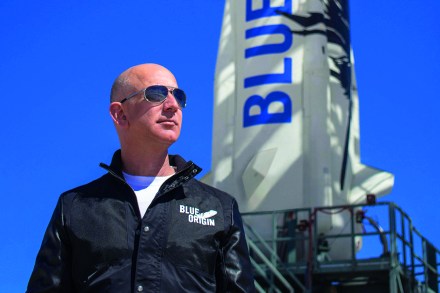
Testosterone is having a moment. At once a molecular vector for toxic masculinity and a health-optimizing supplement for middle-aged tycoons eager to project vigor, “T” is perhaps the most discussed hormone around. I blame Jeff Bezos, who has apparently aged in reverse since founding Amazon. After a tight-shirted appearance at the 2017 Sun Valley conference, his transformation from dweeby online-book-salesman to Vin Diesel-clone-with-alpha-swagger was unmistakable. Was he getting some hormonal help? Fast-forward a few years and he has acquired a hot Latina girlfriend and blasted himself into space in a giant metal penis. This left little room for doubt: surely he was marinated to a T, in T.

testosterone
john cena

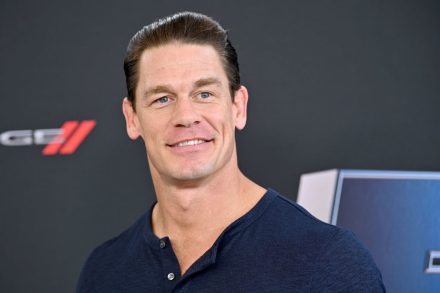
John Cena’s car-crash Taiwan apology

In an unforgivably cringeworthy mea culpa delivered in surprisingly fluent Mandarin, John Cena has apologized to his fans in China. He had said in a promotional interview with a Taiwanese media outlet that Taiwan would be 'the first country that can watch' his new Fast & Furious movie, F9. Uh oh. To the Chinese Communist party and a billion Chinese citizens, the slightest hint of Taiwan’s sovereignty is considered blasphemy in the highest order. 'I made a mistake,' the former WWE champion said in a groveling video posted to the Chinese social media platform, Weibo. 'Now I have to say one thing which is very, very, very important: I love and respect China and Chinese people.' He continued: 'I’m very sorry for my mistakes. Sorry. Sorry. I’m really sorry.

The Trump talisman doesn’t work anymore

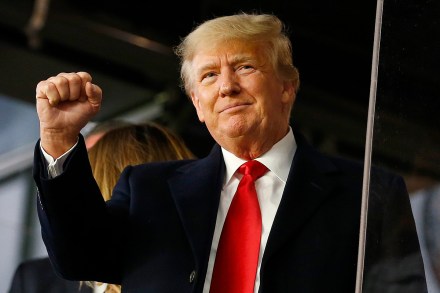
Glenn Youngkin’s victory over Terry McAuliffe is a loud wake-up call for the Democrats, who attempted to fuse the GOP candidate for Virginia governor to Donald Trump’s hip and failed miserably. Joe Biden won the commonwealth by ten points a year ago — yet Youngkin beat his Democratic opponent by two points. A slew of other Republican victories in key states have led to frantic analyses on cable news and soul-searching postmortems about why the Democrats proved so unpopular. Sure, anti-incumbent sentiment and Biden’s historic disapproval ratings haven’t helped, but one clear takeaway has emerged: the Trump boogeyman no longer works.

trump

The player exposing the NBA’s hypocrisy on China

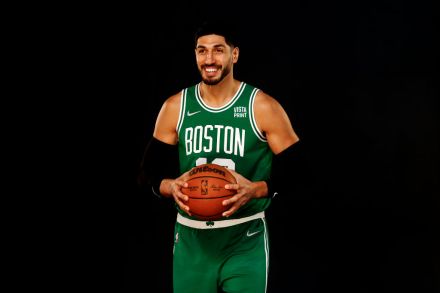
Remember when “Free Tibet” was a mainstay of the cool, hippie subculture that dominated the Nineties? Back when Hollywood cared about the fate of Buddhism’s Holy Land? Few will even remember that Disney — yes, the same Disney that recently filmed parts of the live-action Mulan in Xinjiang — produced a film, Kundun, about the early life of the Dalai Lama. China then retaliated by banning Disney films, causing the company to backtrack and attempt to bury the Scorsese-directed biopic. Disney's then-CEO even traveled to China to apologize. This series of events should sound familiar by now in the age of Western capitulation to China. Less commonplace these days is the sight of a celebrity sporting imagery of the Dalai Lama and any quaint talk of “freeing Tibet.

enes kanter

Has Xi Jinping overplayed his hand?

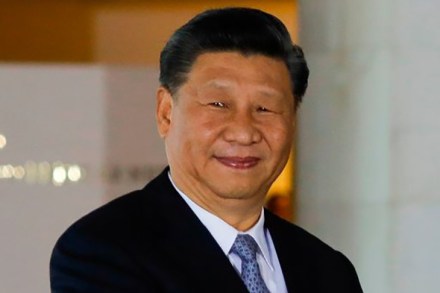
The Chinese Communist party’s origin story, like so many of its official lines, appears to be an apocryphal tale. But a month-long patriotic extravaganza leading up to its centennial celebration has featured military parades, skyscrapers emblazoned with hammer-and-sickle decor and propaganda blitzes on TV. None of the agitprop raised eyebrows as much as the main speech delivered by the Chinese president and general secretary of the party, Xi Jinping, in which he marked the milestone and praised China’s ‘tremendous transformation’ and the historical inevitability of its ‘national rejuvenation’.

xi jinping

Joe Biden is letting India down

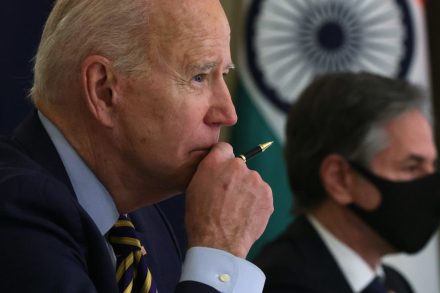
With 40 percent of the population vaccinated, a palpable sense of normalcy has returned to America. The young are now getting their turn at the COVID vaccine and in almost every city, restaurants and bars are back in full swing. But while selfies of joyful reunions with older relatives flood social media here, in India, the picture is grim. The country reported world record-breaking coronavirus infection rates for four days in a row. Hospitals in several cities are grappling with severe shortages of beds, medicines and oxygen. For a country widely seen as the pharmacy of the world (India produces 60 percent of the world’s total vaccines), it is a sad irony that just 8 percent of its own population has been vaccinated thus far.

india

The media’s haste to cry race

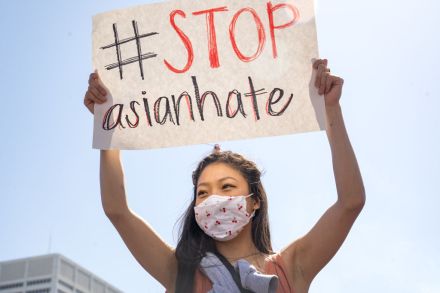
The bodies of the victims hadn’t gone cold, the families had barely begun grieving, when the familiar cottage industry of activists and journalists jumped in to speculate and spread misinformation on social media. What drove someone to slaughter eight people in three Asian massage parlors in Atlanta on Tuesday? A clear storyline took hold: this was white supremacy at work. A young, white man murdered six Asian women and two 'others' made the framing a foregone conclusion. Not even new information from the investigators could slow down the risk to judgment. Atlanta police chief Rodney Bryant said that it was too early to classify the shooting as a hate crime and FBI director Christopher Wray affirmed that it 'does not appear to be racially motivated’.

asian atlanta

Is Joe Biden really ‘tough on China’?

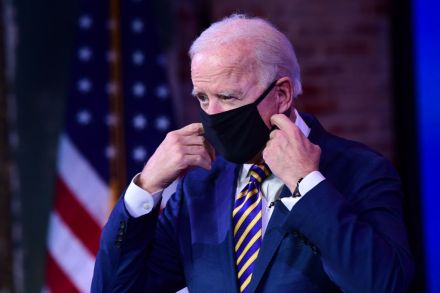
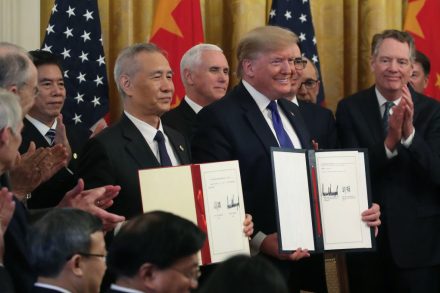
We’re told that Biden is going to be tough on China because the new President has called Xi a ‘thug’. But look at the realities. At the virtual Davos, the world heard Xi Jinping assert China’s role as a world leader, confidently setting the terms of how other countries and institutions should engage with it. While Xi didn't single out the US, his subtext was clear. And if this first week is a sign, the next 100 days of the Biden administration will be a gift to China’s ambitions to reshape the world order. Xi admonished those who 'slip into arrogant isolation' and 'build small circles or start a new cold war’. It’s amusing to hear the Chinese premier lecture the world on 'equal rights, equal opportunities and equal rules' given the Uighur genocide in Xinjiang.

obama white house china joe biden

Yelp’s anti-racist social credit nightmare

It’s seven in the evening and you’re working late. You’re interrupted by the soft rumble of hunger pangs, an unmistakable reminder that you haven’t eaten dinner yet. There’s this newish fusion restaurant a couple of blocks away that you’ve been wanting to try, but haven’t had the chance to. Every time you’ve walked past, it’s buzzing with activity. So you look the restaurant up on Yelp to see if it’s worth your time and money. You launch the app and search, only to be hit with an alert emblazoned with an ominously large exclamation point: ‘Business Accused of Racist Behavior’ The R word. It’s the new scarlet letter. You’re so taken aback that you almost forget that you’re hungry.

yelp

Can China be trusted on climate change?

Xi Jinping was widely praised on Tuesday after he told the United Nations General Assembly via videolink that China would ‘achieve carbon neutrality before 2060’. Environmental activists, academics and government leaders in the West hailed the move as a big deal, a significant step toward addressing climate change. The New York Times couldn’t resist framing this story as a ‘pointed message to the US’ which under Trump has increasingly diverged from the growing scientific and political consensus on climate change. President Trump, famously, initiated the process of withdrawing the country from the 2015 Paris Climate Accords.

china climate xi jinping thought

The China election

Bill Clinton, in a speech heralding China’s entry into the World Trade Organization in 2000, remarked that ‘by joining the WTO, China is not simply agreeing to import more of our products. It is agreeing to import one of democracy’s most cherished values, economic freedom. The more China liberalizes its economy, the more fully it will liberate the potential of its people — their initiative, their imagination, their remarkable spirit of enterprise. And when individuals have the power, not just to dream but to realize their dreams, they will demand a greater say.’It is by now glaringly obvious that this vision didn’t come to pass. For far too long, ‘End of History’ hubris dominated western engagement with China, and hubris led to nemesis.

china

Let’s ignore online petitions

Another day, another ‘racist’ branding faux pas erupts. Social media goes into overdrive. Legacy media is baited to join in. Somewhere in the middle of the news cycle, the company offers a banal apology, a withdrawal of the offending product in question, followed by a generic pledge to Do Better™. The corporate ritual is by now familiar —  and since Black Lives Matter plunged the country into an orgy of activism, it occurs at impressive speed.

trader joe’s petitions

Farewell, dear Hong Kong

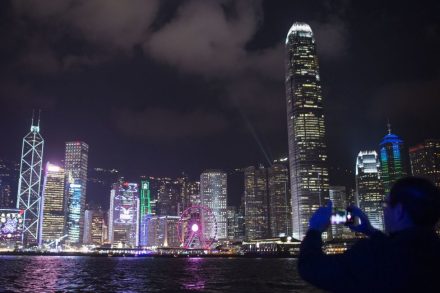
There was no way to know that the last trip I took to Hong Kong just a few years ago would likely be my last. I assumed we still had another 27 years before Hong Kong and China’s ‘one country, two systems’ framework reached its end, but Beijing had other plans. Increasingly emboldened in its domestic social control and assertive in its foreign policy, the Chinese government broke its promise when it sidestepped Hong Kong’s legislature to pass a sweeping national security law targeting ‘secession’, ‘subversion’ and ‘collusion’. These concepts are so broadly-defined as to be easily weaponized against even a nominal critic of the CCP, with a possibility of life in prison as punishment.

Hong Kong skyline

Don’t compare the nationwide riots to Hong Kong

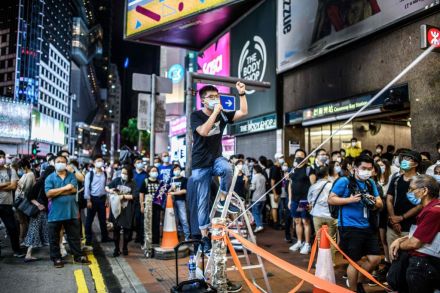
As soon as the unrest began in Minneapolis, the inevitable comparisons with Hong Kong began. We saw throngs of masked demonstrators take to the streets holding placards and chanting slogans while police in riot gear discharged rubber bullets, pepper spray and tear gas. We saw skirmishes in which protesters were pinned to the ground with excessive force. We saw smoldering barricades and burning police vehicles. But that’s where the superficial similarities between the two protest movements end. Hong Kong’s protests began as a revolt against the controversial extradition bill (which would have allowed extraditions to mainland China). It built upon past pro-democracy movements and morphed into an existential battle against the Chinese Communist party.

hong kong

In defense of Andrew Yang

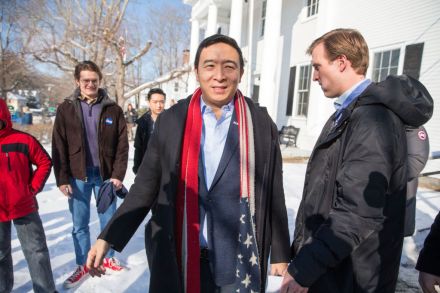
Tone-deaf. White people-pleasing. Bumbling pineapple bun. These are just some of the choice epithets that have been hurled at Andrew Yang after he shared his thoughts about the Asian American experience in the age of coronavirus. Calling the growing reports of racist and xenophobic attacks against Asian Americans across the country a ‘heartbreaking phenomenon', Yang opened his op-ed with a soliloquy about a recent experience at a grocery store where, for the first time since growing up as one of the few children of East-Asian descent in a New York suburb, he felt the searing tinge of race-consciousness and anxiety about his place in America.

Andrew Yang

Time to ban wet markets

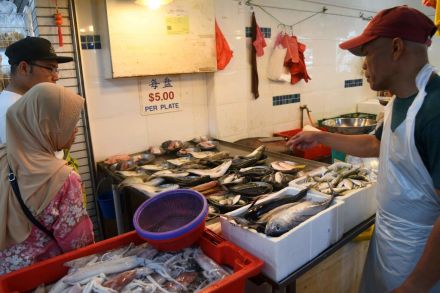
There’s a recurring flashback from my childhood that never fails to induce a blood-curdling shiver down my spine. My mother’s request for company on her monthly shopping trips to the wet market was always a Hobson’s choice, one I deeply resented because the experience was awful. Deep in the bowels of Singapore’s Chinatown complex was a large open-air market that stood in stark contrast to the surrounding glitzy skyscrapers and immaculate streets. The place was a veritable not-so-little shop of horrors and till today, those horrors remain firmly etched in my memory.A distinctly fetid stench greets you long before entering the market; soon it becomes apparent why they’re referred to as ‘wet’.

wet markets singapore

How do pandemics change the way we think?

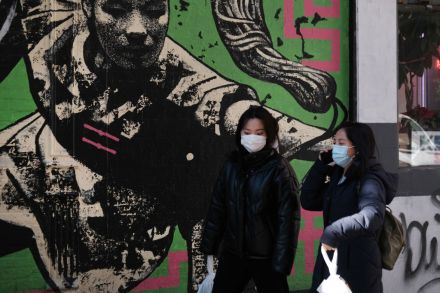
It starts with seemingly insignificant numbers alongside little red blips on the world map. In a matter of days, the numbers soar and the red circles balloon to engulf an entire region. This pattern has repeated itself several times across the globe — notably in South Korea, Iran and Italy — as the number of confirmed cases of COVID-19 has surged since the virus first emerged in Wuhan back in December. Despite the Chinese economy coming to a grinding halt amid an unprecedented city-wide lockdown, the inevitable happened. The virus could not be contained within mainland China’s borders, and neither could its accompanying fear.Coronavirus has spread perniciously, causing 4,716 deaths worldwide and radically transforming life as we know it.

pandemics

Is Joe Biden really a sure thing?

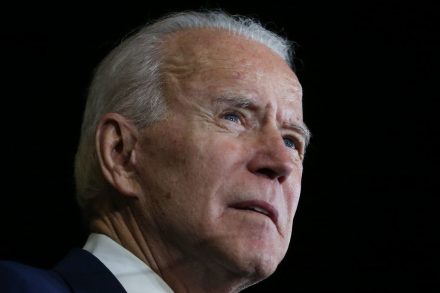
How quickly the campaigns of Tom Steyer, Pete Buttigieg and Amy Klobuchar — all billed as moderates — have assimilated into the the unwieldy, sputtering Borg of the Democratic establishment. On Super Tuesday, Joe Biden was anointed as the new favorite of this collective, sweeping most of the primaries, scoring majority of the delegates and picking up vital support from many senior Democrats. After a stumbling start in Iowa and poor performances in New Hampshire and Nevada, Biden’s campaign was mostly written off as the last gasp of a long but fading political career. He’d never won primary.

joe biden

Why the #NeverBernie efforts fell flat in South Carolina

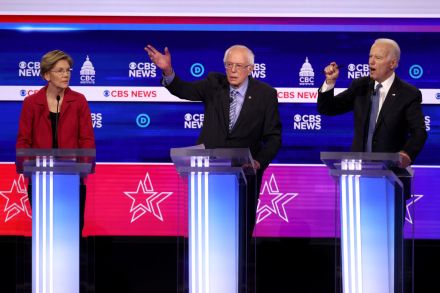
Last night, as expected, Bernie Sanders’s status as the front-runner invited a pile-on of attacks from the other candidates for the Democratic nomination. The South Carolina debate showed Bernie’s opponents are desperate to stop the anti-establishment juggernaut, which is splitting the party into a #NeverBernie moderate base and a progressivist camp that is increasingly comfortable with embracing the socialist label as a badge of honor. They don’t know how to stop him. The moderators kicked matters off by asking Bernie how a democratic socialist could do better than the incumbent given the strong current economy and record low unemployment.