Microsoft

A progressive mayor puts Seattle to sleep

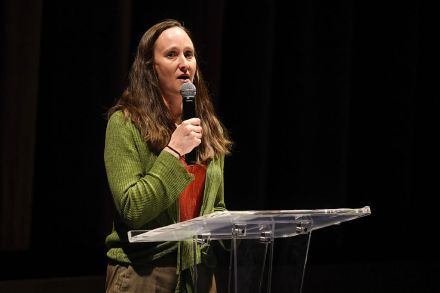
Back in April 1971, a large billboard appeared by a freeway near the Seattle-Tacoma airport. “Will The Last Person Leaving Seattle Turn Out The Lights?” A reference to the Boeing company’s decision to lay off 40,000 local employees, and the ensuing rapid downturn in the area’s economy. Among other problems, the aircraft manufacturer had suffered a crippling blow when the US Senate rejected further funding for its proposed SST supersonic jet, Boeing’s would-be competitor to Concorde. I was reminded of the 1971 slogan just last month, when Seattle’s newly-elected mayor Katie Wilson told a university audience that she was “really, really excited” about the recent passage of a 9.

Wilson

How the West is empowering China’s war machine

The West’s technology brains and universities are arming China. A few of them are potentially breaking the law to do it, but most of them don’t need to. The front door has been open for years, and nobody in London or Washington has thought to close it. According to a federal indictment unsealed in Manhattan last month, on December 18, 2025, in a warehouse somewhere in Southeast Asia, a team of men used a hair dryer to peel serial-number labels off genuine server boxes and press them onto fakes. The real servers, loaded with some of America’s most restricted artificial intelligence hardware, are alleged to have long since been shipped to China. What remained, according to the indictment, were dummies – non-working replicas repackaged to look untouched.

Are AI stocks about to crash?

Bitcoin has lost almost a quarter of its value. The tech-heavy NASDAQ index on Wall Street has started to fall. And even leaders of the industry, such as the Google CEO Sundar Pichai, have started to warn about valuations getting out of control. We already knew that AI was driving a boom in investment. But this week there are worrying signs the market is about to crack. The only real question is whether that turns into a full scale crash. Bitcoin, as so often, is leading the market rout. More than $1 trillion has been wiped off the value of the crypto market over the last six weeks, with Bitcoin itself down by 28 percent since its peak.

AI

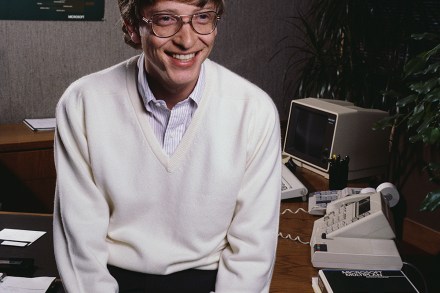
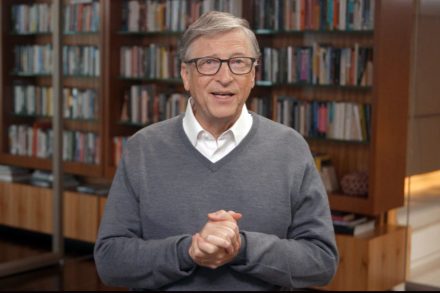
Bill Gates’s memoir offers an oddly revealing look into the Microsoft founder’s psyche

In 2024, a Swiss company called FinalSpark claimed to have built the world’s first computer processor fired by human brain cells. To do this, the company evidently took small samples of living brain tissue, and — so the press release says — “connected them to specialized electrodes to perform computer processing and digital analog conversions to transform neural activity into digital information.” Frankenstein undertones aside, the whole FinalSpark initiative raises the issue of how far a computer can be humanized, made not only to respond with factual accuracy but with something approaching emotional intelligence.

Gates

The battle of the oligarchs

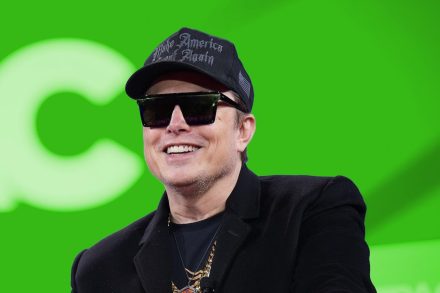
Money and power have rarely been strangers; often nations are made to shudder when the ruling elites battle each other. Britain’s late empire was divided between liberal manufacturers and aristocratic interests, whose conflicts hastened the rise of the Labour Party and the end of empire. In the United States, opposition to powerful trusts defined progressive politics for decades, ultimately laying the basis for the New Deal and a greater scope for government. In the West today we are witnessing a similar divide among the uber-rich class — epitomized by Elon Musk’s embrace of Donald Trump — that is already reshaping politics. Until 2016 the US establishment, both Republican and Democratic, embraced similar views on national security, global trade and multilateral institutions.

oligarchs

FTC chair Lina Khan accused of résumé inflation and lying to Congress

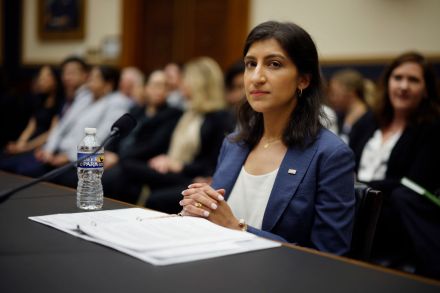
Lina Khan, the chairwoman of the Federal Trade Commission was supposed to be the next great trustbuster. But on the course of her rise to the nation's top antitrust law office, Khan allegedly misrepresented her credentials throughout her career and stands accused of lying to Congress. Representative Harriet Hageman, a Republican on the House Judiciary Committee, levied a series of accusations to Khan in a barrage of Questions for the Record obtained by The Spectator. Hageman’s most sensational claims are that Khan lied to Congress, lied by omission to Congress and misrepresented herself as a lawyer while lacking the appropriate law license.

lina khan

Bill Gates’s sinister job interviews

Interviews are often tough — but imagine instead of being asked about your hobbies or what you’ll bring to the team, you’re instead quizzed on whether you’ve ever had extramarital affairs, what kind of porn you watch or if you had naked pictures of yourself on your phone. Cockburn would be out of the running, that’s for sure.  These were the questions asked to women that interviewed to work at billionaire Bill Gates’s private office. The extensive screening process included being questioned by a security firm about their sexual past, previous drug use and other personal things in case they were vulnerable to blackmail. That old chestnut!

bill gates interviews

Why conservatives should consider antitrust against Microsoft

Amid the renewed energy around antitrust enforcement in recent years, one name has been notably missing: Microsoft. The antitrust villain of the 1990s has skated through the ongoing techlash largely unscathed, happy to play the dutifully chastened elder statesman of the tech ecosystem while privately pushing for Google, Facebook, Amazon and Apple to take their lumps. But if Microsoft thought leaning into the techlash would reduce its level of regulatory scrutiny, they appear to be mistaken. The company recently made an all-cash $69 billion bid to buy the video game giant Activision Blizzard, developer and publisher of games like Call of Duty, World of Warcraft and Candy Crush.

There’s no place like data center

At the height of the COVID pandemic, Microsoft workers ‘chose’ to sleep in data centers, according to a company executive. Last year, Microsoft directed employees to work from home after the virus landed in the US. In October 2020, a company internal memo announced more employees could work from home permanently. As cases and deaths continued to climb, however, some employees were so crucial that they had to sleep at locations hosting the company’s public cloud infrastructure and online services such as Microsoft Teams. 'I heard amazing stories about people actually sleeping in data centers,' said Kristen Roby Dimlow, Microsoft's corporate vice president, CNBC reported.

microsoft data center

Happy corporate wokewash month!

It’s June and the biggest corporations on the planet want you to know that they are celebrating gay Pride — unless you live somewhere like Saudi Arabia in which case they couldn’t care less. On their main Twitter page, Procter & Gamble have put a Pride flag in their banner and in their pinned Tweet they proudly proclaim: 'We strive to be a champion of #LGBTQVisibility year-round, using our voice to drive acceptance, inclusion and a love for humanity.' I guess there are no gay people in Saudi Arabia to champion, which must be why P&G’s Saudi Twitter handle has not a single rainbow flag in sight and a pinned tweet simply wishing people a blessed Ramadan. But that is the beauty of corporate wokewashing.

pride wokewashing corporate

Will the real Bill Gates please stand up?

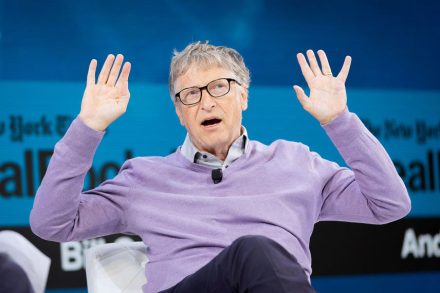
Humans are capable of growth. Even the most immoral of individuals have the capacity for change. Your second act can be distinctly different from your first. If in doubt, just ask Bill Gates. When you close your eyes and think of Bill Gates, what images spring to mind? A kindly man in a knitted sweater promising to rid the world of suffering? Gates has become synonymous with words like compassion and care. But what about words like tyrant, megalomania, pettiness, insincerity and greed? Surely not. How could a benevolent philanthropist, a man who exudes kindness, also be cruel and petty? As has been reported ad nauseam, Bill Gates has devoted so much of his life to eradicating illnesses like malaria and addressing issues of poverty in disadvantaged countries.

bill gates interviews

Bill Gates isn’t a creep. He’s a beta

Won’t you spare a thought for poor William Henry Gates III? For most of America, the collapse of a marriage is a private trauma, or at worst publicized in a series of ill-thought Facebook posts. But Mr Gates is worth $120 billion — and it turns out an unfathomably enormous fortune can buy a great deal of unwanted attention when your personal life is disintegrating. Jeff Bezos had an even bigger fortune at stake when he divorced — and his public breakup involved cringeworthy X-rated text messages being leaked to the world via the National Enquirer. Somehow Gates’s divorce has already managed to become more publicly excruciating. First, there were the leaks about Melinda’s $132,000 a night island getaway where she planned to wait out the media storm.

bill gates

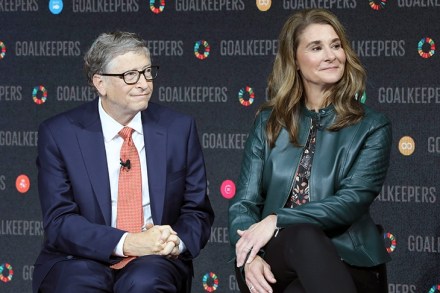
Can Melinda still keep Bill Gates in check?

The end of the 27-year marriage of Bill and Melinda Gates looks tidier, so far, than Amazon founder Jeff Bezos’s parting from his ex-wife MacKenzie Scott, but will no doubt turn into another fee fountain for Seattle’s legal fraternity. Melinda French was a manager at Microsoft, the software giant created and driven by Bill, when the two met in 1987 — and is widely credited with turning him from a hardcore techie and ruthless competitor into a mellower, more admirable human being. The $50 billion charity they created together has become the flagbearer for ‘venture philanthropy’, which is the application of large-scale private funds to address global problems, particularly in healthcare, that governments and market forces fail to solve.

melinda

What’s the point of trying to break up Big Tech?

The ‘antitrust’ law suit launched by US authorities against Google has been reported as a potential turning point in the dominance of Big Tech — and an echo of the courtroom dramas that diminished the excessive power of America’s late 19th-century oil, steel and railroad barons. But I wonder how much impact it will really have.The allegation, in brief, is that Google has created an illegal near-monopoly by paying large sums to Apple and other smartphone makers to secure its position as the default search engine for billions of consumers, its grip reinforced by ownership of Android, the phone operating system, and Chrome, the popular browser — all of which also gives it a stranglehold on the digital advertising market.

big tech

Bad Kshama: meet Seattle’s worst socialist

Seattle In Max Frisch’s 1953 absurdist play The Fire Raisers, a well-off family in an unnamed town invites a man they suspect of being an arsonist to sleep in their home. A second such guest then appears, and before long the family’s attic is piled high with drums of gasoline. The man of the house gradually realizes that he has two active pyromaniacs under his roof, but believes that by displaying kindness, he will make his house immune to them. In the last scene of the play, the original arsonist asks for a box of matches and, again wishing to appear generous, his host gives him one. You can guess the rest. Somehow I’m put in mind of Frisch’s morality tale when examining the unresisted rise of the 46-year-old Seattle socialist politician Kshama Sawant.

kshama sawant

The media’s TikTok blindspot

We learned about journalists this past weekend. Specifically, we learned about tech journalists who aren’t particularly interested reporting or analyzing tech as much as they are committed to harvesting click revenue from a young audience engaged with tech and social media platforms. They proved, in other words, that their industry is broken beyond repair.You probably heard that President Trump told reporters aboard Air Force One that he was looking at banning the social media video app TikTok on Friday. TikTok has come under scrutiny in the past months over security concerns and its parent company ByteDance’s connections to China. It’s understood to be hacking and using data collected from its users’ phones.

tiktok

Microsoft, Google and the artificial intelligence race

The decision by Microsoft to invest $1 billion in OpenAI, a company jointly founded by Elon Musk, brings closer the time when machines threaten to replace humans in any tasks that humans do today. OpenAI, which was founded just four years ago, has pioneered a range of technologies which have pushed the frontiers of massive data processing in defiance of the physical and computer capabilities that governed such developments for generations. Now, with the investment from Microsoft, the pace of technological change is likely to accelerate rapidly. Today, Artificial Intelligence is at a level of what is known as 'weak AI’ and relies on humans to create the algorithms which allow for the crunching of massive amounts of data to produce new and often predictive results.

artificial intelligence