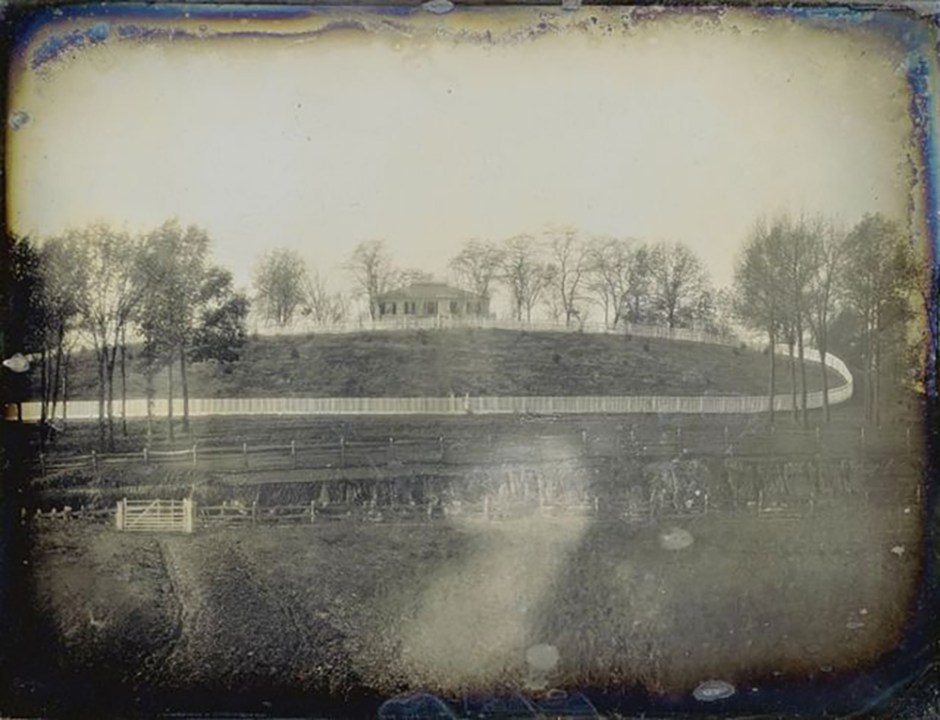
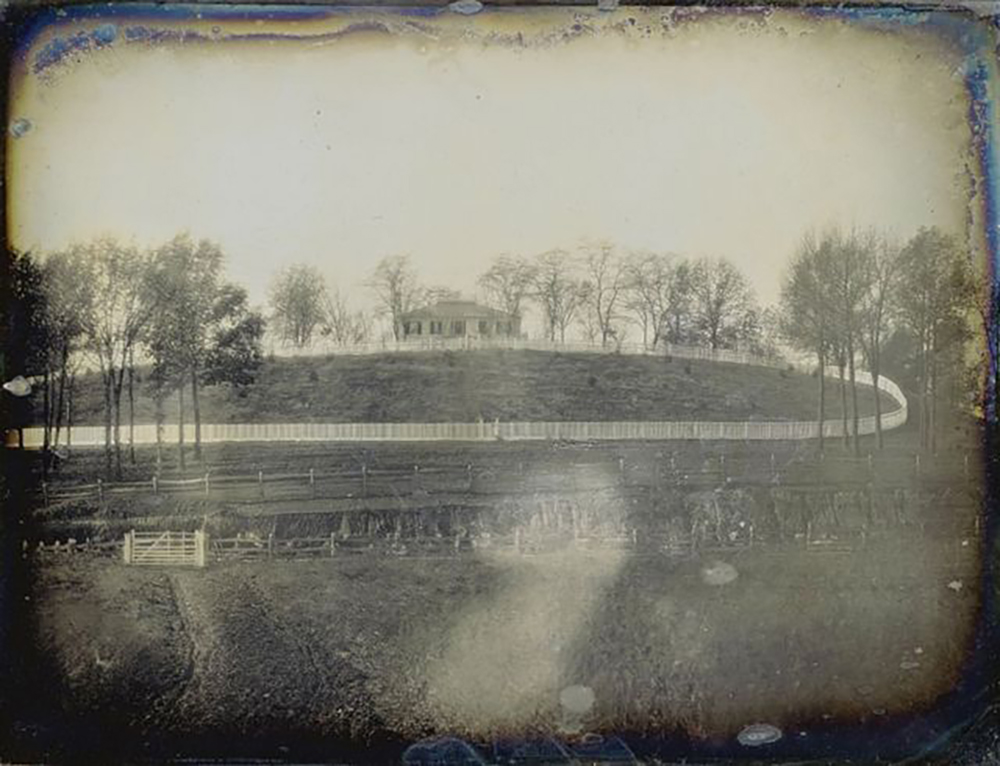
When Alexis de Tocqueville arrived in New York in 1831, he found a city a quarter of the size of Paris, perched on the lower tip of Manhattan, roamed by pigs. Speaking to everyone he met, high and low, he was struck by how many of the rich used to be poor. There was, he observed, an ‘equality of conditions’ that filtered down to the way parents treated their children.
The 25-year-old ‘wiry aristocrat’ filled 14 notebooks during his nine-month road trip across America to 17 of the 24 established states. It formed the basis of Democracy in America. ‘The American inhabits a land where everything is constantly moving, and each movement seems to be progress,’ he wrote. John Prideaux, former US editor of the Economist, takes the book with him as he retraces de Tocqueville’s journey for a new six-part podcast. How much of what de Tocqueville observed still survives?
Prideaux eavesdrops on a pretty ghastly sounding soirée at the Lincoln Center, and makes his way to the lavish apartment of the philanthropists Barbara and the late Donald Tober. Here, the ‘equality of conditions’ feels rather elusive. Tober’s block is guarded by a liveryman, and the lift opens directly into her home. The 91-year-old has commissioned a tomb for when she dies, ‘a seven-foot-long wave of love’, adorned with the Shield of Achilles, a pair of crossed skis, a violin and a horse. But she is also intent on spending most of her money on philanthropic causes before she dies. There may be little equality left in America in life, but in death, there is a kind of levelling.
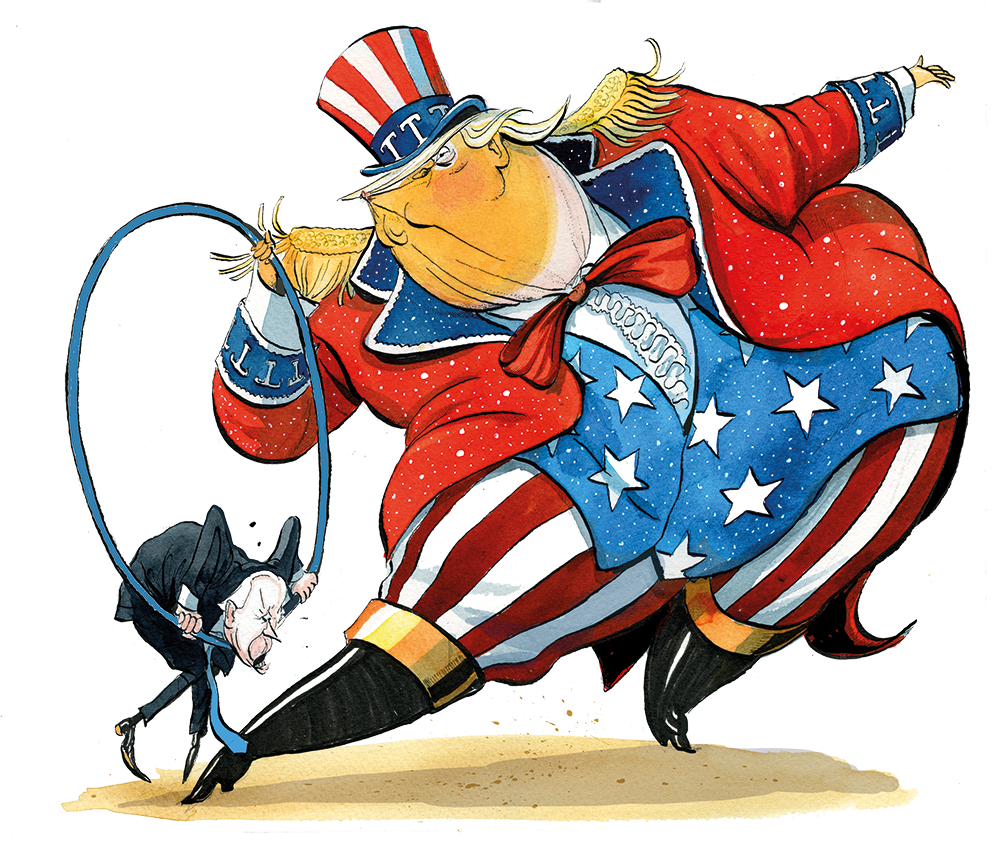
Some of the most compelling insights in what proves to be a scintillating series come from Prideaux’s visit to Sing Sing Correctional Facility. Surprised by how readily the prisoners own up to their crimes – it’s been argued there’s more accountability here than on Wall Street – Prideaux describes what he sees as the major difference between Americans and Europeans. The former are much less likely to believe that they end up where they do because of luck. And so, if they commit a crime, they accept they must be punished for poor choices. Europeans are less punitive, as de Tocqueville also recognised, because of their feudal origins; the belief is instilled in them that some people are simply more likely to come unstuck owing to the social hierarchy.
Tocqueville Road Trip is quite the journey, and Prideaux is a first-class guide. If America was ‘a spectacle for which the history of the past had not prepared it’, it remains a spectacle for which the future is equally ill prepared.
In Mr Jefferson’s Library on BBC Sounds, American journalist Michael Goldfarb begins where John Prideaux ends, in Washington DC. For his five-part mini-series, he is investigating the reading habits that informed Thomas Jefferson’s Declaration and approach to the American revolution more widely.
The first 6,000 books that formed the primary collection of the Library of Congress came from Jefferson’s own library. Finding himself in debt, the founding father sold his books for a pretty dollar, while retaining some old favourites; Goldfarb finds copies of Herodotus’s Histories and Don Quixote in Jefferson’s former home at Monticello.
It would appear that Jefferson had copied out much of what he sold. His commonplace books burst with passages on everything from ancient circumcision to the battle of Hastings and Montesquieu’s The Spirit of the Laws. The last of these, says Goldfarb, is the most heavily annotated in Jefferson’s commonplace legal book. If this is the sort of detail that intrigues you, there’s a lot more where that came from in this series, which suffers for being too dense for the format.
Each 14-minute episode has material to fill a slot at least twice as long. I struggled to keep pace with what was being said while Goldfarb delivered his script. This is a pity, because there were evidently rich insights on the influence of Sir Francis Bacon’s empiricism, among much else. When the narrative did slow, and Goldfarb discussed the injection of religion into today’s politics ‘in a pre-Enlightenment way’ as the antithesis of Jefferson’s dream, I found something to digest.





Comments