The economist

Alexis de Tocqueville’s America has vanished

From our UK edition

When Alexis de Tocqueville arrived in New York in 1831, he found a city a quarter of the size of Paris, perched on the lower tip of Manhattan, roamed by pigs. Speaking to everyone he met, high and low, he was struck by how many of the rich used to be poor. There was, he observed, an ‘equality of conditions’ that filtered down to the way parents treated their children. The 25-year-old ‘wiry aristocrat’ filled 14 notebooks during his nine-month road trip across America to 17 of the 24 established states. It formed the basis of Democracy in America. ‘The American inhabits a land where everything is constantly moving, and each movement seems to be progress,’ he wrote.


Semafor’s Justin Smith is going global

On January 4, Justin Smith announced that he was stepping down as CEO of Bloomberg Media to found a startup. He would pursue a “new kind of global news media company,” one that would serve “unbiased journalism to a truly global audience.” Ben Smith, the New York Times media columnist, resigned on the same day. The two Smiths were joining together to work on what was known at the time only as “Project Coda.” In the flurry of press coverage that followed, some hubristic claims were bandied about. The era of the foreign correspondent was over, Justin insisted. Throughout the world, there were 200 million college-educated, English-speaking professionals who were underserved by current news media, Ben maintained.

Justin Smith

Democracy and economic freedom are in decline

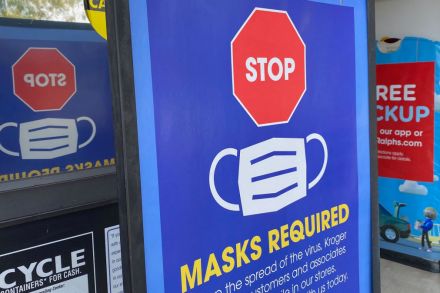
The first report cards on democracy and economic freedom for 2021 are out and the results are not good. Economic Intelligence Unit, the sister company of The Economist magazine, found that last year’s Democracy Index had fallen by almost a tenth of a percent. That’s the biggest drop in the index’s 15-year history. The Heritage Foundation’s Index of Economic Freedom, meanwhile, saw a similar albeit larger decline of 1.6 points out of 100. Heritage looked at economic policies and conditions in 177 countries while the Democracy Index looked at 167 countries. Both reports blame government-enforced COVID restrictions for the declines.

mask

How we did the locomotion: A Brief History of Motion, by Tom Standage, reviewed

From our UK edition

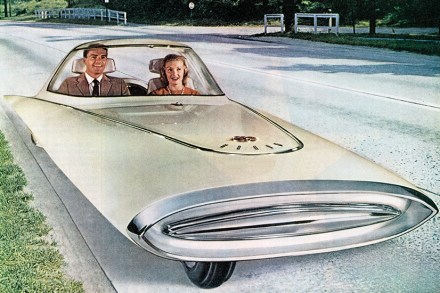
Audi will make no more fuel engines after 2035. So that’s the end of the Age of Combustion, signalled by a puff of immaculately catalysed smoke from polished chrome exhausts designed by fanatics in Ingolstadt. But some say the age of motion itself will have shuddered to a halt before then. A trope of the New Yorker is a cartoon showing cavemen inventing the wheel, a companion to the other trope of desert island castaways. The adventure promised by the wheel and the limitations of boring stationary solitude are ineffably linked. Since Homo erectus left Africa 1.75 million years ago, without wheels, moving our bodies through space has been a defining characteristic of civilisation. The urge to travel may be, as the biochemist Charles Pasternak says, very nearly innate.

The Economist should be more like Walt Whitman

America is complicated. It’s hard to predict what it’ll do next, despite all the time and money spent observing it. Not without reason is Walt Whitman — with his long beard, loose morals and love of ambiguity — its national poet. In an election year, plumbing the country’s mood is especially crucial. But that doesn’t make it any easier. Once bitten in 2016, the liberal portion of America’s establishment is twice shy, and terrified about slipping into the same complacency over Biden’s chances as it did over Clinton’s. While not an American institution, the Economist fits neatly into the same footloose, cosmopolitan club as the more neoliberal-minded of Democrats.

economist