Bbc

Alexis de Tocqueville’s America has vanished

From our UK edition

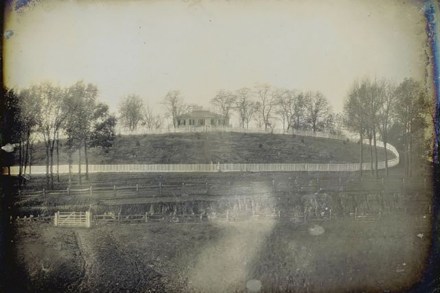
When Alexis de Tocqueville arrived in New York in 1831, he found a city a quarter of the size of Paris, perched on the lower tip of Manhattan, roamed by pigs. Speaking to everyone he met, high and low, he was struck by how many of the rich used to be poor. There was, he observed, an ‘equality of conditions’ that filtered down to the way parents treated their children. The 25-year-old ‘wiry aristocrat’ filled 14 notebooks during his nine-month road trip across America to 17 of the 24 established states. It formed the basis of Democracy in America. ‘The American inhabits a land where everything is constantly moving, and each movement seems to be progress,’ he wrote.

Labour’s mad media protectionism

From our UK edition

Just when you think this government cannot get any madder, it publishes a truly mental green paper. Called ‘Watch this Space’ and produced by the Department for Culture, Media and Sport, it suggests forcing social media platforms to make content produced by public-service media providers, like the BBC, ITV and Channel 4, ‘prominent and easily discoverable’. So, if you search for an instructional video on YouTube about how to do the foxtrot, it would steer you towards an episode of Strictly Come Dancing. And the content recommended for you by a platform’s algorithm wouldn’t be based on your personal preferences, but on what DCMS – or possibly Ofcom, the details are vague – thinks you ought to be consuming.

The peerless Penelope Keith

From our UK edition

The news that Dame Penelope Keith has died at the age of 86 has devastated lovers of great British humour, to say nothing of Spectator readers. The two are, after all, closely linked. Keith was that rare actress who was the lead in not one but two seminal sitcoms, The Good Life and To The Manor Born. It would perhaps be an exaggeration to describe her performances as the aspirational Margo Leadbetter and the aristocratic Aubrey fforbes-Hamilton as showing thespian range. But there was no actress better at skewering the pretensions and absurdities of a certain kind of Englishwoman. Even today, if you say of someone that they are a ‘Penelope Keith type’, it is shorthand for Middle England in excelsis – even if that type is vanishing far quicker than is desirable.

Why does Farage care if he’s on Desert Island Discs?

From our UK edition

The big revelation in Lord Ashcroft’s forthcoming biography of Nigel Farage is that he’s been banned from Desert Island Discs. According to Ashcroft’s sources, an appearance by the Reform UK leader would make some BBC employees feel ‘unsafe’ and might lead to other high-profile figures boycotting the long-running show. ‘I have come to expect nothing less from the BBC,’ Farage told the Mail on Sunday. ‘Their blatant bias has been obvious for years.’ The BBC has categorically denied the story and, in fairness, its ‘blatant bias’ doesn’t extend to Question Time, which Farage has appeared on about 40 times in the past 26 years.

Your podcaster isn’t your friend

From our UK edition

Sometime around the pandemic years, I began to notice that when friends called to catch up, alongside the customary news about careers, marriages, and offspring, they would update me on the fortunes of their favourite podcaster.  The trend reached a harrowing crescendo when an acquaintance of mine somehow became a devout listener to The Rest Is Politics and started keeping me informed about the latest exploits of his imagined companions, ‘Alastair’ and ‘Rory’. (Worst of all, his favourite of the two is Rory. I can think of only a handful of worse things to discover about a friend.

The steady rise of ‘Slow TV’

From our UK edition

Like many families, we used to have a TV in our kitchen. But the default response when there was nothing immediately to be done became to reach for the remote. This suggested we were all developing a woeful lack of gumption so, when we moved house several years ago, I became a television dictator: it’s verboten Monday to Friday, and our 15-year-old monitor, with its cracked screen and unreliable controls, has long been relegated to the sitting room.  Every so often, however, I find my own resolve weakening. This happens every April when SVT, the Swedish national broadcaster, streams The Great Moose Migration, all day, every day, for three weeks.

Stopping the boats shouldn’t require magical thinking

From our UK edition

The BBC’s tracking-down of Kardo Ranya as a people-smuggling mastermind is a triumph of investigative journalism. But anyone who thinks this will seriously help ‘smash the gangs’ is deluded. As the drugs trade illustrates, where there is demand there will be supply. What’s to be done? Imagine you were the party leader of a mainstream British political party. Daydreaming, you see a vision – pouffe! A bang and a flash, and there stands the Fairy Queen herself. ‘What, oh party leader,’ she demands, ‘is your heart’s desire?’ Your reply is unhesitating but – you suppose – hopeless. ‘A winning strategy for the next general election,’ you wail. ‘I ask only for that.

The BBC at its nation-unifying best

From our UK edition

Children of the Blitz began with the surprising news – to me anyway – that while 800,000 British children in places likely to be bombed were evacuated during the war, two million weren’t. The evacuees’ stories have long been a TV staple, but this riveting documentary was the first programme of any kind I can remember about those who stayed at home. The experience was recalled with extraordinary vividness by people mainly in their nineties or beyond, all of whom gave the type of revelatory interview that programme-makers don’t get merely by pointing the camera and asking questions, but through the careful building of wholly justified trust.

Can our democracy survive the ‘bad chaps’? 

What is the greatest threat to British democracy? Zack Polanski’s call for ‘building a society’ that ‘doesn’t include’ people who ‘identify as right-wing’? Labour’s efforts to flood the Upper House with party apparatchiks? Islamist extremism? The correct answer is Reform UK. That, at least, is the conclusion of a new book called What If Reform Wins by the Times reporter Peter Chappell. Before I get to its flaws, I should acknowledge it’s an enjoyable read, with plenty of deft, comic touches. It imagines that Reform wins a majority in June 2029, and then gives a blow-by-blow account of the constitutional crisis that follows, with the informal rules and conventions underpinning our democracy being stress-tested and found wanting.

The BBC’s shameful treatment of Top Cat

Films nowadays often come with warning of ‘smoking’, ‘partial nudity’, ‘drug use’ or something called ‘language’ (presumably to prevent alarming people un-aware of the invention of the talkies). Yet language can be triggering. I know that from watching the BBC as a child, when two linguistic absurdities drove the seven-year-old me practically insane. One was the Blue Peter habit of referring to Sellotape as ‘sticky-backed plastic’, a phrase unspoken by anyone else in any other circumstances, except in parodies of BBC children’s programmes.

Sunday shows round-up: Will Labour axe fuel duty hike?

From our UK edition

Bridget Phillipson: We don’t need to act yet on fuel duty The war in Iran has now gone on for one month and concerns continue to grow over the effect the conflict will have on economies all over the world. On Sky News this morning, Bridget Phillipson played down fears of impending fuel shortages, telling British consumers to ‘continue as you are’. Trevor Phillips noted that more than half of the price of fuel goes to the government and asked the Education Secretary why the government isn’t scrapping the proposed 5p rise to fuel duty in September. Phillipson said the Chancellor is ‘absolutely committed’ to protecting British people from the impacts of the conflict and that the government will ‘take a view closer to the time’ on fuel duty. https://www.youtube.

LIVE: Should we defund or defend the BBC? | Michael Gove & Jon Sopel v Charles Moore & Allison Pearson

From our UK edition

60 min listen

Should we defund – or defend – the BBC?   Live from London, the Spectator hosted a debate on the future of this iconic British institution, compered by associate editor Isabel Hardman. The Spectator’s chairman – and long-time Beeb-critic – Charles Moore, and the Telegraph’s Allison Pearson went head-to-head with the Spectator’s editor – and former Tory cabinet minister – Michael Gove and the former BBC correspondent – now-podcaster with The Newsagents – Jon Sopel.    Defund: do you agree with Lord Moore that the BBC is constantly breaking impartiality? That this issue ‘more profound than just about balance’ – that this is a systemic issue which hampers the British public’s opportunity to learn.

LIVE: Should we defund or defend the BBC? | Michael Gove & Jon Sopel v Charles Moore & Allison Pearson

Will books soon become extinct?

I am glad that BBC Radio 4 is producing a series called How Reading Made Us, presented by the subtle, super-literate Times of London columnist James Marriott. I must declare an interest. Roughly 98 percent of my earnings over 45 years have depended on the fact that plenty of people like reading. Now we are thinking harder, however, about the fact that form affects substance. The idea of an encyclopedia, for example, as developed (from classical roots) in the 18th century, was that all needful knowledge on a particular subject could be assembled and consulted in a book or series of books. With AI, there is little need for this form. The form of a book, which often seemed so compendious, can now seem cumbersome. Fiction, too, is affected by form.

books

Does Nigel Farage really want to be Prime Minister?

From our UK edition

45 min listen

Nigel Farage is a shark – hell bent on devouring Britain's political class, as illustrated with the Spectator's cover story this week, co-authored by James Heale and Tim Shipman. Yet, from rows over the pension triple lock to stagnation in the polls, it isn't clear that Farage has a strategy for power. Reform may win the battle of the Right, but does its leader really want to be Prime Minister? For this week's Edition, host Lara Prendergast is joined by the Spectator's Chairman Charles Moore, deputy political editor James Heale and Times Radio broadcaster Jo Coburn. The panel ponder the idea that Farage may crave power without responsibility. As James puts it, Farage is akin to a southern revivalist – but is momentum waning?

Does Nigel Farage really want to be Prime Minister?

The insidious rise of Tannoy spam

From our UK edition

Six people meet for a picnic on Richmond Green. They eat Popeyes chicken nuggets, Sainsbury’s sausage rolls, M&S sandwiches, Cadbury Mini Rolls and Walkers crisps. They drink a bottle of Pinot Grigio and several cans of Sol lager. How do I know? I’m no detective but they’ve made it easy for me. After they’ve finished, they’ve simply got up and left the bottles, wrappers, packages and paper plates on the grass, laid out like a meal on the Marie Celeste. There’s always been litter – Bill Bryson described it as ‘a long continuum of anti-social behaviour’ – but this is something different. It feels more like social anarchy, a total blankness. I can’t get my head around it.

Stop talking rubbish about Radio 3

From our UK edition

‘Listen to this drivel’ is not the combination of words a radio presenter longs to see in reference to their exertions, but it’s what The Spectator associate editor Damian Thompson had to say about me on X recently. I’d provoked Thompson’s ire by telling people what was coming up that morning in my Radio 3 programme, Essential Classics, in a one-minute video delivered with a somewhat unserious tone. Thompson did later apologise for being rude but declared: ‘It’s just awful to hear the new house style of Radio 3.’   Thompson joins other Spectator writers who have their collective underwear in a twist about the style of presentation on Radio 3.

Does Sadiq Khan approve of colonising?

From our UK edition

How to report Iran? It is a huge story. Perhaps as many as 30,000 people were recently murdered there by the tottering regime, but it won’t let western media in. The BBC’s solution is a deal: their correspondent can enter and report, but the report cannot appear on their Persian service. This agreement is rightly explained on air, unlike the BBC’s iniquitous deal with Hamas over Gaza. Do the terms of the deal benefit journalism, however? We are always told that BBC foreign language services are the lifeblood of truth for citizens of dictatorships. Why are Farsi speakers to be deprived of this? Also, what do we learn from Lyse Doucet walking the Tehran streets in a headscarf? (Is it compulsory or voluntary? Either way, she should explain.

Is Industry the Brideshead Revisited of our times?  

From our UK edition

At first glance, there are few similarities between Brideshead Revisited, Evelyn Waugh’s classic 1945 novel – later adapted into an equally classic ITV series – of prelapsarian bliss in Oxford and Industry, the BBC’s adrenaline-fuelled show that exposes the dark iniquity at the heart of the financial industry. The one is a languid examination of (discreetly portrayed) same-sex love and Catholic guilt, and the other is a profane, sexually charged and palpitation-inducing dive into hedonistic self-indulgence. Brideshead is plover’s eggs and Meursault; Industry class A drugs and group sex. They would seem as distinct from one another as chalk and (Comté) cheese.

We don’t need to see radio DJs’ faces

From our UK edition

In a week in which embarrassing and damaging revelations about past misdemeanours are very much in vogue, let me reveal one of my own. When I was seven years old, I wrote in to Jim’ll Fix It. My request was to play a giant Wurlitzer organ, preferably the one in the Blackpool Empress Ballroom. To my retrospective relief, Savile didn’t respond to my letter. But I did purchase a second-hand, two-tier Hammond organ when I was at university, which I played as part of an acid jazz group. No tapes of our band’s songs or gigs survive I am delighted to state. I was reminded of my rather strange and atavistic early love of organs last week when I read of the death of Nigel Ogden, the presenter of the long-running Radio 2 show The Organist Entertains.

Why won’t the BBC use the word ‘Jews’?

From our UK edition

I was intrigued to learn from the BBC Today programme on Tuesday that ‘buildings across the UK will be illuminated this evening to mark Holocaust Memorial Day, which commemorates the six million people murdered by the Nazi regime more than 80 years ago’. Who were these unfortunate ‘people’, I wondered? Just anyone at all? Was it a wholly indiscriminate spot of slaughter? I have some vague memory that it was one race in particular that was singled out for extermination, but the BBC dared not say their name. In fact, the sentence I quoted is wholly inaccurate: the ‘six million’ figure relates only to Jewish people.