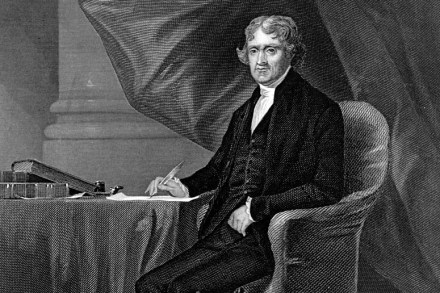
Thomas jefferson

‘I had two jobs: to run the country and to survive’: an interview with President Trump

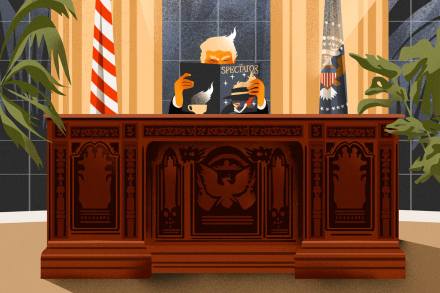
From the moment you enter Donald J. Trump’s Oval Office, you are surrounded, not by staff or Secret Service, but by presidents. In his second term, he has chosen to envelop himself in Americana to an unprecedented degree. He faces Franklin D. Roosevelt whenever he sits at his desk. Looking back are Teddy Roosevelt, Lincoln, McKinley, Polk, Jackson, Jefferson, and alone among them as a non-president, Franklin. Ronald Reagan looks over his shoulder for every decision he makes. “We took them out of the vaults. We have incredible vaults of things,” he tells me. “They have 3,900 paintings.” It’s a roster of the greatest American leaders assembled in an oval around him in their most sterling depictions. They serve as motivation.

America’s Summer of Discontent, 250 years ago

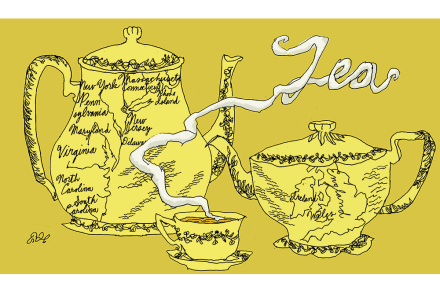
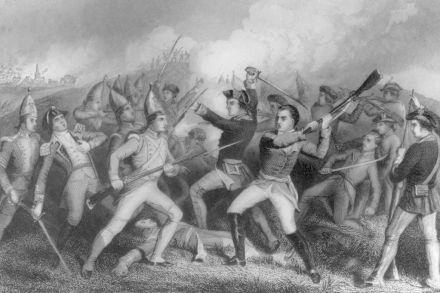
In the summer of 1774, large numbers of American colonists, from Massachusetts Bay down to the Virginia Tidewater, were disaffected and angry. For a decade, they had felt increasingly oppressed by Great Britain, ever since London had imposed duties on various exports to America to help pay for the costs of the victorious Seven Years’ War.  The Stamp Act of 1765 and the 1767 the Townshend Acts, which added duties on lead, glass, tea and other items, became hated symbols of imperial power. The colonists considered the duties to be taxes levied by Parliament, and while they acknowledged Britain’s right to regulate trade, they balked at the presumption by British lawmakers to directly tax them.

discontent
Madison

Why is James Madison so consistently forgotten?

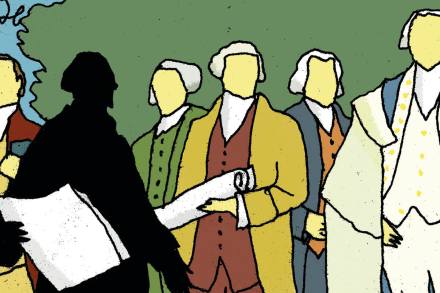
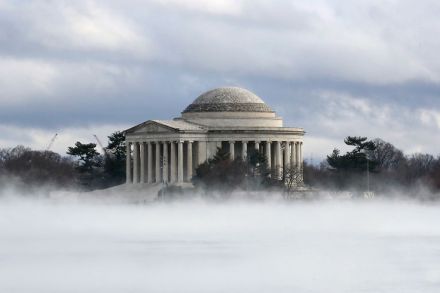
James Madison is consistently forgotten. Admittedly, many of the Founding Fathers are forgotten. The average American could probably name two of the forty or so founders in Howard Chandler Christy’s Capitol painting “Scene at the Signing of the Constitution of the United States.” But while Washington and Jefferson get imposing monuments in DC and Hamilton gets a musical, the father of our beloved Constitution hardly has a memorial. Asking Google why will pull up an article from the Harvard Law Bulletin quoting Professor Noah Feldman. “Unlike George Washington or Thomas Jefferson, no monument was built to honor Madison in the nation’s capital. You have to see the Constitution as his monument,” said Feldman. “His influence is hidden in plain sight.

The awesome Alan Pell Crawford

The great nineteenth-century novelist Harold Frederic (The Damnation of Theron Ware) had a character complain “I cannot read or listen to the inflated accounts” of the role played in the Revolution by Massachusetts and Virginia “without smashing my pipe in wrath.” Frederic’s pipe-smasher would smoke in peaceful raptness while reading Alan Pell Crawford’s engrossing new book, This Fierce People: The Untold Story of America’s Revolutionary War in the South.

Crawford

The populism of Machiavelli and Jefferson

A few years ago a Marine turned novelist, G. Michael Hopf, captured a classic truth in a pithy formula. Inspired by cyclical theories of history — in particular the generational “turnings” of William Strauss and Neil Howe — Hopf wrote in his novel Those Who Remain, “Hard times create strong men, strong men create good times, good times create weak men, and weak men create hard times.” One need not put much stock in Strauss and Howe to appreciate the maxim. It could just as well be derived from Sallust or other classical sources. Or from Machiavelli: in his Discourses on the First Decade of Titus Livy, the Florentine philosopher considers where best to build a city.

Machiavelli

Madeira, our onetime national drink

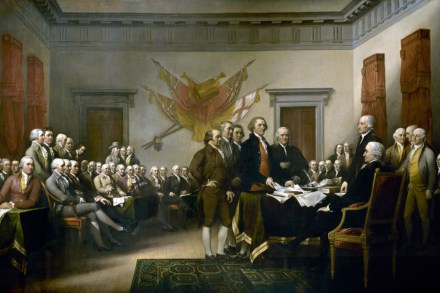
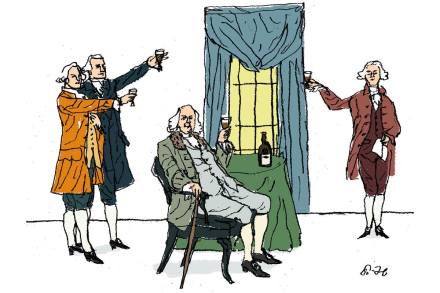
Does America have a national drink? It once did — not officially, quite, but in fact. And what was that national potation? Madeira. The wine, John Hailman writes in Thomas Jefferson on Wine, “symbolized to Americans a common patriotism and spirit of independence.” It was, he continues, the “mother’s milk of the American Revolution,” the “virtual national beverage after the Revolution.” Madeira was used to toast the signing of the Declaration of Independence. Jefferson dispensed it at his inauguration. Washington, Hamilton and Benjamin Franklin all loved the stuff. John Adams remarked that a few glasses of Madeira made anyone feel capable of being president.

madeira

An American remembrance of the Queen

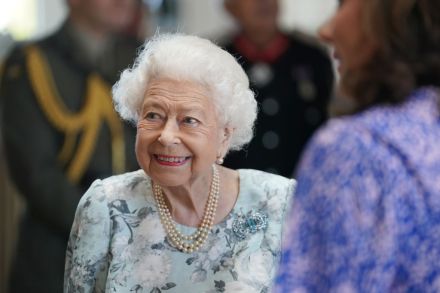
I write as an American patriot who is also a confirmed Anglophile. So when I got the sad news this morning that the Queen’s health had taken so dangerous a turn that the palace had summoned her family to Balmoral, I steeled myself for bad news. Alas, the bad news has now been confirmed. Queen Elizabeth II has died. It says a lot that when I say “the Queen” even American readers know I can mean only one person. The ninety-six-year-old had just celebrated her platinum anniversary this summer — seventy years on the throne, the longest of any English monarch. Elizabeth was far and away the most admired head of state in the world. Her good sense, her generosity of spirit, her thoughtful but active reticence have made her one of the most successful monarchs in history.

A day in DC

An epoch or so ago, when Joe Biden was just a lightweight quadragenarian blowhard, I spent my salad days (stretching over several years) in Washington, DC. Boy did I have fun, though eventually, as Exene Cervenka screamed, I had to get out! Get out! For a while I got back with some frequency, though my visits have been scarce ever since the parts of the city I lived in acquired their post-9/11 police-state trappings. Hell, my roommate and I used to toss around the football on the front lawn of the Capitol on a Saturday morning. I suppose we’d be shot on sight for doing that today. Edmund Wilson, choleric upstate New York man of letters, said as he approached the door marked Exit, “I have come to feel that this country, whether or not I live in it, is no longer any place for me.

DC

Have Americans got George III all wrong?

Americans are rarely accused of underestimating themselves, but might they in fact be a greater people than they think? That thought has regularly occurred to me over the past three years while I was researching and writing my new biography of their last king, George III, and especially when I read Richard Brookhiser’s insightful comment in his recent book Give Me Liberty, where he points out that Britain’s thirteen American colonies in the 1760s and early 1770s were among “the freest societies in the world.

George iii

Do we erase black history when we take down statues?

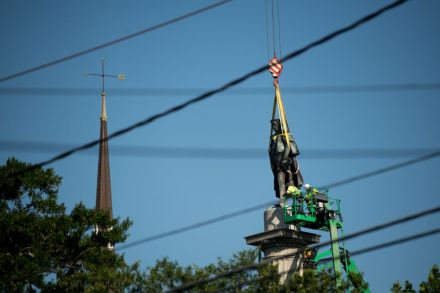
The Summer Of Our Discontent is in full swing and the social guillotines — at first applied to legitimate injustice and prejudice — have now come for history itself.We watch as mobs tear down statues and monuments to the past. The destruction is supposedly performed in the name of justice, but can we seize true justice by destroying the past?American history is a fascinating and sometimes tragic tale of oppression and rebellion, injustice and progress. There is a push and a pull to it all that has led us to be the most successful and prosperous society in human history.Undoubtedly there has been much pain: but how can we know how far we’ve come if we’re not allowed to see where we’ve been?The history of black America is an exhaustive tale of overcoming.

statues black america

The war of the statues is a battle for freedom

The war of the statues is no longer a battle over the memory of slavery, or the Confederacy, or the deployment of stone dead generals to reinforce Jim Crow. It is a battle over the legitimacy of the United States which, despite all the evils, is history’s greatest and possibly final experiment in human freedom.The struggle has turned from Confederate generals to the Founders: from those who seceded from the United States to those who laid its foundations. Students at the University of Missouri are petitioning for the removal of a statue of ‘racist slave owner’ Thomas Jefferson, whose statue at Birmingham, Alabama was damaged in an arson attack. Last week at George Washington University, Washington’s bust was toppled from its plinth.

statues

No one in Jefferson’s day suspected the contradiction between commerce and education

Laramie, Wyoming Historians of democracy know that the phenomenon was built upon two principal social structures: bourgeois commerce and popular education. The first developed during the Middle Ages and grew until eventually it replaced war as the means by which states and individuals acquired wealth; the feudal class gave way to the bourgeoisie. The second developed in the late 18th and early 19th centuries in North America, the United States in particular. The two institutions were widely regarded as socially, morally, economically and politically complementary; necessary to the growth of a solid middle class, of capitalism and of republican government.

jefferson education

Why do Americans and Brits write about alcohol so differently?

This article is in The Spectator’s inaugural US edition. Subscribe here to get yours. ‘No nation is drunken where wine is cheap,’ Thomas Jefferson famously said, laying the blame for insobriety firmly on ‘ardent spirits’. The third president was a notorious wine-fancier with a particularly soft spot for Sauternes, yet it is true that countries with a long history of winemaking tend towards more easeful drinking. Despite the ghastly interregnum of Prohibition, America has become a serious wine-producing nation — and yet ardent spirits seem to have left far stronger a mark, on the national mindset and on the nation’s prose.

liquor american alcohol