Chilton Williamson, Jr.

The clash between Trump and Pope Leo shouldn’t shock Catholics

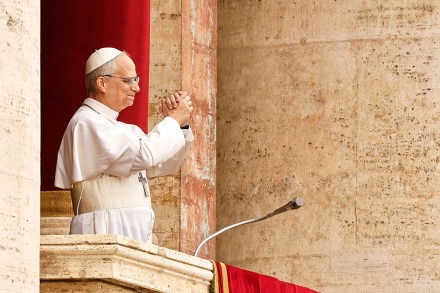
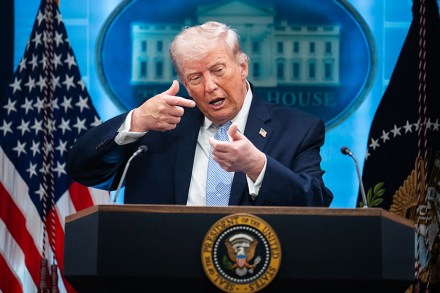
I have always believed that no Catholic with a sound understanding of his faith, which represents the ultimate in realistic thinking and a realistic view of the world, should be shocked by anything. For this reason, the recent contretemps between the President of the United States and Pope Leo XIV left me completely unaffected. Donald Trump is not a Catholic and the Pope in Rome serves in persona Christi, the 367th temporal embodiment of the Lord before the Second Coming. I believe further that a great many devout Catholics devote too much attention to whoever it is who happens to be serving as the Vicar of Christ at any given moment and that it is theologically wrong to treat him as an international celebrity, as it has been the custom of Catholics to do in the postwar era.

pope

The politicization of everything

“A number of observers of the political, moral and spiritual life in recent years have taken up the famous theme of the decline of the West,” the French journalist Luc Ferry wrote in Le Figaro at the end of January. “They recall that civilizations are mortal, like human beings, and that our own, far gone in decadence, is dying. Nevertheless, I fail to see how one can include the United States in this pessimistic reading of history. Not only does it remain the most powerful economic and military power in the world… politically speaking, whatever one thinks of [Donald] Trump, of his antics and his perverse narcissism, it is difficult to deny that he has given new life to the idea that politics can change the world, that action taken by a leader can have an impact on the real world.

Is ‘international law’ practical?

The acceleration of history and the increasingly rapid advancement of the postmodern project, aimed at the transcendence of humanity by itself, makes consideration of the fundamentals of the progressive project necessary, but also inevitable. Among them is its dedication to the hectic search for hitherto unsuspected “human rights” and their instant realization in the name of “natural law,” a subject the French historian and political philosopher Pierre Manent has studied in depth and brilliantly illuminated in a number of works, most recently Natural Law and Human Rights: Toward a Recovery of Practical Reason.

America’s future looks vulgar

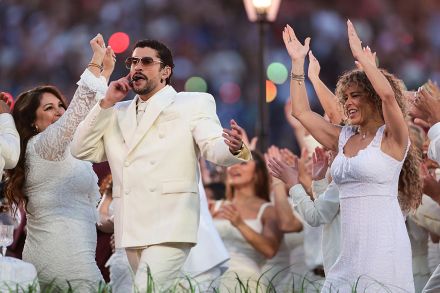
The latest Super Bowl offers the most recent opportunity to reflect on the terminal state of our national culture, held together chiefly by a distractive and unhealthy mania for commercial sports and perfectly exemplified by the infantile yet aggressively transgressive nihilism of a brainless showoff calling himself Bad Bunny and dressed all in white, suggestive perhaps of an anti-Easter Bunny. Why, one wonders, has no political theorist from Hobbes forward posited the ideal human community as one which would combine political democracy with cultural and intellectual aristocracy – as, indeed, America at the time of her founding and for several generations thereafter did? Such an arrangement might satisfy critics of democratic society on the anti-egalitarian right, such as T.S.

Americans will believe in anything

The US has not known social and domestic peace since the start of the present decade, and it is unlikely that it will know it again for the foreseeable future. This is because it has ceased to be a country at all, assuming that nationhood implies fundamental unity, which America no longer has. When novelist John Dos Passos wrote in the late 1930s, “All right, we are two countries,” the boundary he had in mind was economic, separating the rich from the poor. Today the obvious divide is political, between left and right. But what seems obvious is not always true, as in this case.

Our Mount Rushmore

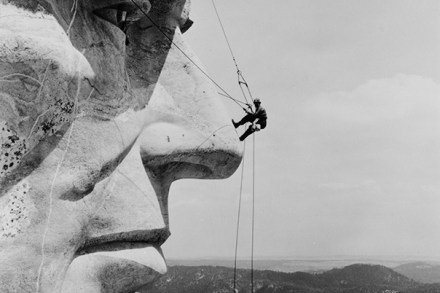
Personally, I regard Mount Rushmore as an excrescence on the mountain and a monument to the horror that Edward Abbey called industrial tourism. Beyond that, it is an expression of a naive piety and a patriotic sentimentalism that no longer exists in America. Matthew Davis correctly views the presidential sculptures carved into the face of Mount Rushmore in the Black Hills of South Dakota by Gutzon Borglum in the 1920s and 1930s as very much a period piece, an expression of popular American patriotism in the early decades of the 20th century. His “biography” of the mountain is equally a cultural work reflective of its time. Preeminent among Davis’s concerns in writing this book was to determine, “What is a memorial for?

rushmore

The trouble with muzzled liberals

Liberalism has always considered itself a noble creed, as liberals have conceived themselves its knights in shining armor. Perhaps – once upon a time – it was so. But that was in the 18th and 19th centuries, and we are now living in an era when liberals have many fears: climate change, fascism, malefactors of great wealth (as Theodore Roosevelt called them), nativists, white men, Republicans, Donald Trump. Indeed, they are frightened of so many things that I have written a book ennumerating them – a book that so far remains unpublished, perhaps because the liberal publishers fear its argument, too. Still, having observed them for so many years, I am convinced that what liberals fear above all else is one another.

Do politics matter at all?

It is likely that the ordinary man, not being an ideologue, would agree as he grows older with Arthur Balfour’s famous epigram: “In politics nothing matters very much, and few things matter at all.” This is only partly to do with sub specie aeterni, etc. For the rest, there is the simple recognition that politicians always make politics (and the questions and policies with which they concern themselves) out to be much more substantial and consequential than they actually are.

balfour

Will members of the intellectual class let AI rot their brains?

An adage dating at least from my adolescence: “You either use it or lose it.” This bit of folk wisdom, which refers principally – or so I understand – to the male procreative organ, has always been considered so obvious as to hardly need stating. Thus the recent discovery that the same principle goes for another human organ – the brain – should not surprise anyone.

labor

The tyranny of the mass-intellectual

In the classical world the question of whether virtue can be taught, or is rather acquired by interior inclination and moral development, was the subject of intense debate by the best Grecian and Roman philosophers. None ever succeeded, however, in agreeing an answer. Progressive education along narrow lines is, for liberals, the source of all legitimate moral authority Since the second half of the 20th century, academics and intellectuals have seemed to believe that they have answered the question definitively and to their own satisfaction. Virtue, they have decided, can indeed be taught, and liberal democratic education is doing it, in public and private schools and universities alike throughout the western world.

education
joy

The joy of politics

Laramie, Wyoming The Joy of Sex, by the appropriately named Alex Comfort, was a bestselling illustrated sex manual published in 1972 and released in a new edition in 2008. In 2024, anyone with sufficient imagination to describe and illustrate The Joy of Politics would beat out Elon Musk in the race to become the world’s first trillionaire. Politics — like sex — has always been with us, but the conception of politics as “joy” began, you may argue, with the adoption of the “Ode to Joy” that concludes Beethoven’s Ninth Symphony by the European Union as its official anthem in 1985.

How the Democratic party became the party of the aggrieved

A well-known writer in the 1930s – I think John Dos Passos – compared Southern California to the lower-left corner of a board that has been tipped in that direction and into which everything in the rest of the country that is not nailed down slides. In the 21st century the mental, cultural and ideological equivalent of that geographic locality is a venerable and once mighty institution, the national Democratic party, whose name is synonymous with it. Throughout the 20th century, the party maintained a strong and consistent identity which accurately and effectively represented its constituency – an alliance that included the working classes, the labor unions, the small farmers, black people, the public educational establishment, colleges and universities, the arts and bohemia.

party

The problem of the progressive middle class

A month or two ago, Rod Liddle had the audacity to write in The Spectator that the besetting problem of modern civilization is the middle class, while implying that something ought to done about it. Reading the article, I was reminded of an entry made by Harold Nicolson in his diary early in 1939 where he observes, à propos the homogenization of the modern world, “Even revolution is becoming bourgeois.

middle

The problem with Greta Thunberg

Like Agatha Christie’s “rescuer from the sea," Greta Thunberg swept upon Gaza to save the starving, the homeless, the bombed – and the bombing – from destruction at the hands of the Israel Defense Forces, only to be intercepted by one of the IDF’s boats and offered a bottle of water and a sandwich wrapped in plastic (which looked not at all like an item from a Jewish delicatessen). La Thunberg later characterized the incident as a kidnapping. Following that, she was presumably (as promised by the Israeli Defense Minister) compelled to view footage of the events of October 7, 2023, before being loaded on to a CO2-dispersing passenger jet and flown to France, en route to her native Sweden. She explained that to remain longer in Israel would have been to discredit her cause.

Greta

Is everything political?

I first heard the slogan “Everything is political” from a left-wing reporter for Wyoming’s statewide newspaper in the mid-1980s, at least a decade before I became acquainted with the work of the revolutionary Italian theorist Antonio Gramsci, deviser of the strategy known as the “long march through the institutions” of the West. While the right clearly has no choice but to fight fire with fire in the struggle against its ideological and political adversaries, the fact remains that the left has substantially won the battle by having helped to transform a slogan into present reality. The idea of everything as politics, and politics as everything, is ideology in its purest form.

political

Why are Europeans so untroubled by their ignorance of America?

Laramie, Wyoming Americans are infamous on the eastern side of the Atlantic for knowing little or nothing about European culture, history and politics – and for being proud of the fact, as Richard Hofstadter, the late Columbia historian, described in them in Anti-intellectualism in American Life, the winner of the Pulitzer Prize for non-fiction in 1964. Much less widely recognized is how little Europeans know about America, Americans and their own civilization – an ignorance that troubles them not at all, perhaps because they seem to be unaware of the fact.

prodi italian europeans

Why human history is fated to end in apocalypse

Laramie, Wyoming In 1988 Francis Fukuyama argued that the end of history had been reached in the form of liberal democratic capitalism, the ne plus ultra of human civilization. Three decades later it seems more likely that the direction of history will be theological, as the world comes reluctantly to recognize that science, democracy, capitalism and technology are insufficient to the achievement of human happiness, satisfaction and fulfillment.

history

A symbol of hope for Europe

Considering the way history has been going for the past quarter of a century, it seems not merely Panglossian but naive and sentimental to the point of bad taste to find grounds for historical optimism now. Nevertheless, positive facts ought to be recognized as well as negative, and without embarrassment. The world appears to have entered upon a new era when the author of a leader in the London Sunday Telegraph is comfortable writing: “Europe has many things to its credit — and the reconstruction of Notre-Dame stands in notable contrast to our own inability even to decide what to do with the Houses of Parliament. But if we are to retain global relevance and restore economic dynamism, it seems increasingly clear that we have more to learn from America.

Trump

The new political era

It seems likely that on Election Day the country entered fully upon the new political era that commenced with the fateful presidential election of 2016. Donald Trump spent the last four years in the howling political wilderness, savagely set upon by every species of Big Beast — legal, financial and political — but from which he emerged as a survivor — physically, mentally and morally intact to achieve what is acknowledged to be the greatest political comeback in American history. Donald J. Trump is, without a doubt, the most remarkable American politician to hold office since 1945. Whether or not he is a genuinely great man as well is a question that only the next four years can answer.

political

The climate ‘calamity’

"Those who cannot remember the past are condemned to repeat it,” George Santayana wrote in The Life of Reason, published in 1905. The philosopher’s aphorism, somewhat hackneyed after nearly a century and a quarter, and always true only in a limited way, assumes that men are capable of directing history to a certain end, while diverting it from other ones. Santayana was a very wise man and certainly no ideologue. Nevertheless, his maxim shares something with ideological thinking. Both assume that men are collectively aware of the realities of the present time and their possibilities, capable of determining where they wish their societies to go in future and in what shape or form, and then — with varying degrees of success — guiding them there.

climate