

Just back in London from Israel, I give breakfast to Oleksandra Matviichuk. She, with her Centre for Civil Liberties, is the only Ukrainian ever to have won the Nobel Peace Prize. In Kyiv, now bombed day and night, the winter will soon set in and some of her friends, as last winter, will have to erect a tent inside their flats to preserve all possible warmth. ‘Cold becomes a factor in all your decisions,’ she says, including when to wash her lustrous long hair. Since Donald Trump began his ‘28-point peace plan’, Russian attacks have risen by nearly a third, with havoc wrought by jet drones which cannot be stopped now that American help is withheld. Last year, Oleksandra stopped her regular US visits preaching the human cost of war after she saw on television the United States voting with Russia, North Korea and Eritrea against a UN General Assembly resolution opposing Russian aggression. She felt America had fundamentally changed: ‘We have no channels. He is the media master.’ She is on the edge of tears. I ask whether she can be hopeful. She sees pain every day, but, ‘Human stories are also about resilience. A free people fight better.’ This, in my experience, is true, and it applies to Israel too. In the West, we don’t understand this, which means we undervalue both Ukraine and Israel. It might also mean we won’t be free much longer.
In Rehovot, I visited Elbit, the Israeli defence company which supplies systems to many foreign customers, including the Royal Navy. President Macron of France has previously called for a halt to arms deliveries to Israel for use in Gaza and supports current sanctions policies, so I am interested to discover that his own presidential plane is protected against missile attack by Elbit’s ‘Music’ DIRCM system.

What will happen to the Falkland Islands now that Javier Milei is lining up Trump to back his opposition to Falkland oil exploitation? Navitas, an Israeli company, is in partnership with the British Rockhopper for the work, and Israel, being a free country, cannot prevent this. But since Milei is the most extravagantly pro-Israel leader in the world today, do not, Israeli friends warn, expect any aid for what they see as a British interest. Last time round, Mrs Thatcher squared the UN Security Council. I do wonder who will help us this time.
We briefly toured the Old City of Jerusalem. I always love its juxtaposition of the three religions, all from the same root, each tense about the other and each quarrelsome with itself. It is best to approach the Church of the Holy Sepulchre from the roof, where the dispute between Copts and Ethiopian Orthodox about minute points of access never disappears. Nothing better exhibits the crooked timber of humanity than this palimpsest of zealotry, devotion and contest. We descended to the Western Wall, where a Jewish friend showed me the bar mitzvahs taking place. The boys declaim the scriptures, clapped by their elders and bombarded with sweets by the young ones. Leaning on a barrier in the attitudes of rails bookies at Ascot, girls look down in admiring amusement at the scene. My friend invited me to pray at the wall myself and leave a prayer in the cracks, as the faithful do. Psalm 137 came into my mind: ‘If I forget thee O Jerusalem, let my right hand forget her cunning.’
Tel Aviv means Hill of Spring and is so called because that is the Hebrew title of Theodor Herzl’s Zionist novel, Altneuland (Old New Land), composed in German. Our guide says it is the only town in the world named after a book. But what about Westward Ho!, inspired by Charles Kingsley’s novel of heroic Protestant imperialism?
Just as I set off for Israel, Esther Rantzen died – not, I am glad to say, in the Dignitas Clinic as she had so often threatened. My mind went back to my first ever appearance on the BBC’s Any Questions? in the summer of 1984, which took place at Uppingham School. Esther was on the panel. She came up to me before dinner and asked: ‘I gather you went to Eton. What is it like? I’ve put our son down for it.’ On air later, an Uppingham parent asked whether the panel would send their children to boarding school. ‘Oh, no,’ exclaimed Esther, ‘I couldn’t bear it! I don’t believe in delegated parenthood.’ I was shocked but, as a nervous new boy, said nothing. With the passing years, however, I came to realise that’s show business – or, as Dame Esther might have put it, ‘That’s Life’.
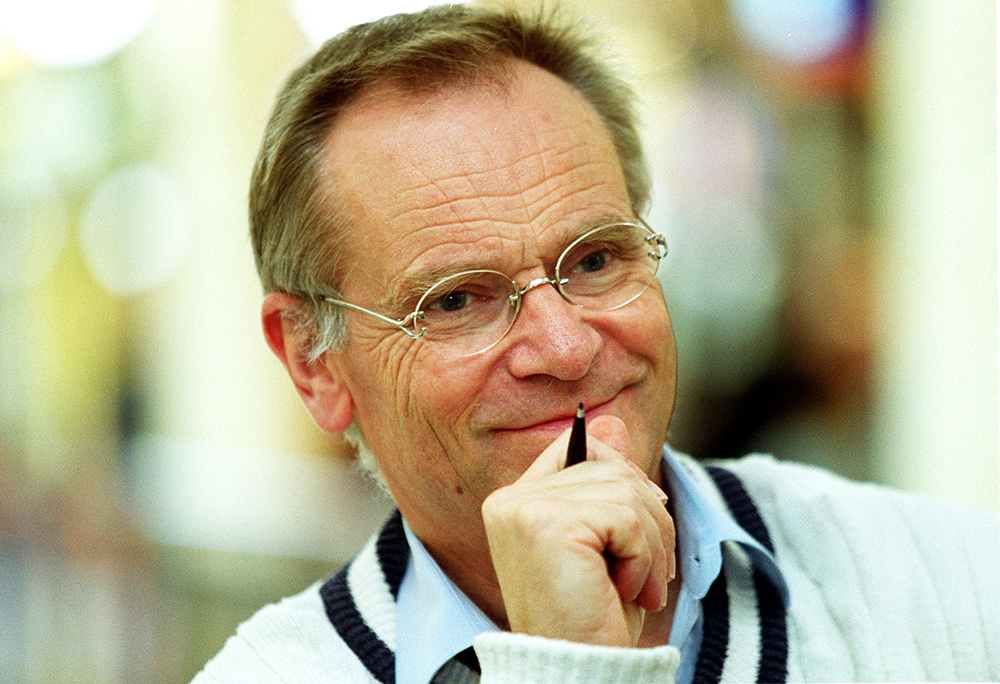
Jeffrey Archer also died. His odd mixture of characteristics included a desire to help. I think that is why John Major let himself be more entwined with him than was altogether wise. Once upon a time, a friend was setting off to promote his new book in America. Jeffrey gave him some advice: ‘I’ll tell you what I do,’ he said. ‘I walk into the local television studio. I say to the presenter, “You haven’t read my book.” He starts to apologise. “No, you couldn’t possibly,” I say, “so let me give you the questions you must ask.” They love that.’ Jeffrey passed the questions to my friend, and the sheet with his answers. Question I: ‘Should I call you Jeffrey, or Lord Archer?’ Answer: ‘Oh, just Jeffrey.’ Question 2: ‘They say ex-British premier Margaret Thatcher loves your books.’ Answer: ‘How did you know that?’ Question 3: ‘Is it true Her Majesty Queen Elizabeth 2 is a fan?’ Answer: ‘Ah-ha! I ought not to comment on that.’ And so on.
Some claim Archer underpaid or refused to pay. But he could certainly be generous. Once, another friend was passing along the Strand in a taxi. Out of the window, he spotted Archer talking to a tramp, reaching into his pocket, bringing out a wad of notes and handing the whole lot to the astonished wino.




Comments