Où sont les bouteilles d’antan? Or proprietors. The other day, some of us were reminiscing about Mijanou, in its day one of the finest restaurants in London. The late Neville Blech had a magnificent palate and his wife Sonia was a superb chef. During their days in Wales, she won a Michelin star, back then a rare honour in the principality. For some reason, she never found favour with the Michelin inspectors in London, although I thought that her ravioli aux truffes should have earned all three stars. Mijanou was extremely popular with politicians, especially Tory ones. That delighted Neville, yet there was one drawback. Some senior figures – foreign, defence, or Northern Ireland secretaries – had to be accompanied by two detectives. Mijanou was not a large restaurant, but that meant a table, with the body-guards restricted to the house menu and drinking only water. Bad luck for them and the restaurant’s takings.
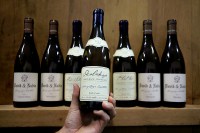
Neville’s wine list was an oenophile’s delight, thoughtful and reasonably priced. That was where I drank le Pin for the first time – not that I have often drunk it since. I have never been convinced that it is worth the money, but by the late 1980s, its reputation was sweeping the price up to the strato-sphere. Neville kept it as reasonable as possible, sometimes barely above the cost at auction.
Neville kept his wine prices as reasonable as possible, sometimes barely above the cost at auction
Mijanou also had a supply of Californians, which Neville and I often discussed. I was a frequent visitor to Washington and able to bring back the latest intelligence. I once benefited from an extraordinarily foolish customer. As I was about to leave, Neville asked if I would do him a favour by helping him finish off a Californian bottle, which the purchaser had barely touched. What a favour: this was a Williams Selyem, the best pinot noir I have ever tasted outside Burgundy. Even in those days, it was not cheap. Since then, it has been elevated to the status of a cult wine, in the way Americans do, and is priced accordingly.

Mijanou was also a favourite of Roy Jenkins’s. On the subject of relative bargains, I once dined with Roy in the Ubiquitous Chip, a well-known Glasgow restaurant whose name bore no relation to its menu. I had arrived at what I still thought of as Renfrew airport and asked the cabbie: ‘Do you by any chance know a restaurant called the Ubiquitous Chip?’ ‘Och aye, the UB Chip.’ It was a jolly good meal, with no excessive chips, culinary or social, but there was a Petrus at under three figures. When I ordered it, Roy made a token protest: ‘I’m aware I have this reputation, but you know I’m quite content with house wine.’ I stuck by the reputation.
Back to Mijanou, and the start of a friendship. I was entertaining John Nott, who was about to leave office. I had ordered a seriously good Châteauneuf. On arrival, John looked grumpy and declared that he did not drink at lunch. Though impassive, I felt irritated. I was not going to waste the wine, but had a busy afternoon. As Hemingway wrote, ‘Châteauneuf is not a lunchtime wine.’ I had expected some help. Anyway, I thought that I might as well ruin the lunch. John had just been given a KCB. I said that it ought to have been a G – fully expecting him to sneer at such frivolity. Not a bit of it. He banged the table. ‘As secretary of state, I gave out four or five GCBs a year. Of course I should have had one!’ Pause. ‘I will have a glass of wine.’ Further pause. ‘This is rather good.’ So it was. We were friends for the rest of his life. Mijanou often had that effect.
Bruce Anderson can also be read on bruceanderson.org.


Comments