
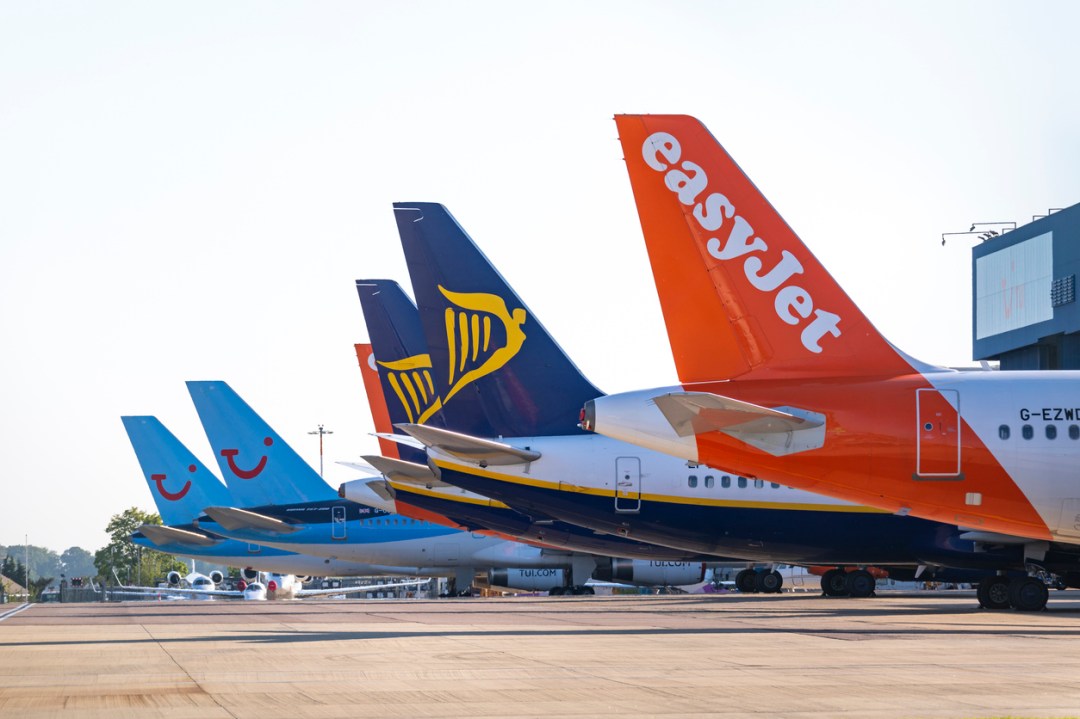
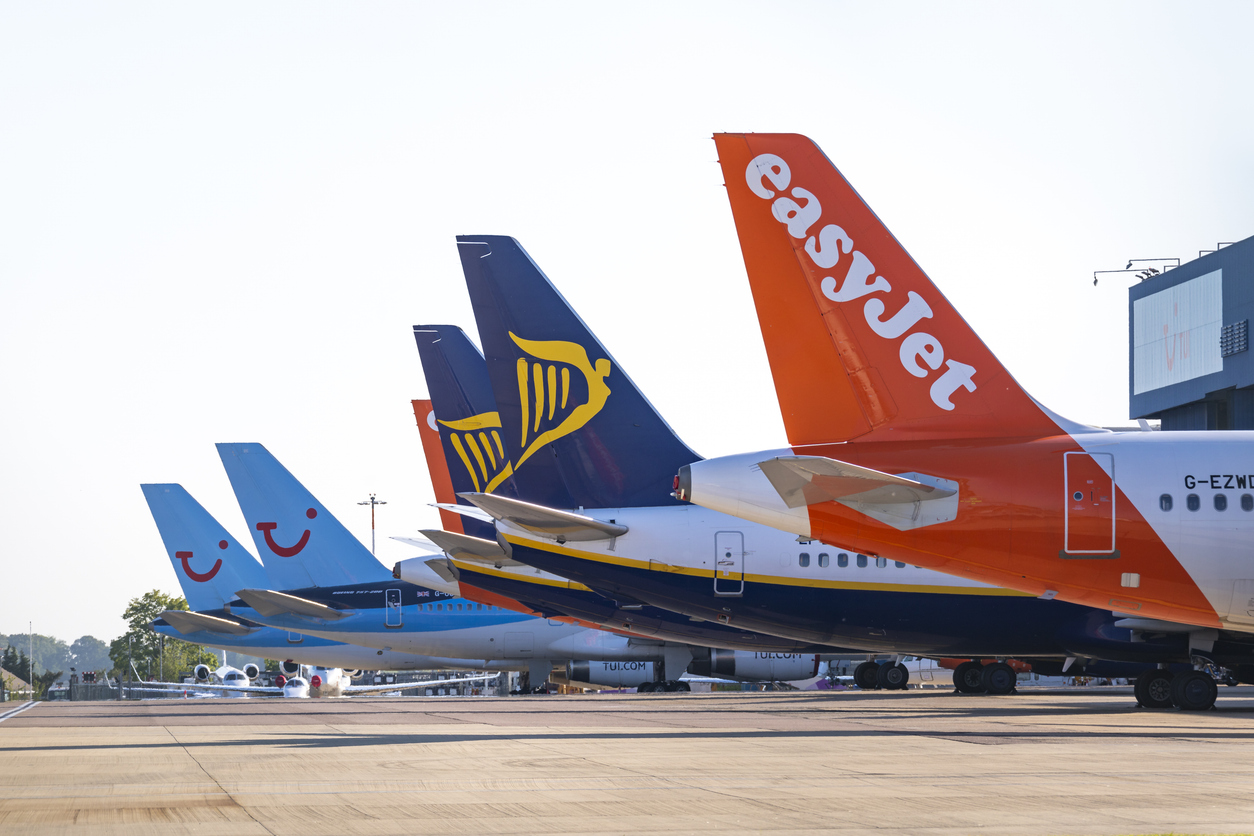
For anti-airport campaigners it is a double setback. In the space of 24 hours, legal challenges against the expansion of Gatwick and Luton have failed. As a result, Gatwick’s emergency runway will be moved 12 metres away from its main runway, to allow it to be used for routine take-offs and landings, enabling an extra 100,000 flights a year. Luton will gain a second terminal, allowing it nearly to double the number of passengers it can handle.
So long as the 2050 net zero target remains, airline travel will ultimately be doomed
The rulings reverse an assumption on the part of campaigners that airport expansion can be blocked on the basis of Britain’s legally-binding 2050 net zero target. Tellingly, carbon emissions were the crux of the case against Gatwick, even though the campaign group which brought the case is called Communities Against Gatwick Noise Emissions. That somewhat gives the game away: it is really an association of Nimbys who are objecting about the impact of planes on the local environment. That is their right, of course, but it doesn’t look entirely convincing when they start to state their case on the basis of carbon emissions instead.
That these two airport expansions will now go ahead is credit in part to the Labour government’s general direction on planning, which is to remove barriers to development and limit the ability of objectors to block infrastructure projects. It also suggests that Ed Miliband’s climate fundamentalism is not as engrained in the cabinet as some might have supposed. Transport secretary Heidi Alexander has proved herself to be far more pragmatic on the subject of airport expansion than might have been expected, and indeed more pro-airport development than the Conservative government.

Boris Johnson, who once promised to lie down in front of the bulldozers to prevent Heathrow’s third runway, seemed happy to let the project simmer on the backburner for eternity after a Court of Appeal ruling in 2020 that the project would breach the UK’s climate commitments. That decision was overturned by the Supreme Court later that year, but the project remains in limbo, eight years after Theresa May gave it the green light and more than two decades after it was first proposed. It is not hard to understand why airport expansion stalled under the Conservatives; while in theory they may be more pro-business than Labour, they have a far more powerful Nimby vote. Projects which threaten to compromise property values in the Home Counties are always going to struggle.
Those who favour airport expansion should savour their moment, as it might not last forever. While the Gatwick and Luton expansions will go ahead on the back of promises to tackle the airport’s carbon emissions in multiple ways, it remains the case that aviation in its current form is totally incompatible with the 2050 net zero target. There is as yet no proven and affordable technology which is capable of decarbonising medium and long-distance air travel by that date or any other. It is physically impossible to build a battery-powered airliner capable of crossing the Atlantic. Hydrogen-powered planes would be ponderous; the fuel takes up so much space it wouldn’t leave much room for passengers or luggage. Richard Branson has flown one of his planes to America on jet fuel derived from waste cooking oil, but there are simply not enough chip shops to power the entire aviation industry.
‘Sustainable Airline Fuel’ manufactured from biomass is already in widespread use, but accounts for less than 1 per cent of fuel used by airlines. And scaling up the industry is going to run into a fundamental problem: there is serious competition for the feedstock from power stations, road vehicles and other industries which are seeking to decarbonise their activities. It is technically possible to manufacture jet fuel directly from carbon dioxide and hydrogen, but that is not going to be cheap. The technology needed to produce ‘green’ hydrogen from the electrolysis of water has disappointed.
So long as the 2050 net zero target remains, airline travel will ultimately be doomed. It might be possible at the moment for an airport to argue that expansion will not increase carbon emissions because it will use more fuel-efficient planes and because it will promote the use of public transport for people travelling to and from the airport. But that argument is going to be less and less successful the closer 2050 approaches. If we are going to carry on flying at an affordable price after that date, either someone is going to have to come up with a miracle technology pretty quickly – or the 2050 target will have to go.






Comments