The Spectator

Portrait of the week: barbecues are banned, Burnham is fooled and Farage wins Clacton

From our UK edition

Home The temperature reached 38.1ºC at Kew Gardens, Surrey. In the West Midlands a wildfire at Stourbridge burnt down 19 houses and damaged 18. The government sent out a loud siren sound and a message to all mobiles in England and Wales warning of a ‘very high risk of wildfires’. So-called Statutory Guidelines temporarily banned the sale of disposable barbecues. More than 8,000 South East Water customers in Kent found supplies disrupted. A burst water main cut off travel by road between Heathrow’s terminals. Two passengers were seriously injured when three carriages of a train from London Victoria to Eastbourne were derailed and fell onto their sides near Lewes. A train from Southend to London Liverpool Street was derailed at Wickford.

Jason Arday’s tragic death is no reason to silence the press

From our UK edition

Physicians and the Samaritans warn against attributing suicide to a single cause. Doing so simplifies a complex tragedy. Those who take their own lives tend to do so because of an array of biological and social factors; pointing to a single spark, campaigners fear, can lead others experiencing similar pain to see suicide as the only way out. This advice does not seem to have registered with those politicising Jason Arday’s tragic death, which many are assuming was a suicide although that is yet to be confirmed. The pinning of blame for Arday’s death began swiftly after the news broke last Friday. Arday’s supporters have suggested he died because of the press coverage of his case.

Letters: universities have always been a little crazy

From our UK edition

Universities’ challenge Sir: I have spent more than three decades in academia and so Lara Brown (‘Alma madder’, 15 August) struck a chord. The craziness is not a new phenomenon. In the mid-1990s my employer, Thames Valley University, offered a half-module in kite-flying. Students spent half a day each week on Hampstead Heath, learning how to fly their silk and bamboo contraptions. I have often wondered how the students used the transferable skills they gained in later life. More recently, I was taken to task by a bureaucrat for not stating my preferred pronouns in my email signature block. When informed it was ‘university policy’, I capitulated. Thereafter, my preferred pronoun was ‘Dr’. I assumed this was acceptable, as I was troubled no further.

How often do eclipses occur?

From our UK edition

Star turn Britain experienced a solar eclipse but not the total eclipse visible in Iceland and Spain. How often do eclipses occur? – During the decade 2021-30 there have been, or will be, 22 eclipses visible somewhere on Earth. Of these, 6 were or will be total eclipses in some locations. – The average location on Earth could expect to experience a partial eclipse every 2.6 years and a total eclipse every 374 years. – However, eclipses are more common above the Arctic Circle (once every 2.2 years) than at the Equator (2.8 years).

Nigel Farage’s hollow victory

From our UK edition

Nigel Farage’s victory in the Clacton by-election is a hollow one. The major parties boycotted the contest: of the Reform leader’s 33 opponents, the most prominent was a screenwriter with a bin on his head. This by-election was not forced on Farage by the parliamentary investigation into undeclared donations – this can resume as soon as he returns to the Commons – but called as an attempt to regain momentum after a difficult patch for Reform. That gambit has failed. In August last year, Reform was riding high. Opposing an unpopular Labour government and a Conservative party in disarray, Farage capitalised on historic victories in the local elections and deep public anger at ‘uniparty’ failures over small boats and living standards.

Letters: Cambridge University is not a victim

From our UK edition

After Arday Sir: Lara Brown scathingly condemns Cambridge University’s acceptance of Jason Arday’s credentials (‘The fabulist’, 8 August). That it did so comes as no surprise, given the modish progressivism that pervades academia. However, the sheer extent of its gullibility in taking Arday’s claims at face value is startling, and the reputational damage that will follow is hardly undeserved. Cambridge University is not a victim here. Our sympathy should be with the qualified black teachers and students for whom it is already hard enough to make headway. They will now have to contend with the inevitable shadow over their legitimacy cast by the Arday farce.

Letters: ‘The voice of a beleaguered Middle England’ – readers say goodbye to Rod

From our UK edition

My all-time hero Sir: I was gutted to learn of the early death of one of my all-time heroes (8 August). Rod Liddle’s was the voice of a beleaguered Middle England, standing for the long-established Christian values of common sense, integrity, fairness, respect for all, and many other aspects so fundamental to this country’s traditional way of life. Rod never took prisoners: he just demolished their arguments with the supremely elegant and simple language. Richard LongfieldWeston Patrick, Hampshire A true wordsmith Sir: A friend speaks for all Liddleites when he writes: ‘Anyone who can think up the word “wankpuffin” is irreplaceable.’ RIP. J. C.H. MounseyMinchinhampton, Glos In Rod we trust Sir: Thank God for Rod.

London: A celebration

From our UK edition

Albanian gangsters with rice flails and Uzis, Ukrainian pimps with high-cheekboned floozies, Jamaicans with handguns, Somalis with knives — just some of the people enriching our lives. Jew-hating Imams from Rabat and Homs, Stockpiling their basements with ricin and bombs, Rich Saudi princes with cowering slaves, Slovakian hooligans, Romanian knaves, A fat lady from Lagos looking quite glum With five kilos of gak stashed away up her bum, Levantine maniacs beating up gays, Young girls from Thailand whose skills quite amaze, Grim Kurdish separatists from the shores of Lake Van, Strange Russian men with a nuclear tan, From Romford to Ruislip a myriad show Of cultural diversity — so mind how you go.

Portrait of the week: Drought declared, Manchester elects new mayor and 70,000 enter Ceuta 

From our UK edition

Home In 19 English counties 1mm or less rain fell in July. Tom Bradshaw, the president of the National Farmers’ Union, said that yields of wheat and oats were ‘very, very poor’. Fire affected 375 acres of Suffolk at Dunwich Heath. Shell agreed to sell its European onshore renewables arm, including solar farms, to France’s TotalEnergies. BP’s profits rose to the highest since 2022, after the war in the Middle East pushed up oil prices. BP put its UK offshore oil and gas business up for sale. A trial by researchers at King’s College London started recruiting 220 children aged 11 to 16 to assess puberty blockers after the High Court rejected a legal challenge.

Cambridge has fallen

From our UK edition

‘What distinguishes Cambridge from Oxford,’ A.A. Milne said in 1939, ‘is that nobody who has been to Cambridge feels impelled to write about it.’ Four decades later, Tom Sharpe would prove him wrong about Cantabrigian reticence with Porterhouse Blue – his riotous satire of the conflict between an idealistic new master and the stuffed shirts of the senior common room. It’s a shame that Sharpe isn’t around to enjoy the Jason Arday scandal – a farce so absurd that even he may have dismissed it as being too silly. When Arday was announced as Cambridge’s professor of sociology of education, he was lauded as the university’s youngest-ever black professor. His biography had a whiff of Hollywood. Arday had been diagnosed with a developmental disorder at the age of three.

Letters: the insanity of Labour’s attack on private schools

From our UK edition

Bad education Sir: Lara Brown (‘Class warfare’, 1 August) lays bare the baleful consequences – intended and unintended – of Labour’s vandalistic attack on private schools. It borders on the insane for a government to seek to destroy a sector which is a world leader. An administration genuinely committed to economic growth would champion industries where the country retains comparative advantage. Consumed by an outmoded class ideology, and seemingly unconcerned about the effects of its policies on the educational prospects for many young people, Labour seems determined to do the opposite.

Portrait of the week: No. 10 North, Burnham meets Zelensky and European wildfires  

From our UK edition

Home Andy Burnham, the Prime Minister, summoned cabinet ministers for a day at No. 10 North – Heron House in central Manchester, shared with intelligence agencies – which he reached by private jet to Glasgow, where he had an appointment, and another private jet south to Manchester. President Volodymyr Zelensky of Ukraine became the first international visitor to Mr Burnham, who told him: ‘You can count on the UK for as long as it takes.’ He decided to speed up the independent review of adult social care being undertaken by Baroness Casey of Blackstock. He said that he wanted schools to offer technical courses to children aged 14 and over.

Burnham is boldly going nowhere

From our UK edition

‘Space: the final frontier.’ Six decades since Captain James T. Kirk first uttered those words, American enthusiasm for star-trekking is stronger than ever. Artemis II’s voyage presages future Nasa trips to the Moon, Mars and beyond; SpaceX’s successful initial public offering and Starship rocket launches confirm continuing enthusiasm for Elon Musk’s interplanetary initiatives. But, on this side of the Atlantic, our ambitions are far less stellar; rather than reach for the heavens, we fiddle with the price of bus tickets. The potential closure of the Jodrell Bank Observatory – home to the UK’s largest telescope for almost 70 years – for lack of funding is a tragedy. Its annual operational cost is £2.

2760: Metalwork – solution

From our UK edition

‘IN THIS WORLD A MAN MUST EITHER BE ANVIL OR HAMMER’ from HYPERION (extra letters from mixtures, marked [B]) by LONGFELLOW. First prize Maddy Coelho, Winchelsea Runners-up Charlotte Blundell, Richmond, Twickenham; Rob Hardcastle, Harrogate, N.

How many people drown in Britain?

From our UK edition

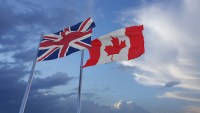
Common ground The Commonwealth Games began as the British Empire Games in 1930, yet they did not originate in Britain. The event was instigated by a Bobby Robinson, a sports reporter on a local newspaper in Hamilton, Ontario, who also acted as manager for the Canadian track and field team at the 1928 Olympics in Amsterdam. The games were held in his home town, Hamilton, and 11 countries participated: Canada, England, Scotland, Wales, Ireland (which meant the Irish Free State as well as Northern Ireland), Australia, New Zealand, South Africa, British Guiana, Newfoundland and Bermuda. The only women’s events were in swimming.