The FIM-92 Stinger missile is not a subtle weapon. An anti-aircraft rocket, capable of launching a high-explosive ‘fire and forget’ laser-guided warhead at targets up to 5km away, it can be carried and operated by only one man. During the 1980s Soviet invasion of Afghanistan, the CIA provided hundreds of Stingers to the Mujahideen, where they proved terrifyingly lethal, downing scores of helicopter gunships and killing thousands of Soviet troops. But, at times, they’ve been as effective against other, more unusual targets.
In 2001, during the first Taliban administration of Afghanistan, the group’s leader, Mullah Muhammad Omar, ordered the destruction of the monumental Buddha statues in the Bamiyan valley, a historic Silk Road site deep within the Hindu Kush. Over the course of 25 days, Taliban fighters used Stinger missiles, as well as tanks, RPGs, mines and dynamite, to obliterate the statues. These masterworks of Gandharan Buddhism, which stood higher than Nelson’s Column and predated the foundation of Islam, were reduced to rubble, leaving only their massive, empty niches behind.
Now, under the second Taliban administration, one organisation is promoting Bamiyan as an established attraction for Afghanistan’s ‘danger tourists’. One Australian travel influencer captioned a recent Facebook post: ‘At the Buddha’s [sic] of Bamiyan. A truly wonderful spot!’
The recent scale of global cultural desecration has made the Taliban’s efforts in 2001 look a bit half-hearted
The world reacted with impotent horror to the Taliban’s iconoclasm in 2001. But in theory an organisation exists that might have prevented it: the United Nations Educational, Scientific and Cultural Organisation (Unesco). Founded in November 1945, during the post-second world war surge in optimism, it’s best known today for its World Heritage List, which includes historic sites – Stonehenge, Machu Picchu – as well as unique landscapes and biospheres, such as the Great Barrier Reef and the Philippines’s Batad rice terraces. But its original mandate was broader and utopian: to promote global peace through international cooperation, as well as preserving and protecting the world’s heritage.
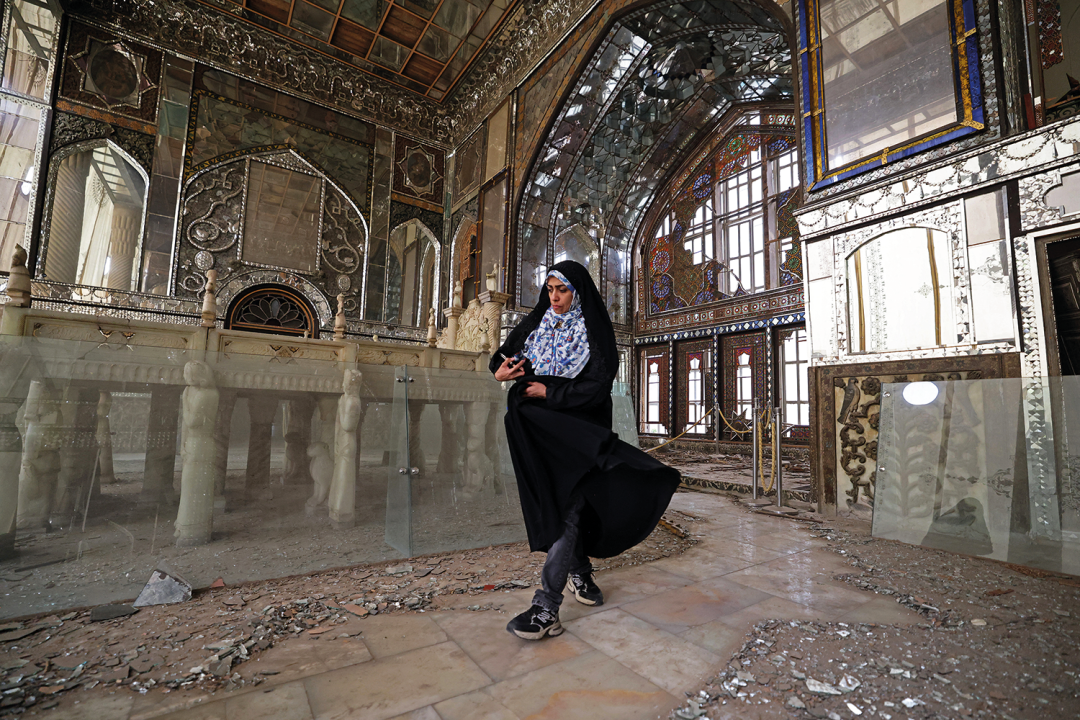
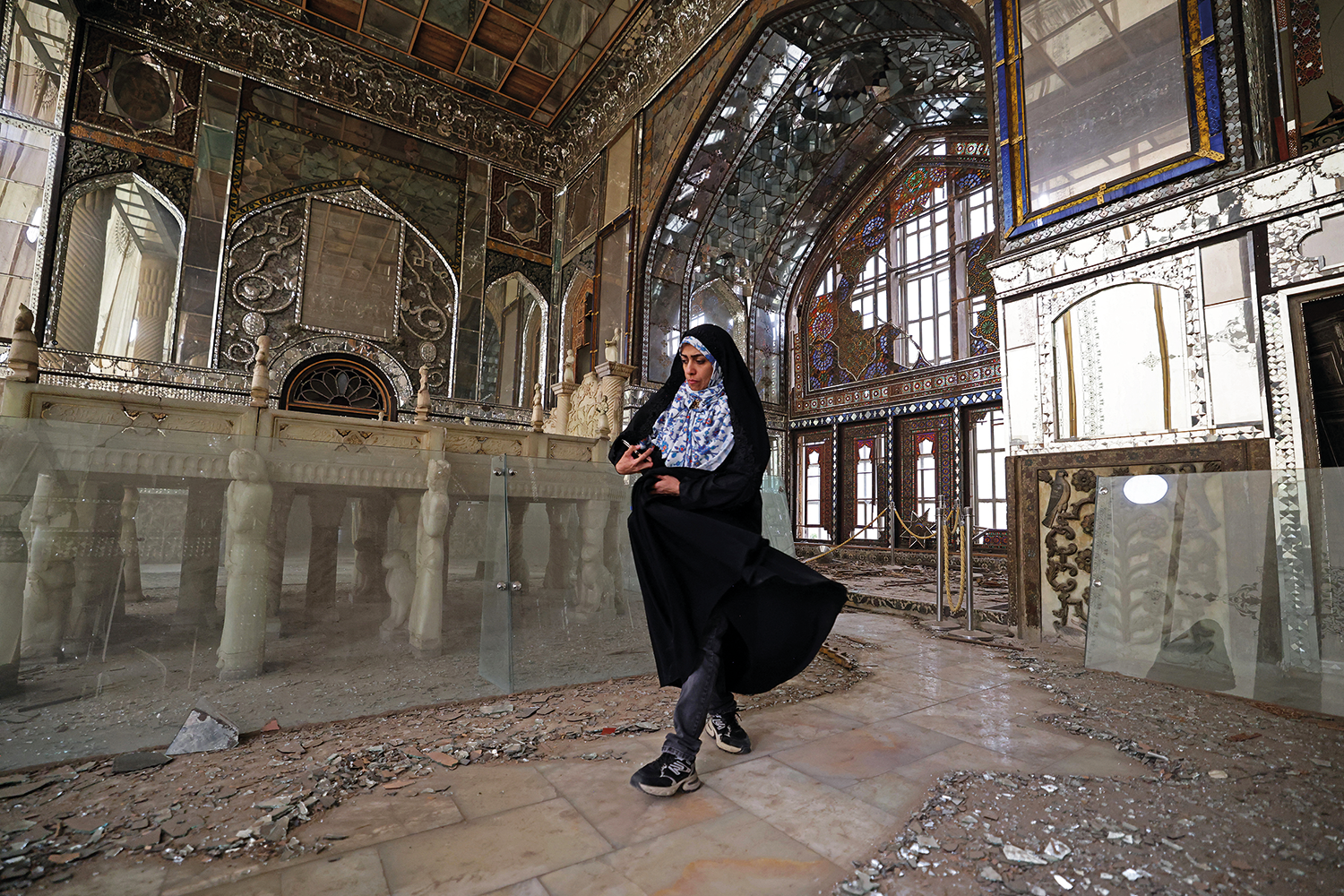
Yet today, even Unesco’s fiercest champions might admit it has somewhat taken its eyes off the ball. The organisation celebrated its 80th anniversary in fine style last summer. But the scale of global cultural desecration during the past two decades has made the Taliban’s efforts in 2001 look a bit half-hearted. During Isis’s occupation of Iraq and Syria, militants dynamited the 2,000-year-old Temple of Bel in Palmyra, razed the ancient city of Nimrud and took sledgehammers to artefacts in Mosul museum. The Chinese government’s persecution of the Uyghur people has involved destroying hundreds of mosques, using bulldozers to plough up traditional graveyards, and systematic cultural genocide through mass ‘re-education camps’. And the ongoing conflicts in Gaza, Ukraine and Iran have taken a heavy toll on heritage, as hundreds of historic buildings and locations have been damaged or entirely erased by war.
Last month, Unesco’s World Heritage Committee gathered for its annual convention in Busan, South Korea. But at a time when even once-robust international institutions such as Nato look shaky, how can an organisation that has declared Italian pasta a vital part of the world’s cultural heritage retain its credibility? Put another way: will Unesco survive another 80 years – and does it deserve to?
Unesco’s eternal problem is cash. ‘In my life, budgets have always been short – I never had a budget with too much money!’ says Francesco Bandarin, who served as director of the World Heritage Centre and Unesco’s assistant director-general for culture. Unesco’s funding comes from its 194 member states. They contribute via assessed contributions – measured as a proportion of GDP – and voluntary contributions, which are often earmarked for special projects. On paper, this system seems fair; in reality, it’s a nightmare for an organisation whose leadership rotates every four years. It also gives the richest members an outsize influence: geopolitical petulance means poverty for Unesco.

The US, for instance, has crashed in and out of Unesco three times since its founding. The first departure was under Ronald Reagan in 1983, and it has left twice since, in 2017 and 2026, both times under Donald Trump. (Margaret Thatcher also withdrew the UK in 1985, before Tony Blair rejoined in 1997.) But the bigger issue is that since 2011 – the year that Unesco voted to allow Palestine to become a member – the US hasn’t paid its assessed contributions. Before 2011, it contributed 22 per cent of the organisation’s budget. Now, it has racked up more than $600 million in debts. President Biden decried Trump’s decision to leave, and brought the US back in 2023. He didn’t, though, repay the debt.
‘It was a colossal cut in contributions,’ says Bandarin. ‘A time of great turmoil and a financial catastrophe.’ The ‘fatal decision’ to admit Palestine and the ‘wicked, unsolvable problem’ of its conflict with Israel, has continued to haunt Unesco, Bandarin tells me. Israel withdrew in 2019, and the US is scheduled to leave at the end of the year. (Occasionally, this tussling plays out as farce: a meeting was once delayed because attendee names were placed alphabetically, putting Israel and Iran next to each other.) China is now poised to become Unesco’s biggest funder – and steering influence.
But Unesco has made other unforced errors too. A perennially prickly area is the World Heritage List. The annual convention at which new sites are inscribed has become ‘Eurovision for monuments’, in the words of one insider. Attendees describe an unseemly jostling for inscription, as even the most wretched administrations crave the soft-power cachet of a Unesco World Heritage site designation. ‘It’s become a market for member states to swap favours… Culture is politics, and politics is culture, so of course things happen under the table,’ says Bandarin.
This horse-trading and Unesco’s desire for fair representation leads to absurd contortions: France, for instance, has 54 World Heritage Sites; but the countries with most World Heritage sites per kilometre are the Caribbean islands. ‘It’s got silly,’ says Marc Patry, who spent more than a decade working for the World Heritage Convention. ‘There’s almost 200 countries on the planet, and some of them are pretty damn tiny. So could it be possible that somewhere like Barbados just isn’t as well endowed with natural and cultural history as somewhere like France or China? Wales has nine World Heritage sites – Wales is nice and all, but come on!’
But you can at least visit World Heritage sites; they give you something to do on a drizzly afternoon abroad. It’s harder to make the same argument for Unesco’s list of ‘intangible’ cultural assets. Consisting of more than 800 practices and customs across 157 countries, it’s a bewildering pick’n’mix that includes such imperishable traditions as Neapolitan pizza twirling, Filipino salt collection and Czech amateur theatre.
The convention on intangible heritage was only ratified in 2003. And some Unesco old-timers resent it, arguing that it smothers the impact and good the organisation does. After all, it’s hard to conceive of another body – aside, perhaps, from the UN – which has such a truly global mandate and authority. This means that, alongside safeguarding the inalienable rights of Turkmen dog breeders, Unesco is also responsible for the tsunami early-warning system that protects coastlines in more than 30 countries.
The cultural asset list includes Neapolitan pizza twirling and Czech amateur theatre
‘Unesco is not run by one country like the US or China. That gives it enormous licence,’ argues Natarajan Ishwaran, who joined Unesco in 1986 and led its division of ecological sciences. He points out that his team continued to monitor DRC’s five World Heritage biospheres during its bloody civil war, and were allowed to inspect the three sites which were outside the Kinshasa government’s control. Likewise, during the frostiest parts of the Cold War, Unesco provided a unique forum for American and Soviet scientists to collaborate on sensitive technologies such as satellites and remote-sensing equipment. Today, it fulfils a similar function: US and Chinese AI researchers have shared their findings under the aegis of Unesco.
‘I was born in Sri Lanka, studied in the States, and spent my career working in Paris and now China – that wouldn’t have been possible without Unesco,’ says Ishwaran. ‘It’s a very important multilateral system. No one says it’s perfect, or that it doesn’t need reform, but education, science and culture are the three main areas of human endeavour. And nothing else provides a forum for nearly 200 countries to discuss them.’
Patry agrees. ‘If you were to reinvent Unesco, it probably wouldn’t look like it does now – but you would need something similar. We need platforms to discuss these things. The Unesco headquarters in Paris is a strange building. People would ask me for tours, and I’d say there’s nothing to see, it’s just meeting rooms. Because that’s what we would do: arrange meetings. We bring people together.’
So can Unesco survive? It’s hard today, in our fractured, multipolar world, to imagine the white heat of confidence that led to its foundation, under the guiding mission of putting ‘peace into the minds of men’. It’s easy to mock this loftiness, but it also explains Unesco’s durability. If you set aside the flim-flammery and absurdity of how it occasionally operates, Unesco is built on a bedrock of idealism that is harder to sneer at.
At its core is a statement about how the world is – and how we wish it to be. Without Unesco, or something like it, the world stage becomes a bare and Hobbesian place: nasty, beauty-less, and shorn of history. A vision encapsulated by Bamiyan’s empty niches. Perhaps the question, then, is not whether Unesco can last another 80 years – but, can we afford it not to? Just ask the Neapolitan dough tossers.



Comments