Gaza

How Gaza became one of the biggest issues of the local elections

From our UK edition

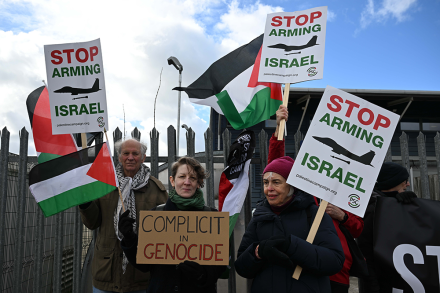
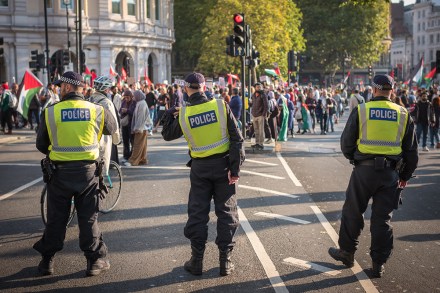
As Tony Blair contested a third election in 2005, the Labour government’s popularity was in tatters. The divisions in the country were running deep, following a United States-led war in the Middle East. The general election, held alongside the locals, saw the emergence of new radical political parties. They seized an opportunity to break the two-party consensus by opposing foreign wars and weaponising an increasingly politicised Muslim vote. Not much is written today about Respect, but it had some success fighting on an anti-Iraq war platform. George Galloway, the party’s leader, won in Bethnal Green and Bow. Although Respect’s staying power proved limited, what is emerging for next month’s local elections might prove more durable.

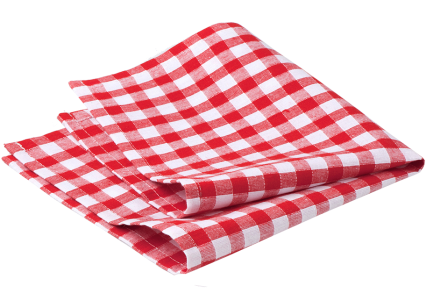
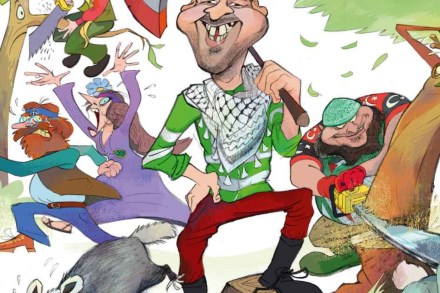
‘Tea-towel-gate’: another British travesty

During last September’s freshers’ fair at Royal Holloway, University of London, two students got into a brief verbal tiff that became subject to the administration’s immediate alarm. Our characters: Brodie Mitchell, a self-described non-Jewish Zionist, and Huda El-Jamal, the female president of the Friends of Palestine Society who is of Palestinian descent. Mitchell says El-Jamal taunted him – ‘Here’s the wannabe Jew’ – and questioned why he wasn’t wearing a yarmulke. Referring to the keffiyeh El-Jamal was wearing as a headscarf, Mitchell taunted back: ‘You’re wearing a tea towel over your head.’ A monstrous exchange, we can all agree. Naturally, Royal Holloway suspended Mitchell for nine weeks – nine weeks!

Does British politics have a problem with the ‘omnicause’?

From our UK edition

51 min listen

It is undoubtable that – under the leadership of Zack Polanski – the Green Party have soared to new heights. Having won their first parliamentary by-election in February, polls consistently show them as a force to be reckoned with on the left of British politics. Much of their success has come at the detriment of Labour, with disgruntled further-left progressive voices opting to vote Green. This, though, is a brand of eco-populism that comes at the expense of the Green Party's roots, or so argues Angus Colwell in the Spectator's cover article this week. Have the Greens ceded the issue of the environment?

Does British politics have a problem with the 'omnicause'?

The real reason the left hates Israel

‘Listen to what the man on the left of the camera has to say about Israel, the man who is addressed as Nick,’ a radical Corbynista friend suggested to me the other day in a social media message designed to change my mind about the Middle East. It’s part of a sustained campaign on his part which dates back at least ten years and is usually conducted with good grace, if never accord. So I listened to what this chap Nick had to say, with growing hilarity. Not because of what he said – which was what you might expect from a rank anti-Semite, but because of who he was. For it was none other than Nick Griffin, the former leader of the British National party.

Cynthia Erivo’s Dracula is tiresome

From our UK edition

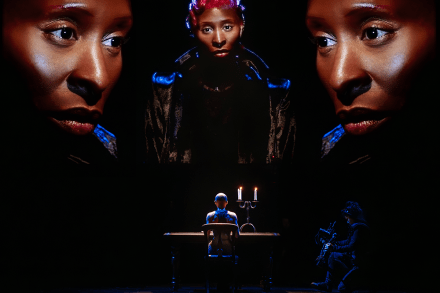
Interest in Dracula seems to go on for ever. Kip Williams has chosen Cynthia Erivo to star in his new version of the yarn about a clique of blood-quaffers who bite their victims’ necks and lick the seepings. The show is staged as a read-through of Bram Stoker’s text supplemented by costumes, wigs and a few orchestral hits recorded on tape. Erivo plays all 23 roles and her performance is simultaneously filmed and broadcast to the audience on TV screens dotted around the theatre. This creates two problems. First, Erivo can’t see or interact with the crowd because she’s encircled by wardrobe assistants and cameramen who swarm around her like gnats. Secondly, the audience are expected to look at the screens and not at the stage. This is odd.

A commentary on the grim present: Glyph, by Ali Smith, reviewed

From our UK edition

Glyph (whose sibling, Gliff, was published last year) is Ali Smith’s 14th novel and her fifth since 2016, when her ‘Seasonal Quartet’ saw the beginning of her project to use fiction to comment on contemporary events. It takes as its subject two sisters. Petra and Patricia (‘Patch’) negotiate their difficult childhood by retreating into a story world. Not that their escape is all unicorns and rainbows. The two stories they most often return to involve a horse blinded in the Great War and a man’s corpse flattened towards the end of the second world war. They call this flattened man ‘Glyph’: it’s ‘the sound he makes when he breathes out’. We soon skate from this grim past to the grim present.

The US plan for Gaza is absurd

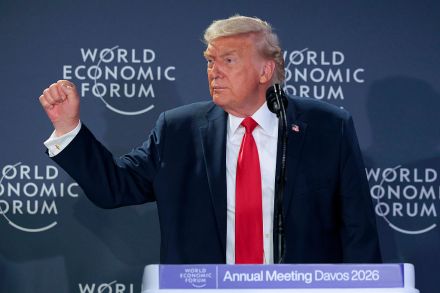
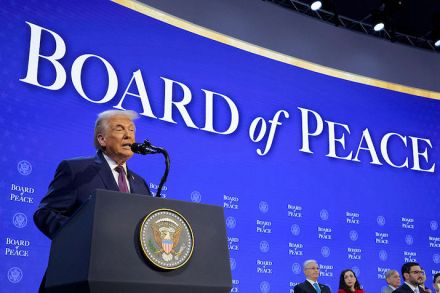
Donald Trump’s strangely artificial Board of Peace event in Davos on Thursday looked like a Hollywood rendering of an international summit. Everything was too slick, faintly uncanny. Like an AI-generated image, it was photo-real yet failed the most basic human glance test. Too perfect. No wabi-sabi. The first tell was visual: the set, complete with a crisp new institutional logo: a globe on a shield, flanked by olive branches. It carried the unmistakable whiff of Grok or ChatGPT, but the strangeness went deeper than design. The speeches themselves were weirdly messianic and utopian.

gaza

Are you long on America?

Donald Trump has completed the first year of his second presidency – and remains a truly divisive figure. He may have pulled back, after an absurd escalation, from his apparent threat to annex Greenland by force. But European leaders continue to berate him for his turbulent behavior in international affairs, and a growing number of Republicans are turning against his erratic foreign policy. Last week, the cry on global markets was “Sell America,” after the President ratcheted up trade hostilities with long-standing US allies by announcing yet another round of punitive tariffs on several European countries for refusing to agree that America should own Greenland outright.

Why shouldn’t the Board of Peace replace the UN?

The latest media palpitation about Donald Trump concerns his just-announced “Board of Peace.” Unveiled as an initiative to manage the introduction of tranquillity and physical reconstruction of that pile of rubble formerly known as Gaza, the Board of Peace seems to be filling all the empty space in the parking lot reserved for international relations. Think Big! The BoP now seems to take as its mandate international conflict more generally. Reporting on the fledgling enterprise, a story on ABC News mournfully told the world that “Critics and government leaders are decrying the board, saying it undermines the United Nations.”   Is that a promise?

board of peace

Playing ball with Team Trump

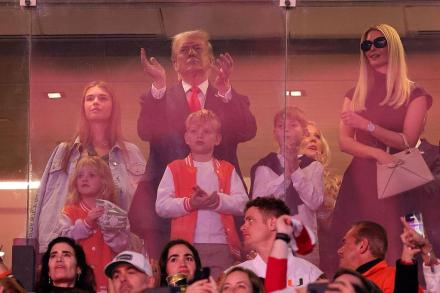
The State Department has a “secret playbook for using sports to advance Trump’s agenda,” according to Politico. Foggy Bottom has a tough assignment ahead. Witness the opening ceremonies of Sunday’s NBA game in London between the Memphis Grizzlies and Orlando Magic, the first NBA game in the UK in six years. As Vanessa Williams sang the National Anthem, someone shouted “Leave Greenland alone,” which the arena cheered. Cockburn doesn’t think Williams is much of a threat to Greenland. President Trump’s appearance last night at the College Football Championship – along with Secretary of State Marco Rubio, Ivanka and Jared, Kai Trump and Steve Witkoff – went without a hitch.

Trump’s brave new world

No one ever tucked themselves up in bed to read a government document – at least not in the expectation of enjoying it. The standard format is one of hundreds of pages of impenetrable jargon yielding no more than nuggets of significant ideas. The Trump administration has admirably cut through that tendency to produce a National Security Strategy (NSS) that is worth reading: a coherent outlining of America’s strategic intentions on the world stage. Originally composed by Michael Anton, a brilliant mind who is sadly leaving the State Department, the document concisely lays out a Trumpian vision of America’s role in the 21st century.

Why Trump and Israel differ on Turkey’s involvement in Gaza

As the Gaza ceasefire struggles into its second month, a significant difference between the position of Israel and that of its chief ally, the United States, on the way forward is emerging. This difference reflects broader gaps in perception in Jerusalem and Washington regarding the nature and motivations of the current forces engaged in the Middle East. The subject of that difference is Turkey.  The Turks have expressed a desire to play a role in the “international stabilization force” (ISF), which, according to President Donald Trump’s 20-point plan, is supposed to take over ground security control of Gaza from the IDF (and Hamas) in the framework of the plan’s implementation.

turkey gaza

You can’t trust the BBC

From our UK edition

You may remember that in February the BBC found itself in a spot of bother regarding a film about the conflict in Gaza which, it transpired, had been narrated by the son of a Hamas minister. Some people, not least Jewish people, wondered if such an account perhaps might accidentally stray into the realms of partisanship, and the BBC was forced to withdraw the documentary forthwith. It then commissioned an internal report into why this young lad had been chosen to front the film, rather than, say, Rylan Clark or Clare Balding. As a consequence of the investigation, the BBC’s head of news, Deborah Turness, sent a round robin email to all BBC staff. Only now, nearly nine months later, can I reveal the disturbing truth about what Ms Turness told her colleagues.

Do black lives still matter?

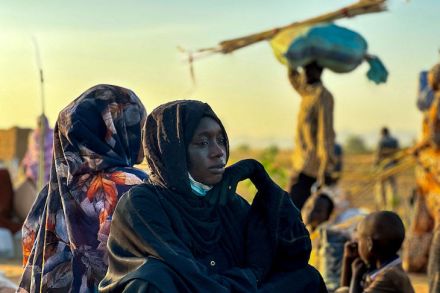
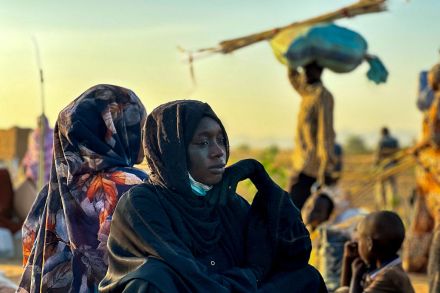
It was an ethnic massacre so bad that it could be seen from space. Satellites picked up bloodied patches of soil in North Darfur’s capital, El Fasher, after Sudan’s Rapid Support Forces (RSF) swept into the besieged city. Pools of blood and piles of bodies were identified. Thousands of people are feared to have died in the appalling violence. Many thousands more have fled for their lives. Others remain trapped in the city. The scenes of slaughter were so blatant that it should have brought marchers out onto the streets in passionate protest. But there wasn’t a peep from the usual suspects. Was this because the killings did not take place in Gaza or the West Bank, but in Sudan, one of Africa’s largest countries?

sudan darfur

Activist silence over Sudan speaks volumes

The city of El Fasher, long a symbolic and strategic stronghold in Darfur, has in recent days become the site of atrocities so grave that the United Nations has openly warned of the risk of genocide. Videos reviewed by the Office of the High Commissioner for Human Rights show scores of unarmed men executed in cold blood, some lying dead at the feet of Rapid Support Forces fighters, others dragged off and detained. Journalists and aid workers have disappeared. The last remaining functional hospital was shelled, killing patients and staff. The Saudi Maternity Hospital, once a rare lifeline, is now a mass grave.

Sudan

The westerners helping Hamas win the propaganda war

From our UK edition

After two years of war, and despite Israel’s many successes on the battlefield, Hamas can also claim a kind of victory – at least for now. The terror group has survived and is once again exerting control in the areas of Gaza under its authority. Public executions, whippings, stonings and kneecappings have returned. In the first five days of the ceasefire, Hamas executed at least 100 Gazans. Hamas’s survival was achieved not only through its remaining fighters and its holding of hostages, but also thanks to a chorus of western apologists. A coalition of so-called progressives and professional activists has excused, rationalised and defended the group’s actions across universities and in newspaper editorials.

The Ultras: meet Britain’s new Islamo-socialist alliance

From our UK edition

Ayoub Khan seemed delighted. Last Thursday, it was announced that fans of the Israeli football club Maccabi Tel Aviv would be banned from attending their match against Aston Villa next month, an outcome that Khan, the MP for Birmingham Perry Barr, had been lobbying for since September. That night, Khan took himself on a broadcast round to celebrate. Keir Starmer had said the ban was the ‘wrong decision’, but on Newsnight Khan told him to back off. ‘The Prime Minister should stay out of operational matters,’ he said. ‘That’s not a matter for him, sitting in No. 10.’ It has been a satisfying 15 months for Khan since his election.

How Israel won the war – and lost the PR battle

Regardless of the ultimate outcome of the Gaza peace deal brokered by Donald Trump, the past two years have seen Israel achieve an unprecedented litany of military accomplishments in the Middle East. The level of damage done to Hamas, Hezbollah and the Houthis is difficult to comprehend. The end of the Assad regime and, with American support, the demolition of the Iranian nuclear program – setting it back years at the least – were steps that many once thought impossible. Israel has emerged from the post-October 7 period unquestionably stronger in every way except one: its support around the globe, particularly among the youngest voices in the West.

Israel

Who deserves credit for the Gaza ceasefire?

Since the Gaza ceasefire was announced last week, two distinct narratives have emerged. The first gives President Donald Trump the lion’s share of credit. The second, mostly pushed by former Biden officials, is trying to share the glory. Both are wrong and for the same reason: they give the United States unrealistic credit and ignore the obvious fact that it is the belligerents who decide the fate of a war. More than any world leader, Prime Minister Benjamin Netanyahu deserves credit.

Lab leaks & spy scandals: was Cameron wrong about China?

From our UK edition

48 min listen

This week on Quite right! Michael and Maddie turn their sights to Westminster’s latest espionage scandal – and the collapse of the case to prosecute two men accused of spying for China. Was the case dropped out of incompetence, or out of fear of offending Beijing? As Michael puts it, ‘Either we’re not being told the truth, or this is a government of staggering incompetence.’ They also unpick the growing row over Jonathan Powell, Keir Starmer’s National Security Adviser, and his alleged role in shelving the case. What does his re-emergence, along with Peter Mandelson and other ‘Sith Lords of Blairism’, tell us about the return of New Labour’s old moral compromises?