Afghanistan

Accelerating the ‘kill chain’ – a terrifying glimpse of future warfare

From our UK edition

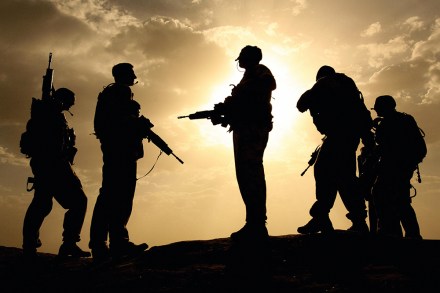
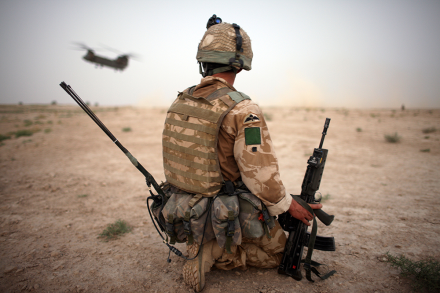
America possesses the most powerful military in history, but since 1945 it has not won a war against anyone other than Saddam Hussein. It appears not to understand why. In fact the only thing the US seems worse at than winning wars is learning lessons from its defeats. People such as the secretary of war Pete Hegseth think it’s all about woke. Lily-livered longhairs stateside stabbed the army in the back over Vietnam; then ‘stupid rules of engagement’ tied the military’s hands in Iraq and Afghanistan and caused the disasters there. The solution is to fight harder, if necessary even at the expense of ethics and the law. Another answer might be to get US forces fighting smarter.

Why the Afghanistan-Pakistan war matters

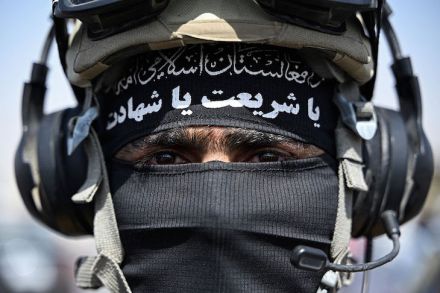
More than a decade ago, during a tense visit to Islamabad as secretary of state, Hillary Clinton gave Pakistan’s leaders a warning: "You can’t keep snakes in your backyard and expect them only to bite your neighbors." She was referring to the Taliban and other militant groups that Islamabad had long tolerated as part of its "strategic depth" policy aimed at countering India’s regional dominance. Now, as Pakistan’s jets strike targets inside Afghanistan and the Taliban mobilize forces along the border, that warning seems like a prophecy.

How the army can rediscover its fighting spirit

From our UK edition

The seemingly endless debate about the hollowness of our armed forces has concentrated on size, technical capability and sustainability – never more so than in recent days when the UK’s unreadiness for war, or even to defend its own bases overseas, has been exposed. But there has been no mention of the moral component of fighting power (morale, spirit, will), which is the most important element of combat effectiveness. Napoleon is often quoted as saying that in war, ‘the moral is to the physical as three to one’, and history is littered with examples showing this to be true. The most recent was the evaporation, within days, of the Afghan army on which the US had spent around $20 billion. It was technically very capable but it lacked a willingness to fight.

Chaos in Iran spells trouble for the Taliban

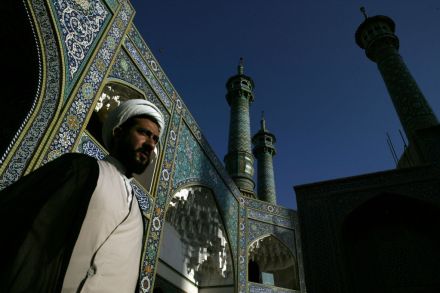
The US-Israeli attack on Iran presents an opportunity to get rid of the Taliban in Afghanistan. If there is a collapse of central authority in Iran, tens of thousands of Afghan former soldiers living in exile there could use the power vacuum to mobilize, return home and fight against the Taliban. There are several resistance groups who have advanced plans to fight but need a reliable haven outside the country to launch attacks inside Afghanistan. Iran, which has a 600-mile border with the country, could be the launchpad they need. This represents a unique opportunity for Afghanistan, as for the first time the country faces conflict on both sides.

Trump blames Biden for shooting of National Guardsmen

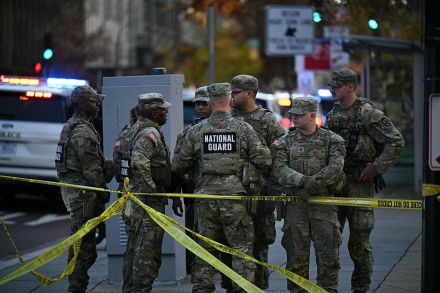
In response to the attack on Thanksgiving eve by a suspected Afghan national upon two West Virginia National Guardsmen, President Trump demanded a renewed effort to expel illegal immigrants. During a brief and uncompromising address from West Palm Beach that bore the rhetorical fingerprints of White House advisor Stephen Miller, Trump ripped into illegal immigration and former president Joe Biden. The President deemed the influx of refugees from Afghanistan and elsewhere the “single greatest national-security threats” facing America. Biden was a “disastrous president.” Trump reserved special scorn for his detractors who he said purport to protect constitutional liberties but are leaving America exposed to rampant criminality.

How Dick Cheney made Donald Trump

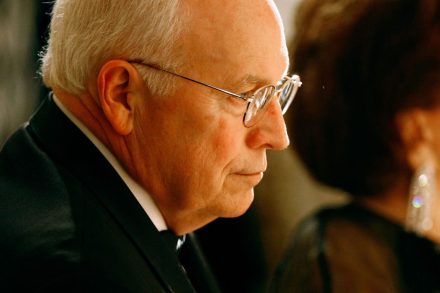
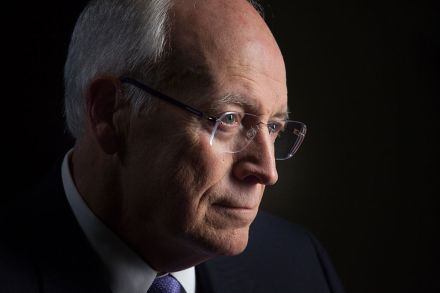
Former vice president Dick Cheney, who died on Monday at age 84, loathed Donald Trump. In a 2022 election campaign ad for his daughter, Liz, a congresswoman from Wyoming, he declared: “In our nation’s 246-year history, there has never been an individual who is a greater threat to our republic than Donald Trump.” Yet Cheney was more responsible for Trump’s rise than almost anyone else in the Republican establishment. He helped to mastermind the calamitous Iraq War and preached the unitary executive theory of the presidency. Instead of vilifying Cheney, MAGA-world should offer him a bouquet of appreciation. Recall that it was during the 2016 South Carolina primary that Trump first showed his real independence from the folderol surrounding the Iraq War.

dick cheney

Dick Cheney dies at 84

Former vice president Dick Cheney died last night aged 84. He arrived in Washington as a congressman for Wyoming, then became secretary for defense under George H.W. Bush and served for eight years as George W. Bush’s vice president. He was considered by many to have pulled the strings behind the Bush administration. What is perhaps his most lasting legacy is the “Cheney Doctrine,” which influenced America’s decision to engage in wars in the Middle East. He campaigned for a military response to the 9/11 terrorist attacks, which drove his conviction that any country, organization or individual that posed a threat to the US, or that might in the future, needed to be taken out.

When, why and how came the fall – the success and sorry decline of the British Army

From our UK edition

I wonder how many people appreciate what a remarkably capable army we had for the first three decades of this book’s range – and how incapable that army has become. Forward defence in Germany during the Cold War (56,000 troops); keeping the peace in Northern Ireland; bringing Rhodesia/Zimbabwe back into the fold; liberating the hostages at the Iranian embassy in London; retaking the Falkland Islands; ejecting the Iraqis from Kuwait; bringing order to the Balkans; halting the civil war in Sierra Leone – the ‘rise’ part of Ben Barry’s book is indeed inspiring.

Portrait of the week: Keir vs Nigel, ID cards and Trump’s peace deal

From our UK edition

Home Sir Keir Starmer, the Prime Minister, addressed delegates at the Labour party conference in Liverpool who had been issued with little flags of the home nations to wave. He said Nigel Farage, the leader of Reform UK, ‘doesn’t like Britain, doesn’t believe in Britain’. He had earlier put forward the difficult argument that Farage’s party was ‘racist’ in its migrant policy while Reform supporters were not racist but ‘frustrated’. Asked seven times whether there would be VAT rises, he repeated that ‘the manifesto stands’. Rachel Reeves, the Chancellor of the Exchequer, promised to keep ‘taxes, inflation and interest rates as low as possible’. Ofgem raised the energy price cap by 2 per cent.

The High Court’s war on truth

From our UK edition

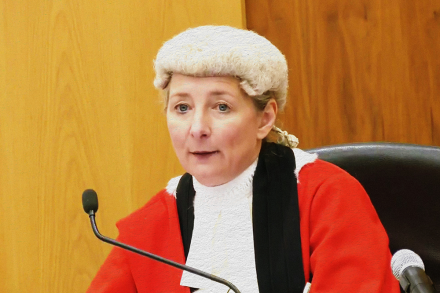
In Lewis Carroll’s Through the Looking-Glass, Humpty-Dumpty tells Alice: ‘When I use a word, it means just what I choose it to mean – neither more nor less.’ The assertion is intentionally absurd. If every-one adopted their own idiosyncratic lexical definitions, language wouldn’t function, and we’d all blither unintelligibly in a Tower of Babel. But then, Humpty missed his calling as a British High Court judge. Sitting on the bench rather than a wall, the big egghead might never have had that great fall.

The mixed legacy of Zbigniew Brzezinski, strategist of the Cold War

From our UK edition

In the autumn of 1938, within nine weeks of each other, two boys arrived in New York, fleeing the gathering storm: a 15-year-old Jewish German and a ten-year-old Catholic from Poland. Both would repay the mortal debt they owed by dedicating their lives to the Land of the Free. The older boy was, of course, Henry Kissinger, later Grand High Poobah to Richard Nixon and Gerald Ford. The younger was Zbigniew Brzezinski, Jimmy Carter’s national security adviser from 1977 to 1981 and the subject of a magisterial biography bythe Financial Times’sWashingtonsupremo, Edward Luce. From the first, Zbigniew Brzezinski (pronounced ‘ZbigNieff BreshinSki’, as Carter helpfully informed his team) sat in Kissinger’s shadow, always a step or two behind the great Bavarian.

The Afghan asylum leak cover-up saved lives

From our UK edition

The United Kingdom’s immigration system is broken. Tens of thousands have entered the country who should not, and the bureaucracy which processes asylum cases is a creaking wreck. Those who do deserve a safe welcome are left in legal limbo for months, if not years. And yet the Home Office, which is responsible for this chaos, is not even the department in government with the most inefficient and unaccountable bureaucracy. That hard-fought distinction belongs to the Ministry of Defence, which combines profligacy in procurement with an inability to give armed forces families homes that meet even the most basic standards of decency.

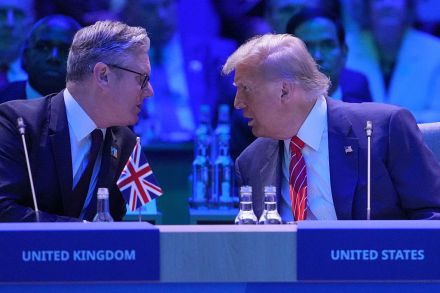
Why does Trump like Starmer so much?

From our UK edition

12 min listen

It can now be revealed that a Ministry of Defence data leak has cost the UK some £7 billion and put thousands of Afghans at risk of death. A dataset containing the details of nearly 19,000 people who applied to move to the UK following the Taliban takeover was released in error by a British defence official in February 2022. Ministers were informed of the debacle in August 2023; since then, an unprecedented super-injunction has been in place to stop the press from reporting details. What does this mean for successive governments?

Trump won’t be dragged into a regime-change war

The handsome pages of The Spectator World’s July issue readers will find an essay of mine arguing that the United States doesn’t win wars anymore because we don’t even understand what a modern war is. From the French Revolution to the Cold War, and in the long, warm afterglow—thankfully, non-nuclear—of Cold War success, Western elites have tended to think about wars in terms of regimes and ideologies. Winning a war is all about changing the opponent’s regime so that it endorses one’s own ideology: turning a “dictatorship” into a “liberal democracy” through the magic of bombs and bullets.

Regime change

Being Mr. Meghan Markle is no honeymoon

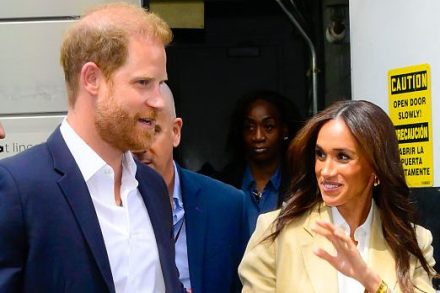
Prince Harry and Meghan Markle are finally enjoying their “honeymoon period.” Or they are according to the Duchess of Sussex, who made the statement on a fawning podcast as part of a brand building media blitz – and who certainly seems to be enjoying herself.But has she asked her husband if he’s reveling in their belated honeymoon quite as much as she is? Once the spare to the throne, his presence as her forlorn shadow at events to honor her now appears largely surplus to requirements even to Meghan. “That man loves me so much,” she gushed on Montecito neighbor Jamie Kern Lima’s podcast on Monday. She likened their relationship to a video game where you "slay the dragon, save the princess.

Meghan

Sad but beautiful exhibition of Afghanistan’s war rugs

From our UK edition

Decades after its inclusion in the Hippie Trail, Afghanistan is again open to tourism, according to the Taliban’s spokesman Zabihullah Mujahid. It is perhaps a source of regret for the group that the 6th-century Buddhas of Bamiyan are missing in action. They were blown up in 2001 either, depending on who you ask, because of Islam’s strict beliefs on anti-idolatry or to punish the West for offering money to preserve them rather than give aid to starving children. The war rugs, depicting camels and flowers alongside rocket launchers, are striking and jarring While the country continues to export fruit, nuts and insect resins – opium production was massively scaled back by the Taliban – Afghanistan is justly famous for its woven rugs.

‘Blood! Blood! Blood!’: the Battle of Fallujah twenty years on

The National Museum of the Marine Corps has built a replica of a street in Fallujah, the Iraqi city that American forces half-destroyed in order to save it, in a battle twenty years ago next month. The exhibit promises visitors an “interactive experience that puts them in the boots of a Marine as he kicks down the door of a suspected insurgent stronghold.” If you have a games console, you can play Six Days in Fallujah, a video game where you take the role of a Marine who narrates the action of a firefight that really happened. Fallujah has become a symbol of gritty heroism and sacrifice — or for critics of the Iraq war, occupation and war crimes. Either way, the battle is deeply lodged in the popular imagination.

Fallujah

ABC News is the big loser of the Trump-Harris debate

The main takeaway from the ABC News ambus— er, presidential debate last night? That someone should sue the network for creating a hostile workplace environment.  The evening was supposed to offer Kamala Harris and Donald Trump an opportunity expose themselves to the public and explain their positions on various policy matters that are important to the public.   In the event, it was an event in which the immoderators, David Muir and Linsey Davis, repeatedly pecked at and corrected, or pretended to correct, one candidate, Donald Trump, while passing over lie after lie after lie emitted by Kamala Harris.  Trump did not say “there were fine people on both sides” at Charlottesville. He did not “incite an insurrection” on January 6.

abc news

Trump honors fallen soldiers of Abbey Gate

Former president Donald Trump made a surprise appearance at Arlington National Cemetery on Monday to lay a wreath and pay his respects to the thirteen American service members who were killed during a suicide bombing amid the military withdrawal from Afghanistan. It is the third anniversary of the Abbey Gate attack, which was a tragic source of national embarrassment as America left the twenty-year long war and has been a continuous political thorn in the side of President Joe Biden. While Biden and Vice President Kamala Harris both released statements recognizing the fallen service members, Biden is currently at the beach (in fact, he is on vacation all week long) and Harris has no public events on her schedule.

abbey gate

‘Kind of funny’: former House staffer rejects Foreign Affairs Committee’s defense of Afghanistan investigation

A senior investigator who resigned from the House Foreign Affairs Committee last week is hitting back at the committee’s attempts to defend its investigation into the United States’s military withdrawal from Afghanistan. Jerry Dunleavy, a former Washington Examiner reporter who wrote a book about the fall of Kabul in the summer of 2021, joined the Foreign Affairs Committee at the behest of senior staff about a year ago. In his resignation letter that was made public last week, Dunleavy accused the committee and Chairman Michael McCaul of not running a serious investigation into the Biden administration’s withdrawal from the twenty-year war in Afghanistan.

Committee Chairman Michael McCaul (R-TX) speaks during a House Committee on Foreign Affairs hearing (Photo by Samuel Corum/Getty Images)