
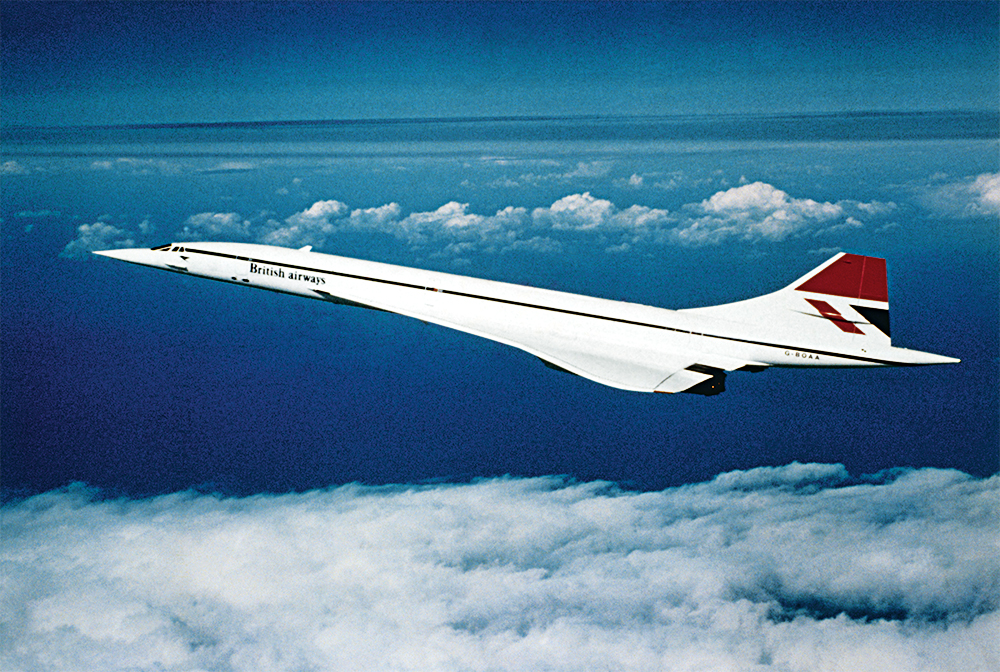
Not since the Spitfire has a machine inspired such complex loyalties. Never before or since had an aircraft so completely embodied national values and excited such admiration and affection. But, like the Spitfire, Concorde was both magnificent and absurd. Thus, essentially English.
Concorde was shockingly beautiful and an aeronautical marvel. At its Mach 2 cruise – say 1,300 mph – its nose reached a temperature of 127 Celsius. The fuselage stretched by several inches. Passengers could – with a glass of champagne to hand – see the curvature of the Earth from its tiny windows. The sky was purple and orange. Concorde was an emotional and technical success, but a commercial disaster.
Nothing better illustrates the distinction between English and American cultures than a comparison between Concorde and its nemesis, the Boeing 747, which first carried passengers six years before Concorde’s original revenue flight.
Concorde’s vision of the future was to facilitate the high-speed travel of a tiny, free-spending elite. People who were prepared to pay for the convenience and bragging rights of flying to New York for lunch and be back in London in time for dinner. When someone asked Charles Saatchi if he ever used public transport, he said: “Yes. Concorde.”
Boeing, by contrast, wanted to democratize intercontinental air travel. In a 747, comfort was secondary, but convenience and economy were absolute… for its 500 passengers nibbling supermarket sachets of peanuts.
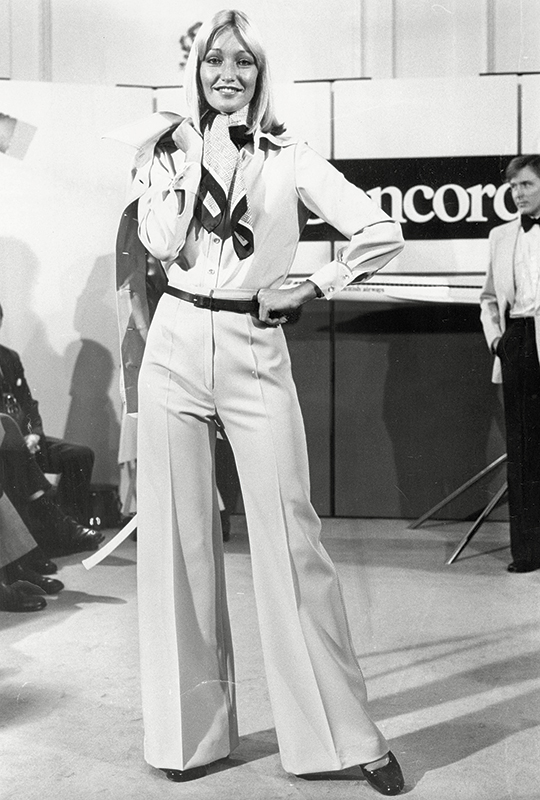
Yet the Concorde experience was absolute. Passengers enjoyed not just a superlative aeronautical experience, but deluxe design as well. Air France’s Concordes had tableware designed by Raymond Loewy, the mustachioed wearer of correspondent shoes who put Chanel No. 5 in his smelly rubber scuba suit. He was also the plane’s design consultant. Jean Patou and Nina Ricci did the attendants’ uniforms.
I flew Concorde just once, when I was bounced off a regular first-class Boeing flight from Heathrow. The experience was sublime: ohmygod thrust on takeoff, soon followed by a tranquilizing diet of grande marque champagne, first growth claret, smoked salmon, and caviar. The paradox here was that it was so lovely, I was sad to arrive in New York so quickly. It should have gone on forever. It will in my memory.
One reason we feel so fondly of Concorde is that it excites in many Brits a racial memory of the days when Britain was second only to the USA in aerospace. Comet was the first jet transport. The Fairey Delta was the fastest plane of the ’50s. Hawker-Siddeley built a fighter that could take-off vertically.
Now, like Prospero’s dream, all gone. Concorde was hobbled by US authorities banning it from overflying America for fear of its sonic boom disturbing sleepy homesteaders in Arkansas. Thus, it was denied the lucrative West Coast market.
Yet the glorious Concorde was forever in its own endgame. Londoners came to know and adore the sight and sound of the impossibly slim plane on finals to Heathrow. You could actually set your clock by it.
And clock is the relevant image: for all its technological brilliance, the Concorde flight-deck was Spitfire-era manual controls, twitchy analogue instruments, valves and solenoids. It was a futuristic anachronism.
On July 25, 2000, an overloaded chartered Concorde ran over some debris at Roissy. A rubber fragment from an exploded tire punctured a wing tank and the plane crashed in flames. That was when the future ended.





Comments