


On May 12, the Canadian evolutionary psychologist Gad Saad published a book called Suicidal Empathy: Dying to be Kind. It’s a smart book, immensely pertinent to a time, like ours, that is awash with this diseased form of self-infatuated fellow feeling. Dr. Saad is correct: “Suicidal empathy is a civilization malady that has entered every nook and cranny of our lives.”
One of the peculiarities of the malady that Dr. Saad diagnoses is its persistence. Socialism – which is the generic name of this intoxicating and addictive drug – has failed everywhere it has been tried. No matter. The world manufactures new versions of Greta Thunberg, AOC and Bernie Sanders faster than they can be repudiated.
Democrats, Dr. Saad observes, are the party of empathy. It follows that they market their policies primarily as exercises in philanthropy. When it comes to tax policy, for example, they like to say that the chief issue is not raising revenue but “fairness.” Remember Joe the Plumber? He asked Barack Obama why he couldn’t keep more of the money he made. I am not opposed to people making money, Obama said, I just want to “spread the wealth around.” Spending other people’s money is a prime instance of empathetic behavior.

Suicidal Empathy is at bottom a criticism of misplaced benevolence. This may seem paradoxical. Isn’t benevolence a good thing? Let’s think about that for a moment. Benevolence is a curious mental or characterological attribute. It is, as the philosopher David Stove observes in What’s Wrong With Benevolence: Happiness, Private Property, and the Limits of Enlightenment, less a virtue than an emotion. To be benevolent means – what? To be disposed to relieve the misery and increase the happiness of others. Whether your benevolent attitude or action actually has that effect is beside the point.
Yes, Stove says: “Benevolence, by the very meaning of the word, is a desire for the happiness, rather than the misery, of its object.” But here’s the rub: “The fact simply is that its actual effect is often the opposite of the intended one. The adult who had been hopelessly ‘spoilt’ in childhood is the commonest kind of example; that is, someone who is unhappy in adult life because his parents were too successful, when he was a child, in protecting him from every source of unhappiness.”
It’s not that benevolence is a bad thing per se. It’s just that, like charity, it works best the more local are its aims. Enlarged, it becomes like that “telescopic philanthropy” that Dickens attributes to Mrs. Jellyby in Bleak House. Like other such benefactors, Mrs. Jellyby’s philanthropy is more ardent the more abstract and distant its objects. She is gripped by a passionate zeal to better the lives of the natives of the African country of “Borrioboola-Gha, on the left bank of the Niger.” When it comes to her own family, however, she is indifferent to the point of callousness.
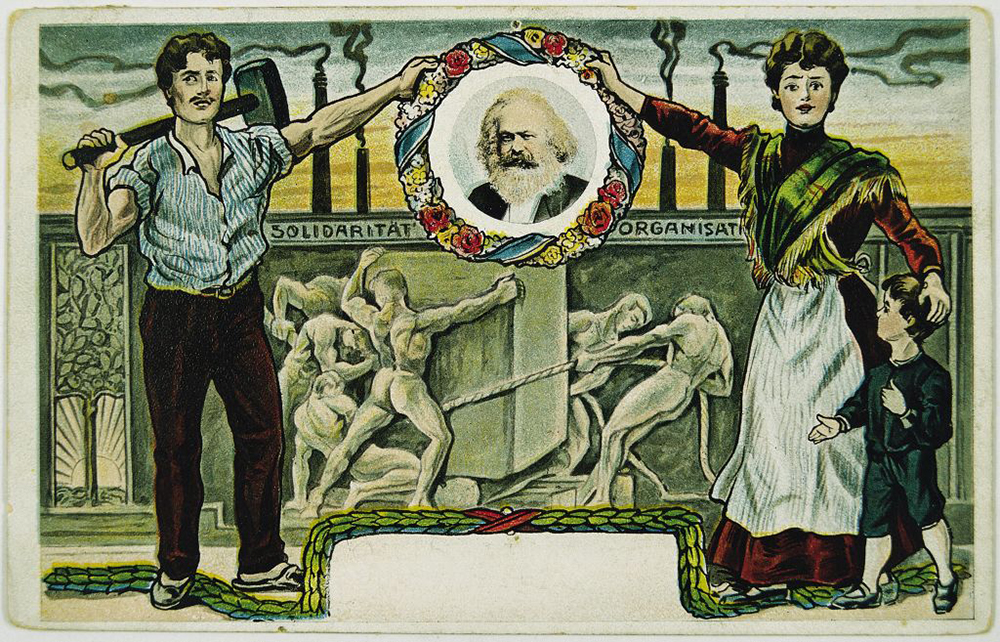
The sad truth is that theoretical benevolence is compatible with any amount of practical indifference or even cruelty. You feel kindly towards others. That is what matters: your feelings. The effects of your benevolent feelings in the real world are secondary. Rousseau was a philosopher of benevolence. So was Karl Marx. Yet everywhere that Marx’s ideas have been put into practice, the result has been universal immiseration. His intention was the benevolent one of forging a more equitable society by abolishing private property and equalizing wealth.
Dr. Saad’s point is that an absolute commitment to benevolence, like the road that is paved with good intentions, typically leads to an unprofitable destination. The great 19th-century English essayist Walter Bagehot underscored the point when he asked whether the benevolence of mankind actually does more good than ill. It makes the purveyor of benevolence feel better – where by “better” I mean “more smug and self-righteous.” But it is unclear whether the objects of benevolence are any better off.
Just so with the modern welfare state: a sterling incarnation of the sort of abstract benevolence Gad Saad anatomizes. It doesn’t matter that the welfare state actually creates more of the poverty and dependence it was instituted to abolish – the intentions behind it are benevolent. Which is one of the reasons that it is so seductive. It flatters the vanity of those who espouse it even as it nourishes the egalitarian ambitions that have always been at the center of Enlightened thought. This is why David Stove describes benevolence as “the heroin of the Enlightened.” It is intoxicating, addictive, expensive and ultimately ruinous.
The book is immensely pertinent to a time awash with this diseased form of self-infatuated fellow feeling
The intoxicating effects of benevolence also help to explain the growing appeal of politically correct attitudes about everything from “the environment” to the fate of the Third World. Why does the consistent failure of statist policies not disabuse their advocates of the statist agenda? One reason is that statist polices have the sanction of benevolence. They are “against poverty,” “against war,” “against oppression,” “for the environment.” And why shouldn’t they be? Where else are the pleasures of smug self-righteousness to be had at so little cost?
The intoxicating effects of benevolence also help to explain why unanchored benevolence is inherently expansionist. The party of benevolence is always the party of big government. The imperatives of benevolence are intrinsically opposed to the pragmatism that underlies the allegiance to limited government.
For centuries, smart political philosophers have understood that the lust for equality is the enemy of freedom. That species of benevolence underwrote the tragedy of Communist tyranny. The rise of political correctness has redistributed that lust over a new roster of issues: not the proletariat, but the environment; not the struggling masses, but “reproductive freedom,” gay rights, the Third World, diversity training and an end to racism and xenophobia.
It looks, in Marx’s famous phrase, like history repeating itself as farce. Suicidal Empathy reminds us that we would be rash to exclude a reprise of tragedy.




Comments