
A vehicle that lifts from your driveway, bypasses the gridlock below, and deposits you, serenely, wherever you choose? For most of the 20th century, it remained science fiction. Now, somewhat amazingly, the race to put a personal flying machine in private hands could be nearing completion.
The history of this quest is longer and stranger than most realize. In the 1930s came Autogiro Company of America’s AC-35, an autogyro that could drive 25 mph and fly 75 mph. The ’40s saw the Fulton FA-2 Airphibian with detachable wings and tail. It was even approved by the Civil Aviation Authority, but production was halted due to financial issues. In the ’50s, Hiller Aircraft constructed a series of single-person flying platforms including the VZ-1 Pawnee, upon which a pilot stood, propelled by a ducted-fan rotor system and steered by shifting their weight. It was promptly abandoned and the company was sold in 1964.
The first generation of ultralight personal eVTOLs is finally here, constrained in range and altitude, yes, but real
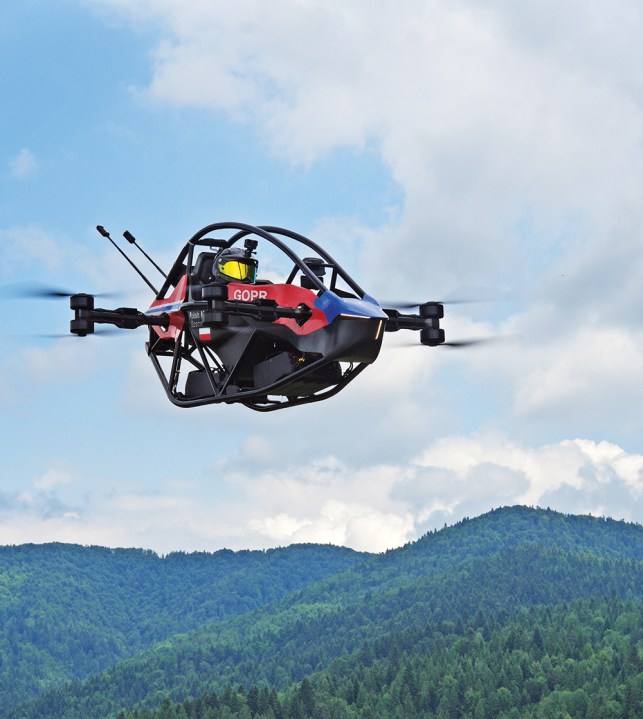
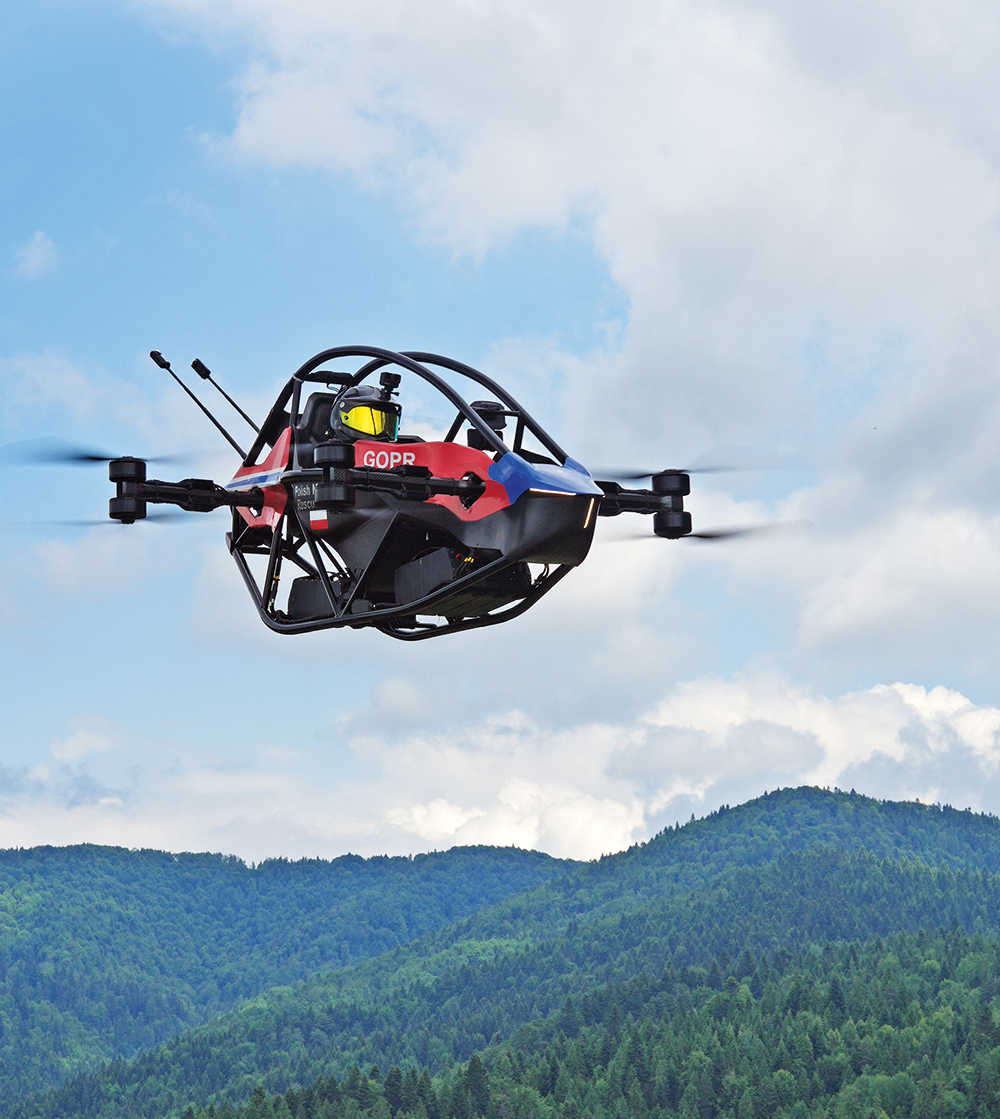
Now, in 2026, it looks very much as if personal flying vehicles have finally landed. Swedish company Jetson has already begun delivering its $150,000 Jetson ONE. The first-ever customer was tech entrepreneur Palmer Luckey, who now has his own electric eight-motor, single-seat eVTOL built from aluminum and carbon fiber that can be used for recreational use at low altitude. Top speed is over 60 miles an hour, and it can fly for 20 minutes at a time. The clincher is that because it’s classified as ultralight, a pilot license isn’t needed to fly one. Demand is already so high, Jetson says customers will now have to wait until 2028 unless they’ve already ordered.
And more are coming. The Rictor X4 is another ultralight eVTOL, but this one will supposedly cost less than $40,000 and again needs no pilot’s license and offers the same 20-minute flight time. Interested? Preorders have started with just a $5,000 deposit, with deliveries scheduled for later this year.
China’s XPeng is after a larger, richer audience entirely. Its Thunderbirds-esque modular AeroHT – combining a six-wheeled electric SUV with a detachable drone flight module – is somewhat unbelievably scheduled for mass production later this year at a price of $280,000. Considerably less than Rolls-Royce’s all-electric Spectre.
Can it possibly be true? Is the wait finally over? It certainly looks like it. The first generation of ultralight personal eVTOLs is finally here, constrained in range and altitude, yes, but real, purchasable, and, in their own limited way, flyable. What happens when adoption becomes widespread is now anyone’s guess.





Comments